
Rita Gray
Author of The Wild Little Horse
Works by Rita Gray
Cyphers 42 1 copy
Tagged
Common Knowledge
- Gender
- female
Members
Reviews
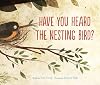
Can you hear a nesting bird? As two children play outdoors, they observe a variety of backyard birds, but return time after time to watch a robin nesting in a tree. As the bird is still and quiet, so are the children. All are waiting.
Rhyming text and onomatopoeia will have readers mimicking the birds as they wait for the climax. “Mourning doves take their morning stroll. coah, cooo, cooo, coooo. Woodpecker calls from a tree with a hole. cuk-cuk-cuk-cuk-cuk.” After a first reading to show more delight in the luminous text and illustrations, pair this with Audubon plush bird toys with actual bird songs and a nonfiction bird guide (such as Backyard Birds by Nolting, Latimer and Peterson) for a fuller experience.
Gray uses figurative language splendidly, invoking playfulness (“Swallow slides from under a shingle.”) and the mystical (“Wood thrush turns the twilight still.”) Pak’s earth-toned, vibrant illustrations support the quiet of the nesting bird and the stillness needed to observe and respect birds.
The robin’s and the children’s patience is rewarded at the end as the title question is answered. In an afterword, Gray extends the events with an imagined interview with the robin. Budding birders may wish to visit the Journey North website to learn more about robins at http://www.learner.org/jnorth/robin/index.html show less
Rhyming text and onomatopoeia will have readers mimicking the birds as they wait for the climax. “Mourning doves take their morning stroll. coah, cooo, cooo, coooo. Woodpecker calls from a tree with a hole. cuk-cuk-cuk-cuk-cuk.” After a first reading to show more delight in the luminous text and illustrations, pair this with Audubon plush bird toys with actual bird songs and a nonfiction bird guide (such as Backyard Birds by Nolting, Latimer and Peterson) for a fuller experience.
Gray uses figurative language splendidly, invoking playfulness (“Swallow slides from under a shingle.”) and the mystical (“Wood thrush turns the twilight still.”) Pak’s earth-toned, vibrant illustrations support the quiet of the nesting bird and the stillness needed to observe and respect birds.
The robin’s and the children’s patience is rewarded at the end as the title question is answered. In an afterword, Gray extends the events with an imagined interview with the robin. Budding birders may wish to visit the Journey North website to learn more about robins at http://www.learner.org/jnorth/robin/index.html show less

Exploring the calls of various avian species, the gently rhyming narrative of this lovely work of picture-book natural history continually returns to the question of the nesting bird - a robin - and what sound she makes. Her silence reveals something to the attentive listener and reader: namely, that she is sitting upon her eggs. Eventually, of course, there will be something to hear, as the baby birds begin to hatch...
I appreciated the structure of author Rita Gray's text in Have You Heard show more the Nesting Bird?, as it highlights the calls of various birds, using both descriptive text and onomatopoeia, while continually returning to the titular question about the nesting bird. This really drives home the central message here, about nesting birds staying quiet, in order to protect their eggs and baby birds. The afterword, written as an interview with one such bird, provides more detailed information about this subject. The accompanying artwork from Kenard Pak is lovely, created using a subtle earthy palette, and beautifully capturing the delicate charm of each bird depicted. All in all, a sweet little book, one which communicates its informational message in an engaging way, and one that I would recommend to young bird and nature lovers. show less
I appreciated the structure of author Rita Gray's text in Have You Heard show more the Nesting Bird?, as it highlights the calls of various birds, using both descriptive text and onomatopoeia, while continually returning to the titular question about the nesting bird. This really drives home the central message here, about nesting birds staying quiet, in order to protect their eggs and baby birds. The afterword, written as an interview with one such bird, provides more detailed information about this subject. The accompanying artwork from Kenard Pak is lovely, created using a subtle earthy palette, and beautifully capturing the delicate charm of each bird depicted. All in all, a sweet little book, one which communicates its informational message in an engaging way, and one that I would recommend to young bird and nature lovers. show less
A fun read to any kids that is interested in birds. Pak's illustrations capture the simpleness of the birds life and the excitement that come with eggs in a nest.I remember being small and seeing robins nesting their eggs, it was just how the book described it. The Q&A with the bird at the end was a very creative way to put some real information about robins in the book.
First of all, the illustrations are SUPER John Klassen-y. The color palette is so similar to [b:Sam and Dave Dig a Hole|20708761|Sam and Dave Dig a Hole|Mac Barnett|https://d.gr-assets.com/books/1400887343s/20708761.jpg|39789300] that these books could be siblings.
This book has lots and lots of onomatopoeia birdsong, which I think would make it fun read-aloud if you're up for that kind of thing. It's relatively rare to find a good non-fiction picture book for story time, but this would work show more for preschoolers. show less
This book has lots and lots of onomatopoeia birdsong, which I think would make it fun read-aloud if you're up for that kind of thing. It's relatively rare to find a good non-fiction picture book for story time, but this would work show more for preschoolers. show less
Lists
Awards


You May Also Like


Associated Authors
Statistics
- Works
- 9
- Members
- 1,475
- Popularity
- #17,414
- Rating
- 3.8
- Reviews
- 51
- ISBNs
- 19