
Franklyn M. Branley (1915–2002)
Author of What Makes Day and Night?
About the Author
Image credit: University of Southern Mississippi
Series
Works by Franklyn M. Branley
Lodestar - Rocket Ship To Mars: The Record of the First Operation Sponsored by the Federal Commission for Interplanetary Exploration, June 1 ,1971 (1951) 12 copies
Comets, meteoroids, and asteroids: Mavericks of the solar system, (Exploring our universe) (1974) 9 copies
Story time in a bag Shapes & clouds 9 copies
Guide to outer space 3 copies
THE GREAT MOON HOAX by Franklyn M. Branley, illustrated by Richard E. Brown (A Magic Circle Book) (1973) 3 copies
Sunshine Makes the Seasons 2 copies
Mysteries of the planets 2 copies
What Makes a Magnet? 1 copy
THE MOON SEEMS TO CHANGE 1 copy
The moon seems to change 1 copy
Floating and Sinking 1 copy
Floating in space 1 copy
Planets in our solar system 1 copy
Sunshine Makes the Seasons 1 copy
[(Air Is All Around You)] [By (author) Franklyn Mansfield Branley ] published on (September, 2006) (2006) 1 copy
Floating in Space (Let's Read-And-Find-Out Science) by Franklyn M. Branley (28-May-1998) Paperback 1 copy
Magnets 1 copy
Apollo and the moon 1 copy
Associated Works
Tagged
Common Knowledge
- Legal name
- Branley, Franklyn Mansfield
- Birthdate
- 1915-06-05
- Date of death
- 2002-05-05
- Gender
- male
- Education
- New York University
Columbia University (Teacher's College) - Occupations
- astronomer
teacher
children's book author - Organizations
- Hayden Planetarium
- Short biography
- He began the Read-and-Find- Out series of science books for young children.
- Nationality
- USA
- Birthplace
- New Rochelle, New York, USA
- Place of death
- Brunswick, Maine, USA
- Map Location
- New York, USA
Members
Reviews

As mentioned in my review of Seymour Simon's Gorillas, my children's book reading is mostly in the realm of fiction, so Janet Hamilton's recent Horn Book article (What Makes a Good Science Book?) had me whipping out pencil and paper, and taking note. Franklyn M. Branley's Gravity Is a Mystery, originally published in 1970, and part of the Let's-Read-and-Find-Out Science series, was one of the first titles she discussed.
An informative introduction to the idea of gravity for young children, show more this picture-book does not offer a specific definition, because - as the title would suggest - "gravity is a mystery." Instead, it takes a question any young child might ask - "What would happen if you dug a hole through the earth, and fell into it?" - and expands outward from there, discussing the effects of gravity, both planetary and celestial. This approach allows for a clear and concise discussion of what we do know, while also emphasizing that there is much that we don't: we know what gravity does, we just don't know what it is.
I liked this approach, which really makes science seem exciting, with new discoveries to be made, new knowledge to be gained. Republished in 2007, with colorful new illustrations by Edward Miller, Gravity Is a Mystery is a fun book, both visually appealing and intellectually stimulating. If I were a primary-school science teacher trying to explain this concept, this is the book to which I would turn! show less
An informative introduction to the idea of gravity for young children, show more this picture-book does not offer a specific definition, because - as the title would suggest - "gravity is a mystery." Instead, it takes a question any young child might ask - "What would happen if you dug a hole through the earth, and fell into it?" - and expands outward from there, discussing the effects of gravity, both planetary and celestial. This approach allows for a clear and concise discussion of what we do know, while also emphasizing that there is much that we don't: we know what gravity does, we just don't know what it is.
I liked this approach, which really makes science seem exciting, with new discoveries to be made, new knowledge to be gained. Republished in 2007, with colorful new illustrations by Edward Miller, Gravity Is a Mystery is a fun book, both visually appealing and intellectually stimulating. If I were a primary-school science teacher trying to explain this concept, this is the book to which I would turn! show less
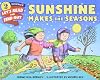
I was surprised to find out how many college students didn't understand where and why we had seasons. Maybe if they had read this book at a young age it would have been something that stuck with them better than however they had learned. I loved this book and the way it broke down the science behind what the sun does for us in a very easy to understand way. I really think third graders just learning about the solar system and sun would benefit from this book, it even guides you through some show more experiments that help the students actually see what they are learning in person. show less

We live in an aerial ocean, and this is a very well done attempt to describe it to young children. We learn that air is everywhere in our world, even in water, and it's there even though you can't see it or smell it. But it's not in outer space. The book includes two simple experiments to try.
This is one of the older Let's-Read-And-Find-Out science books by the founding author. We recently checked out from our library several stage 1 books from this series, with mixed results for our show more 4-yr-old. In general it seemed she wasn't quite old enough. But this one, with the long drawn-out descriptions of the experiments, was somehow perfect and the most successful of the bunch. My daughter constantly tells me how air is all around us. She is fascinated. And, I've only read it to her twice. show less
This is one of the older Let's-Read-And-Find-Out science books by the founding author. We recently checked out from our library several stage 1 books from this series, with mixed results for our show more 4-yr-old. In general it seemed she wasn't quite old enough. But this one, with the long drawn-out descriptions of the experiments, was somehow perfect and the most successful of the bunch. My daughter constantly tells me how air is all around us. She is fascinated. And, I've only read it to her twice. show less
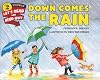
Oh what a delight this book is! It contains the sounds, the pretty pictures and the small pieces of information peppered here and there that makes the subject of Rain come alive and endear to the readers. The author has successfully delivered scientific information in a very colorful, simple and interesting manner. Another commendable aspect of the book is the ethnic tolerance that the author has portrayed in the book by the creation of four children of varying racial descent –redhead, show more curly dark brown, blonde and Asian black. That’s a fantastic example to set for the children! The illustrations are vivid, colourful and depict fun activities through which kids can learn about the topic! Word Art has been employed to emphasize on certain words, like while explaining gloomy appearance of stormy clouds, the word “Darkened” has been made black in bold. Such visual stimulation will boost a child’s mind. The book is a very helpful, beginner’s learning manual for kids till the age of 9. The experiments described can also be executed in a classroom environment .I would strongly recommend the book. show less
Lists
Awards


You May Also Like


Associated Authors
Statistics
- Works
- 152
- Also by
- 2
- Members
- 22,140
- Popularity
- #966
- Rating
- 4.0
- Reviews
- 185
- ISBNs
- 505
- Languages
- 4
- Favorited
- 3