

Brian Griffith
Author of Correcting Jesus: 2000 Years of Changing the Story
Works by Brian Griffith
Associated Works
Between Today and Yesterday 1 copy
Tagged
Common Knowledge
Members
Reviews
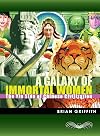
This extravagantly named book covers women’s position in China from prehistory to current times. While China is usually thought of by the west as a solid patriarchy, Griffith proves that it just isn’t so.
Excavations from prehistoric ages show no difference in the graves of men and women; the bodies are treated the same and buried the same way. Early rural villages show the same pattern. Female deities were as powerful and important (if not more so) than the male ones. It isn’t until show more the nomadic tribes invaded that we find clear male dominance and female suppression. And for the most part, even when China was ruled by a strong patriarchy, control was sparse. China is a huge country, with lots of people spread out thinly for the most part. The female shamans kept on being the village wise people, and women ran businesses as often as men did. The move to general female suppression was slow.
While we in the west tend to think of foot binding when we think about Chinese women, it was actually only practiced by the upper classes. Rural women and poor women needed to be able to work, and that required unbound feet. The Confucian system, that puts women on the bottom of the heap, was actually changed through the centuries to mean that- and changed in a lot of other ways, too.
Griffith takes us through each era in Chinese prehistory and history, first explaining the society of the time in general, and then women’s place in it. He tells us of the empresses, the concubines, the myths, the businesswomen, the peasants, and the goddesses. Even today, a goddess is at the heart of Chinese spirituality- Kwan Yin (Guanyin, and many other names), the goddess of mercy.
While not fast reading, it’s interesting reading. I was made aware of a whole side of Chinese history I had never seen before- despite taking Chinese history in college. I think this book will become a classic in Oriental studies. show less
Excavations from prehistoric ages show no difference in the graves of men and women; the bodies are treated the same and buried the same way. Early rural villages show the same pattern. Female deities were as powerful and important (if not more so) than the male ones. It isn’t until show more the nomadic tribes invaded that we find clear male dominance and female suppression. And for the most part, even when China was ruled by a strong patriarchy, control was sparse. China is a huge country, with lots of people spread out thinly for the most part. The female shamans kept on being the village wise people, and women ran businesses as often as men did. The move to general female suppression was slow.
While we in the west tend to think of foot binding when we think about Chinese women, it was actually only practiced by the upper classes. Rural women and poor women needed to be able to work, and that required unbound feet. The Confucian system, that puts women on the bottom of the heap, was actually changed through the centuries to mean that- and changed in a lot of other ways, too.
Griffith takes us through each era in Chinese prehistory and history, first explaining the society of the time in general, and then women’s place in it. He tells us of the empresses, the concubines, the myths, the businesswomen, the peasants, and the goddesses. Even today, a goddess is at the heart of Chinese spirituality- Kwan Yin (Guanyin, and many other names), the goddess of mercy.
While not fast reading, it’s interesting reading. I was made aware of a whole side of Chinese history I had never seen before- despite taking Chinese history in college. I think this book will become a classic in Oriental studies. show less
 This review was written for LibraryThing Early Reviewers.
Where to start, this isn't an easy book to review because it stirs up so many thoughts, and I don't want to get off on a tangent. What the book is, is a well presented, laboriously compiled exploration of our conflicting feelings toward and interactions with our cousins — i.e. all the other life forms in our little blue canoe.
I was already aware of a good part of what is presented in this book, accumulating the information over time, but seeing it all at once, compiled with extensive show more references, was a ... a rattling experience. To his credit, the author doesn't preach, but rather lays out all the conflicting information with a minimum of opining for the reader to ponder.
I thought a number of bits insightful, but am not including snippets here for fear of distracting potential readers. This is a book that needs to be absorbed cover to cover as a learning experience, and as a complement to other books such as Edward O. Wilson's The Diversity of Life.
My only comment is that it isn't surprising in the broad-brush. Earth's biosphere is a closed loop system with a no waste life-fueled-by-life model. The key to ongoing physical life within such is filling ecosystem niches for productivity, and achieving a balance in the paradoxical interactions. All life forms have some sense of umwelt, and in higher life forms, at least, that includes a bit of self-aggrandizement ;-) show less
I was already aware of a good part of what is presented in this book, accumulating the information over time, but seeing it all at once, compiled with extensive show more references, was a ... a rattling experience. To his credit, the author doesn't preach, but rather lays out all the conflicting information with a minimum of opining for the reader to ponder.
I thought a number of bits insightful, but am not including snippets here for fear of distracting potential readers. This is a book that needs to be absorbed cover to cover as a learning experience, and as a complement to other books such as Edward O. Wilson's The Diversity of Life.
My only comment is that it isn't surprising in the broad-brush. Earth's biosphere is a closed loop system with a no waste life-fueled-by-life model. The key to ongoing physical life within such is filling ecosystem niches for productivity, and achieving a balance in the paradoxical interactions. All life forms have some sense of umwelt, and in higher life forms, at least, that includes a bit of self-aggrandizement ;-) show less
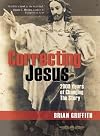
Jesus blew it. He expected too much. A number of his teachings were simply unworkable, and the church found it necessary to rework them over time.
Jesus thought we should treat women as equals, but we corrected that howler in a hurry. He thought maybe God would forgive all those who forgave others, but we quickly realized God isn’t that forgiving. There are many stipulations to His mercy. Jesus suggested we turn the other cheek, but we Americans fixed that one, too. We amassed the biggest show more military in history, to make sure we never have to play the pacifist like Jesus.
Jesus’s early followers practiced equality, but everybody in our capitalistic country knows what nonsense that is. That man in the gutter, hoping for a handout? He’s there because he’s too lazy to work.
Most of all, we laughed at the way Jesus practiced compassion. Better to throw divorcees, gays, blacks, Muslims, and especially those bleeding heart Liberals under the evangelistic steamroller. We have a conservative agenda to live up to.
This book is a little–no, maybe a lot–more serious than I’m letting on, but it manages to be as entertaining as it is thought-provoking. Highly recommended.
Exterminating Angel Press, © 2009, 326 pages
ISBN: 978-1-935259-02-2 show less
Jesus thought we should treat women as equals, but we corrected that howler in a hurry. He thought maybe God would forgive all those who forgave others, but we quickly realized God isn’t that forgiving. There are many stipulations to His mercy. Jesus suggested we turn the other cheek, but we Americans fixed that one, too. We amassed the biggest show more military in history, to make sure we never have to play the pacifist like Jesus.
Jesus’s early followers practiced equality, but everybody in our capitalistic country knows what nonsense that is. That man in the gutter, hoping for a handout? He’s there because he’s too lazy to work.
Most of all, we laughed at the way Jesus practiced compassion. Better to throw divorcees, gays, blacks, Muslims, and especially those bleeding heart Liberals under the evangelistic steamroller. We have a conservative agenda to live up to.
This book is a little–no, maybe a lot–more serious than I’m letting on, but it manages to be as entertaining as it is thought-provoking. Highly recommended.
Exterminating Angel Press, © 2009, 326 pages
ISBN: 978-1-935259-02-2 show less
There are many people who most earnestly declare that the Bible is the inerrant word of God. But how many of us wonder if the Bible has always been believed exactly as it is today. What about all the different translations? What about the fact that it wasn’t written in English—King James’ or any other form. And what if different churches at different times might not have agreed on exactly what the Bible said?
Brian Griffith takes his readers on a fascinating ride through history, show more showing how Christian stances on different topics have changed over the years, despite the underlying books of the Bible (and especially the New Testament) staying the same. The book covers topics as far apart as freedom and compassion, the role of women in society, and even attitudes to Judaism. Each chapter is well-designed around a particular issue, revealing how societies have mutated through history, how politics and power have changed the way the Bible is read, and how influences from disparate cultures have encouraged alternative interpretations.
Hot-button topics are included, alongside quieter discussion, in a book that’s consistently readable, well-researched and never dogmatic. The author doesn’t take sides in his subjects, but rather convincingly presents the dilemmae of opposing sides. He does a great job of inviting the reader to deduce at least something of the “original” meaning, and to question if today’s dogmatic fashions are true to the Word. I really enjoyed both the read and the challenge.
Disclosure: I’d dipped into this book before, but this time I read it through from beginning to end and loved it. show less
Brian Griffith takes his readers on a fascinating ride through history, show more showing how Christian stances on different topics have changed over the years, despite the underlying books of the Bible (and especially the New Testament) staying the same. The book covers topics as far apart as freedom and compassion, the role of women in society, and even attitudes to Judaism. Each chapter is well-designed around a particular issue, revealing how societies have mutated through history, how politics and power have changed the way the Bible is read, and how influences from disparate cultures have encouraged alternative interpretations.
Hot-button topics are included, alongside quieter discussion, in a book that’s consistently readable, well-researched and never dogmatic. The author doesn’t take sides in his subjects, but rather convincingly presents the dilemmae of opposing sides. He does a great job of inviting the reader to deduce at least something of the “original” meaning, and to question if today’s dogmatic fashions are true to the Word. I really enjoyed both the read and the challenge.
Disclosure: I’d dipped into this book before, but this time I read it through from beginning to end and loved it. show less
You May Also Like
Associated Authors
Statistics
- Works
- 6
- Also by
- 1
- Members
- 72
- Popularity
- #243,042
- Rating
- 4.1
- Reviews
- 12
- ISBNs
- 10
