

Uwe Schütte
Author of Kraftwerk: Future Music from Germany
About the Author
Works by Uwe Schütte
Thomas Bernhard 1 copy
Tagged
Common Knowledge
- Gender
- male
Members
Reviews

Listened to “Trans Europe Express” last night:
“Rendezvous on Champs-Elysees
Leave Paris in the morning with TEE
In Vienna, we sit in a late-night cafe
Straight connection, TEE"
Just doesn't cut it like this:
"Rendez-vous auf den Champs Elysees
Verlass Paris am Morgen mit dem TEE
In Wien sitzen wir I'm Nachtcafe
Direkt Verbindung TEE”
I remember their first Portuguese appearance so well in Lisbon at Coliseu dos Recreios in 2004, it was a joy to behold. Over the following days, myself and show more some of my geeky devoted friends who had already perfected the robotic stances and movements added the 'oleaginous' smile and were busy freaking out our mates at work by turning it on (I know, we were shallow back then...I’m still shallow now). But we really did love the music. The first German I committed to memory was "Vor uns liegt ein weites Tal, Die sonne scheint mit glitzerstrahl". They had it all, cutting edge, image and much of the time they were off the beaten track so making the journey much more personal.
You know what shone through Kraftwerk’s music back then? There was a sentiment in there that the future was going to be fantastic. In amongst all the magical music and the sublime melodies, and despite the occasional dystopian moment there was (is?) a wonderful humanity and a sense that what was coming was much better than the past. Compare that to the stuff we’re being subjected to now, where it’s all about donkey torture and shitty breakups. 4 chords on repeat mostly!!! What did they have that was new? Easy: The pioneering electronic instrumentation paradoxically pumping out wonderful melodies and incredibly danceable rhythms. The sly humour, the po faced banality & the ambiguous fascination with technology. The meticulous cultivation of image & graphics. The highly mannered stage presentation when almost every else was doing the opposite. Still recall how shocking their heavy bass driven live sound was in the 80’s especially for the Gary Numan fans that weren’t familiar with dub soundclash. Kraftwerk mainly reflected on and channelled the German character and society which they grew out of, still overshadowed by the fallout from the war. There are fundamental attitudes to work, authority, standards and lifestyle that are particularly German and Kraftwerk tapped that, but also looked at it from an alternative perspective that grew in the younger generation like mine.
In the 80S I bought the album “Ralf and Florian” on the strength of the completely off kilter black and white cover. I had no money either, and it was a weird spontaneous buy. I can honestly say it changed my life. Had no idea that such exquisite beauty could be found on a piece of vinyl and so I spent the rest of my life trying to find it. Had some success and a lot of failures. The pursuit rolls on. show less
“Rendezvous on Champs-Elysees
Leave Paris in the morning with TEE
In Vienna, we sit in a late-night cafe
Straight connection, TEE"
Just doesn't cut it like this:
"Rendez-vous auf den Champs Elysees
Verlass Paris am Morgen mit dem TEE
In Wien sitzen wir I'm Nachtcafe
Direkt Verbindung TEE”
I remember their first Portuguese appearance so well in Lisbon at Coliseu dos Recreios in 2004, it was a joy to behold. Over the following days, myself and show more some of my geeky devoted friends who had already perfected the robotic stances and movements added the 'oleaginous' smile and were busy freaking out our mates at work by turning it on (I know, we were shallow back then...I’m still shallow now). But we really did love the music. The first German I committed to memory was "Vor uns liegt ein weites Tal, Die sonne scheint mit glitzerstrahl". They had it all, cutting edge, image and much of the time they were off the beaten track so making the journey much more personal.
You know what shone through Kraftwerk’s music back then? There was a sentiment in there that the future was going to be fantastic. In amongst all the magical music and the sublime melodies, and despite the occasional dystopian moment there was (is?) a wonderful humanity and a sense that what was coming was much better than the past. Compare that to the stuff we’re being subjected to now, where it’s all about donkey torture and shitty breakups. 4 chords on repeat mostly!!! What did they have that was new? Easy: The pioneering electronic instrumentation paradoxically pumping out wonderful melodies and incredibly danceable rhythms. The sly humour, the po faced banality & the ambiguous fascination with technology. The meticulous cultivation of image & graphics. The highly mannered stage presentation when almost every else was doing the opposite. Still recall how shocking their heavy bass driven live sound was in the 80’s especially for the Gary Numan fans that weren’t familiar with dub soundclash. Kraftwerk mainly reflected on and channelled the German character and society which they grew out of, still overshadowed by the fallout from the war. There are fundamental attitudes to work, authority, standards and lifestyle that are particularly German and Kraftwerk tapped that, but also looked at it from an alternative perspective that grew in the younger generation like mine.
In the 80S I bought the album “Ralf and Florian” on the strength of the completely off kilter black and white cover. I had no money either, and it was a weird spontaneous buy. I can honestly say it changed my life. Had no idea that such exquisite beauty could be found on a piece of vinyl and so I spent the rest of my life trying to find it. Had some success and a lot of failures. The pursuit rolls on. show less
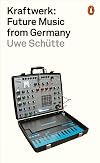
Uwe Schutte's account of Kraftwerk and its influence has the advantage of coming from a native German who understands fully the cultural context in which the 'band' or rather the performance art group emerged in the 1970s.
I even forgave him the standard and rather silly Brexit comment which is 'de rigeur' now from miserabilist academics (and which usually loses at least one star from a rating) and his evident dislike of Rammstein who I still think are preferable all things considered.
But show more these prejudices aside, and the evident fact that he is a thorough fan boy, I cannot think of a better guide to the phenomenon, its origins, its cultural context, its achievement and its influence. The book is not just about music but about culture in its broadest sense and its sociology.
Kraftwerk is interesting (before we even get to the music) as an expression of the rather spoiled upper middle class youth of prosperous North-Rhine Westphalia, centred on Dusseldorf, whose Europeanism is presented as as logical as it is illogical for the English working classes.
Indeed, I recommend the book to any British Leaver as an exercise in understanding a mind-set so utterly alien to the British outside London and the university towns that it may as well be that of Shanghai or California. This is a Germany closer to France and Benelux than Berlin.
The work of Kraftwerk seems to go through three broad phases. I made the effort to listen to every album (as we used to call them) in sequence and in German versions to get a feel for this. Schutte provides a good background to each although more as critic than as musicologist.
The first is an experimental phase in which Hutter and Schneider produce interesting but not particularly good prog rock. Kraftwerk has refused to reissue these three first albums so far which is a shame because their experimentation does give important insights into their creative drives.
The second is the classic period of 'robot pop' from 1974 to 1981, arguably 1986 (Electric Cafe), although, as a non-cyclist (of which more in a moment), the later 'Tour de France Soundtracks' (2003) must count as the most boring concept album (bar a track or two) in musical history.
Still, few people have not heard and enjoyed tracks from 'Autobahn' (1974), 'Radio-activitat' (1975), 'Trans Europa Express' (1977), 'Die Mensch-Machine' (1978) or 'Computerwelt' (1981) or failed to see the lads doing robotic movements in identical suits.
The third phase is an almost cultic semi-reclusive phase belied by their constant touring where the creativity seems to be no more than a constant reworking of mostly old material in a nerdy, almost autistic approach, to their own history.
Schutte rightly considers the band to be more an art performance operation (I would say, a typically German small technical business) by this stage. This is quite consistent with their roots in the late 1960s and early 1970s Dusseldorf art scene.
Personally, I am in two minds about this. The constant refinement of an old body of work with a few new 'bits' actually works well by the time it is collected as '3-D The Catalogue' (2017) and relatively small groups of people clearly got a buzz out of the real world performances.
On the other hand, constant refinement of the past - the retro in their retro-futurism - does seem like an evolutionary dead end. Since the late 1980s, they may have been a darling of the art world but of a conceptualist art world that also seemed to be rapidly going up its own orifices.
The irony, of course, of all this is that Kraftwerk seems not to be able to decide which real world it is in. It does not exploit the contemporary transmission of the digital so much as take the digital to only semi-cultic fans constantly refined only for its followers in closed spaces.
The actual performance now looks quite old-fashioned. Middle aged men in silly costumes standing stock still working flat electronic keyboards and relying on admittedly increasingly sophisticated audio-visual equipment. Its repetition must be an acquired taste.
Nevertheless, no one can take away from them their influence. Although similar electronic work was inevitable simply because that is what the technology predicted and you have the likes of Joe Meek and Detroit Techno to look to, Kraftwerk distilled it for a mass audience early and powerfully.
The constant refinement of their work is a response to the constant refinement of the increasingly extremely expensive equipment they deploy. Given their other interests, ageing and touring (and the 'small business' nature of the band), it is no surprise that new ideas die off quite quickly.
Nothing comes out of nothing, of course. The Dusseldorf art and musical world was the world of Fluxus and of Stockhausen but also of a sleek industrialisation that could reflect with understanding on noise as music, an aesthetic that went back Luigi Russolo and Italian Futurism.
Indeed, Schutte is very good at describing the emergence of Kraftwerk as an aesthetic of retro-futurism that was distinctively European and which we would see a little later in the quasi-political aesthetic of Laibach.
This retro-futuristic ethic (as Schutte describes it) leaps back into the past before the horrors of mid-century. It re-boots culture as if the future of the past had become our present. Kraftwerk drop the violence of futurism to emphasise modernity and speed - cars, trains, cycles.
This got them into an interesting little pickle with 'Radioactivity' since it was initially a very inter-war positive view of nuclear energy that they hastily had to redraft to meet the expectations of their cult members as the young German middle classes turned against the technology.
The episode is trivial but it suggests a certain lack of philosophical authenticity in the 'business'. It is of its class, its location and its market. It seems to have no central core. It is hollow like much of its class and like the robotic humanity that its music consciously represented.
It could be said to be 'music for music's sake' which draws us to the personalities of the two founders of the group, close friends in their youth. Unfortunately, the book is not much of an in-depth biography. Their personal reclusiveness is preserved. Do they have sex lives? Are they having a laugh?
Schutte notes that it is probable that their public personae may have been influenced by the British artists Gilbert & George whose artworks are part of a package that includes the presentation of themselves to the public along consistent life-long lines.
There is, of course, both genius and hollowness in this. The question for the public is always just how much such 'models' are true to themselves (whoever they may be) and how much are they mere shadows created to hide themselves or because there are no selves there.
For those of us who clearly have strong selves, we can treat Ralf & Florian and Gilbert & George as peculiar entertainments, as arch manipulators or as insights into peculiar minds without ever being entirely clear which is the most appropriate response.
The best approach might have be to separate personae and work but Kraftwerk (and Gilbert & George) deliberately do not permit this. They exist before our eyes solely through carefully managed communications and imagery.
Perhaps an insight into Kraftwerk may come from the obsessive take-up of cycling (speed again) by the two principals which led to the interesting if dull (if you are not a cyclist) 'Tour de France'. Obsessive cycling is almost a personality trait, dictated by biochemical factors over time.
As to their place in popular music history, although Schutte may be talking this up a bit in his book, it is assured insofar (as he rightly points out) Kraftwerk finally broke out of the Anglo-Saxon rock trap derived from African-American music and created something authentically European.
European techno-pop has different roots (in the avant-garde of European classical music) and, as these things do, it moved across to become influential in American black music, perhaps subliminally sick of whites appropriating their roots and ready to appropriate the music of remorseful Aryans.
The book may not tell us everything nor may it be the last word on the matter but as a readable popular Penguin paperback, it is stimulating and informative. There is lots of meaty detail to back up assertions and it will be of interest (I believe) even to those not wholly enamoured of electro-pop. show less
I even forgave him the standard and rather silly Brexit comment which is 'de rigeur' now from miserabilist academics (and which usually loses at least one star from a rating) and his evident dislike of Rammstein who I still think are preferable all things considered.
But show more these prejudices aside, and the evident fact that he is a thorough fan boy, I cannot think of a better guide to the phenomenon, its origins, its cultural context, its achievement and its influence. The book is not just about music but about culture in its broadest sense and its sociology.
Kraftwerk is interesting (before we even get to the music) as an expression of the rather spoiled upper middle class youth of prosperous North-Rhine Westphalia, centred on Dusseldorf, whose Europeanism is presented as as logical as it is illogical for the English working classes.
Indeed, I recommend the book to any British Leaver as an exercise in understanding a mind-set so utterly alien to the British outside London and the university towns that it may as well be that of Shanghai or California. This is a Germany closer to France and Benelux than Berlin.
The work of Kraftwerk seems to go through three broad phases. I made the effort to listen to every album (as we used to call them) in sequence and in German versions to get a feel for this. Schutte provides a good background to each although more as critic than as musicologist.
The first is an experimental phase in which Hutter and Schneider produce interesting but not particularly good prog rock. Kraftwerk has refused to reissue these three first albums so far which is a shame because their experimentation does give important insights into their creative drives.
The second is the classic period of 'robot pop' from 1974 to 1981, arguably 1986 (Electric Cafe), although, as a non-cyclist (of which more in a moment), the later 'Tour de France Soundtracks' (2003) must count as the most boring concept album (bar a track or two) in musical history.
Still, few people have not heard and enjoyed tracks from 'Autobahn' (1974), 'Radio-activitat' (1975), 'Trans Europa Express' (1977), 'Die Mensch-Machine' (1978) or 'Computerwelt' (1981) or failed to see the lads doing robotic movements in identical suits.
The third phase is an almost cultic semi-reclusive phase belied by their constant touring where the creativity seems to be no more than a constant reworking of mostly old material in a nerdy, almost autistic approach, to their own history.
Schutte rightly considers the band to be more an art performance operation (I would say, a typically German small technical business) by this stage. This is quite consistent with their roots in the late 1960s and early 1970s Dusseldorf art scene.
Personally, I am in two minds about this. The constant refinement of an old body of work with a few new 'bits' actually works well by the time it is collected as '3-D The Catalogue' (2017) and relatively small groups of people clearly got a buzz out of the real world performances.
On the other hand, constant refinement of the past - the retro in their retro-futurism - does seem like an evolutionary dead end. Since the late 1980s, they may have been a darling of the art world but of a conceptualist art world that also seemed to be rapidly going up its own orifices.
The irony, of course, of all this is that Kraftwerk seems not to be able to decide which real world it is in. It does not exploit the contemporary transmission of the digital so much as take the digital to only semi-cultic fans constantly refined only for its followers in closed spaces.
The actual performance now looks quite old-fashioned. Middle aged men in silly costumes standing stock still working flat electronic keyboards and relying on admittedly increasingly sophisticated audio-visual equipment. Its repetition must be an acquired taste.
Nevertheless, no one can take away from them their influence. Although similar electronic work was inevitable simply because that is what the technology predicted and you have the likes of Joe Meek and Detroit Techno to look to, Kraftwerk distilled it for a mass audience early and powerfully.
The constant refinement of their work is a response to the constant refinement of the increasingly extremely expensive equipment they deploy. Given their other interests, ageing and touring (and the 'small business' nature of the band), it is no surprise that new ideas die off quite quickly.
Nothing comes out of nothing, of course. The Dusseldorf art and musical world was the world of Fluxus and of Stockhausen but also of a sleek industrialisation that could reflect with understanding on noise as music, an aesthetic that went back Luigi Russolo and Italian Futurism.
Indeed, Schutte is very good at describing the emergence of Kraftwerk as an aesthetic of retro-futurism that was distinctively European and which we would see a little later in the quasi-political aesthetic of Laibach.
This retro-futuristic ethic (as Schutte describes it) leaps back into the past before the horrors of mid-century. It re-boots culture as if the future of the past had become our present. Kraftwerk drop the violence of futurism to emphasise modernity and speed - cars, trains, cycles.
This got them into an interesting little pickle with 'Radioactivity' since it was initially a very inter-war positive view of nuclear energy that they hastily had to redraft to meet the expectations of their cult members as the young German middle classes turned against the technology.
The episode is trivial but it suggests a certain lack of philosophical authenticity in the 'business'. It is of its class, its location and its market. It seems to have no central core. It is hollow like much of its class and like the robotic humanity that its music consciously represented.
It could be said to be 'music for music's sake' which draws us to the personalities of the two founders of the group, close friends in their youth. Unfortunately, the book is not much of an in-depth biography. Their personal reclusiveness is preserved. Do they have sex lives? Are they having a laugh?
Schutte notes that it is probable that their public personae may have been influenced by the British artists Gilbert & George whose artworks are part of a package that includes the presentation of themselves to the public along consistent life-long lines.
There is, of course, both genius and hollowness in this. The question for the public is always just how much such 'models' are true to themselves (whoever they may be) and how much are they mere shadows created to hide themselves or because there are no selves there.
For those of us who clearly have strong selves, we can treat Ralf & Florian and Gilbert & George as peculiar entertainments, as arch manipulators or as insights into peculiar minds without ever being entirely clear which is the most appropriate response.
The best approach might have be to separate personae and work but Kraftwerk (and Gilbert & George) deliberately do not permit this. They exist before our eyes solely through carefully managed communications and imagery.
Perhaps an insight into Kraftwerk may come from the obsessive take-up of cycling (speed again) by the two principals which led to the interesting if dull (if you are not a cyclist) 'Tour de France'. Obsessive cycling is almost a personality trait, dictated by biochemical factors over time.
As to their place in popular music history, although Schutte may be talking this up a bit in his book, it is assured insofar (as he rightly points out) Kraftwerk finally broke out of the Anglo-Saxon rock trap derived from African-American music and created something authentically European.
European techno-pop has different roots (in the avant-garde of European classical music) and, as these things do, it moved across to become influential in American black music, perhaps subliminally sick of whites appropriating their roots and ready to appropriate the music of remorseful Aryans.
The book may not tell us everything nor may it be the last word on the matter but as a readable popular Penguin paperback, it is stimulating and informative. There is lots of meaty detail to back up assertions and it will be of interest (I believe) even to those not wholly enamoured of electro-pop. show less

Interesting book provides an analysis of the music, with small mentions of Schneider's shyness at a concert, Bowie's playing of Radio-Activity before his concert tours in 1976, Kraftwerk joining Japanese concert organised by Sakamoto as part of the campaign to stop for nuclear power (but what has the author got against Rammstein?!)
The group faced struggles with identity, Nazi history, xenophobia in America, and producing new a music genre, which the author compares to Andy Warhol's art and show more factory.
I enjoyed learning about the space connection: Wernher Von Braun "proposed the utopian idea of setting up a permanent space station orbiting Earth as a basis for experiments .", and how their 2018 concert was linked live to astronaut on the ISS during the song Spacelab.
The author discusses historic automatons made to make music: Jacques de Vaucanson, Pierre and Henri-Louis Jaquet-Droz, (Daft Punk), Les Robots Music.
He mentions Kraftwerk's: admiration of the film Metropolis film, the Children's TV show Robbi, Tobbi und das Fliewatüüt.
How the band influenced Ladytron, Client, and Craftwife. He compares Sex Object (song) to Giorgio Moroder's I feel love.
He describes how the band reproduced sounds breathing, anvils, trains, cars, etc
Bauhaus influence on artwork, particularly Oskar Schlemmer Bauhaustreppe, and eventually the typeface used on album cover
Kraftwerk influenced by Peter Thomas orchestra's theme music to the German science fiction TV show Raumpatrouille Orion (1966), and their synchronization of visuals and music, use of the electronic flute, how the music reflects everyday sounds in a way like Smetana's Vlatava, and how they incorporated the GB Team cyclists cycling around the Manchester Velodrome during their performance there in 2009.
He described how the band transformed into artists, performing at the Tate and MoMA, and appreciated Emil Schult comics, the artists Gilbert and George, and produced Kraftwerk 3-D catalogue Munich exhibition 2011.
Kraftwerk 's principal of minimalism and privacy, Ralph Hütter's reservations about the internet as a communication tool and his known scorn for social media: "I am not a fan of the internet. I think it is overrated. Intelligent information is still intelligent information and an overflow of nonsense does not really help. In German, it's called Datenmüll: data rubbish
The autor also talks of how Bowie appreciated their music and plugged them on his Isolar tour. show less
The group faced struggles with identity, Nazi history, xenophobia in America, and producing new a music genre, which the author compares to Andy Warhol's art and show more factory.
I enjoyed learning about the space connection: Wernher Von Braun "proposed the utopian idea of setting up a permanent space station orbiting Earth as a basis for experiments .", and how their 2018 concert was linked live to astronaut on the ISS during the song Spacelab.
The author discusses historic automatons made to make music: Jacques de Vaucanson, Pierre and Henri-Louis Jaquet-Droz, (Daft Punk), Les Robots Music.
He mentions Kraftwerk's: admiration of the film Metropolis film, the Children's TV show Robbi, Tobbi und das Fliewatüüt.
How the band influenced Ladytron, Client, and Craftwife. He compares Sex Object (song) to Giorgio Moroder's I feel love.
He describes how the band reproduced sounds breathing, anvils, trains, cars, etc
Bauhaus influence on artwork, particularly Oskar Schlemmer Bauhaustreppe, and eventually the typeface used on album cover
Kraftwerk influenced by Peter Thomas orchestra's theme music to the German science fiction TV show Raumpatrouille Orion (1966), and their synchronization of visuals and music, use of the electronic flute, how the music reflects everyday sounds in a way like Smetana's Vlatava, and how they incorporated the GB Team cyclists cycling around the Manchester Velodrome during their performance there in 2009.
He described how the band transformed into artists, performing at the Tate and MoMA, and appreciated Emil Schult comics, the artists Gilbert and George, and produced Kraftwerk 3-D catalogue Munich exhibition 2011.
Kraftwerk 's principal of minimalism and privacy, Ralph Hütter's reservations about the internet as a communication tool and his known scorn for social media: "I am not a fan of the internet. I think it is overrated. Intelligent information is still intelligent information and an overflow of nonsense does not really help. In German, it's called Datenmüll: data rubbish
The autor also talks of how Bowie appreciated their music and plugged them on his Isolar tour. show less
It often feels more like a book about Schütte's artistic tastes rather than insights into the band.
You May Also Like
Associated Authors
Statistics
- Works
- 22
- Members
- 183
- Popularity
- #118,258
- Rating
- 3.6
- Reviews
- 4
- ISBNs
- 37
- Languages
- 1