
William Scott Wilson
Author of The Lone Samurai: The Life of Miyamoto Musashi
About the Author
William Scott Wilson was born in 1944 and grew up in Fort Lauderdale, Florida. As an undergraduate student at Dartmouth College in 1966, he was invited by a friend to join a three-month kayak trip up the coast of Japan from Shimonoseki to Tokyo. This eye-opening journey, beautifully documented in show more National Geographic magazine, spurred Wilson's fascination with the culture and history of Japan show less
Works by William Scott Wilson
The Illustrated Book of Japanese Haiku: A Journey through the Seasons with Japan's Best-Loved Poets (2024) — Compiler — 4 copies
Associated Works
The Unfettered Mind: Writings of the Zen Master to the Sword Master (The Way of the Warrior Series) (1601) — Translator, some editions — 630 copies, 11 reviews
The Life-Giving Sword: The Secret Teachings From the House of the Shogun (The Way of the Warrior Series) (2003) — Translator, some editions — 166 copies, 1 review
Strange Tales from Japan: 99 Chilling Stories of Yokai, Ghosts, Demons, and the Supernatural (2021) — Translator, some editions — 147 copies, 2 reviews
The Demon's Sermon on the Martial Arts and Other Tales (2012) — Translator, some editions — 42 copies, 1 review
Master of the Three Ways: Reflections of a Chinese Sage on Living a Satisfying Life (2012) — Translator — 21 copies
The Dream of the Cucumber — Translator, some editions — 1 copy
The Mysterious Technique of the Cat — Translator, some editions — 1 copy
Meeting of the Gods of Poverty in a Dream — Translator, some editions — 1 copy
The Ghost at the Old Temple — Translator, some editions — 1 copy
The Skills of the Heron and the Crow — Translator, some editions — 1 copy
The Greatest Joys of the Cicada and Its Cast-off Shell — Translator, some editions — 1 copy
The Toad's Way of the Gods — Translator, some editions — 1 copy
The Centipede Questions the Snake — Translator, some editions — 1 copy
The Seagull and the Mayfly Discuss the Tao — Translator, some editions — 1 copy
The Owl's Understanding — Translator, some editions — 1 copy
Transformation of the Sparrow and the Butterfly — Translator, some editions — 1 copy
Profit and Loss of the Bulbul and the Wren — Translator, some editions — 1 copy
Tagged
Common Knowledge
- Canonical name
- Wilson, William Scott
- Birthdate
- 1944-02-21
- Gender
- male
- Education
- Dartmouth College (BA)
Monterey Institute of Foreign Studies (BA)
University of Washington (1979|MA) - Occupations
- translator (Japanese - English)
consulate specialist - Organizations
- Consulate General of Japan in Seattle
- Nationality
- USA
- Birthplace
- Nashville, Tennessee, USA
- Places of residence
- Nashville, Tennessee, USA
Fort Lauderdale, Florida, USA (grew up)
Miami, Florida, USA - Associated Place (for map)
- Florida, USA
Members
Reviews
(I actually listened to the audiobook version, read by Brian Nishii - he is so good! His Japanese and Chinese pronunciations are perfect, and his English is melodious).
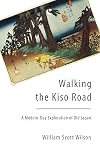
This is a wonderful book. Unlike many a Japan travel memoir written in English this is not couched as some kind of 'discovering myself in the mysterious and quirky land of Japan'. Rather it is written by someone who has visited Japan, and specifically this part of Japan, many times over the years. While peppered with show more quotations and the occasional deep thoughts about walking, travel and self, it is actually a mildly humorous, very entertaining travelogue of a walk through part of Japan that has deliberately retained many traditional features surrounded by natural beauty. We follow Wilson as he makes new friends and connects with old ones while walking most of the Kiso Road (occasionally blisters got the best of him). Whether you love Japan, or just like to share interesting travel stories, this is a book worth spending time with. show less
This is a wonderful book. Unlike many a Japan travel memoir written in English this is not couched as some kind of 'discovering myself in the mysterious and quirky land of Japan'. Rather it is written by someone who has visited Japan, and specifically this part of Japan, many times over the years. While peppered with show more quotations and the occasional deep thoughts about walking, travel and self, it is actually a mildly humorous, very entertaining travelogue of a walk through part of Japan that has deliberately retained many traditional features surrounded by natural beauty. We follow Wilson as he makes new friends and connects with old ones while walking most of the Kiso Road (occasionally blisters got the best of him). Whether you love Japan, or just like to share interesting travel stories, this is a book worth spending time with. show less
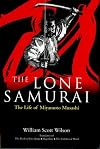
This was a beautiful book. I have not come across a biography written with such a respect to the person of interest without becoming cringe or little bit over the top, especially in the world of martial arts or war.
Musashi presented in this book is a man that even after all his deeds and written works remains a mystery (and as such great basis for various works, novels and movies about his life and deeds). We do know that he was dedicated to his martial arts, to the philosophy of it than he show more also applied in ordinary, non-martial-art-related, life. But we only see the surface,with occasional glimpse of his views and attitude toward life, very interesting views obviously built through his experiences (that unfortunately remain hidden and majorly unknown). We follow him from early days when he made his name by mercilessly defeating the challengers. Then we get to know the man who decides that actual killing of his challengers is to be avoided because it does not have a purpose, so he decides to leave a trace and create a school of his own. This is period of Musashi's life during which he starts playing more of a role of wise man (in positive, true, meaning, not mafia or wise cracker way). He shows that he knows a lot of things, from governing to arts, and is more than capable to make a very durable friendships. This is a side of him that I was not aware. It shows that he was truly a quite capable polymath. Again, how did he manage to acquire this much knowledge is left unknown.
He is practical man, and has a very clear approach to combat and martial arts - goal is defeating the enemy, means are not important, important thing is to finish the fight with the other side completely defeated and no longer a danger. I like how he considers opinions (prevalent in other martial art schools) that combat involves deception as silly. It is silly to Musashi because for him combat is use of all means, all weapons and techniques available to defeat the enemy. There is nothing to consider deception when in combat everything is allowed to win. His comments how one needs to train in order to win using what is available to him in ordinary life are also very interesting. If one is dedicated to life of the martial arts, then one is always ready to engage in combat. There is no need for additional rituals or preparation. If one is at his senses, he is ready for fight at any time. Also I like his approach to death in combat. While death in combat was looked through prism of Samurai being able to understand how every day, every new conflict brought with it, can also mean warrior's death, this became sort of a cult like approach, with even some works on warrior conduct starting to state how death is the way of the warrior (as they say when simplification takes place.....). For Musashi death was something that can happen (and thus is in line with the old views on death and combat) but goal in combat was not death in any way of the warrior but defeat and death of his opponents.
Parts on Musashi's phase as artist and later as a teacher are truly epic. I did not know he was such an accomplished painter.
It is very refreshing to read about the person that never put himself under the stage light (although fame and rank was something he was always after, and good advertisement was always welcome). This, considering the way various schools and techniques fought for their spot under the sun, was extraordinary then, but is exceptional today, in time when everyone has a need to share more than required with everyone else.
Excellent story of a very interesting man, who seems to have lived by the creed of do-and-learn, but was also more than capable to learn other skills, looking at them as if they are just another facets of martial arts gem, and thus worthy to know and master. If one just takes this idea from this book, it is incredible, it opens a lot of potential. Life is something we need to embrace, live fully and recognize that any skill, any bits of knowledge we come across, every experience, is a way to grow and become stronger. Important thing - do not just read about these things, live them. That is the only way to achieve greatness.
One of the best books I ever read.
Highly recommended. show less
Musashi presented in this book is a man that even after all his deeds and written works remains a mystery (and as such great basis for various works, novels and movies about his life and deeds). We do know that he was dedicated to his martial arts, to the philosophy of it than he show more also applied in ordinary, non-martial-art-related, life. But we only see the surface,with occasional glimpse of his views and attitude toward life, very interesting views obviously built through his experiences (that unfortunately remain hidden and majorly unknown). We follow him from early days when he made his name by mercilessly defeating the challengers. Then we get to know the man who decides that actual killing of his challengers is to be avoided because it does not have a purpose, so he decides to leave a trace and create a school of his own. This is period of Musashi's life during which he starts playing more of a role of wise man (in positive, true, meaning, not mafia or wise cracker way). He shows that he knows a lot of things, from governing to arts, and is more than capable to make a very durable friendships. This is a side of him that I was not aware. It shows that he was truly a quite capable polymath. Again, how did he manage to acquire this much knowledge is left unknown.
He is practical man, and has a very clear approach to combat and martial arts - goal is defeating the enemy, means are not important, important thing is to finish the fight with the other side completely defeated and no longer a danger. I like how he considers opinions (prevalent in other martial art schools) that combat involves deception as silly. It is silly to Musashi because for him combat is use of all means, all weapons and techniques available to defeat the enemy. There is nothing to consider deception when in combat everything is allowed to win. His comments how one needs to train in order to win using what is available to him in ordinary life are also very interesting. If one is dedicated to life of the martial arts, then one is always ready to engage in combat. There is no need for additional rituals or preparation. If one is at his senses, he is ready for fight at any time. Also I like his approach to death in combat. While death in combat was looked through prism of Samurai being able to understand how every day, every new conflict brought with it, can also mean warrior's death, this became sort of a cult like approach, with even some works on warrior conduct starting to state how death is the way of the warrior (as they say when simplification takes place.....). For Musashi death was something that can happen (and thus is in line with the old views on death and combat) but goal in combat was not death in any way of the warrior but defeat and death of his opponents.
Parts on Musashi's phase as artist and later as a teacher are truly epic. I did not know he was such an accomplished painter.
It is very refreshing to read about the person that never put himself under the stage light (although fame and rank was something he was always after, and good advertisement was always welcome). This, considering the way various schools and techniques fought for their spot under the sun, was extraordinary then, but is exceptional today, in time when everyone has a need to share more than required with everyone else.
Excellent story of a very interesting man, who seems to have lived by the creed of do-and-learn, but was also more than capable to learn other skills, looking at them as if they are just another facets of martial arts gem, and thus worthy to know and master. If one just takes this idea from this book, it is incredible, it opens a lot of potential. Life is something we need to embrace, live fully and recognize that any skill, any bits of knowledge we come across, every experience, is a way to grow and become stronger. Important thing - do not just read about these things, live them. That is the only way to achieve greatness.
One of the best books I ever read.
Highly recommended. show less
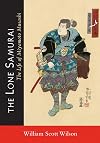
An excellent biography of Miyamoto Musashi, one of the most captivating figures in world history. Deeply informative, with a catalogue of interesting tidbits about the different media representations of the man in addition to a comprehensive overview of his life and works, this is not only THE biography to read, it might be the only one available in English? (I'm not sure, but from what I can tell, there aren't any others available to read.) This is very much worth your time if you like show more Japanese history, or happen to like Vagabond.
The only complaints that I have are probably related to the limited sources available, but occasionally the author would mention that Musashi had adopted sons, for example, and provide no other context or detail. Perhaps this information doesn't exist, but it would be nice to at least acknowledge that. show less
The only complaints that I have are probably related to the limited sources available, but occasionally the author would mention that Musashi had adopted sons, for example, and provide no other context or detail. Perhaps this information doesn't exist, but it would be nice to at least acknowledge that. show less
Miyamoto Musashi (1584-1645) was an iconoclastic Samurai Warrior Mystic whose martial exploits have acquired him enduring fame and immortality. Undefeated in over 65 singular combat bouts; veteran of two epic military battles and having annihilated several schools and traditions of martial arts, Musashi's legacy is captured in his sui generis paintings and the profound text: The Book of Five Rings.
Scott Wilson sifts fact from fiction to provide a comprehensive but also an equally realistic show more perspective of who Musashi was and how his world shaped him in this prescient biography. Relying primarily on fieldwork, avoiding hagiography, while pursuing contemporary sources Wilson weaves a very alluring but also realistic portrait of this much enigmatic armed mystic.
What is significant about The Lone Samurai is that Wilson also dedicates an entire section to understanding Musashi through his own works; the works of contemporaries who he influenced and what his own words reveal about him.
This is a highly sacred read. A tribute to a man whose immortality was assured well in his own life. A must read for all would-be leaders, strategists and men of destiny today. show less
Scott Wilson sifts fact from fiction to provide a comprehensive but also an equally realistic show more perspective of who Musashi was and how his world shaped him in this prescient biography. Relying primarily on fieldwork, avoiding hagiography, while pursuing contemporary sources Wilson weaves a very alluring but also realistic portrait of this much enigmatic armed mystic.
What is significant about The Lone Samurai is that Wilson also dedicates an entire section to understanding Musashi through his own works; the works of contemporaries who he influenced and what his own words reveal about him.
This is a highly sacred read. A tribute to a man whose immortality was assured well in his own life. A must read for all would-be leaders, strategists and men of destiny today. show less
Lists
Awards

You May Also Like


Associated Authors
Statistics
- Works
- 16
- Also by
- 21
- Members
- 655
- Popularity
- #38,516
- Rating
- 3.8
- Reviews
- 13
- ISBNs
- 27
- Languages
- 5
- Favorited
- 1