
Edward Bloor
Author of Tangerine
About the Author
Works by Edward Bloor
Ashford Extra ePaper 1 copy
Associated Works
Tagged
Common Knowledge
- Legal name
- Bloor, Edward William
- Birthdate
- 1950-10-12
- Gender
- male
- Education
- Fordham University (BA|1973)
- Occupations
- novelist
playwright - Nationality
- USA
- Birthplace
- Trenton, New Jersey, USA
- Places of residence
- Winter Garden, Florida, USA
- Associated Place (for map)
- USA
Members
Discussions
YA Historical fiction old radio wartime parallel universe? in Name that Book (June 2020)
Reviews
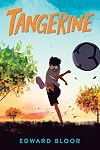
Tangerine, Florida seems like a strange and dangerous place to live. Constant lightning strikes in the afternoons, continuous underground muck fires, and resulting sinkholes plague the community. That's not all. Prized koi fish are mysteriously disappearing from the community pond. Swarms of mosquitos are so thick, trucks with choking pesticides spray daily as if on war patrol. Multiple houses need fumigating because of termites. Then the robberies begin...and the vandalism and graffiti. show more
Paul Fisher and his family have recently moved to this unstable area and all middle-schooler Paul wants to do is make the soccer team. Despite having a disability (he is legally blind), he is an excellent goalie. He just needs a chance. Since all eyes (pun totally intended) are on Paul's older brother, Eric, the high school football star destined for greatness, that chance seems slim. Everyone adores Eric so why does Paul fear his brother so much?
Tangerine stuns the reader with harsh realities usually missing from young adult novels. Publishers Weekly said "it breaks the mold" and I agree one hundred percent. Confessional: some scenes were so harsh I found myself catching my breath. show less
Paul Fisher and his family have recently moved to this unstable area and all middle-schooler Paul wants to do is make the soccer team. Despite having a disability (he is legally blind), he is an excellent goalie. He just needs a chance. Since all eyes (pun totally intended) are on Paul's older brother, Eric, the high school football star destined for greatness, that chance seems slim. Everyone adores Eric so why does Paul fear his brother so much?
Tangerine stuns the reader with harsh realities usually missing from young adult novels. Publishers Weekly said "it breaks the mold" and I agree one hundred percent. Confessional: some scenes were so harsh I found myself catching my breath. show less

I thought this was a great satire of the public education system in America, today. The story was full of intelligent humor, mocking many of the mandates of our educational system. I especially liked the incorporation of the ghost story...subtly hinting at how spooky the "demons" of the library and free-thought can be. Loved it! This story has much to offer to the reader who likes to dig into the deeper thoughts revealed in a good satire.

Martin Conway comes from a family filled with heroes and disgraces. His grandfather was a statesman who worked at the US Embassy in London during WWII. His father is an alcoholic who left his family. His sister is an overachieving Ivy League graduate. And Martin? Martin is stuck in between--floundering.
But during the summer after 7th grade, Martin meets a boy who will change his life forever. Jimmy Harker appears one night with a deceptively simple question: Will you help?
Where did this boy show more come from, with his strange accent and urgent request? Is he a dream? It's the most vivid dream Martin's ever had. And he meets Jimmy again and again--but how can his dreams be set in London during the Blitz? How can he see his own grandather, standing outside the Embassy? How can he wake up with a head full of people and facts and events that he certainly didn't know when he went to sleep--but which turn out to be verifiably real?
The people and the scenes Martin witnesses have a profound effect on him. They become almost more real to him than his waking companions. And he begins to believe that maybe he can help Jimmy. Or maybe that he must help Jimmy, precisely because all logic and reason argue against it.
This is a truly remarkable and deeply affecting novel about fathers and sons, heroes and scapegoats. About finding a way to live with faith and honor and integrity. And about having an answer to the question: What did you do to help? show less
But during the summer after 7th grade, Martin meets a boy who will change his life forever. Jimmy Harker appears one night with a deceptively simple question: Will you help?
Where did this boy show more come from, with his strange accent and urgent request? Is he a dream? It's the most vivid dream Martin's ever had. And he meets Jimmy again and again--but how can his dreams be set in London during the Blitz? How can he see his own grandather, standing outside the Embassy? How can he wake up with a head full of people and facts and events that he certainly didn't know when he went to sleep--but which turn out to be verifiably real?
The people and the scenes Martin witnesses have a profound effect on him. They become almost more real to him than his waking companions. And he begins to believe that maybe he can help Jimmy. Or maybe that he must help Jimmy, precisely because all logic and reason argue against it.
This is a truly remarkable and deeply affecting novel about fathers and sons, heroes and scapegoats. About finding a way to live with faith and honor and integrity. And about having an answer to the question: What did you do to help? show less
Generally, I'm not too keen on stories about white boys from rich families who wander onto the wrong side of the tracks and learn to kick it with their poor minority counterparts. However, I really liked this book. The seventh grade narrator, Paul, is supposedly legally blind, but he can see, both literally and figuratively, more than most people. He has this evil older brother who's a football star (I kept thinking this plot line was going to get super-natural, but it didn't). There's also show more a lot of good stuff in this book about the nature of cookie cutter housing developments or, rather, the lack of nature in cookie cutter housing developments. If lightning scares you and you're into the smell of citrus, I'd tell you to go for this book. show less
Lists
Awards


You May Also Like


Associated Authors
Statistics
- Works
- 9
- Also by
- 1
- Members
- 5,921
- Popularity
- #4,168
- Rating
- 3.6
- Reviews
- 183
- ISBNs
- 84
- Languages
- 1
- Favorited
- 3
