
Margaret Peterson Haddix
Author of Among the Hidden
About the Author
Margaret Peterson Haddix was born in Washington Court House, Ohio on April 9, 1964. She received bachelor's degrees in English/journalism, English/creative writing, and history from Miami University in 1986. Before becoming an author, she was a copy editor for The Journal-Gazette, a newspaper show more reporter for The Indianapolis News, an instructor at Danville Area Community College, and a freelance writer. Her first book, Running Out of Time, was published in 1995. She has written more than 30 books including Don't You Dare Read This, Mrs. Dunphrey, Just Ella, Turnabout, The Girl with 500 Middle Names, Because of Anya, and Into the Gauntlet. She also writes the Shadow Children series and the Missing series. She has won the International Reading Association Children's Book Award and several state Readers' Choice Awards. (Bowker Author Biography) show less
Series
Works by Margaret Peterson Haddix
Shadow Children Boxed Set: Among the Hidden, Among the Impostors, Among the Betrayed, and Among the Barons (2004) 309 copies, 4 reviews
The Shadow Children, the Complete Series: Among the Hidden; Among the Impostors; Among the Betrayed; Among the Barons; Among the Brave; Among the Enemy; Among the Free (2008) 215 copies, 14 reviews
The Complete Missing Collection: Found; Sent; Sabotaged; Torn; Caught; Risked; Revealed; Redeemed (The Missing) (2016) 26 copies, 1 review
The Complete Children of Exile Series: Children of Exile; Children of Refuge; Children of Jubilee (2019) 7 copies
Torn [MISSING BK04 TORN] [Hardcover] 3 copies
Os filhos das sombras 2 copies
The Missing, Books 1-4 2 copies
The Shadow Children, Books 1-3: Among the Hidden, Among the Impostors, and Among the Betrayed 2 copies, 1 review
Il mio peggior... amico 1 copy
Found 1 copy
Return of the Snowflakes 1 copy
Storm Watch 1 copy
בלב הסכנה 1 copy
Among the Hidden, Among the Impostors, Among the Betrayed, Among the Barrons, Among the Brave (Shadow Children Series, 1-5) (2004) 1 copy
{ [ RISKED (MISSING #06) ] } Haddix, Margaret Peterson ( AUTHOR ) Sep-02-2014 Paperback (2014) 1 copy
Children of Frost 1 copy
Associated Works
Twice Told: Original Stories Inspired by Original Artwork (2006) — Contributor — 123 copies, 4 reviews
Tagged
Common Knowledge
- Birthdate
- 1964-04-09
- Gender
- female
- Education
- Miami University of Ohio (BA - Creative Writing and Journalism)
- Occupations
- writer
author - Short biography
- Margaret Peterson Haddix (born April 9, 1964) is an American writer known best for the two children's series, Shadow Children (1998–2006) and The Missing (2008–2015). She also wrote the tenth volume in The 39 Clues, published by Scholastic.
Haddix grew up on a farm about halfway between two small towns: Washington Court House, Ohio, and Sabina, Ohio. Her family was predominantly farmers and she grew up in a family of voracious readers. Some of her favorite books growing up included E.L. Konigsburg books, Harriet the Spy, Anne of Green Gables, Louisa May Alcott’s Little Women, Anne Frank, Rebecca of Sunnybrook Farm, and The Little Princess.
She graduated from Miami University in Oxford, Ohio with degrees in English/journalism, English/Creative writing, and History. While in college, Haddix worked a series of jobs. She was an assistant cook at a 4-H camp, but almost every other job has been related to writing. During college, she worked on the school newspaper and had summer internships at newspapers in Urbana, Ohio; Charlotte, North Carolina; and Indianapolis, Indiana.
Haddix chose to pursue fiction writing after her husband, Doug, became a news reporter, because she did not want to be his employee. Her previous work as a reporter inspired her to write fiction. After documenting a wide variety of topics, she wanted to create her own plots and characters. Haddix experienced a long period of having her writing rejected by publishers before her first two books were accepted in 1995 and 1996. Her first book was Running Out of Time, published when Haddix was pregnant with her second child, and her first child was one and a half years old. Her second book, Don't You Dare Read This, Mrs. Dunphrey, followed shortly after. The Summer of Broken Things, written in 2018, is Haddix’s most recently published stand-alone book.
Haddix has written more than 30 books for children and teenagers, including Running Out of Time, Don't You Dare Read This, Mrs. Dunphrey, Leaving Fishers, Just Ella, Turnabout, Takeoffs and Landings, The Girl with 500 Middle Names, Because of Anya, Escape from Memory, Say What?, The House on the Gulf, Double Identity, Dexter the Tough, Uprising, Palace of Mirrors, Claim to Fame, The Always War, Game Changer, the Shadow Children series, and the Missing series. She also wrote Into the Gauntlet, book 10 in The 39 Clues series. Her books have made New York Times Best Seller lists and American Library Association (ALA) annual book lists and they have won the International Reading Association's Children's Book Award and more than a dozen state reader's choice awards.
The New York Times’ best-selling author currently lives in Columbus, Ohio with her husband, Doug, and their two children, Meredith and Connor.
Haddix has received the International Reading Association Children's Book Award, Champions league, some ALA listings on Best Books for Young Adults and Quick Picks for Reluctant Young Adult Readers, The National Kids Award, and readers' choice lists in more than 29 states. - Nationality
- USA
- Places of residence
- Columbus, Ohio, USA
- Associated Place (for map)
- Ohio, USA
Members
Discussions
Found: Juvenile fiction book where characters see their future selves in Name that Book (February 2025)
Found: Book I cannot remember for the life of me in Name that Book (November 2024)
Found: YA Fiction - Girl thinks it's 19th century, searching for medicine in Name that Book (July 2023)
Found: YA Fiction. Princess in Hiding. Plays Harp. 13 Adopted Princesses. in Name that Book (September 2021)
Fake Virtual War in Name that Book (April 2018)
sabatoged by Margret peter Haddix in Book talk (May 2011)
Three Unknowns in Name that Book (October 2010)
Reviews
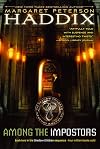
This series continues to surprise me. As the plot presents itself, Luke being sent to a boarding school under the fake name of Lee Grant and facing the loneliness, the complete change of his life, it seems fairly straight-forward. It seems predictable. It seems like nothing really extraordinary.
But dang, this little book is filled with 100+ surprises and plot twists that aren't over-the-top or fake. Thank goodness I've got the next with me because these books are also pretty addicting.
Loved show more the change in Luke's character, how he grew, how he learned, how he seized opportunities he would've shrunk away from in the first installment. I loved the constant homage to Jen, how everyone began making her out as some sort of martyr, and that she wasn't forgotten for even a moment. It was so sweet.
For such little books, these books pack a serious punch and are quite mature and serious, despite the targeted audience and that audience's usual sugar-coated fare. Loving it so much! show less
But dang, this little book is filled with 100+ surprises and plot twists that aren't over-the-top or fake. Thank goodness I've got the next with me because these books are also pretty addicting.
Loved show more the change in Luke's character, how he grew, how he learned, how he seized opportunities he would've shrunk away from in the first installment. I loved the constant homage to Jen, how everyone began making her out as some sort of martyr, and that she wasn't forgotten for even a moment. It was so sweet.
For such little books, these books pack a serious punch and are quite mature and serious, despite the targeted audience and that audience's usual sugar-coated fare. Loving it so much! show less

This is charmingly written, engaging, very cute capitalist apologia. The messages of the book are really mixed up. Truly horrible, indefensible, egregious things happen to the poor children in this book, their families, and their communities—but in the end it's all fine because they've moved to the middle class and a family of billionaires are their friends . No structural change to make sure horrible things aren't happening to every other poor community in the country/world is mentioned, show more and it seems like everyone thinks it's totally fine for billionaires to exist while poor mothers die in underfunded hospitals nearby (explicitly, this is the dichotomy). This probably started out from interesting thoughts about income stratification and automation, but its solutions were nowhere near what was necessary for the world it created. It suffers from a problem in trying to make everyone "nice" in a world where rich families stand blithely by while poor families suffer and are destroyed for their benefit—something that is not nice at all. show less

Twelve-year-old Zola thinks she has the perfect life. She thinks everyone does, now that it's 2193, and humanity has solved all its problems. Insta-Closets deliver new clothes every morning, Insta-Ovens deliver gourmet meals on demand, and virtual reality goggles let her have any adventure she wants, with friends from all over the world.
Then one day Zola finds a handwritten note in her Insta-Closet:
"If you want to see things as they really are, come find me."
What if Zola's wrong about show more everything--even the year? As she struggles to figure out who wrote the note, she discovers a printed book in her Insta-Closet called "The Jessie Keyser Story: How One Girl Escaped from Clifton Village". Zola wonders: Who is Jessie Keyser, and why does she look like her . . . and what else do they have in common? show less
Then one day Zola finds a handwritten note in her Insta-Closet:
"If you want to see things as they really are, come find me."
What if Zola's wrong about show more everything--even the year? As she struggles to figure out who wrote the note, she discovers a printed book in her Insta-Closet called "The Jessie Keyser Story: How One Girl Escaped from Clifton Village". Zola wonders: Who is Jessie Keyser, and why does she look like her . . . and what else do they have in common? show less

Because of a food shortage, the government has imposed a 2 child limit for families. Luke is a third child, and has spent his life staying home and being afraid of discovery. Fortunately his family are farmers. They always have plenty of food to eat even tho they are constantly worried about how they'll meet their tax payments. Also, in his younger years he could be outside as they were isolated from neighbors. This changes as the government uses eminent domain to take their woods, cuts it show more down, and builds a housing project.
I like that this story will give young readers a possible future that might get them to think about the consequences of how our current food production system is progressing into megafarms without concern for the environmental damage it is doing. It also includes a totalitarian government, a system with privileges for the elite, and the premise that the government doesn't plan well (building houses next to a hog farm?) or makes decisions that are inept (destroying 2nd rate food instead of feeding it to pigs to produce meat).
As an adventure story, the plot just didn't make it for me. show less
I like that this story will give young readers a possible future that might get them to think about the consequences of how our current food production system is progressing into megafarms without concern for the environmental damage it is doing. It also includes a totalitarian government, a system with privileges for the elite, and the premise that the government doesn't plan well (building houses next to a hog farm?) or makes decisions that are inept (destroying 2nd rate food instead of feeding it to pigs to produce meat).
As an adventure story, the plot just didn't make it for me. show less
Lists
Which house? (1)
Princess Tales (2)
Awards


You May Also Like


Associated Authors
Statistics
- Works
- 95
- Also by
- 8
- Members
- 57,141
- Popularity
- #257
- Rating
- 3.9
- Reviews
- 1,232
- ISBNs
- 858
- Languages
- 14
- Favorited
- 43

