
Jeanne DuPrau
Author of The City of Ember
About the Author
Image credit: Jeanne DuPrau en 2006
Series
Works by Jeanne DuPrau
Associated Works
Noisy Outlaws, Unfriendly Blobs, and Some Other Things . . .: That Aren't as Scary, Maybe, Depending on How You Feel Abo (2005) — Contributor — 695 copies, 13 reviews
Tagged
Common Knowledge
- Birthdate
- 1944-06-09
- Gender
- female
- Education
- Scripps College (B.A., English Literature)
- Occupations
- high school English teacher
technical writer (for Apple Computer)
editor (in educational publishing companies)
writer (freelance) - Agent
- Nancy Gallt
- Short biography
- Jeanne DuPrau (born 1944 in San Francisco, California) is an American writer and author of The New York Times bestseller *The City of Ember* and its companion *The People of Sparks*. She lives in Menlo Park, California, and drives a hybrid car that runs on a combination of gas and electricity.
- Nationality
- USA
- Birthplace
- San Francisco, California, USA
- Places of residence
- San Francisco, California, USA (birth)
Menlo Park, California, USA - Map Location
- California, USA
Members
Discussions
Found: YA Dystopian- kids leave underground society in Name that Book (January 2021)
Reviews

I actively disliked this book, which was surprising to me because I loved the first two Ember books. It's important to note, though, that while this is called the Third Book of Ember, it's actually a prequel with very little connection to Ember. I was a bit disappointed when I first realized that, but I still had high expectations for this book.
Boy, was I wrong. I found a large part of the book almost unbearable, because I couldn't stand the main character. Like the other Ember books, DuPrau show more has a message to get across here, but unlike the other ones, it doesn't make for a good story. Nickie wants to do something good for the world, so she's quick to accept the word of a stranger that it's necessary to root out sinners. This basically results in her becoming a big tattle-tale, despite herself doing things that she must realize she shouldn't, like secretly keeping a dog in her house. She's quick to accuse other people for very little reason, causing a lot of harm, and I really didn't enjoy reading about it.
Then there's the fact that all the different threads in the story don't really resolve into a satisfactory whole; it was more like one random disappointment after another. I can't resist including some SPOILERS here: the supposed terrorist in the woods turns out to be an albino bear (what?), the coded message that Nickie's father is sending from the top-secret mission that he's on turns out just to say what state he's in (what's the point?), and the mysterious flashes in the sky are really a way to see into parallel universes, which led to the discovery of extraterrestrial life and so intrigued the important people in Washington that they put off going to war with the terrorists (WTF?).
Rather than being left with a sense of satisfaction when everything was explained in the end, I was deeply disappointed. I felt that this story was much less than the sum of its parts. show less
Boy, was I wrong. I found a large part of the book almost unbearable, because I couldn't stand the main character. Like the other Ember books, DuPrau show more has a message to get across here, but unlike the other ones, it doesn't make for a good story. Nickie wants to do something good for the world, so she's quick to accept the word of a stranger that it's necessary to root out sinners. This basically results in her becoming a big tattle-tale, despite herself doing things that she must realize she shouldn't, like secretly keeping a dog in her house. She's quick to accuse other people for very little reason, causing a lot of harm, and I really didn't enjoy reading about it.
Then there's the fact that all the different threads in the story don't really resolve into a satisfactory whole; it was more like one random disappointment after another. I can't resist including some SPOILERS here: the supposed terrorist in the woods turns out to be an albino bear (what?), the coded message that Nickie's father is sending from the top-secret mission that he's on turns out just to say what state he's in (what's the point?), and the mysterious flashes in the sky are really a way to see into parallel universes, which led to the discovery of extraterrestrial life and so intrigued the important people in Washington that they put off going to war with the terrorists (WTF?).
Rather than being left with a sense of satisfaction when everything was explained in the end, I was deeply disappointed. I felt that this story was much less than the sum of its parts. show less
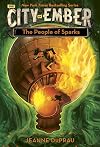
4.5 stars. This review is also available on my blog, Read Till Dawn.
This is the sequel to the New York Times bestselling dystopian The City of Ember, which I reviewed here (link goes to my blog). There are some inevitable spoilers from the first book, so read ahead at your own risk!
Where Ember was a story of setting and plot, this was a story of characters and relationships. The people of Sparks are reluctant to care for four hundred extra people out of their own reserves, and the people of show more Ember quickly become embittered about the "stinginess" of their unwilling hosts. The book is one long look at conflict: the small things that can spark big wars, and the devastating effects of human anger.
A few times in the book characters talk about the idea that the only way to stop bad events from escalating, is to return good for bad and convince your opponent to stop the cycle of retaliation. This was the idea that stuck with me most strongly when I first read the book many years ago, and it's the idea that once again hits me with the most force. It's a very important message, and one that everyone could take a moment to consider.
Lina and Doon play prominent roles in this book, which makes me happy because I love them. What I particularly love about them is that they don't let their relationship drama consume the story: in fact, I wouldn't even call it "drama." They go through a small rough patch in their friendship, but it doesn't consume the story. They've each got much bigger issues to deal with as Doon struggles to decide what to do/where his loyalties lie during the revolution, and Lina worries about her sick sister and finding a place to live away from Sparks. They spend most of the book apart from each other, both physically and emotionally, but there's none of that "oh no, we'll never be friends again" garbage that authors often throw in to add some tension.
On another note, it's fascinating to see the world a couple centuries after the cataclysmic events ended. People survive by scavenging goods from old deserted cities, the science of electricity long forgotten. It's like a primitive time period from our own past in many respects (the water pumps, the farming for survival, etc.), but it's also futuristic in the most fascinating and kind of depressing way. Roamers, who pick through ruins to find goods to trade for, drive trucks - that's right, trucks - pulled by horses or mules. One woman buys (via trading) an old sink top with hot and cold faucets, because she likes the looks of it and wants to use it as a candleholder.
It's hard to put this book into words, but it really is a gripping, fascinating, throught-provoking read about the future, the past, the nature of conflict, and the road to peace. If this sounds interesting to you, read The People of Sparks - I promise you won't be disappointed! show less
This is the sequel to the New York Times bestselling dystopian The City of Ember, which I reviewed here (link goes to my blog). There are some inevitable spoilers from the first book, so read ahead at your own risk!
Where Ember was a story of setting and plot, this was a story of characters and relationships. The people of Sparks are reluctant to care for four hundred extra people out of their own reserves, and the people of show more Ember quickly become embittered about the "stinginess" of their unwilling hosts. The book is one long look at conflict: the small things that can spark big wars, and the devastating effects of human anger.
A few times in the book characters talk about the idea that the only way to stop bad events from escalating, is to return good for bad and convince your opponent to stop the cycle of retaliation. This was the idea that stuck with me most strongly when I first read the book many years ago, and it's the idea that once again hits me with the most force. It's a very important message, and one that everyone could take a moment to consider.
Lina and Doon play prominent roles in this book, which makes me happy because I love them. What I particularly love about them is that they don't let their relationship drama consume the story: in fact, I wouldn't even call it "drama." They go through a small rough patch in their friendship, but it doesn't consume the story. They've each got much bigger issues to deal with as Doon struggles to decide what to do/where his loyalties lie during the revolution, and Lina worries about her sick sister and finding a place to live away from Sparks. They spend most of the book apart from each other, both physically and emotionally, but there's none of that "oh no, we'll never be friends again" garbage that authors often throw in to add some tension.
On another note, it's fascinating to see the world a couple centuries after the cataclysmic events ended. People survive by scavenging goods from old deserted cities, the science of electricity long forgotten. It's like a primitive time period from our own past in many respects (the water pumps, the farming for survival, etc.), but it's also futuristic in the most fascinating and kind of depressing way. Roamers, who pick through ruins to find goods to trade for, drive trucks - that's right, trucks - pulled by horses or mules. One woman buys (via trading) an old sink top with hot and cold faucets, because she likes the looks of it and wants to use it as a candleholder.
It's hard to put this book into words, but it really is a gripping, fascinating, throught-provoking read about the future, the past, the nature of conflict, and the road to peace. If this sounds interesting to you, read The People of Sparks - I promise you won't be disappointed! show less
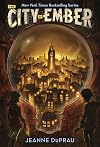
I'm tempted to attribute the dumbed down world building, logic flaws, and flat characters to the fact that this is written as children's literature, but I've read far too many excellent stories in that category to accept that children don't need or deserve better. Much of the ignorance of the people of Ember is explained at the end - that the adults who were chosen to populate that world were under strict orders to not pass on knowledge of the world before, but that just seems like a cop-out show more to me. Children ask questions, and their caregivers didn't have anyone preventing them from answering after they were dropped off in Ember. There was no satisfactory explanation for why the Builders demanded that their history be erased. In fact, it's nonsensical, if they expected that their descendants would need to emerge from Ember and re-integrate into the outside world some 200 years later. This is just one of the many logical flaws that kept me disengaged from the book. The characters and their relationships with one another had no depth. Lina feels very little grief for her grandmother, and forgets her death almost immediately. She seems to feel very little for her sister except concern when the child wanders off and is lost. When she refuses to leave Ember without her sister later, it seems borne of a sense of responsibility rather than any actual connection. She might as well have been refusing to leave without her only pair of shoes. I finished the story mostly because it was on audio and kept me company while doing some chores around the house, but if I had been actually reading the book, I probably would have put it down halfway through and not picked it up again. show less
The City of Ember by Jeanne Duprau is a delightful young adult read. The main appeal of the Duprau’s tale is the sense of mystery that pervades everything about her cleverly constructed world. In the tale, carefree and impetuous Lina Mayfleet, and her classmate, the more convicted and determined Doon Harrow, find themselves caught up in a centuries old mystery. In the process they become entangled in blackmarket dealings, political malfeasance, and the selfishness of humanity as their aged show more city begins to fail.
As a parent I really appreciated the value of truth and virtue presented by Duprau in the story. Through the book Duprau touches on the unbecoming responses of humans to an ominous future, covering the gambit from deluded activists, self-serving opportunists, and resigned gluttons. Interestingly, throughout all the plights and struggles against the baser human nature, there is a thread of hope and promise that is closely tied to virtue, and compassion. Traits that are clearly praised in the book are dedication, passion, thoughtfulness, and family ties.
If I were to over-analyze the book for its theological grounds I would say that it takes a rather hopeful agnostic approach to the existence of God and things of eternity. As a Christian I was a little worried that the ‘believers’ presented in the world would be used to disparage the undeniably similar Christian faith as some other authors like to do. As it turned out, the believers, while mistaken and perhaps self deceived into apathy toward their plight, were not ridiculed nor did were they presented as the worst of human nature in the face of slow impending doom. Despite seeming to quietly dismiss the self willed false-hope of the believers, Duprau consistently points to a hope beyond human invention, something tied to the creation, growth, and the progression of life.
I would heartily recommend this tale to any young reader as it is full of mystery, adventure, and virtue.
###
But, as a writer, I cannot help but to also critique the story. Please note the difference between critique and criticism. There are flaws and missteps in every novel. I like this story and it is in most ways a better work than I could produce. When I look for flaws, I’m not trying to disparage the author, but trying to better my own writing and nothing more. The following is my critical analysis of what Duprau, perhaps, could have done better and where the flaws in the book lie. SPOILER ALERT!
My biggest concern with ‘The City of Ember’ is that Duprau seems to have written herself out of her intended trilogy. The entire appeal of her story is in the world which she so thoughtfully developed. Her characters are decent, but not the most vivid I have read, and her narrative voice, while clean and uncluttered, is not a strength that would bring me back to a sequel in and of itself. To me the appeal of Ember is the mystery of the world; how it works, why it was made, who made it, and how it will survive. But by the end of the tale Duprau packages all of that up (rather satisfyingly) and puts it away. Where is there to go from here? I’m not sure, but the hints I got from the end of the book, and the sneak peak of the sequel don’t give me much hope for another world that could possible be as engaging as the City of Ember.
It’s hard to complain too much about a book written for young adults, but I will note that the occasional dues ex machina is employed to circumvent problems or move the plot along. Some that come to mind are, convenient black-outs, learning how to strike a match, learning of the word ‘Egress’ (which I can’t imagine anyone ever actually using as was done by the Builders), and Doon’s discovery of the E on the rock. Likewise, I like a little more symmetry and mirroring in my fiction and there were a few loose/dead ends that could have been better employed. I liked Lina’s bean sprout, and Doon’s moth, but the were ultimately very diffuse in their allegory and didn’t connect much with the plot.
The whole red herring with the secret store room in the pipeworks would have been more satisfying if it had been employed somehow as a mechanism for Doon and Lina’s escape once the truth was discovered. Another device not terribly well used was the death of Lina’s grandmother. In the immediate sense it was used to help break Lina’s ties to Ember, and both show Doon’s sensitive character and build the bond between him and Lina, but after that, it is nearly forgotten, which is odd for such a life changing event as the death of a caretaker and guardian.
There were a few places, where the action picked up, that I thought the author did some ‘head-hopping’, but over all the writing was very solid even if it lacked flare. While the characters were well developed the narrative voice felt reserved and the images of the characters in my mind were seldom as vivid as the feel of the city itself.
For a first novel ‘The City of Ember’ is very good. Like I said, I think Duprau’s strengths are in her world building and sense of mystery. Second to that comes plot, followed by character development, and finally narrative voice. If I were to advise Duprau on her next novel (for which it is already too late) I would suggest making the most of her strength in world building and working up a sense of mystery as the key hook to the story, and then to really focus on improving her narrative voice to give it more character and make it more engaging to the reader in and of itself. Overall the City of Ember is a great read, and an excellent first novel from Jeanne Duprau. show less
As a parent I really appreciated the value of truth and virtue presented by Duprau in the story. Through the book Duprau touches on the unbecoming responses of humans to an ominous future, covering the gambit from deluded activists, self-serving opportunists, and resigned gluttons. Interestingly, throughout all the plights and struggles against the baser human nature, there is a thread of hope and promise that is closely tied to virtue, and compassion. Traits that are clearly praised in the book are dedication, passion, thoughtfulness, and family ties.
If I were to over-analyze the book for its theological grounds I would say that it takes a rather hopeful agnostic approach to the existence of God and things of eternity. As a Christian I was a little worried that the ‘believers’ presented in the world would be used to disparage the undeniably similar Christian faith as some other authors like to do. As it turned out, the believers, while mistaken and perhaps self deceived into apathy toward their plight, were not ridiculed nor did were they presented as the worst of human nature in the face of slow impending doom. Despite seeming to quietly dismiss the self willed false-hope of the believers, Duprau consistently points to a hope beyond human invention, something tied to the creation, growth, and the progression of life.
I would heartily recommend this tale to any young reader as it is full of mystery, adventure, and virtue.
###
But, as a writer, I cannot help but to also critique the story. Please note the difference between critique and criticism. There are flaws and missteps in every novel. I like this story and it is in most ways a better work than I could produce. When I look for flaws, I’m not trying to disparage the author, but trying to better my own writing and nothing more. The following is my critical analysis of what Duprau, perhaps, could have done better and where the flaws in the book lie. SPOILER ALERT!
My biggest concern with ‘The City of Ember’ is that Duprau seems to have written herself out of her intended trilogy. The entire appeal of her story is in the world which she so thoughtfully developed. Her characters are decent, but not the most vivid I have read, and her narrative voice, while clean and uncluttered, is not a strength that would bring me back to a sequel in and of itself. To me the appeal of Ember is the mystery of the world; how it works, why it was made, who made it, and how it will survive. But by the end of the tale Duprau packages all of that up (rather satisfyingly) and puts it away. Where is there to go from here? I’m not sure, but the hints I got from the end of the book, and the sneak peak of the sequel don’t give me much hope for another world that could possible be as engaging as the City of Ember.
It’s hard to complain too much about a book written for young adults, but I will note that the occasional dues ex machina is employed to circumvent problems or move the plot along. Some that come to mind are, convenient black-outs, learning how to strike a match, learning of the word ‘Egress’ (which I can’t imagine anyone ever actually using as was done by the Builders), and Doon’s discovery of the E on the rock. Likewise, I like a little more symmetry and mirroring in my fiction and there were a few loose/dead ends that could have been better employed. I liked Lina’s bean sprout, and Doon’s moth, but the were ultimately very diffuse in their allegory and didn’t connect much with the plot.
The whole red herring with the secret store room in the pipeworks would have been more satisfying if it had been employed somehow as a mechanism for Doon and Lina’s escape once the truth was discovered. Another device not terribly well used was the death of Lina’s grandmother. In the immediate sense it was used to help break Lina’s ties to Ember, and both show Doon’s sensitive character and build the bond between him and Lina, but after that, it is nearly forgotten, which is odd for such a life changing event as the death of a caretaker and guardian.
There were a few places, where the action picked up, that I thought the author did some ‘head-hopping’, but over all the writing was very solid even if it lacked flare. While the characters were well developed the narrative voice felt reserved and the images of the characters in my mind were seldom as vivid as the feel of the city itself.
For a first novel ‘The City of Ember’ is very good. Like I said, I think Duprau’s strengths are in her world building and sense of mystery. Second to that comes plot, followed by character development, and finally narrative voice. If I were to advise Duprau on her next novel (for which it is already too late) I would suggest making the most of her strength in world building and working up a sense of mystery as the key hook to the story, and then to really focus on improving her narrative voice to give it more character and make it more engaging to the reader in and of itself. Overall the City of Ember is a great read, and an excellent first novel from Jeanne Duprau. show less
Lists
Awards


You May Also Like


Associated Authors
Statistics
- Works
- 20
- Also by
- 4
- Members
- 26,176
- Popularity
- #799
- Rating
- 3.7
- Reviews
- 730
- ISBNs
- 179
- Languages
- 12
- Favorited
- 16
