
Suzanne Collins (1) (1962–)
Author of The Hunger Games
For other authors named Suzanne Collins, see the disambiguation page.
About the Author
Suzanne Collins was born on August 10, 1962. She was born in Hartford, Connecticut and graduated from Indiana University with a double major in Drama and Telecommunications. Collins went on to receive an M.F.A. from New York University in dramatic writing. Since 1991, she has been a writer for show more children's television shows. She has worked on the staffs of several shows including Clarissa Explains it All, The Mystery Files of Shelby Woo, Little Bear and Oswald. She also co-wrote the Rankin/Bass Christmas special, Santa, Baby! and was the head writer for Scholastic Entertainment's Clifford's Puppy Days. Her books include When Charlie McButton Lost Power, The Underland Chronicles, and the Hunger Games Trilogy. Book one of this trilogy, The Hunger Games, became a major motion picture in 2012 with Oscar-winning actress Jennifer Lawrence portraying the main character of Katniss Everdeen. Catching Fire, book 2 of the trilogy, became a major motion picture in 2013. Mockingjay - Part One was released as a film in 2014 and Part Two in 2015. (Bowker Author Biography) show less
Series
Works by Suzanne Collins
The Hunger Games / Catching Fire / Mockingjay / The Ballad of Songbirds and Snakes (2020) 555 copies, 7 reviews
Associated Works
The Graphic Canon of Children's Literature: The World's Greatest Kids' Lit as Comics and Visuals (2014) — Contributor — 101 copies, 1 review
Tagged
Common Knowledge
- Legal name
- Collins, Suzanne Marie
- Birthdate
- 1962-08-11
- Gender
- female
- Education
- Alabama School of Fine Arts (Theater Arts)
Indiana University (BA | 1985 | Theater and Telecommunications)
New York University (MFA | 1989 | Dramating Writing) - Occupations
- television screenwriter
novelist - Awards and honors
- Time Magazine's 100 Most Influential People in The World (2010)
California Young Reader Medal (2011)
CYBIL Award (2008) - Agent
- Rosemary B. Stimola (Stimola Literary Studio)
- Relationships
- Pryor, Charles (husband)
- Nationality
- USA
- Birthplace
- Hartford, Connecticut, USA
- Places of residence
- Sandy Hook, Connecticut, USA
- Associated Place (for map)
- Connecticut, USA
Members
Discussions
📚 Sunrise on the Reaping by Suzanne Collins - Discussion Thread in Booked for Life (!!!CURRENTLY INACTIVE!!!) (June 2025)
Life in the Capitol in The Hunger Games (September 2017)
Group Read: The Hunger Games in Read YA Lit (February 2014)
Mockingjay discussion -- includes *SPOILERS* in Hogwarts Express (February 2012)
Catching Fire - what will happen in the second book of the Hunger Games? in Read YA Lit (August 2009)
Reviews

I was a little worried about this book going in. I didn't have good memories of the film, where I felt the first half was rushed and the second half repeated the first film over again. Plus, I've recently read a lot of contemporary YA that had the same style the Hunger Games books do (first-person present-tense narration) and really bounced off most of them.
Well, I needn't have worried. The movie's first half is actually the novel's first two-thirds, as Katniss tries to navigate her new show more post-game life, balancing her personal needs with the needs of everyone around her. In the films, it's hard to care about the character I could only ever remember as not-Peeta, but in the books you see her struggle over Gale much more clearly because you're always in her thoughts, so even though Gale isn't actually there very much, you see her thinking about him. There are a lot of nice bits that didn't make it into the films, like Katniss and Peeta watching footage of Haymitch's games. The other tributes in the Quarter Quell feel more like real people, too.
The actual Hunger Game doesn't feel repetitive, either, mostly because Katniss's mindset is completely different. In the first book, it was mostly about keeping herself alive. Here, it's about keeping Peeta alive, and working with a team. Back when I read The Hunger Games, I argued that the point of the novel was to reveal that cooperation is our natural way of being, but oppressors disrupt that: "'Survival of the fittest' isn't a natural ethos, it's imposed on human beings by a small subset. The natural inclination of human beings, we are shown multiple times throughout the novel, is actually to cooperate with one another. It's only when a powerful force compels them that they fight with one another." The thing is, I'm not sure that Katniss really learned that lesson. She wants to look out for Peeta, but is bad at doing it; she is really bad at imagining that other people could possibly be looking out for her, and why. Catching Fire is about how far she has to go to learn about cooperation, because the Capitol has done such a good job of forcing its subjects to prioritize survival of the self above all other considerations. During the Games, she is constantly learning that other people want to help her, and underestimating them anyway. I look forward to seeing how Collins develops this in the final book; I saw the third film but not the fourth, so I don't know how it all ends.
Also: I kind of feel like Peeta is a wet blanket in the movies. In the books, his steadfastness quickly made him into my favorite character. I'm Team Peeta all the way. Not in the sense that I want Katniss to be with him romantically (she should pick whoever she wants), but in the sense that he is clearly a stand-up guy that deserves happiness. show less
Well, I needn't have worried. The movie's first half is actually the novel's first two-thirds, as Katniss tries to navigate her new show more post-game life, balancing her personal needs with the needs of everyone around her. In the films, it's hard to care about the character I could only ever remember as not-Peeta, but in the books you see her struggle over Gale much more clearly because you're always in her thoughts, so even though Gale isn't actually there very much, you see her thinking about him. There are a lot of nice bits that didn't make it into the films, like Katniss and Peeta watching footage of Haymitch's games. The other tributes in the Quarter Quell feel more like real people, too.
The actual Hunger Game doesn't feel repetitive, either, mostly because Katniss's mindset is completely different. In the first book, it was mostly about keeping herself alive. Here, it's about keeping Peeta alive, and working with a team. Back when I read The Hunger Games, I argued that the point of the novel was to reveal that cooperation is our natural way of being, but oppressors disrupt that: "'Survival of the fittest' isn't a natural ethos, it's imposed on human beings by a small subset. The natural inclination of human beings, we are shown multiple times throughout the novel, is actually to cooperate with one another. It's only when a powerful force compels them that they fight with one another." The thing is, I'm not sure that Katniss really learned that lesson. She wants to look out for Peeta, but is bad at doing it; she is really bad at imagining that other people could possibly be looking out for her, and why. Catching Fire is about how far she has to go to learn about cooperation, because the Capitol has done such a good job of forcing its subjects to prioritize survival of the self above all other considerations. During the Games, she is constantly learning that other people want to help her, and underestimating them anyway. I look forward to seeing how Collins develops this in the final book; I saw the third film but not the fourth, so I don't know how it all ends.
Also: I kind of feel like Peeta is a wet blanket in the movies. In the books, his steadfastness quickly made him into my favorite character. I'm Team Peeta all the way. Not in the sense that I want Katniss to be with him romantically (she should pick whoever she wants), but in the sense that he is clearly a stand-up guy that deserves happiness. show less
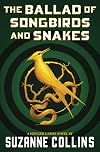
First sentence: Coriolanus released the fistful of cabbage into the pot of boiling water and swore that one day it would never pass his lips again.
ETA: I just reread The Ballad of Songbirds and Snakes after watching the movie adaptation--twice. The movie (obviously) resonated with me. It helped in the reread that I knew exactly what was coming in regards to the end. Though to be fair the end is ambiguous both in the book and film. There are definitely differences between the book and film. I show more highlighted--digitally--some scenes that were different. One thing that stands out, for example, is that Sejanus asks Coriolanus to TRADE tributes. Lucy Snow definitely comes across more as a possession, an asset, an object than a love interest. There are a million and one red flags...not only in his relationship with Lucy Snow but also with his non-friend-friend Sejanus. There are MORE characters in the book than there are in the film.
My original review:
Premise/plot: The Ballad of Songbirds and Snakes is a prequel (of sorts) to Suzanne Collins' The Hunger Games. The protagonist (he is not a hero) is a young (very young) Coriolanus Snow. He comes from a previously wealthy (high class) family that has fallen (hard and fast) on hard times. His only hope of a better life--a more prosperous future--is a scholarship to university. And that may be completely out of his control. Twenty-four students will become mentors to the twenty-four tributes coming to the Capital for this year's Hunger Games. (It's the TENTH hunger games.) The victor's mentor will receive a scholarship. The Hunger Games are still relatively new. Those viewing (and participating) still remember the hard, bitter, horrifying, traumatic times of actual war. Capital's economy certainly hasn't recovered from the actual war. (There is nothing lavish and luxurious as readers (and viewers) may remember from the original trilogy of books.) The Hunger Games are still in their infancy, still being shaped and formed by master minds. (People like Dr. Gaul...and her students...)
Coriolanus's tribute is from district twelve. Her name is Lucy Gray Baird. She's a singer with charisma, a bit of star quality. She has a little something special that makes her stand out from others. He sees this as her greatest strength. Perhaps the two of them can manipulate things along--here and there--and with a little luck she may win it all. Hooray for his bright future....
But things don't always go according to plan...even when they seem to... It seems there's always someone watching just a smidge cleverer.
Readers also meet his classmates. In particular Sejanus Plinth who is essentially "new money." His family has the funds but they are new to Capital. Sejanus still thinks of himself as belonging to District 2 and being one of the people. Which makes things super tricky when he has to participate (as a mentor) in the Hunger Games. He feels one with the tributes--whether they see him as one of them or not. He cannot accept that these tributes are animals, monsters, incapable of thought and feeling. There is no "us" and "them."
Throughout the book, Coriolanus struggles with his ambitions and his conscience. You might think of the old imagery of an angel on one side and a devil on the other.
My thoughts: I don't feel like my time has been completely wasted. It hasn't. I just wish the book had been shorter. I really don't understand *why* the part after the conclusion of the Hunger Games had to go on so long. The first half of the novel was compelling enough. It was interesting to see the great contrast between these primitive earlier Hunger Games and the later Games which are depicted in the trilogy. Worlds of difference between Capital then and now, between the Games then and now. I liked how Coriolanus and Sejanus both--in their own ways--disapproved of how the tributes were being treated. There are moments when Snow comes across as well--human.
S
P
O
I
L
E
R
S
I almost wish that Lucy Gray had lost in the games OR been murdered by the powers that be soon after. I really HATED how that story resolved. I think Snow could still have turned all dark side and evil as a result of someone else killing Lucy (the supposed love of his life). Their scenes together reminded me of the DARK and DEPRESSING scenes of Oliver Twist. (The murder of Nancy). show less
ETA: I just reread The Ballad of Songbirds and Snakes after watching the movie adaptation--twice. The movie (obviously) resonated with me. It helped in the reread that I knew exactly what was coming in regards to the end. Though to be fair the end is ambiguous both in the book and film. There are definitely differences between the book and film. I show more highlighted--digitally--some scenes that were different. One thing that stands out, for example, is that Sejanus asks Coriolanus to TRADE tributes. Lucy Snow definitely comes across more as a possession, an asset, an object than a love interest. There are a million and one red flags...not only in his relationship with Lucy Snow but also with his non-friend-friend Sejanus. There are MORE characters in the book than there are in the film.
My original review:
Premise/plot: The Ballad of Songbirds and Snakes is a prequel (of sorts) to Suzanne Collins' The Hunger Games. The protagonist (he is not a hero) is a young (very young) Coriolanus Snow. He comes from a previously wealthy (high class) family that has fallen (hard and fast) on hard times. His only hope of a better life--a more prosperous future--is a scholarship to university. And that may be completely out of his control. Twenty-four students will become mentors to the twenty-four tributes coming to the Capital for this year's Hunger Games. (It's the TENTH hunger games.) The victor's mentor will receive a scholarship. The Hunger Games are still relatively new. Those viewing (and participating) still remember the hard, bitter, horrifying, traumatic times of actual war. Capital's economy certainly hasn't recovered from the actual war. (There is nothing lavish and luxurious as readers (and viewers) may remember from the original trilogy of books.) The Hunger Games are still in their infancy, still being shaped and formed by master minds. (People like Dr. Gaul...and her students...)
Coriolanus's tribute is from district twelve. Her name is Lucy Gray Baird. She's a singer with charisma, a bit of star quality. She has a little something special that makes her stand out from others. He sees this as her greatest strength. Perhaps the two of them can manipulate things along--here and there--and with a little luck she may win it all. Hooray for his bright future....
But things don't always go according to plan...even when they seem to... It seems there's always someone watching just a smidge cleverer.
Readers also meet his classmates. In particular Sejanus Plinth who is essentially "new money." His family has the funds but they are new to Capital. Sejanus still thinks of himself as belonging to District 2 and being one of the people. Which makes things super tricky when he has to participate (as a mentor) in the Hunger Games. He feels one with the tributes--whether they see him as one of them or not. He cannot accept that these tributes are animals, monsters, incapable of thought and feeling. There is no "us" and "them."
Throughout the book, Coriolanus struggles with his ambitions and his conscience. You might think of the old imagery of an angel on one side and a devil on the other.
My thoughts: I don't feel like my time has been completely wasted. It hasn't. I just wish the book had been shorter. I really don't understand *why* the part after the conclusion of the Hunger Games had to go on so long. The first half of the novel was compelling enough. It was interesting to see the great contrast between these primitive earlier Hunger Games and the later Games which are depicted in the trilogy. Worlds of difference between Capital then and now, between the Games then and now. I liked how Coriolanus and Sejanus both--in their own ways--disapproved of how the tributes were being treated. There are moments when Snow comes across as well--human.
S
P
O
I
L
E
R
S
I almost wish that Lucy Gray had lost in the games OR been murdered by the powers that be soon after. I really HATED how that story resolved. I think Snow could still have turned all dark side and evil as a result of someone else killing Lucy (the supposed love of his life). Their scenes together reminded me of the DARK and DEPRESSING scenes of Oliver Twist. (The murder of Nancy). show less
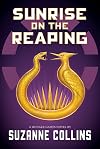
Haymitch Abernathy's 16th birthday is also the reaping for the annual Hunger Games, a bloody display of violence mandated by the government to keep citizens in line. And this year's 50th anniversary will be bloodier than ever with twice the number of tributes forced to play.
Although I was overall interested in another Hunger Games title, particularly after enjoying the first prequel, I admit to being a little skeptical about this one at first. It's the story of young Haymitch, who we know show more from the main trilogy as the older mentor of Katniss and Peeta. So it seemed like there wouldn't be much to say and the outcome would be predictable.
However, Collins keeps the readers on their toes almost from the outset. I really appreciated getting to see various other characters (such as Beetee and Wiress) who we met in the trilogy here as their younger selves, providing richer backstories to them than we had before. The subplot of sabotage was also great so that this book didn't just become the very entertainment it was condemning. All in all, this was a captivating read with compelling characters that continues to hone in on Collins's themes of oppression and resistance.
Although my copy of the book ended with a preview of the first chapter of The Hunger Games, I really wouldn't recommend reading this book before reading the main trilogy and it would contain spoilers to those. For fans of the original series, I think it was worth the read. show less
Although I was overall interested in another Hunger Games title, particularly after enjoying the first prequel, I admit to being a little skeptical about this one at first. It's the story of young Haymitch, who we know show more from the main trilogy as the older mentor of Katniss and Peeta. So it seemed like there wouldn't be much to say and the outcome would be predictable.
However, Collins keeps the readers on their toes almost from the outset. I really appreciated getting to see various other characters (such as Beetee and Wiress) who we met in the trilogy here as their younger selves, providing richer backstories to them than we had before. The subplot of sabotage was also great so that this book didn't just become the very entertainment it was condemning. All in all, this was a captivating read with compelling characters that continues to hone in on Collins's themes of oppression and resistance.
Although my copy of the book ended with a preview of the first chapter of The Hunger Games, I really wouldn't recommend reading this book before reading the main trilogy and it would contain spoilers to those. For fans of the original series, I think it was worth the read. show less
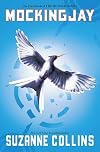
Okay, I have a LOT I want to talk about. I don't know if I'll manage to fit everything I want to say into this review, so I'll just try my best.
I honestly believe this is an extremely over-hated book. I'm not going to say that it's perfect or that it's even the best book in the series, but there's a lot about it that I absolutely fucking love.
I'll start by talking about some of my complaints. One of the weakest aspects of this trilogy is the pacing. Once again, the pacing here is not that show more great. The long, drawn-out stay in District 13 could have been significantly abbreviated. I'm not saying the characters should have stayed there for a shorter period of time; I'm saying that quite a bit of material could have been cut out to make that section of the story flow better.
Another one of my complaints is the massive focus on propaganda shooting under Plutarch Heavensbee. I know a lot of this franchise focuses on putting on a face for the rest of Panem; however, in the first two books, Katniss and Peeta had to do that to survive. Now, they're doing it to give morale to the rebellion. I know these propaganda shots may have helped the war, but there is still a sense of artificialness to the sections involving them, even when the shootings are unscripted. They don't feel real or exciting. They feel hollow, and that is something I do not often accuse these books of being.
Let's move on to what I love about this novel. I have stated that things take quite some time to get moving in this story. However, when they do get moving, oh boy. This becomes an intense, action-packed, and thrilling finale to the series. The final third of this story simply does not relent. It is wild, and I love it.
In addition, I love how much gray area there is in this book when it comes to morality. At first, it seems that you're supposed to root for everyone in the rebellion because of how evil the Capitol is. However, as the story progresses, and you notice the rebellion doing more and more fucked up shit, you start to wonder if Coin as the new leader of Panem would be just as bad, if not worse, than President Snow and the Capitol. Katniss's ambivalence towards the cause only makes her more likable and relatable. Her final kill being Coin instead of Snow is the perfect decision on Collins' part.
Lastly, this book makes me realize how much this series means to me and how entranced I am by it. I've always loved this franchise, but I'm only now starting to realize how enraptured I've become by it. While it has a lot of problems, there's something uniquely attractive about it. It is one of the darkest and most depressing stories ever made. It's not only dark because of all the trauma, death, and destruction Katniss and Peeta have faced over the years, but it's also dark because of the psychological torture they've been put through. By the end of the story, both of them have almost lost the will to live. They've given everything they have to improve the future generations of Panem, resulting in them turning into hollow shells of themselves. Katniss is constantly drugged up, wandering around from place to place, barely doing anything. It's extremely sad. However, Katniss and Peeta do manage to eventually pull themselves back together and slowly start rebuilding their lives. The last 10 pages are probably my favorite ending to any book series I've ever read in my life. They perfectly capture that tragic yet beautiful theme that this trilogy has adopted. Things will never be the same for any of these characters. They're left with physical and mental scars that will last the rest of their lives, but they try to keep themselves going for the sake of everyone else. It is very poetic, and it leaves me emotionally overwhelmed every single time.
So, yeah. I'm not saying these books are perfect, but they have given me emotions no other media franchise could possibly replicate. For that, they will always have a special place in my heart, and Suzanne Collins will always be an admirable figure to me. show less
I honestly believe this is an extremely over-hated book. I'm not going to say that it's perfect or that it's even the best book in the series, but there's a lot about it that I absolutely fucking love.
I'll start by talking about some of my complaints. One of the weakest aspects of this trilogy is the pacing. Once again, the pacing here is not that show more great. The long, drawn-out stay in District 13 could have been significantly abbreviated. I'm not saying the characters should have stayed there for a shorter period of time; I'm saying that quite a bit of material could have been cut out to make that section of the story flow better.
Another one of my complaints is the massive focus on propaganda shooting under Plutarch Heavensbee. I know a lot of this franchise focuses on putting on a face for the rest of Panem; however, in the first two books, Katniss and Peeta had to do that to survive. Now, they're doing it to give morale to the rebellion. I know these propaganda shots may have helped the war, but there is still a sense of artificialness to the sections involving them, even when the shootings are unscripted. They don't feel real or exciting. They feel hollow, and that is something I do not often accuse these books of being.
Let's move on to what I love about this novel. I have stated that things take quite some time to get moving in this story. However, when they do get moving, oh boy. This becomes an intense, action-packed, and thrilling finale to the series. The final third of this story simply does not relent. It is wild, and I love it.
In addition, I love how much gray area there is in this book when it comes to morality. At first, it seems that you're supposed to root for everyone in the rebellion because of how evil the Capitol is. However, as the story progresses, and you notice the rebellion doing more and more fucked up shit, you start to wonder if Coin as the new leader of Panem would be just as bad, if not worse, than President Snow and the Capitol. Katniss's ambivalence towards the cause only makes her more likable and relatable. Her final kill being Coin instead of Snow is the perfect decision on Collins' part.
Lastly, this book makes me realize how much this series means to me and how entranced I am by it. I've always loved this franchise, but I'm only now starting to realize how enraptured I've become by it. While it has a lot of problems, there's something uniquely attractive about it. It is one of the darkest and most depressing stories ever made. It's not only dark because of all the trauma, death, and destruction Katniss and Peeta have faced over the years, but it's also dark because of the psychological torture they've been put through. By the end of the story, both of them have almost lost the will to live. They've given everything they have to improve the future generations of Panem, resulting in them turning into hollow shells of themselves. Katniss is constantly drugged up, wandering around from place to place, barely doing anything. It's extremely sad. However, Katniss and Peeta do manage to eventually pull themselves back together and slowly start rebuilding their lives. The last 10 pages are probably my favorite ending to any book series I've ever read in my life. They perfectly capture that tragic yet beautiful theme that this trilogy has adopted. Things will never be the same for any of these characters. They're left with physical and mental scars that will last the rest of their lives, but they try to keep themselves going for the sake of everyone else. It is very poetic, and it leaves me emotionally overwhelmed every single time.
So, yeah. I'm not saying these books are perfect, but they have given me emotions no other media franchise could possibly replicate. For that, they will always have a special place in my heart, and Suzanne Collins will always be an admirable figure to me. show less
Lists
Guilty Pleasures (1)
Poly Sci Fi (1)
Favourite Books (1)
Favorite Series (1)
Thrillers (1)
Favorite Books (1)
Childhood books (1)
My Wishlist - YA (1)
BitLife (1)
Read in 2016 (1)
A Novel Cure (1)
Pageturners (1)
Put a Bird On It (1)
Great Audiobooks (1)
Fiction on Fire (1)
um actually (1)
Best Young Adult (5)
Female Author (3)
Five star books (3)
Read in 2011 (3)
Leseliste (3)
Have read (2)
Overdue Podcast (5)
Elaina's (5)
Best Dystopias (3)
H (3)
Forest Books (1)
Scholastic (1)
al.vick-series (2)
2000s decade (2)
Awards


You May Also Like


Associated Authors
Statistics
- Works
- 46
- Also by
- 5
- Members
- 238,103
- Popularity
- #17
- Rating
- 4.2
- Reviews
- 8,398
- ISBNs
- 1,225
- Languages
- 38
- Favorited
- 90


