
James Dashner
Author of The Maze Runner
About the Author
James Dashner was born in Georgia and attended Brigham Young University. Before becoming a full-time writer, he worked in finance. He is the author of The 13th Reality series, The Jimmy Fincher Saga, the Mortality Doctrine series, and the Maze Runner series. The Journal of Curious Letters was show more chosen for a 2008 Borders Original Voices pick and The Maze Runner won a 2015 West Australian Young Readers' Book Award in the Older Readers category. (Bowker Author Biography) show less
Series
Works by James Dashner
The 13th Reality Books 1 & 2: The Journal of Curious Letters; The Hunt for Dark Infinity (2015) 77 copies
The 13th Reality Books 3 & 4: The Blade of Shattered Hope; The Void of Mist and Thunder (2015) 50 copies, 1 review
Maze-Runner-Schuber (6 Bände im Taschenbuch-Schuber inklusive Bonusband mit »Crank Palace« und »Die Geheimakten«) (2021) 9 copies
Lối thoát Tử thần 1 copy
The Maze Hunter 1 copy
Preview: The Fever Code 1 copy
Associated Works
Hope Nation: YA Authors Share Personal Moments of Inspiration (2018) — Contributor — 179 copies, 7 reviews
Tagged
Common Knowledge
- Birthdate
- 1969
- Gender
- male
- Education
- Brigham Young University (MA|1999)
- Organizations
- The Church of Jesus Christ of Latter-day Saints
- Agent
- Michael Bourret
Lauren Abramo - Short biography
- James Smith Dashner (born November 26, 1972) is an American writer of speculative fiction, primarily series for children or young adults, such as The Maze Runner series and the young adult fantasy series the 13th Reality. His 2008 novel The Journal of Curious Letters, first in the series, was one of the annual Borders Original Voices picks.
James Dashner was born on November 26, 1972 in Austell, Georgia, as one of six children in the family. He was raised a Mormon. At the age of 10, he would type on his parents' typewriter. He graduated from Duluth High School in 1991. He moved from Atlanta, Georgia to Provo, Utah to study at Brigham Young University, where he received a master's degree in accounting. Dashner and his wife, Lynette Anderson, a former student of Brigham Young University, have four children and are now living in Utah.
Dashner is the author of the New York Times bestselling Maze Runner series that includes The Maze Runner, The Scorch Trials, The Death Cure, and The Kill Order. He has also written The Eye of Minds (book one in the Mortality Doctrine series), the 13th Reality series, and two books in The Infinity Ring series: A Mutiny in Time and The Iron Empire. - Nationality
- USA
- Birthplace
- Georgia, USA
- Places of residence
- Georgia, USA
Utah, USA - Associated Place (for map)
- USA
Members
Discussions
Found: Sci-fi other dimensions children in Name that Book (August 2024)
the maze runner series in Book talk (February 2016)
the maze runner in I read dashner (January 2016)
Reviews
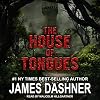
The House of Tongues by James Dashner
My rating: 5 of 5 stars
#FirstLine - Prologue ~ I am an old man.
This book…is really something and I LOVED it. It starts off in a way that grabbed my attention immediately. The story is told to you, the reader. You feel like you are sat down and get to hear, first hand, the horrors that took place back in the day and the horrors that re-emerged many years later. I was sucked in. I could literally not put it down and when life forced me to do so I was show more still thinking about the story. It is so beautifully told, which may seem weird for a book in the horror genre. There is is just something about the choices of words, the descriptions, the timing of jokes, the storytelling, the dialogue, the fleshing out past and present. It was truly brilliant. This book is also scary, really scary. I could not stop thinking about it. I dreamt about it several nights. I read this book thinking about what I would have done as a teen and as a parent. Both scared me to my core!!! It is probably one of my all time favorite YA horror/thriller/mystery books. I will not soon forget this book. I want everyone to read it so I can talk to everyone about it! So if you do read it, which I HIGHLY recommend, please come back and tell me your thoughts. I need to know. I REALLY need to know!!! So don’t leave me hanging, please! show less
My rating: 5 of 5 stars
#FirstLine - Prologue ~ I am an old man.
This book…is really something and I LOVED it. It starts off in a way that grabbed my attention immediately. The story is told to you, the reader. You feel like you are sat down and get to hear, first hand, the horrors that took place back in the day and the horrors that re-emerged many years later. I was sucked in. I could literally not put it down and when life forced me to do so I was show more still thinking about the story. It is so beautifully told, which may seem weird for a book in the horror genre. There is is just something about the choices of words, the descriptions, the timing of jokes, the storytelling, the dialogue, the fleshing out past and present. It was truly brilliant. This book is also scary, really scary. I could not stop thinking about it. I dreamt about it several nights. I read this book thinking about what I would have done as a teen and as a parent. Both scared me to my core!!! It is probably one of my all time favorite YA horror/thriller/mystery books. I will not soon forget this book. I want everyone to read it so I can talk to everyone about it! So if you do read it, which I HIGHLY recommend, please come back and tell me your thoughts. I need to know. I REALLY need to know!!! So don’t leave me hanging, please! show less
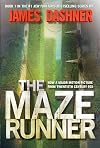
Thomas wakes up in a strange, enclosed town populated only by a bunch of other male teenagers, surrounded on all sides by a maze. Every day a few of the boys run out into the maze, hoping to map it and find an exit, and every day they come back just before the maze walls close, having found nothing. But Thomas has new ideas and fresh determination to get out, and with his help they just might solve the maze once and for all.
The solution to the maze is stupid. This book is stupid. It is show more terribly, clunkily, just plain badly written. The dialog is so peppered with made up curse words that it's nigh unintelligible, and even after the reader figures out what all the new slang means the dialog sounds unnatural. I wish I could get back the hours I spent reading this.
For those that want to know the mystery without having to slog through the terrible prose, here it is:solar flares and a new disease start do destroy human civilization. A group known as WICKED grabs the smartest orphans, raises them, and then mindwipes them and sticks them in a maze to test their responses. For two years they obsessively watch the boys (oh yeah, all the genius orphans are boys for some unknown reason) do basic menial chores in an environment that must require a huge amount of resources to create and maintain. Somehow watching these mindwiped kids feed pigs and hoe plants for two years (only 8 of them at a time try to find ways out of the maze) is worth creating holographic illusions, entire species of cyborg sentries, ever-changing mile high walls, etc. Thomas and Theresa-the-walking-plot-device solve the mystery of the maze in about two days, because apparently none of the other super geniuses over thought of investigating the Cliff or using more than one way to compare maze patterns. Then they slide through a hole into the real world, where they are saved by a team of rebels against WICKED except--not really! WICKED is still secretly in charge!
The whole thing is nonsensically dumb. I literally don't think I could come up with something that made so little sense, or was so poorly written. show less
The solution to the maze is stupid. This book is stupid. It is show more terribly, clunkily, just plain badly written. The dialog is so peppered with made up curse words that it's nigh unintelligible, and even after the reader figures out what all the new slang means the dialog sounds unnatural. I wish I could get back the hours I spent reading this.
For those that want to know the mystery without having to slog through the terrible prose, here it is:
The whole thing is nonsensically dumb. I literally don't think I could come up with something that made so little sense, or was so poorly written.
To compare this story to a roller coaster ride would be inaccurate, since that implies a hill that must be climbed to reach the fast-paced parts. No, instead I would probably compare The Maze Runner to one of those fancy sports cars. You know the ones. 0 to 60 miles an hour in a matter of seconds? Strap yourself in my friends, this is a wild ride!
Anyone who has been reading my reviews for a decent amount of time knows that I want to love the characters I read about. If I'm to be invested in show more a story, those characters have to speak to me and make me a part of their struggle. It seems to me that James Dashner knew this when he was writing. Thomas and the other Gladers were written so well, that they literally became a part of my life in a matter of pages. I loved how different they all were! From the opinionated and gruff Alby, all the way down to sweet and innocent Chuck. They made me feel like I was a part of their world, and I had no problem getting into the story.
The Maze actually becomes its own entity in this story, and it is almost as though the walls are breathing. Since the reader is unable to see those who are actually behind the boys being trapped, it is the Maze itself that becomes the enemy. There were portions of this story that had me cringing! What crawls and writhes within the walls is literally terrifying, and I was on the edge of my seat as I read.
To those out there who might know picky readers, The Maze Runner is sure to be a hit. The writing is beautiful and descriptive, the characters are easy to connect to, and the story line is fast-paced. I will admit that there is a bit of violence. I think that is to be expected in a dystopian novel such as this. However I don't think that it is anything most older readers would take issue with. It simply shows the lengths that the boys must go to in order to survive.
If you haven't yet read this, run to your library and pick it up! The Scorch Trials, the second book in the series, is nearing release and you won't want to fall behind. show less
Anyone who has been reading my reviews for a decent amount of time knows that I want to love the characters I read about. If I'm to be invested in show more a story, those characters have to speak to me and make me a part of their struggle. It seems to me that James Dashner knew this when he was writing. Thomas and the other Gladers were written so well, that they literally became a part of my life in a matter of pages. I loved how different they all were! From the opinionated and gruff Alby, all the way down to sweet and innocent Chuck. They made me feel like I was a part of their world, and I had no problem getting into the story.
The Maze actually becomes its own entity in this story, and it is almost as though the walls are breathing. Since the reader is unable to see those who are actually behind the boys being trapped, it is the Maze itself that becomes the enemy. There were portions of this story that had me cringing! What crawls and writhes within the walls is literally terrifying, and I was on the edge of my seat as I read.
To those out there who might know picky readers, The Maze Runner is sure to be a hit. The writing is beautiful and descriptive, the characters are easy to connect to, and the story line is fast-paced. I will admit that there is a bit of violence. I think that is to be expected in a dystopian novel such as this. However I don't think that it is anything most older readers would take issue with. It simply shows the lengths that the boys must go to in order to survive.
If you haven't yet read this, run to your library and pick it up! The Scorch Trials, the second book in the series, is nearing release and you won't want to fall behind. show less
*4.75
This is my first time reading the book since I was 14 and I thought I was gonna realize how much my childhood nostalgia had made me realize that it was just mediocre, but I was wrong!
The setting is so immersive, I felt like I was in the maze. Some of the scenes were so exhilarating that I had to stop while reading to take a second and breathe. The characters aren't likeable or unlikable. They're human. Scared teenagers with no memories having to fight for their lives.
That being said, I show more have one question that I know won't be answered as I continue with the series. What happened to Winston's dog, Bark? Did he get left in the maze? Was he killed during the final fight scene? What happened to Bark? show less
This is my first time reading the book since I was 14 and I thought I was gonna realize how much my childhood nostalgia had made me realize that it was just mediocre, but I was wrong!
The setting is so immersive, I felt like I was in the maze. Some of the scenes were so exhilarating that I had to stop while reading to take a second and breathe. The characters aren't likeable or unlikable. They're human. Scared teenagers with no memories having to fight for their lives.
That being said, I show more have one question that I know won't be answered as I continue with the series. What happened to Winston's dog, Bark? Did he get left in the maze? Was he killed during the final fight scene? What happened to Bark? show less
Lists
Awards


You May Also Like


Associated Authors
Statistics
- Works
- 58
- Also by
- 2
- Members
- 64,899
- Popularity
- #216
- Rating
- 3.7
- Reviews
- 1,873
- ISBNs
- 673
- Languages
- 24
- Favorited
- 44


