
Rick Yancey
Author of The 5th Wave
About the Author
Rick Yancey was born in Miami, Florida on November 4, 1962. He received a B.A. in English from Roosevelt University in Chicago. Before becoming a full time writer in 2004, he worked as a field officer for the Internal Revenue Service. His first book, A Burning in Homeland, was published in 2003. He show more is the author of several series including The 5th Wave, The Extraordinary Adventures of Alfred Kropp, The Highly Effective Detective, and The Monstrumologist. He wrote a memoir entitled Confessions of a Tax Collector. In 2010, he received a Michael L. Printz Honor for The Monstrumologist. The 5th Wave was adapted into a movie. (Bowker Author Biography) show less
Series
Works by Rick Yancey
The Monstrumologist Collection: The Monstrumologist; The Curse of the Wendigo; The Isle of Blood; The Final Descent (2014) 17 copies
De 5de golf (De 5de golf, #1) 3 copies
The monstrumologist 2 copies
Klątwa Wendigo : William James Henry : ciąg dalszy opowieści o badaczu potworów, czyli o Monstrumologu (2014) 2 copies
Die 5. Welle (Die 5. Welle #1) 2 copies
Las extraordinarias aventuras de Alfred Kropp : = The extraordinary adventures of Alfred Kropp (2006) 1 copy
Alpha Dog 1 copy
The Fifth Wave 1 copy
Associated Works
Tagged
Common Knowledge
- Legal name
- Yancey, Richard
- Birthdate
- 20th century
- Gender
- male
- Education
- Roosevelt University
- Occupations
- Internal Revenue Service tax collector
theater critic
playwright - Awards and honors
- Michael L. Printz Honor
- Short biography
- Richard Yancey (born November 4, 1962)[citation needed] is an American author who writes works of suspense, fantasy, and science fiction aimed at young adults.
Rick Yancey was born in a Miami suburb, Florida.
Yancey wrote his first short story in seventh grade while attending Crystal Lake Junior High School in Florida. After graduating from Lakeland Senior High School, he was accepted to Florida Southern College and majored in Communications. After a year at Florida Southern College, Yancey transferred to Florida State University and ultimately graduated from Roosevelt University with a B.A. in English. After graduation, Yancey planned on attending law school.
Ultimately, Yancey decided against law school and began teaching English classes as well as acting and directing in local community theatres. In 1991, Yancey applied for a government job and was hired by the Internal Revenue Service, where he worked as an agent for twelve years.
Yancey also spent 10 years of his life in Knoxville, Tennessee, where two of his books are set.
While working at the IRS, Yancey wrote screenplays in his spare time. At the suggestion of his wife and collaborator, one of his screenplays became his first professionally published book, A Burning in Homeland (Simon and Schuster), published in 2001.
With the success of A Burning in Homeland, Yancey resigned from the IRS in 2004 to concentrate on writing full-time. His memoir, Confessions of a Tax Collector (HarperCollins, 2004), chronicles his days working at the IRS.
After the release of his memoir, Yancey began work on two series of books—one for adults, and one for children.
The Alfred Kropp series tells the story of an awkward teenager who saves the world when he comes into possession of King Arthur's famed sword, Excalibur—pursued by the secret cabal of knights who have hidden it for centuries. Published by Bloomsbury Children’s Publishing in the U.S. and the U.K., and in fifteen foreign language editions, the series comprised three books: The Extraordinary Adventures of Alfred Kropp (2005), The Seal of Solomon (2007), and The Thirteenth Skull (2008).
His Highly Effective Detective books (St. Martin’s Press) are whodunits for adult readers, featuring a charming but barely competent private investigator based in Tennessee. That series consists of four titles: The Highly Effective Detective (2006), The Highly Effective Detective Goes to the Dogs (2008), The Highly Effective Detective Plays the Fool (2010), and The Highly Effective Detective Crosses the Line (2011).
By 2010, Yancey had completed the first book in The Monstrumologist series. The tetralogy tells the tale of a 19th-century doctor and his young apprentice, who race around the world chasing—and being chased by—monsters. This highly acclaimed series, published by Simon and Schuster Children’s Books in the U.S. and the U.K, and in eight foreign language editions, comprised four books: The Monstrumologist (2009), The Curse of the Wendigo (2010), The Isle of Blood (2011), and The Final Descent (2013). - Nationality
- USA
- Birthplace
- Miami, Florida, USA
- Places of residence
- Florida, USA
Chicago, Illinois, USA
Knoxville, Tennessee, USA
Gainesville, Florida, USA - Associated Place (for map)
- Florida, USA
Members
Reviews
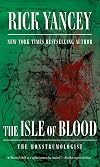
"Everything is good in leaving the hands of the Creator of Things; everything degenerates in the hands of man." -Jean-Jacques Rousseau, 'Emile, or On Education'
God, this book gutted me. Absolutely gutted me. I'm not an emotional reader (or an emotional person), so I am incredibly surprised at how much this affected me. I didn't just cry over this, I wept- four times. Sobs and everything.
Usually I like to really analyse and pick apart the books I read- consider the book's plot, characters, show more setting, style, tone, themes, and then try to understand it as a whole.
Not so with The Isle of Blood.
Setting aside the fact that this may very well be the best book I have ever read, there's no way I can review it as I normally do. It's special. So the "review" that follows is really just me ruminating on the book's themes, with some synopses and analyses thrown in for the sake of coherence.
____________________
Nil timendum est.
This is the motto of the Society for the Advancement of the Science of Monstrumology. But, if anything, The Isle of Blood makes us question these words. It's a profoundly different book than The Monstrumologist and The Curse of the Wendigo, and leagues better- but it's not without all the same heartbreaks and dark beauty that weaves through this series.
In The Isle of Blood, Warthrop receives evidence that could mean that the "holy grail of monstrumology," the Typhoeus magnificum, not only exists but may be possible to find and study. The magnificum, nicknamed the Faceless One, is strange and shadowy- not much is known about it besides the rumour that it causes a mysterious phenomenon; pulverised bits of human viscera falling from the sky on remote islands. In short, finding it could mean the height of Warthrop's considerable scientific ambition- fame, accolades, a major monstrumological discovery, academic recognition. But as Warthrop and Will Henry prepare to venture to places unknown in search of this elusive monster, Warhtrop leaves Will in the middle of the night to journey with his new assistant, Arkwright. Will is understandably baffled, devastated, and furious, and when Arkwright comes back months later bearing news that Warthrop has died, Will cannot accept the information and decides to go searching for Warthrop and, in a roundabout sort of way, the fabled magnificum.
This book asks some really interesting questions (it's definitely the most philosophical one in the series so far) and the above quote embodies what is perhaps the central theme of this book: seeing the unseen, facing the Faceless One, striving to know things that seem unknowable. As Warthrop says to the unfortunate courier of Kearns' package early on: "'It is human to turn round, to stare into Medusa's face, to tie ourselves to the mainmast to hear the sirens' song, to turn back as Lot's wife turned back. I am not angry at you for looking. But you did look.'" The idea of "The Faceless One" and "The One of a Thousand Faces" factors into the ending and the reveal of the manificum as well, but I'll be discussing that later on.
The Isle of Blood very much represents the internalisation of the concepts explored in books one and two- monsters; good, evil, and the grey in between; god; Hell; and stepping a little too close to the abyss.
In it we see a Will Henry who is twisted and rent by internal conflict- a boy struggling to extricate his own identity from the dark, thorny, murky, and profoundly broken one of Pellinore Warthrop. He has to navigate the mire that lies between who he used to be and who he has become under Warthrop's care. This is further developed when Warthrop up and leaves Will in New York- now that he is alone, with no Warthrop to cook, clean, and work for, no master to yell at him or berate him or teach him, no monsters to battle... Who is he? What is Will without Warthrop- and, for that matter, what is Warthrop without Will? Their relationship is the paradox of paradoxes: pure but toxic, brilliant but damaging. There's hate, and certainly some measure of love, despite the fact that Warthrop never says it and Will swears up and down that he never loved the doctor. It's touching and terrible in equal measure- they are both so broken, but sometimes some light shines through the cracks.
This leads me to the theme that I found the most interesting in the novel: how we remake things in our own image. As god may shape us, as Warthrop shapes Will, and as Will shapes him, so too does the magnificum shape its victims. It is dark and beautiful and horrifying, considering the many ways which we project our own hopes, fears, dreams, and doubts onto others.
(I feel like I should just briefly note that this book is not nearly as grotesque as its predecessors. There's gore, of course, but most of it is in the first one hundred pages and the last fifty, and it doesn't come close to being as horrifying as, say, baby faces floating in rivers of shit or sheaths of skin sloughing off upon the removal of a boot- two memorably stomach-churning scenes from the second and first books, respectively.)
The Lady and the Tiger is a major motif in this story; the daunting presence of the unknown, and the crippling fear of choosing wrong, even when both options are equally horrible. The Lady and the Tiger is a short story by Frank Stockton involving an impossible choice between, well- a lady and a tiger. In The Isle of Blood, Torrance explains the story in detail, but you can still read it here. I encourage you to do so, as it's short, fascinating, and many of the ideas found there relate directly to this book:
I think the phrase "devious mazes of passion" describes this series rather well, don't you?
Oh, I nearly forgot to mention: there are some historical figures in this novel as well. Yancey tries his hand at imagining if Arthur Rimbaud and Arthur Conan Doyle met Will and Warthrop, and I think it's a great success. Yancey does really well in characterising actual historical figures like those mentioned previously, as well as Jacob Riis and Jack the Ripper. I especially loved when Doyle met Warthrop and was positively giddy- as though Holmes had walked right out of his story and shaken his hand.
(Come on, how could I resist adding this in?)
Now, I'm going to talk about the ending here, so I'm spoiler-tagging this entire section. I beg you not to succumb to your itchy fingers and not press the "show spoiler" button unless you've already read the book or have no intention or desire to, ever.
At the end of Will and Warthrop's journey, which takes them to England (and a brief stay in a mental institution), Venice, Aden, Port Said, and, finally, Socotra, they discover that the magnificum is not a physical monster, but a disease with the possibility to devastate the island every so often. If that seems anticlimactic, don't worry- it isn't. Because the actual reveal is fascinating and visceral and astonishingly well-done- but it isn't the reveal I want to talk about, it's what happens afterward.
The discovery of the true nature of the magnificum allows us to examine the many ways in which we can tear ourselves apart, both literally- the scene where the magnificum (for lack of a better term, although I'm talking about the victim of the disease and not the disease itself) is weeping while tearing apart a corpse to form the nidus comes to mind- and figuratively, like Will killing three people and coming dangerously close to killing a fourth. Warthrop is another example of this, when he falls upon the floor in the cave and begs for death.
Because no matter the outside evil- the monsters, be they literal or figurative- we will always hurt ourselves the most, and we will always damn our own souls before anybody can do so for us.
I think Warthrop's reaction to the discovery speaks volumes about his character- specifically, how much he's grown since we first meet him in The Monstrumologist. There are three great Pellinore Warthrop quotes in this book. One is actually a full-fledged conversation Will has with an imaginary Warthrop, which I found both inventive, funny, and touching, but which is too long to past here, and the second one is this:
Beautiful, no?And so it is that even in the depths of his failure, Pellinore Warthrop attains his greatest achievement. And that is why, even though the end of the book should, in theory, be depressing- it isn't. I would daresay that it is rather positive. But my most favourite is the final lines of the book, which I'm spoiler-tagging because nobody should ever read the final lines of a book before they finish the book itself. That is sacrilege.
Warthrop's final lines to Will Henry made me sob like a child, but I don't feel so bad because apparently Rick Yancey himself cried while writing that scene: "I vividly remember the night I wrote the final scene between them in The Isle of Blood, and I burst into extremely unmanly tears."
The biggest question The Isle of Blood leaves us with regards Will Henry- namely, his morality. Moral carelessness and evil- what Warthrop aptly names "the dark tide"- seem to encroach upon our Will at every corner. He is faced with several dilemmas and my heart ached for him every time he had todo the unthinkable. As I mentioned before, Will killed three people in this book (more if you count Arkwright and all of the monsters, but I'm just talking about Kearns & the Russians), and came very close to killing a fourth. It still remains up to the reader whether he did these in cold blood, whether he simply holds infinite devotion to Warthrop, or whether he himself realises that they were wrong. It just killed me when Warthrop said this:
There are so many wonderful and chilling questions in this book, questions of the best kind: hard, and perhaps impossible, to answer.
What happens when we stop fighting the darkness? When the battle is no longer good versus evil, but us versus ourselves? What happens when we let the the evil in? Does it consume us? Are we ruined forever, inextricably bound to death, decay, and darkness?
Aren't we already?
And what happens if we let the darkness in, only to find that it has already hollowed out a place inside of us? show less
God, this book gutted me. Absolutely gutted me. I'm not an emotional reader (or an emotional person), so I am incredibly surprised at how much this affected me. I didn't just cry over this, I wept- four times. Sobs and everything.
Usually I like to really analyse and pick apart the books I read- consider the book's plot, characters, show more setting, style, tone, themes, and then try to understand it as a whole.
Not so with The Isle of Blood.
Setting aside the fact that this may very well be the best book I have ever read, there's no way I can review it as I normally do. It's special. So the "review" that follows is really just me ruminating on the book's themes, with some synopses and analyses thrown in for the sake of coherence.
____________________
Nil timendum est.
This is the motto of the Society for the Advancement of the Science of Monstrumology. But, if anything, The Isle of Blood makes us question these words. It's a profoundly different book than The Monstrumologist and The Curse of the Wendigo, and leagues better- but it's not without all the same heartbreaks and dark beauty that weaves through this series.
In The Isle of Blood, Warthrop receives evidence that could mean that the "holy grail of monstrumology," the Typhoeus magnificum, not only exists but may be possible to find and study. The magnificum, nicknamed the Faceless One, is strange and shadowy- not much is known about it besides the rumour that it causes a mysterious phenomenon; pulverised bits of human viscera falling from the sky on remote islands. In short, finding it could mean the height of Warthrop's considerable scientific ambition- fame, accolades, a major monstrumological discovery, academic recognition. But as Warthrop and Will Henry prepare to venture to places unknown in search of this elusive monster, Warhtrop leaves Will in the middle of the night to journey with his new assistant, Arkwright. Will is understandably baffled, devastated, and furious, and when Arkwright comes back months later bearing news that Warthrop has died, Will cannot accept the information and decides to go searching for Warthrop and, in a roundabout sort of way, the fabled magnificum.
"The world grows smaller, and little by little the light of our lamps chases away the shadows. All shall be illuminated one day, and we will wake with a new question: 'Yes, this, but now... what?'" He laughed softly. "Perhaps we should turn back and go home."
"Sir?"
"It will be a seminal moment in the history of science, Will Henry, the finding of the magnificum, and not without some ancillary benefit to me personally. If I succeed, it will bring nothing short of immortality- well, the only concept of immortality that I am prepared to accept. But if I do succeed, the space between us and the ineffable will shrink a little more. It is what we strive for as scientists, and what we dread as human beings. There is something in us that longs for the indescribable, the unattainable, the thing that cannot be seen."
This book asks some really interesting questions (it's definitely the most philosophical one in the series so far) and the above quote embodies what is perhaps the central theme of this book: seeing the unseen, facing the Faceless One, striving to know things that seem unknowable. As Warthrop says to the unfortunate courier of Kearns' package early on: "'It is human to turn round, to stare into Medusa's face, to tie ourselves to the mainmast to hear the sirens' song, to turn back as Lot's wife turned back. I am not angry at you for looking. But you did look.'" The idea of "The Faceless One" and "The One of a Thousand Faces" factors into the ending and the reveal of the manificum as well, but I'll be discussing that later on.
The Isle of Blood very much represents the internalisation of the concepts explored in books one and two- monsters; good, evil, and the grey in between; god; Hell; and stepping a little too close to the abyss.
In it we see a Will Henry who is twisted and rent by internal conflict- a boy struggling to extricate his own identity from the dark, thorny, murky, and profoundly broken one of Pellinore Warthrop. He has to navigate the mire that lies between who he used to be and who he has become under Warthrop's care. This is further developed when Warthrop up and leaves Will in New York- now that he is alone, with no Warthrop to cook, clean, and work for, no master to yell at him or berate him or teach him, no monsters to battle... Who is he? What is Will without Warthrop- and, for that matter, what is Warthrop without Will? Their relationship is the paradox of paradoxes: pure but toxic, brilliant but damaging. There's hate, and certainly some measure of love, despite the fact that Warthrop never says it and Will swears up and down that he never loved the doctor. It's touching and terrible in equal measure- they are both so broken, but sometimes some light shines through the cracks.
This leads me to the theme that I found the most interesting in the novel: how we remake things in our own image. As god may shape us, as Warthrop shapes Will, and as Will shapes him, so too does the magnificum shape its victims. It is dark and beautiful and horrifying, considering the many ways which we project our own hopes, fears, dreams, and doubts onto others.
"Why do men pray to God, Kendall? I've never understood it. God loves us. We are his creation, like my spider; we are his beloved... Yet when faced with mortal danger, we pray to him to spare us! Shouldn't we pray instead to the one who would destroy us, who has sought our destruction from the very beginning? What I mean to say is... aren't we praying to the wrong person? We should beseech the devil, not God. Don't mistake me; I'm not telling you where to direct your supplications. I'm merely pointing out the fallacy of them- and perhaps hinting at the reason behind prayer's curious inefficaciousness."And yes, that was from Kearns, because who else would have said something so morally grey in such an elegant way?
(I feel like I should just briefly note that this book is not nearly as grotesque as its predecessors. There's gore, of course, but most of it is in the first one hundred pages and the last fifty, and it doesn't come close to being as horrifying as, say, baby faces floating in rivers of shit or sheaths of skin sloughing off upon the removal of a boot- two memorably stomach-churning scenes from the second and first books, respectively.)
The Lady and the Tiger is a major motif in this story; the daunting presence of the unknown, and the crippling fear of choosing wrong, even when both options are equally horrible. The Lady and the Tiger is a short story by Frank Stockton involving an impossible choice between, well- a lady and a tiger. In The Isle of Blood, Torrance explains the story in detail, but you can still read it here. I encourage you to do so, as it's short, fascinating, and many of the ideas found there relate directly to this book:
Now, the point of the story is this: Did the tiger come out of that door, or did the lady?
The more we reflect upon this question, the harder it is to answer. It involves a study of the human heart which leads us through devious mazes of passion, out of which it is difficult to find our way.
I think the phrase "devious mazes of passion" describes this series rather well, don't you?
Oh, I nearly forgot to mention: there are some historical figures in this novel as well. Yancey tries his hand at imagining if Arthur Rimbaud and Arthur Conan Doyle met Will and Warthrop, and I think it's a great success. Yancey does really well in characterising actual historical figures like those mentioned previously, as well as Jacob Riis and Jack the Ripper. I especially loved when Doyle met Warthrop and was positively giddy- as though Holmes had walked right out of his story and shaken his hand.
(Come on, how could I resist adding this in?)
Now, I'm going to talk about the ending here, so I'm spoiler-tagging this entire section. I beg you not to succumb to your itchy fingers and not press the "show spoiler" button unless you've already read the book or have no intention or desire to, ever.
The discovery of the true nature of the magnificum allows us to examine the many ways in which we can tear ourselves apart, both literally- the scene where the magnificum (for lack of a better term, although I'm talking about the victim of the disease and not the disease itself) is weeping while tearing apart a corpse to form the nidus comes to mind- and figuratively, like Will killing three people and coming dangerously close to killing a fourth. Warthrop is another example of this, when he falls upon the floor in the cave and begs for death.
Because no matter the outside evil- the monsters, be they literal or figurative- we will always hurt ourselves the most, and we will always damn our own souls before anybody can do so for us.
I think Warthrop's reaction to the discovery speaks volumes about his character- specifically, how much he's grown since we first meet him in The Monstrumologist. There are three great Pellinore Warthrop quotes in this book. One is actually a full-fledged conversation Will has with an imaginary Warthrop, which I found both inventive, funny, and touching, but which is too long to past here, and the second one is this:
"'You shouldn't be out here!' he screamed.
'Neither should you!' I hollered back.
'I will never sound the retreat! Never!'
He shoved me toward the stern and turned his back upon me, planting his legs wide for balance and spreading his arms as if inviting the fullness of God's wrath upon his head. A burst of lightning flashed, thunder shook the planks, and Warthrop laughed. The monstrumologist laughed, and his laughter overtook the wind and the lashing rain and the thunder itself, trampling the maelstrom under its unconquerable heels. Is it any wonder the power this man held over me- this man who did not run from his demons like most of us do, but embraced them as his own, clutching them to his heart in a choke hold grip. He did not try to escape them by denying them or drugging them or bargaining with them. He met them where they lived, in the secret place most of us keep hidden. Warthrop was Warthrop down to the marrow of his bones, for his demons defined him; they breathed the breath of life into him; and, without them, he would go down, as most of us do, into the purgatorial fog of a life unrealized.
You may call him mad. You may judge him vain and selfish and arrogant and bereft of all normal human sentiment. You may dismiss him entirely as a fool blinded by his own ambition and pride. But you cannot say Pellinore Warthrop was not finally, fully, furiously alive.
Beautiful, no?
The world is large, and it is easy to forget how very small we are. Like the rot of stars, time consumes us. He had thought the quest would bring him immortality, a triumph that would outlast his brief appearance upon the stage. He was wrong. Pellinore Warthrop would pass into oblivion, his noble work unrecognized, his sacrifice overshadowed by the deeds of lesser men. He could have wallowed in despair; he might have chewed upon the dry bones of bitterness and regret.I'm tearing up now just reading that.
Instead he came to Venice, and he danced.
We are hunters all. We are, all of us, monstrumologists. And Pellinore Warthrop was the best of us, for he had found the courage to turn and face the most terrifying monster of all.
Warthrop's final lines to Will Henry made me sob like a child, but I don't feel so bad because apparently Rick Yancey himself cried while writing that scene: "I vividly remember the night I wrote the final scene between them in The Isle of Blood, and I burst into extremely unmanly tears."
The biggest question The Isle of Blood leaves us with regards Will Henry- namely, his morality. Moral carelessness and evil- what Warthrop aptly names "the dark tide"- seem to encroach upon our Will at every corner. He is faced with several dilemmas and my heart ached for him every time he had to
"It is a very thin line between us and the abyss, Will Henry," he said. "For most it is like that line out there, where the sea meets the sky. They see it. They cannot deny the evidence of their eyes, but they never cross it. They cannot cross it; though they chase it for a thousand years, it will forever stay where it is. Do you realize it took our species more than ten millennia to realize that simple fact? That we live on a ball and not a plate? Most of us do, anyway. Men like Jacob Torrance and John Kearns... Those kinds of men still live on a plate. Do you understand what I mean?"
I nodded. I thought I did.
"The very strange and ironic thing is that I left you behind so you wouldn't have to live on that plate with them."
There are so many wonderful and chilling questions in this book, questions of the best kind: hard, and perhaps impossible, to answer.
What happens when we stop fighting the darkness? When the battle is no longer good versus evil, but us versus ourselves? What happens when we let the the evil in? Does it consume us? Are we ruined forever, inextricably bound to death, decay, and darkness?
Aren't we already?
And what happens if we let the darkness in, only to find that it has already hollowed out a place inside of us? show less
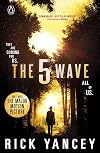
The aliens arrive in a great big mothership and things don't work out too good for us. Three waves of diabolically long-distance remote control mass slaughter later, and we're down to a handful of survivors who still aren't quite sure what hit them. Then the fourth wave comes along and starts picking off the survivors and setting things up for the fifth wave, which might seem like overkill, but as with any big cleaning job it's getting into those tight corners that takes ages.
Cassie Sullivan show more has lost most of her family except her brother, Sammy, and she's not really sure about him. She gets shot in the leg and stranded in the boot of a car during a blizzard and it seems like curtains for her until a strapping young farmer boy rescues her and takes her home. Meanwhile her old school crush is being indoctrinated into an army of children to strike back against the aliens, and the newest member of his squad is a kid called Sammy.
Horror and violence and death and destruction and more death and killing and death. That's what you get in the 5th Wave. It's grim stuff and the characters have to deal with grief and despair and PTSD by the barrelfull. But it's smoothly written, pacy as hell, undeniably exciting and compelling. There's troubling stuff there to do with the imagery of genocide and child soldiers and aliens-as-implacable-hostile-forces, and using these in a post-apocalyptic romp, but it doesn't feel particularly rompy, to be fair. There's hints of a developing love triangle of conflicted loyalities, but, I dunno, the whole thing seemed to work and I bombed through it, although I felt a bit wrung out by the end and not exactly up for another cheerful installment of happy funny puppy violence and genocide time just yet. show less
Cassie Sullivan show more has lost most of her family except her brother, Sammy, and she's not really sure about him. She gets shot in the leg and stranded in the boot of a car during a blizzard and it seems like curtains for her until a strapping young farmer boy rescues her and takes her home. Meanwhile her old school crush is being indoctrinated into an army of children to strike back against the aliens, and the newest member of his squad is a kid called Sammy.
Horror and violence and death and destruction and more death and killing and death. That's what you get in the 5th Wave. It's grim stuff and the characters have to deal with grief and despair and PTSD by the barrelfull. But it's smoothly written, pacy as hell, undeniably exciting and compelling. There's troubling stuff there to do with the imagery of genocide and child soldiers and aliens-as-implacable-hostile-forces, and using these in a post-apocalyptic romp, but it doesn't feel particularly rompy, to be fair. There's hints of a developing love triangle of conflicted loyalities, but, I dunno, the whole thing seemed to work and I bombed through it, although I felt a bit wrung out by the end and not exactly up for another cheerful installment of happy funny puppy violence and genocide time just yet. show less
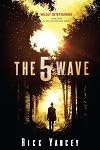
This is THE hot YA book of the summer hereabouts. This story is primarily told by Cassie, a 16 year-old going it alone after successive alien invasion waves destroy her family and crush mankind. Civilization has fallen apart to the extent that you can trust no one; shoot first and don't bother with questions. Cassie is determined to fulfill a promise to her 5 year-old brother against impossible odds. Along the way, she meets the handsome and enigmatic Evan Walker, and comes to depend heavily show more on him, while simultaneously questioning everything about him. Alone she is doomed, but with Evan...?
I did rip through this one, and was appropriately horrified by the scope of the apocalypse descending upon the world. There's no way to tell a story like this without violence, but it sometimes overwhelmed me. It made the carnage of WWII -- the setting of my last book -- seem kinda cute. Beyond that though, I think this would be a very appealing book for teens, where characters discover what they're really made of, and grapple with Essential Questions about what it means to be human, to make a promise, what is worth living and dying for. Well done. show less
I did rip through this one, and was appropriately horrified by the scope of the apocalypse descending upon the world. There's no way to tell a story like this without violence, but it sometimes overwhelmed me. It made the carnage of WWII -- the setting of my last book -- seem kinda cute. Beyond that though, I think this would be a very appealing book for teens, where characters discover what they're really made of, and grapple with Essential Questions about what it means to be human, to make a promise, what is worth living and dying for. Well done. show less
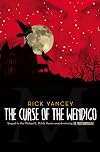
Dang, Yancey really knows how to bring a story to a climax. I think it was even more intense than in The Monstrumologist, which is saying something.
Again, Will Henry's relationship with the doctor is the most intriguing part of this novel. The secondary characters had a lot more to them this time around, which I did like, but Will Henry and the Monstrumologist shone again, and I can't even explain how glad I am that their relationship was still fresh and brilliant and confusing and sometimes show more horrible. Great writing.
I think things did get a bit lengthy, and by the end of the novel I was really tired of Will Henry having to be saved all the time because he's gone through so much already and I'm sure Yancey's got a whole lot more in the plans to torture him with in the next one.
Anyways, still pretty terrifying, although I was less satisfied with the more ambiguous ending on this one. I tell you, though, these books are digging up some macabre streak in me I didn't know I had: I'm now watching zombie shows and getting more books that'll scare the potatoes outta me. Yancey's got a way with making stories that stick with you and making you want more. I'm glad I rented the next one right away! show less
Again, Will Henry's relationship with the doctor is the most intriguing part of this novel. The secondary characters had a lot more to them this time around, which I did like, but Will Henry and the Monstrumologist shone again, and I can't even explain how glad I am that their relationship was still fresh and brilliant and confusing and sometimes show more horrible. Great writing.
I think things did get a bit lengthy, and by the end of the novel I was really tired of Will Henry having to be saved all the time because he's gone through so much already and I'm sure Yancey's got a whole lot more in the plans to torture him with in the next one.
Anyways, still pretty terrifying, although I was less satisfied with the more ambiguous ending on this one. I tell you, though, these books are digging up some macabre streak in me I didn't know I had: I'm now watching zombie shows and getting more books that'll scare the potatoes outta me. Yancey's got a way with making stories that stick with you and making you want more. I'm glad I rented the next one right away! show less
Lists
Awards


You May Also Like


Associated Authors
Statistics
- Works
- 48
- Also by
- 1
- Members
- 21,026
- Popularity
- #1,027
- Rating
- 3.8
- Reviews
- 883
- ISBNs
- 328
- Languages
- 17
- Favorited
- 13