
Kiera Cass
Author of The Selection
About the Author
Kiera Cass was born in South Carolina in May 1981. She received a bachelor's degree in history from Radford University. She self-published her first novel, The Siren, in 2009. In 2014 her title, The One made The New York Times Best Seller List. She is the author of The Selection series which is a show more series of five young adult novels set in the fictional country of Illéa, formerly the United States. The books are about a competition known as The Selection, where citizens of Illéa compete for the current king's heir in marriage.The Crown, part of the Selection series, was published in 2016. (Bowker Author Biography) show less
Series
Works by Kiera Cass
The Maid 17 copies
Untitled 7 copies
The Crown: Epilogue 4 copies
The Selection Kindle sample 1 copy
Cô gái tinh hoa 1 copy
Hoàng Phi 1 copy
Rywalki. Opowiadania 1 copy
The Selection 1 copy
Moștenitoarea (Alegerea, #4) 1 copy
The Siren 1 copy
La selección 1 copy
L'Élue: La Sélection 3 1 copy
Tuyển chọn hoàng phi 1 copy
Associated Works
Tagged
Common Knowledge
- Birthdate
- 1983
- Gender
- female
- Agent
- Elana Roth Parker (Laura Dail Literary)
- Nationality
- USA
- Birthplace
- South Carolina, USA
- Places of residence
- Virginia, USA
- Map Location
- USA
Members
Reviews
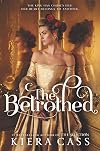
In an author's note at the beginning of my review copy of The Betrothed, Kiera Cass mentions that the 1500s era is one of her inspirations for her latest book. I mention this because it is an important note. The Betrothed is not a rewrite of The Selection series. It is a clean and somewhat idealized version of what it was like to be of noble/titled birth and have to live near the king. There are strict rules and etiquette one must follow at all times. There is no privacy, and there is almost show more always fear that one wrong word could have disastrous consequences for your family depending on the type of ruler.
That being said, I think Ms. Cass did a fantastic job of showing how stifling life at court can be, how limited you are in your ability to make independent decisions. Through other families, we see firsthand the terror an erratic or despotic ruler can create among his or her gentry. With Hollis, we get to see that being a princess or queen is not all presents and fancy gowns. There is a level of scrutiny that occurs with such high ranking that most people would struggle to accept.
I am giving the impression that The Betrothed is dark and dreary, and that is far from the truth. In actuality, the story is light-hearted, fun, and decadent, but it has a bite to it. Reading it is akin to wearing that perfect prom/wedding dress with shoes that slightly pinch your toes. Ms. Cass might like and write about all the pretty things, but she does not hesitate to go dark when the story requires her to do so.
To me, this ability to flit between the inconsequential and the serious is what I enjoyed most about The Betrothed. The romantic tension hides a more serious underlying story that I am anxious to see unfold. Hollis proves herself to be more than a pretty face and shows substantial grit at the story's end. In all, The Betrothed is another strong addition to the book world by Kiera Cass. show less
That being said, I think Ms. Cass did a fantastic job of showing how stifling life at court can be, how limited you are in your ability to make independent decisions. Through other families, we see firsthand the terror an erratic or despotic ruler can create among his or her gentry. With Hollis, we get to see that being a princess or queen is not all presents and fancy gowns. There is a level of scrutiny that occurs with such high ranking that most people would struggle to accept.
I am giving the impression that The Betrothed is dark and dreary, and that is far from the truth. In actuality, the story is light-hearted, fun, and decadent, but it has a bite to it. Reading it is akin to wearing that perfect prom/wedding dress with shoes that slightly pinch your toes. Ms. Cass might like and write about all the pretty things, but she does not hesitate to go dark when the story requires her to do so.
To me, this ability to flit between the inconsequential and the serious is what I enjoyed most about The Betrothed. The romantic tension hides a more serious underlying story that I am anxious to see unfold. Hollis proves herself to be more than a pretty face and shows substantial grit at the story's end. In all, The Betrothed is another strong addition to the book world by Kiera Cass. show less
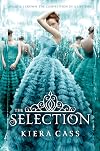
Ah, The Selection, how do I hate thee? Let me count the ways.
1. Characters
First up on the chopping block are the characters. Our dashing heroine is America Singer. Seriously. That’s her name. Not only that, but her name constantly pops up. It’s never, “How are you?” but always, “America, how are you?”, as if we need constant reminding of how much her mother must have hated her when she named her.
America is utterly unlikeable and unsympathetic. She whines her way through most of show more the book, and her constant haranguing about her boy troubles left me disturbed. America is a singer and a musician (in case the name didn’t tip you off), but not once after her arrival to the palace does it ever mention her practicing her instruments. I may not know a lot about music, but I do remember from my school band days that practice was key. But apparently, America is above such trite, trivial things. Anyways, she’s too busy playing cards with her maids.
As for America’s boy toys:
In one corner we have Droidbot A, formally known as Aspen. Aspen’s main character trait is hotness. He steams. He smolders. He secretes sex from his pores instead of sweat. Also, he’s a massive jerk. He breaks up with America around page 30 because she made him dinner. Because, you know, it’s his job as the manly man to provide for his woman, not the other way around. Bastard. I bet he’s the sort who’d break up with a girl if she so much as mentioned splitting the bill.
While we’re on this subject, America’s reaction? Apologies. She doesn’t even call Droidbot A out on his massive steaming pile of ****. Ugh.
In the other corner we have Droidbot B, also known as Maxon *snrk*. Seriously. It sounds like a brand of band-aid. ‘Maxon, a subsidiary of the Johnson & Johnson Company.’ Funnily enough, Maxon’s name bothered me far more than America’s. It’s just so wrong. Maxon has no personality. He’s not even that hot. Still, we are forced to spend a significant portion of the novel in his company.
Then there’s the villain, Celeste. Celeste is evil. You know that because her name is Celeste, which is French, and French people are evil. Celeste is the true epitome of villainy. She rips America’s dress and *gasp* spills a drink down another girl’s dress on purpose! Oh the humanity! And… that’s it. No evil plans for world domination. No murders, not even some petty thievery. Just a stupid girl looking to get into a catfight. Wow. How thrilling.
As for the other characters, what can be said for them? The lucky ones get one or two token personality traits, but most just simply exist, bland and boring and brainless. There’s an awful lot of characters in this book: America’s family, the other 34 girls in the contest, the maids, the royal family… yet none of them have any memorable personality what-so-ever.
2. Plot
Oh sweet Jesus on a breadstick, the plot. Let’s see. America must choose between Droidbot A and Droidbot B. The end. Yes, this is a difficult choice. Droidbot A is hotter than melted butter, but he’s also a chauvinist pig. Droidbot B is as bland as the band-aid for which he’s named, but he’s also royalty, which has to count for something apparently.
3. World Building
Future writers, please listen to me. Don’t attempt to write fantasy or dystopian fiction unless you are fully prepared to spend a long time developing a complex, realistic, interesting world for your characters to inhabit. If you spend five minutes thinking about it, then it will show. Like it does here. Part way through, we get a brief summary of how America the country turned into the place America the character lives. And it’s painfully obvious that the author has no idea how real world politics work. Her scenario is hilariously unlikely and ridiculous. Furthermore, nothing in this world makes sense. America’s family is poor, on the verge of starving occasionally. But they still have popcorn when they watch TV. There are movies. Who’s making them? Where the computers? There are cell phones. Where the flipping fudge did all the royalty come from? What is up with that caste system? Why the BLEEPBLEEP is this whole selection process televised? Why does the king put up with all that? Isn’t he king? What’s the point of having it on television? Seriously? Who are the rebels? Why are they rebelling? Why can’t we have a book about them instead, since they cannot be more boring that the lot we’re stuck with? Why? Why? Why??
I digress.
4. Lost potential
On a more serious note… the idea of the caste system is actually quite interesting. And the book briefly explores the shortcomings of such a system. For example: America is in Caste Five. That means that she has to do something with the arts for a living. In her case, she sings and plays piano and violin. Her younger sister paints. But her little brother shows no aptitude for art or music. Basically, he’s screwed.
And then, just when things might get interesting, the book trundles onward to describe for the umpteenth time America’s angst over which Droidbot to choose. This had the potential to turn into something really fascinating and neat. This book has been compared quite a lot with The Hunger Games. But The Hunger Games took a concept and then turned it into a high-stakes, slightly meta social commentary on war, celebrities, and what we find entertaining. Result? Something that goes far beyond the standard YA love triangle and is genuinely thought-provoking and deep. This book never even comes close.
5. Royalty
For some reason, America (the country; this is really confusing, isn’t it?) has a lurid fascination with royalty. We couldn’t get enough of Diana, and we certainly can’t get enough of Will and Kate. The idea of royalty making a return to America could have been really fascinating (see above section on lost potential), exploring the irony of such an attraction in a country that fought a war to be free of a monarchy. But the author is just as enamored with royalty as America (the character) is. Royalty can do no wrong. Half the country is starving? Why, the prince had no idea! None at all! The king and queen are blameless too. Despite running everything, they are not in any way responsible for anything bad that happens in the country. Because their royalty. Ew.
Final thoughts:
This book tried way to hard to be the next The Hunger Games. Everything, from the contest to the dresses to the televised interviews and events, come straight from it. But they aren’t comparable at all. Like I said before, Suzanne Collins turns her series into a huge meta commentary on society. The televised aspect of the Hunger Games comments on our own fascination with reality TV and violence. It makes sense. The televised aspect of The Selection makes no sense. None. I don’t know why the royalty even put up with it. There’s a love triangle in The Hunger Games, but it quickly shrinks in importance, seeing as there are bigger things to worry about. By the end, the love triangle barely even matters. It’s no longer about who the heroine loves more, but rather who didn’t commit heinous war crimes and blow up innocent children. There’s two more books in The Selection series, but somehow I doubt that it’ll go in that direction. There’ll be more triteness, more obsessing over which Droidbot to choose, and more Celeste being totally evil and spilling drinks down dresses. Because, you know, that’s what evil overlords do. Muahaha. show less
1. Characters
First up on the chopping block are the characters. Our dashing heroine is America Singer. Seriously. That’s her name. Not only that, but her name constantly pops up. It’s never, “How are you?” but always, “America, how are you?”, as if we need constant reminding of how much her mother must have hated her when she named her.
America is utterly unlikeable and unsympathetic. She whines her way through most of show more the book, and her constant haranguing about her boy troubles left me disturbed. America is a singer and a musician (in case the name didn’t tip you off), but not once after her arrival to the palace does it ever mention her practicing her instruments. I may not know a lot about music, but I do remember from my school band days that practice was key. But apparently, America is above such trite, trivial things. Anyways, she’s too busy playing cards with her maids.
As for America’s boy toys:
In one corner we have Droidbot A, formally known as Aspen. Aspen’s main character trait is hotness. He steams. He smolders. He secretes sex from his pores instead of sweat. Also, he’s a massive jerk. He breaks up with America around page 30 because she made him dinner. Because, you know, it’s his job as the manly man to provide for his woman, not the other way around. Bastard. I bet he’s the sort who’d break up with a girl if she so much as mentioned splitting the bill.
While we’re on this subject, America’s reaction? Apologies. She doesn’t even call Droidbot A out on his massive steaming pile of ****. Ugh.
In the other corner we have Droidbot B, also known as Maxon *snrk*. Seriously. It sounds like a brand of band-aid. ‘Maxon, a subsidiary of the Johnson & Johnson Company.’ Funnily enough, Maxon’s name bothered me far more than America’s. It’s just so wrong. Maxon has no personality. He’s not even that hot. Still, we are forced to spend a significant portion of the novel in his company.
Then there’s the villain, Celeste. Celeste is evil. You know that because her name is Celeste, which is French, and French people are evil. Celeste is the true epitome of villainy. She rips America’s dress and *gasp* spills a drink down another girl’s dress on purpose! Oh the humanity! And… that’s it. No evil plans for world domination. No murders, not even some petty thievery. Just a stupid girl looking to get into a catfight. Wow. How thrilling.
As for the other characters, what can be said for them? The lucky ones get one or two token personality traits, but most just simply exist, bland and boring and brainless. There’s an awful lot of characters in this book: America’s family, the other 34 girls in the contest, the maids, the royal family… yet none of them have any memorable personality what-so-ever.
2. Plot
Oh sweet Jesus on a breadstick, the plot. Let’s see. America must choose between Droidbot A and Droidbot B. The end. Yes, this is a difficult choice. Droidbot A is hotter than melted butter, but he’s also a chauvinist pig. Droidbot B is as bland as the band-aid for which he’s named, but he’s also royalty, which has to count for something apparently.
3. World Building
Future writers, please listen to me. Don’t attempt to write fantasy or dystopian fiction unless you are fully prepared to spend a long time developing a complex, realistic, interesting world for your characters to inhabit. If you spend five minutes thinking about it, then it will show. Like it does here. Part way through, we get a brief summary of how America the country turned into the place America the character lives. And it’s painfully obvious that the author has no idea how real world politics work. Her scenario is hilariously unlikely and ridiculous. Furthermore, nothing in this world makes sense. America’s family is poor, on the verge of starving occasionally. But they still have popcorn when they watch TV. There are movies. Who’s making them? Where the computers? There are cell phones. Where the flipping fudge did all the royalty come from? What is up with that caste system? Why the BLEEPBLEEP is this whole selection process televised? Why does the king put up with all that? Isn’t he king? What’s the point of having it on television? Seriously? Who are the rebels? Why are they rebelling? Why can’t we have a book about them instead, since they cannot be more boring that the lot we’re stuck with? Why? Why? Why??
I digress.
4. Lost potential
On a more serious note… the idea of the caste system is actually quite interesting. And the book briefly explores the shortcomings of such a system. For example: America is in Caste Five. That means that she has to do something with the arts for a living. In her case, she sings and plays piano and violin. Her younger sister paints. But her little brother shows no aptitude for art or music. Basically, he’s screwed.
And then, just when things might get interesting, the book trundles onward to describe for the umpteenth time America’s angst over which Droidbot to choose. This had the potential to turn into something really fascinating and neat. This book has been compared quite a lot with The Hunger Games. But The Hunger Games took a concept and then turned it into a high-stakes, slightly meta social commentary on war, celebrities, and what we find entertaining. Result? Something that goes far beyond the standard YA love triangle and is genuinely thought-provoking and deep. This book never even comes close.
5. Royalty
For some reason, America (the country; this is really confusing, isn’t it?) has a lurid fascination with royalty. We couldn’t get enough of Diana, and we certainly can’t get enough of Will and Kate. The idea of royalty making a return to America could have been really fascinating (see above section on lost potential), exploring the irony of such an attraction in a country that fought a war to be free of a monarchy. But the author is just as enamored with royalty as America (the character) is. Royalty can do no wrong. Half the country is starving? Why, the prince had no idea! None at all! The king and queen are blameless too. Despite running everything, they are not in any way responsible for anything bad that happens in the country. Because their royalty. Ew.
Final thoughts:
This book tried way to hard to be the next The Hunger Games. Everything, from the contest to the dresses to the televised interviews and events, come straight from it. But they aren’t comparable at all. Like I said before, Suzanne Collins turns her series into a huge meta commentary on society. The televised aspect of the Hunger Games comments on our own fascination with reality TV and violence. It makes sense. The televised aspect of The Selection makes no sense. None. I don’t know why the royalty even put up with it. There’s a love triangle in The Hunger Games, but it quickly shrinks in importance, seeing as there are bigger things to worry about.
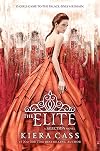
Reading The Elite was quite the unique reading experience, and I’m not so sure that’s a good thing.
I don’t want to repeat my The Selection review, but on the whole, while there were major flaws in the writing in that book, the story was just FUN. It really was the equivalent of reality TV, and while that may not make it the best literature ever, it was super-entertaining.
This book was also entertaining, but with way more problems. And I think one of the main reasons is that I CANNOT show more like America. I just can’t. I liked her well enough in The Selection, and while she sometimes got on my nerves, I respected where she was coming from. She was resourceful, cunning, and kind, and relatively smart about things. This all went on a downhill spiral in The Elite though. America suffers from a strong case of The Informed Character Trait. Now, I don’t know if I’m the only person to use this term, but I use it more frequently than I would like. In essence, the Informed Character Trait is when you, the reader, are repeatedly told–either through dialogue in the book or just the narration–that a character has a trait or ability, when all evidence points to the contrary. For America, it’s her intelligence.
Now, I love intelligent characters, and I don’t expect every character to be intelligent, but if you have people tell America REPEATEDLY that she’s intelligent, you should back it up. And yet all America did over & over again was make dumb mistakes. America is not a smart character. Feisty? Yes. Compassionate? I’ll let you argue that point(though she does tend to string both Maxon and Aspen along), resourceful? She definitely knows how to use what’s available. But time and time again, she does the dumbest thing possible. And this just drove me up the wall(obviously).
As far as Aspen and Maxon: Aspen has yet to do anything to redeem himself, so cross him off for a character I could like. Maxon was a “perfect” character in the first book, and while it’s nice to see a little bit more depth to his character, I think it might have gone too far in the opposite direction. At this point, I’m not really rooting for any of them. I’d say I still like Maxon the best, because despite his flaws he really DOES try to improve the life of people in his country. I’m no longer sure how I feel about America and Maxon together though.
Despite all of my ranting, I actually enjoyed this book WHILE reading. I mean, it’s just a drama-fest, but it’s an entertaining one. It’s only when I closed the book that all of the “What did I just read?” questions sprung to my mind. I wouldn’t say this book is fun, though, which is why I’m so rant-y about it. Cass’ writing is still plain, but she did a better job of building the world slightly in this one. I predict more action in the final book(oh, how I hope so!). That being said, I wouldn’t necessarily recommend against this book. Just know what you’re getting in to. show less
I don’t want to repeat my The Selection review, but on the whole, while there were major flaws in the writing in that book, the story was just FUN. It really was the equivalent of reality TV, and while that may not make it the best literature ever, it was super-entertaining.
This book was also entertaining, but with way more problems. And I think one of the main reasons is that I CANNOT show more like America. I just can’t. I liked her well enough in The Selection, and while she sometimes got on my nerves, I respected where she was coming from. She was resourceful, cunning, and kind, and relatively smart about things. This all went on a downhill spiral in The Elite though. America suffers from a strong case of The Informed Character Trait. Now, I don’t know if I’m the only person to use this term, but I use it more frequently than I would like. In essence, the Informed Character Trait is when you, the reader, are repeatedly told–either through dialogue in the book or just the narration–that a character has a trait or ability, when all evidence points to the contrary. For America, it’s her intelligence.
Now, I love intelligent characters, and I don’t expect every character to be intelligent, but if you have people tell America REPEATEDLY that she’s intelligent, you should back it up. And yet all America did over & over again was make dumb mistakes. America is not a smart character. Feisty? Yes. Compassionate? I’ll let you argue that point(though she does tend to string both Maxon and Aspen along), resourceful? She definitely knows how to use what’s available. But time and time again, she does the dumbest thing possible. And this just drove me up the wall(obviously).
As far as Aspen and Maxon: Aspen has yet to do anything to redeem himself, so cross him off for a character I could like. Maxon was a “perfect” character in the first book, and while it’s nice to see a little bit more depth to his character, I think it might have gone too far in the opposite direction. At this point, I’m not really rooting for any of them. I’d say I still like Maxon the best, because despite his flaws he really DOES try to improve the life of people in his country. I’m no longer sure how I feel about America and Maxon together though.
Despite all of my ranting, I actually enjoyed this book WHILE reading. I mean, it’s just a drama-fest, but it’s an entertaining one. It’s only when I closed the book that all of the “What did I just read?” questions sprung to my mind. I wouldn’t say this book is fun, though, which is why I’m so rant-y about it. Cass’ writing is still plain, but she did a better job of building the world slightly in this one. I predict more action in the final book(oh, how I hope so!). That being said, I wouldn’t necessarily recommend against this book. Just know what you’re getting in to. show less
I really enjoyed The Selection and blazed through it really quickly; and while I didn't enjoy The Elite quite as much because it put my heart through so much, the sequel did not ultimately disappoint.
The one part that, for me, felt overdone was America's agonizing between choosing Maxon or Aspen. I understand the confusion, and don't think it would have made sense for the story if it had been cut out entirely, but her flip-flopping also made me enjoy her as a character less. I don't know if show more that's something the author did wrong, or if that is inevitable when writing a love triangle.
But I really did admire how Cass took her characters through some grueling situations that made my heart wrench, but somehow, in the last thirty or so pages, still made me feel like I could allow myself to get attached to them again. The later middle section of the book was fairly torturous, but Cass managed to explain it (in my eyes, sufficiently) and still set up for the third book. I have to admit that, when I started, I didn't realize there would be a third book, so was expecting it to end with this one.
Overall, though, I admire how Cass has built her world. Even if it made me cringe and wince sometimes, I admire what she put her characters through--and how she still made them come out the better for it. (There were times when I wondered why I was rooting for America as the protagonist, but unlike some other YA novels, it never felt like America was only worthwhile to the main leads because the author wanted it to be that way. She's real, and sometimes unlikeable, but ultimately still someone who's trying to do the right thing.) I think Cass strikes the balance fairly well of invoking a good dose of romance, but not overdoing it until I need to put the book down and find something else with an actual plot. I also like that, clearly, there is a crisis, but it's not the insane dystopia that has been so popular with many YA books lately (never really my thing).
All in all, I'm giving it three stars because, given the agony I went through as a reader, I don't know if I could quickly go back and reread it; but I do think it was, overall, well-written and well-done, and by the time I made it to the end (which was also fairly quick, because it was engagingly written), I did feel like the pain I went through as a reader was acknowledged and rewarded. show less
The one part that, for me, felt overdone was America's agonizing between choosing Maxon or Aspen. I understand the confusion, and don't think it would have made sense for the story if it had been cut out entirely, but her flip-flopping also made me enjoy her as a character less. I don't know if show more that's something the author did wrong, or if that is inevitable when writing a love triangle.
But I really did admire how Cass took her characters through some grueling situations that made my heart wrench, but somehow, in the last thirty or so pages, still made me feel like I could allow myself to get attached to them again. The later middle section of the book was fairly torturous, but Cass managed to explain it (in my eyes, sufficiently) and still set up for the third book. I have to admit that, when I started, I didn't realize there would be a third book, so was expecting it to end with this one.
Overall, though, I admire how Cass has built her world. Even if it made me cringe and wince sometimes, I admire what she put her characters through--and how she still made them come out the better for it. (There were times when I wondered why I was rooting for America as the protagonist, but unlike some other YA novels, it never felt like America was only worthwhile to the main leads because the author wanted it to be that way. She's real, and sometimes unlikeable, but ultimately still someone who's trying to do the right thing.) I think Cass strikes the balance fairly well of invoking a good dose of romance, but not overdoing it until I need to put the book down and find something else with an actual plot. I also like that, clearly, there is a crisis, but it's not the insane dystopia that has been so popular with many YA books lately (never really my thing).
All in all, I'm giving it three stars because, given the agony I went through as a reader, I don't know if I could quickly go back and reread it; but I do think it was, overall, well-written and well-done, and by the time I made it to the end (which was also fairly quick, because it was engagingly written), I did feel like the pain I went through as a reader was acknowledged and rewarded. show less
Lists
Awards


You May Also Like


Associated Authors
Statistics
- Works
- 60
- Also by
- 1
- Members
- 40,158
- Popularity
- #440
- Rating
- 3.7
- Reviews
- 1,426
- ISBNs
- 542
- Languages
- 20
- Favorited
- 15
