What a beautifully written, elegant tale. I discovered this upon a stroll through the Strand in NYC, and I'm so glad I found it.
It reads, just like it says, as a modern day fairy tale, with all of the whimsy of the classic fairy tales. The characters are so likeable, and the story so fun to follow along with. The writing is simple but lovely, and I found myself just really enjoying Foxlee's narrative style. Her tone at times reminded me of C.S. Lewis's (and I guess to some extent L.M. Montgomery's, too), in its matter-of-fact way of taking childhood and magic seriously.
If I'd say a few things I didn't like about it, it would simply be that Ophelia caught on to things much slower than I did (but then again, Ophelia is eleven--and she has the voice of an eleven-year-old, which is delightful and right), and some elements were a bit too creepy for me (all the ghosts, and hearing Ophelia's dead mother speaking all the time).
Overall, though, I really liked this. I want to read (and possibly write!) more modern day fairy tales, and I want to read Foxlee's other work.
It reads, just like it says, as a modern day fairy tale, with all of the whimsy of the classic fairy tales. The characters are so likeable, and the story so fun to follow along with. The writing is simple but lovely, and I found myself just really enjoying Foxlee's narrative style. Her tone at times reminded me of C.S. Lewis's (and I guess to some extent L.M. Montgomery's, too), in its matter-of-fact way of taking childhood and magic seriously.
If I'd say a few things I didn't like about it, it would simply be that Ophelia caught on to things much slower than I did (but then again, Ophelia is eleven--and she has the voice of an eleven-year-old, which is delightful and right), and some elements were a bit too creepy for me (all the ghosts, and hearing Ophelia's dead mother speaking all the time).
Overall, though, I really liked this. I want to read (and possibly write!) more modern day fairy tales, and I want to read Foxlee's other work.

Ellison is one of my favorite authors, and I enjoyed this book a lot, if not quite as much as the first two. At any rate, I think it is easily as tightly plotted and interesting; I just liked the first one more because I loved the way Ellison introduces us into the world, and the second one because Adam had been one of the characters who interested me most from the first. A secondary note, but the copy has become much, much cleaner. There were a number of typos in the beginning chapters of this book, but by the end, there were none.
Here, we finally get some of the explanations that some critics of the first book were looking for: the origins of the Frost, and its rather peculiar, primitive society.I was disappointed that Adam disappeared just as Gabe reappeared, as I still highly favor Adam, but I appreciated having Gabe back again, as well.
How to summarize my feelings about this book? The plot is thickening, and the pace has picked up--not that I'd ever really accuse Ellison of slow pacing, from what I've read of her so far. A lot of interesting twists I'm excited to read more about. The only thing that I liked less about this book, besides Adam's disappearance, is that there's a bit more graphic violence, though by no means deeply graphic. I'm just supremely squeamish, and the other books didn't have any places where that might be activated, but this did, a little.
Here, we finally get some of the explanations that some critics of the first book were looking for: the origins of the Frost, and its rather peculiar, primitive society.
How to summarize my feelings about this book? The plot is thickening, and the pace has picked up--not that I'd ever really accuse Ellison of slow pacing, from what I've read of her so far. A lot of interesting twists I'm excited to read more about. The only thing that I liked less about this book
I enjoyed The Curse Girl overall, but not quite as much as I was expecting.
I love fairy tale retellings, and Beauty and the Beast in particular (although, to be totally honest, probably the Disney version more than anything--the decidedly scary elements of the story don't appeal to me as much). That being said, I understand it's a really tricky one to pull off. I think I can count on one hand the number of books that really fully persuaded me that two people genuinely hated each other for valid reasons, but then also genuinely fell in love for valid reasons (I'm thinking of Jane Austen's Pride and Prejudice and, in a more lighthearted fashion, William Shakespeare's As You Like It.)
A few things that I found kind of disappointing:though it naturally inclined me to like Will more to discover that he hadn't been the one the curse was originally meant for, it also felt, to me, a bit like a cop out. That's the instant removal of one genuine barrier to love between him and Bee--that he's actually someone who got cursed because he truly was beastly on some level.
Also, I found it unbelievable that Bee didn't consider, even once, that Liam might be Will. They're two halves/nicknames of the same full name. I understand why Ellison might not have let Bee think about this, because I think the only reasonable thing that Bee could have thought to brush that aside would be that they had different-sounding voices... but, though I generally have a pretty generous suspension of disbelief, show more this one I just couldn't buy.
I thought this book, unlike Ellison's other books I've read so far from the Frost Chronicles, could have benefited from more than just another round of copy-editing. For example, I understand that Will spoke in a more old-fashioned way, but why (especially in the beginning) did Bee? She switched back and forth between being pretty formal and being colloquial at first, which threw me off a little. Also, in the beginning, maybe it was just me, but I felt like reasons to hate Will were more or less manufactured, and profanity used mainly to emphasize hatred without really showing a lot of it first. I also did find Bee unnecessarily dramatic a lot, especially in the beginning, and wished that she were not quite as temperamental. But again, I acknowledge that this is a really tricky dynamic to write, and I don't think Ellison did a terrible job; I just wasn't always fully convinced.
In the end, though, I still found the romance very sweet. Some of the descriptions really gripped my imagination and I loved the way things came together towards the end. And I still stand by the declaration that I love Ellison's narrative style. Plus, from what I've read of Ellison so far, she's good at plotting--planting clues here and there that are put together in a satisfying way at the end. I definitely enjoyed this book, and it was fun enough that I can imagine myself going back and wanting to reread it in the future, when I'm in a certain mood for it. But there were parts that held me back from loving this book as much as I thought I might. show less
I love fairy tale retellings, and Beauty and the Beast in particular (although, to be totally honest, probably the Disney version more than anything--the decidedly scary elements of the story don't appeal to me as much). That being said, I understand it's a really tricky one to pull off. I think I can count on one hand the number of books that really fully persuaded me that two people genuinely hated each other for valid reasons, but then also genuinely fell in love for valid reasons (I'm thinking of Jane Austen's Pride and Prejudice and, in a more lighthearted fashion, William Shakespeare's As You Like It.)
A few things that I found kind of disappointing:
Also, I found it unbelievable that Bee didn't consider, even once, that Liam might be Will. They're two halves/nicknames of the same full name. I understand why Ellison might not have let Bee think about this, because I think the only reasonable thing that Bee could have thought to brush that aside would be that they had different-sounding voices... but, though I generally have a pretty generous suspension of disbelief,
I thought this book, unlike Ellison's other books I've read so far from the Frost Chronicles, could have benefited from more than just another round of copy-editing. For example, I understand that Will spoke in a more old-fashioned way, but why (especially in the beginning) did Bee? She switched back and forth between being pretty formal and being colloquial at first, which threw me off a little. Also, in the beginning, maybe it was just me, but I felt like reasons to hate Will were more or less manufactured, and profanity used mainly to emphasize hatred without really showing a lot of it first. I also did find Bee unnecessarily dramatic a lot, especially in the beginning, and wished that she were not quite as temperamental. But again, I acknowledge that this is a really tricky dynamic to write, and I don't think Ellison did a terrible job; I just wasn't always fully convinced.
In the end, though, I still found the romance very sweet. Some of the descriptions really gripped my imagination and I loved the way things came together towards the end. And I still stand by the declaration that I love Ellison's narrative style. Plus, from what I've read of Ellison so far, she's good at plotting--planting clues here and there that are put together in a satisfying way at the end. I definitely enjoyed this book, and it was fun enough that I can imagine myself going back and wanting to reread it in the future, when I'm in a certain mood for it. But there were parts that held me back from loving this book as much as I thought I might. show less
Two things I will admit: one, I am twenty-three years old and, while a huge lover of children's literature, not the target audience for this book. Two, while I really enjoyed this book, I admit that that pleasure was compounded (if not changed) by the fact that I am a Middlebury alum, and Weston apparently has an MA there and has taught there before.
All that aside, though, I really did enjoy this book. Such a sweet tone, full of good lessons without a preachy tone, and sweet characters you care about. Sometimes the diary style with Ava's intense feelings were a bit much for me--but, like I said, I'm not the target audience. I suspect children would learn a handful of new words, enjoy the wordplay as much as I did, and feel warm and fuzzy inside after reading this book.
All that aside, though, I really did enjoy this book. Such a sweet tone, full of good lessons without a preachy tone, and sweet characters you care about. Sometimes the diary style with Ava's intense feelings were a bit much for me--but, like I said, I'm not the target audience. I suspect children would learn a handful of new words, enjoy the wordplay as much as I did, and feel warm and fuzzy inside after reading this book.
Hmm, okay. I had read the The Mortal Instruments books (well--1-3 anyway), mainly because I had heard of Clare from her days as a HP fanfiction writer and was curious. I liked them okay, but they didn't become new favorites. However, I heard lots of good things about the Infernal Devices books even apart from TMI fans, so I definitely wanted to give it a try--especially since it's still a novelty for me to read good YA books featuring Asian protagonists, and quite exciting.
Overall, I think it does better in all the things I liked about TMI, but still has the aspects of TMI that ultimately made it not a favorite for me.
So, what are these things?
This sounds so weird to say, because clearly TMI and TID are both really fleshed-out urban fantasy series, and yet I find that what I enjoy most in them is the characters, dialogue, and romance. What I don't enjoy is the heavy paranormal/witchcraft (admittedly, I'm just never a fan of that), and the graphic violence. At least, much more graphic than I, the queen of squeamish readers, am comfortable with.
That's not to say that I wish Clare had removed all the urban fantasy elements and made this a YA contemporary romance. I did enjoy the overall plot elements, and thought it was well-constructed, with a couple of huge wild turns that kept me guessing, but not in a bad way (i.e., in a way where I feel so ill and dissatisfied with the ending that it'll be difficult for me to ever trust the author again; see show more [b:Mockingjay|7260188|Mockingjay (The Hunger Games, #3)|Suzanne Collins|https://d.gr-assets.com/books/1358275419s/7260188.jpg|8812783], most notably). Also, I am fully cognizant of the fact that part of what makes the romance work here ist hat it doesn't take over the book and become melodramatic; it can be prominent, but more understated, because there's a lot of other stuff going on, and I like that.
But ultimately, ah! I'm just so squeamish, and even the concept of shape changing and carving runes into your skin freaks me out--not to mention the actual killing and violence.
But I do think Clare has done some solid world-building (clearly--how many books are in this world, exactly? More than 8). The exposition sometimes felt clumsy to me--in the beginning of this book, for instance, I was jarred a few times with very nearly info-dump passages. I admit, though, that I was later impressed by some of these tactics--e.g., Tessa reading The Shadowhunter's Codex before falling asleep wasn't my favorite, but the fact that she kept reading it throughout meant that Clare could nicely slip in a few details here and there on things she had read.
What I loved most, though, were the characters and dialogue. I'm consistently impressed with how Clare creates such a huge ensemble cast that looks, sounds, and feels distinct from each other. The dialogue is generally witty and fun.
Even the love triangle, which I'm not always a fan of, didn't put me off in this book. I liked that Tessa was so blessedly normal. By that, I mean: not the Queen of Klutz, like Bella in [b:Twilight|41865|Twilight (Twilight, #1)|Stephenie Meyer|https://d.gr-assets.com/books/1361039443s/41865.jpg|3212258], and a slightly more independent but nevertheless realistic product of the Victorian era she's living in, without lambasting those who buy into its role for women more wholly, like Jessamine. Not ridiculously skilled in combat (for indeed, where would she have learned?), but not totally helpless and self-pitying either. Compassionate, vulnerable, but with a desire to help and be strong. I like her a lot. And yes, definitely more than Clary.
I also love Will and Jem, naturally. But--and here I'm worried--I usually can tell, subconsciously or consciously, which character in a love triangle the author is trying to bias us towards, and I usually agree, but in this case, I'm terribly afraid that Clare is trying to make us like Will more (giving him more individual scenes, complex stories, sometimes even better dialogue lines, etc.)--but I still like Jem more. He's actually straightforward, gentle, and kind, and communicates well and isn't easily offended, all things that are more important in an actual relationship. I like both of them, though, and I like their friendship a lot, too. (Total digression: I think the dichotomy often presented in love triangles of passion vs. stability is a silly one, and often false. Ideally shouldn't one person be a measure of both in order to be someone with whom one can have a healthy, functional relationship?)
Long, long review on my thoughts, but basically, I'm a fan, though there are elements that are difficult for me to stomach. I'm not sure how many books are in this series, but I'll be eager to keep reading on for the characters for now. show less
Overall, I think it does better in all the things I liked about TMI, but still has the aspects of TMI that ultimately made it not a favorite for me.
So, what are these things?
This sounds so weird to say, because clearly TMI and TID are both really fleshed-out urban fantasy series, and yet I find that what I enjoy most in them is the characters, dialogue, and romance. What I don't enjoy is the heavy paranormal/witchcraft (admittedly, I'm just never a fan of that), and the graphic violence. At least, much more graphic than I, the queen of squeamish readers, am comfortable with.
That's not to say that I wish Clare had removed all the urban fantasy elements and made this a YA contemporary romance. I did enjoy the overall plot elements, and thought it was well-constructed, with a couple of huge wild turns that kept me guessing, but not in a bad way (i.e., in a way where I feel so ill and dissatisfied with the ending that it'll be difficult for me to ever trust the author again; see show more [b:Mockingjay|7260188|Mockingjay (The Hunger Games, #3)|Suzanne Collins|https://d.gr-assets.com/books/1358275419s/7260188.jpg|8812783], most notably). Also, I am fully cognizant of the fact that part of what makes the romance work here ist hat it doesn't take over the book and become melodramatic; it can be prominent, but more understated, because there's a lot of other stuff going on, and I like that.
But ultimately, ah! I'm just so squeamish, and even the concept of shape changing and carving runes into your skin freaks me out--not to mention the actual killing and violence.
But I do think Clare has done some solid world-building (clearly--how many books are in this world, exactly? More than 8). The exposition sometimes felt clumsy to me--in the beginning of this book, for instance, I was jarred a few times with very nearly info-dump passages. I admit, though, that I was later impressed by some of these tactics--e.g., Tessa reading The Shadowhunter's Codex before falling asleep wasn't my favorite, but the fact that she kept reading it throughout meant that Clare could nicely slip in a few details here and there on things she had read.
What I loved most, though, were the characters and dialogue. I'm consistently impressed with how Clare creates such a huge ensemble cast that looks, sounds, and feels distinct from each other. The dialogue is generally witty and fun.
Even the love triangle, which I'm not always a fan of, didn't put me off in this book. I liked that Tessa was so blessedly normal. By that, I mean: not the Queen of Klutz, like Bella in [b:Twilight|41865|Twilight (Twilight, #1)|Stephenie Meyer|https://d.gr-assets.com/books/1361039443s/41865.jpg|3212258], and a slightly more independent but nevertheless realistic product of the Victorian era she's living in, without lambasting those who buy into its role for women more wholly, like Jessamine. Not ridiculously skilled in combat (for indeed, where would she have learned?), but not totally helpless and self-pitying either. Compassionate, vulnerable, but with a desire to help and be strong. I like her a lot. And yes, definitely more than Clary.
I also love Will and Jem, naturally. But--and here I'm worried--I usually can tell, subconsciously or consciously, which character in a love triangle the author is trying to bias us towards, and I usually agree, but in this case, I'm terribly afraid that Clare is trying to make us like Will more (giving him more individual scenes, complex stories, sometimes even better dialogue lines, etc.)--but I still like Jem more. He's actually straightforward, gentle, and kind, and communicates well and isn't easily offended, all things that are more important in an actual relationship. I like both of them, though, and I like their friendship a lot, too. (Total digression: I think the dichotomy often presented in love triangles of passion vs. stability is a silly one, and often false. Ideally shouldn't one person be a measure of both in order to be someone with whom one can have a healthy, functional relationship?)
Long, long review on my thoughts, but basically, I'm a fan, though there are elements that are difficult for me to stomach. I'm not sure how many books are in this series, but I'll be eager to keep reading on for the characters for now. show less
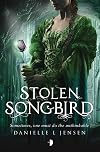
I'd been anticipating this book and wanting to read it for a while, and I finally got to it. Hooray! Besides the occasional stilted dialogue, gore (not terribly much, but there's some), and witchcraft, there was a lot here that I really liked.
I like that the setting was French-inspired with authentic French names. I appreciate that kind of internal consistency in world-building. And the setting was very richly imagined and described. The beginning gets you hooked fairly quickly--it took me a bit to get into Cécile's head, but the beginning is paced well enough that you adjust quickly. I also grew to like her a lot, and there were several turns where I was pleasantly surprised that Jensen didn't take the cliche route (for example, with Anaïs).
I thought Jensen did a great job with showing the complexity of the politics and, therefore, the characters. The romance, though I found it difficult at first (how often is Tristan going to walk away and slam a door?), really won me over by the end. No insta-love here; I really believed it as it was unfolding in its various stages, and, though I sometimes felt frustrated, I also really believed the ways in which it was thwarted.
And even though it's a first person POV that switches between the main couple, it's done sparingly enough (and wisely enough) that it adds to the book, rather than detracting from it.
All in all, I'm definitely eager for the next book.
I like that the setting was French-inspired with authentic French names. I appreciate that kind of internal consistency in world-building. And the setting was very richly imagined and described. The beginning gets you hooked fairly quickly--it took me a bit to get into Cécile's head, but the beginning is paced well enough that you adjust quickly. I also grew to like her a lot, and there were several turns where I was pleasantly surprised that Jensen didn't take the cliche route (for example, with Anaïs).
I thought Jensen did a great job with showing the complexity of the politics and, therefore, the characters. The romance, though I found it difficult at first (how often is Tristan going to walk away and slam a door?), really won me over by the end. No insta-love here; I really believed it as it was unfolding in its various stages, and, though I sometimes felt frustrated, I also really believed the ways in which it was thwarted.
And even though it's a first person POV that switches between the main couple, it's done sparingly enough (and wisely enough) that it adds to the book, rather than detracting from it.
All in all, I'm definitely eager for the next book.
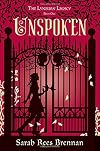
This was a book that I enjoyed a lot, but mostly for language rather than for plot.
Brennan is a wonderful writer. From the first page, Kami's voice is brilliant and so much fun. I also love both her parents, and especially her dad. The dialogue is witty. The characters are likable and complex. And the last 50-100 pages surprised me multiple times with the different turns of events, something that doesn't happen to me that frequently. Also, I like that she really delved into the many issues regarding what it's like to be linked to someone else and read his mind and have your mind read: both the good, the comfortable, the secure, but also the frightening, the unstable, and the constant wondering about not being your own individual.And somewhat towards the end, when Kami was beginning to have trouble trusting anyone at all, Brennan really got me into her head, that gradual creepy feeling of wondering if anything is really as it seems.
That being said,Angela and Holly's romance seemed unnecessary to me. This also has a bit more violence/gore than I am comfortable with, though Brennan is not graphic. The core premise is actually not something I would have picked the book up for, not being a big fan of paranormal. That being said, there are quite a lot of paranormal elements, but they unfold naturally and gradually. And the pleasure of Brennan's language really made me enjoy it overall, a lot more than I expected. The ending, too--while it does make me want to read on, and show more there is a tiny measure of resolution at least to one important question, it still felt like too much of a cliffhanger to me. show less
Brennan is a wonderful writer. From the first page, Kami's voice is brilliant and so much fun. I also love both her parents, and especially her dad. The dialogue is witty. The characters are likable and complex. And the last 50-100 pages surprised me multiple times with the different turns of events, something that doesn't happen to me that frequently. Also, I like that she really delved into the many issues regarding what it's like to be linked to someone else and read his mind and have your mind read: both the good, the comfortable, the secure, but also the frightening, the unstable, and the constant wondering about not being your own individual.
That being said,
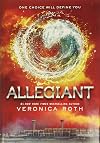
Hmm. Well, if someone gave me an opportunity to erase Insurgent and Allegiant from my memory, I'd be very tempted to say yes.
My main beef with this book is that Roth made characters I really cared about, and then didn't give them (and therefore, me, the reader) the payoff that I thought they really deserved and needed.
The way I felt after reading this was comparable, actually, to how I felt after reading [b:Gone with the Wind|18405|Gone with the Wind|Margaret Mitchell|https://d202m5krfqbpi5.cloudfront.net/books/1328025229s/18405.jpg|3358283], [b:Mockingjay|7260188|Mockingjay (The Hunger Games, #3)|Suzanne Collins|https://d202m5krfqbpi5.cloudfront.net/books/1358275419s/7260188.jpg|8812783], and [b:Insurgent|11735983|Insurgent (Divergent, #2)|Veronica Roth|https://d202m5krfqbpi5.cloudfront.net/books/1325667729s/11735983.jpg|15524542] (although I would say I liked this book marginally better than Insurgent, I think--I know my ratings don't currently reflect that). That is, I felt really dissatisfied and kind of frustrated.
I think I understood what the ending was getting at, and while I appreciated the metaphor of Tris's heroic sacrifice, and I admire authors who can make hard choices about their characters and what happens to them, it just didn't feel satisfying. Did David really have to be there? Why couldn't Tris and Tobias finally get some peace together?
Another thing I immediately kind of groaned at was the switching point of views. After two books from Tris's POV, that show more was jarring--although I now, of course, understand why that had to happen. But still, if that had to happen, I think I would have preferred that the whole series be told in omniscient or third-person narration from the beginning. Still, because I like Tobias and I thought the POV switches actually accomplished something (including, unexpectedly, making it easier to sympathize with Tris and find the good things about her from an outside perspective), my main problem with the book wasn't that, but the ending.
This makes me unsure if I want to read the collection of stories on Four, though I probably will because he's still one of my favorite characters.
Several of the other problems:I was so relieved when Tobias asked Tris to stop treating him like a child. Tris's perfect instincts and how Tobias's character seems to be dismantled as a result were unenjoyable. Also, while this book took me through lots of different emotions, it didn't feel like my emotional reactions were genuinely earned. It felt more like melodrama and just--unfair.
That said, a handful of things I appreciated: I actually liked that this book wasn't non-stop action, like the first two felt to me. It let me breathe a bit as a reader. Also, while I hated Tris's reactions to Tobias (it seemed like his reactions to her were never quite as harsh, though both ended up having many good reasons to question each other), the issues they run into as a couple are ones that don't seem contrived to me--ones that you actually do need to work through, and that are tough.
I can imagine going back and rereading Divergent, but I think I want to try to forget the rest exists. If nothing else, though, at least the dissatisfying ending led to my really, really appreciating 1 Corinthians 15 and the importance of Jesus's resurrection. show less
My main beef with this book is that Roth made characters I really cared about, and then didn't give them (and therefore, me, the reader) the payoff that I thought they really deserved and needed.
The way I felt after reading this was comparable, actually, to how I felt after reading [b:Gone with the Wind|18405|Gone with the Wind|Margaret Mitchell|https://d202m5krfqbpi5.cloudfront.net/books/1328025229s/18405.jpg|3358283], [b:Mockingjay|7260188|Mockingjay (The Hunger Games, #3)|Suzanne Collins|https://d202m5krfqbpi5.cloudfront.net/books/1358275419s/7260188.jpg|8812783], and [b:Insurgent|11735983|Insurgent (Divergent, #2)|Veronica Roth|https://d202m5krfqbpi5.cloudfront.net/books/1325667729s/11735983.jpg|15524542] (although I would say I liked this book marginally better than Insurgent, I think--I know my ratings don't currently reflect that). That is, I felt really dissatisfied and kind of frustrated.
Another thing I immediately kind of groaned at was the switching point of views. After two books from Tris's POV, that show more was jarring--
This makes me unsure if I want to read the collection of stories on Four, though I probably will because he's still one of my favorite characters.
Several of the other problems:
That said, a handful of things I appreciated: I actually liked that this book wasn't non-stop action, like the first two felt to me. It let me breathe a bit as a reader. Also, while I hated Tris's reactions to Tobias (it seemed like his reactions to her were never quite as harsh, though both ended up having many good reasons to question each other), the issues they run into as a couple are ones that don't seem contrived to me--ones that you actually do need to work through, and that are tough.
I can imagine going back and rereading Divergent, but I think I want to try to forget the rest exists. If nothing else, though, at least the dissatisfying ending led to my really, really appreciating 1 Corinthians 15 and the importance of Jesus's resurrection. show less
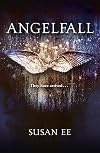
I had heard a lot about this book for a long time, and had wanted to read it. Now that I have, I understand the hype, although I have to say that it wasn't really for me.
Ee is a great writer, and she's not someone who added a few whiny complaints and called her setting postapocalyptic. She's built an immersive, frightening California post-angel takeover, replete with cannibals, enemies, and scary monsters of all kinds.
Penryn is a smart heroine, equal parts vulnerable and kick-butt. She has a lot more on the brain than crushes, and she doesn't trust total strangers on sight, much less fall in love with them. Her family dynamic is also written so well. Raffe is serious about his duty, though he also shows unexpected humor. I ended up caring about the characters a lot, and the ending was really devastating.
For all that, the extreme creepiness and violence and some of the disturbing images were way too much for me. (I should point out here that pure urban fantasy is usually not my favorite.) I think that someone else who's really into urban fantasy would adore this. The rather pointed digs against Christianity also rubbed me the wrong way.
Overall, I liked the characters, and I'll want to finish the books, but it was a bit too much for me.
Ee is a great writer, and she's not someone who added a few whiny complaints and called her setting postapocalyptic. She's built an immersive, frightening California post-angel takeover, replete with cannibals, enemies, and scary monsters of all kinds.
Penryn is a smart heroine, equal parts vulnerable and kick-butt. She has a lot more on the brain than crushes, and she doesn't trust total strangers on sight, much less fall in love with them. Her family dynamic is also written so well. Raffe is serious about his duty, though he also shows unexpected humor. I ended up caring about the characters a lot, and the ending was really devastating.
For all that, the extreme creepiness and violence and some of the disturbing images were way too much for me. (I should point out here that pure urban fantasy is usually not my favorite.) I think that someone else who's really into urban fantasy would adore this. The rather pointed digs against Christianity also rubbed me the wrong way.
Overall, I liked the characters, and I'll want to finish the books, but it was a bit too much for me.
This book has no pretensions about being a literary masterpiece, and for what it is, it's enjoyable. I think I'd give it 2.5 stars.
The plot is not particularly original, and what causes me to dock the most stars is that the writing is not particularly polished--commas in wrong places, some language that feels gimmicky ("superfun", etc.), occasional incorrect grammar or usage. There's a lot of melodrama typical for kind of story: immediately assuming bad things about someone who likes the same guy you do, or over-emphasizing that everyone likes this guy. Everyone.
But for all that, the characters are still likable, and the romance is sweet. Its development is fairly natural. Like with many hate --> love romance arcs, I didn't always believe the hate, or the level of love. The state of the relationship by the end seemed somewhat rushed and dramatic to me, though it still ends up being satisfying given the level of inner conflict. Overall, it was a cute story, and I appreciated it in its sweet simplicity.
The plot is not particularly original, and what causes me to dock the most stars is that the writing is not particularly polished--commas in wrong places, some language that feels gimmicky ("superfun", etc.), occasional incorrect grammar or usage. There's a lot of melodrama typical for kind of story: immediately assuming bad things about someone who likes the same guy you do, or over-emphasizing that everyone likes this guy. Everyone.
But for all that, the characters are still likable, and the romance is sweet. Its development is fairly natural. Like with many hate --> love romance arcs, I didn't always believe the hate, or the level of love. The state of the relationship by the end seemed somewhat rushed and dramatic to me, though it still ends up being satisfying given the level of inner conflict. Overall, it was a cute story, and I appreciated it in its sweet simplicity.
First, I'll say that, while there were many things about this book that made me raise my eyebrows (metaphorically speaking), or even sometimes cringe, there were other things I did enjoy, which is why I finished the book.
Here are some of the things that fit into the former category: overall, I think I would have enjoyed the romance more had it been a lot subtler. It was pretty pronounced from the beginning, and because we had the added (dis)advantage of hearing from both POVs in alternating chapters, that really made many parts come off as melodramatic to me. (Which I guess some would argue is a part of writing for teens; but I would still say that you can get a teen voice without being overly dramatic.)
Next, I personally don't enjoy major POV switches, like this book uses. I'm not necessarily firmly opposed to it if it can be done well, but I can't think of any book, off the top of my head, where I enjoyed this feature. In this case, I didn't think it was horribly mangled, but because of the aforementioned melodrama in the romance, I felt that the POV switches further ruined tension by giving too much information.
Other things that I just wasn't a fan of: I felt that both Vane, but especially Audra, described Audra as skinny/slender way too much. I'm skinny/slender, and I have some moments of self-awareness where I might think, "Oh, I'm skinny," but I would never think in my head, "My skinny arm reached out to grab the sign," or whatever. Another thing was that there was show more a lot of melodramatic dialogue (or internal monologue) which used periods in a way that I felt deterred from the drama of the moment, rather than adding to it. Things like, "Do. You. Understand. Me. Now." felt artificial and overused to me.
Also, I know it's hard to avoid this (really hard!), especially in fantasy, but I did feel like there was lot of info-dumping dialogue, and even strange explanatory details when writing from Audra's POV. If everything is second-nature to her, which I'm assuming it is, surely she wouldn't be saying something like, "This device, which is used for X, was on the right," or whatever. I also felt that Vane's resistance and reactions to learning new information sometimes felt exaggerated, but I understand that's another tricky thing in writing sci-fi/fantasy. Reacting is normal, but when does it get beyond just reacting normally to making the reader want to suspend her own disbelief because the character is doing it so thoroughly?
Finally, as I said at the beginning, I felt like the world-building really served as the backdrop for a melodramatic romance. And, okay--I accept that that might be a point of personal preference, as there are novels that can be romance first and sci-fi/fantasy second. But overall, this novel suffered from a lot of the problems with overdeveloping romance that I usually don't enjoy: excessive description of physical features, melodramatic descriptions of what happens or how the air is charged when they are touching or about to touch, etc.
Despite all that, I still finished the novel. Here are some of the things I enjoyed: despite what I said above, overall, I did enjoy the world-building of this story. I often felt like it was servicing the romance, which was the main plot-point, but I still found it interesting enough to want to learn more about it. I really liked the characterization of the Northerly/Southerly/Easterly/Westerly winds. Cool idea, and I liked seeing it develop, though I would've been interested in seeing it develop more--for example, through the presence of characters other than Vane and Audra.
The ending, especially after the way the whole book seemed to be pointing, was unexpected! But it did make me potentially curious about the next book, which I wasn't sure I would be from the rest of the book.
There was also some measure of enjoyable character development, though overall I felt that the word I could best use to describe this book, its plot, its characters, and its writing style would be "melodramatic."
All in all, I was able to finish this book, but there were a number of things that hampered more enjoyable reading. I'm curious enough to wonder about the sequel, but not necessarily sure at this point if I want to commit to reading more. show less
Here are some of the things that fit into the former category: overall, I think I would have enjoyed the romance more had it been a lot subtler. It was pretty pronounced from the beginning, and because we had the added (dis)advantage of hearing from both POVs in alternating chapters, that really made many parts come off as melodramatic to me. (Which I guess some would argue is a part of writing for teens; but I would still say that you can get a teen voice without being overly dramatic.)
Next, I personally don't enjoy major POV switches, like this book uses. I'm not necessarily firmly opposed to it if it can be done well, but I can't think of any book, off the top of my head, where I enjoyed this feature. In this case, I didn't think it was horribly mangled, but because of the aforementioned melodrama in the romance, I felt that the POV switches further ruined tension by giving too much information.
Other things that I just wasn't a fan of: I felt that both Vane, but especially Audra, described Audra as skinny/slender way too much. I'm skinny/slender, and I have some moments of self-awareness where I might think, "Oh, I'm skinny," but I would never think in my head, "My skinny arm reached out to grab the sign," or whatever. Another thing was that there was show more a lot of melodramatic dialogue (or internal monologue) which used periods in a way that I felt deterred from the drama of the moment, rather than adding to it. Things like, "Do. You. Understand. Me. Now." felt artificial and overused to me.
Also, I know it's hard to avoid this (really hard!), especially in fantasy, but I did feel like there was lot of info-dumping dialogue, and even strange explanatory details when writing from Audra's POV. If everything is second-nature to her, which I'm assuming it is, surely she wouldn't be saying something like, "This device, which is used for X, was on the right," or whatever. I also felt that Vane's resistance and reactions to learning new information sometimes felt exaggerated, but I understand that's another tricky thing in writing sci-fi/fantasy. Reacting is normal, but when does it get beyond just reacting normally to making the reader want to suspend her own disbelief because the character is doing it so thoroughly?
Finally, as I said at the beginning, I felt like the world-building really served as the backdrop for a melodramatic romance. And, okay--I accept that that might be a point of personal preference, as there are novels that can be romance first and sci-fi/fantasy second. But overall, this novel suffered from a lot of the problems with overdeveloping romance that I usually don't enjoy: excessive description of physical features, melodramatic descriptions of what happens or how the air is charged when they are touching or about to touch, etc.
Despite all that, I still finished the novel. Here are some of the things I enjoyed: despite what I said above, overall, I did enjoy the world-building of this story. I often felt like it was servicing the romance, which was the main plot-point, but I still found it interesting enough to want to learn more about it. I really liked the characterization of the Northerly/Southerly/Easterly/Westerly winds. Cool idea, and I liked seeing it develop, though I would've been interested in seeing it develop more--for example, through the presence of characters other than Vane and Audra.
The ending, especially after the way the whole book seemed to be pointing, was unexpected! But it did make me potentially curious about the next book, which I wasn't sure I would be from the rest of the book.
There was also some measure of enjoyable character development, though overall I felt that the word I could best use to describe this book, its plot, its characters, and its writing style would be "melodramatic."
All in all, I was able to finish this book, but there were a number of things that hampered more enjoyable reading. I'm curious enough to wonder about the sequel, but not necessarily sure at this point if I want to commit to reading more. show less
I don't know. I'm not quite sure what I was expecting, but it wasn't really this.
There were things about this book I enjoyed: generally a light tone, the development of the father-daughter relationship, an honest and vulnerable heroine and likable friends. But I found some other things not as great; only a few grammatical errors, but the occasional remark that I just didn't know how I felt about. Some of the driving premises of the story also read as slightly cheesy to me, though I didn't feel that it was excessively sentimental for the most part. I didn't enjoy the plot that much, which has more to do with personal taste than it being poorly developed, I think. I also found Shelby's constant questioning of God--I'm not sure. Honest, and for that reason interesting, but for me, not satisfying.
Overall, it was fine, and I liked it okay, but wasn't a huge fan.
There were things about this book I enjoyed: generally a light tone, the development of the father-daughter relationship, an honest and vulnerable heroine and likable friends. But I found some other things not as great; only a few grammatical errors, but the occasional remark that I just didn't know how I felt about. Some of the driving premises of the story also read as slightly cheesy to me, though I didn't feel that it was excessively sentimental for the most part. I didn't enjoy the plot that much, which has more to do with personal taste than it being poorly developed, I think. I also found Shelby's constant questioning of God--I'm not sure. Honest, and for that reason interesting, but for me, not satisfying.
Overall, it was fine, and I liked it okay, but wasn't a huge fan.
Compelled by Love: How to change the world through the simple power of love in action by Heidi Baker
This is such a beautiful book written by a woman who really knows and loves Jesus. In the first few pages I already felt the tears coming, and it was so refreshing to read Heidi Baker's simple, sincere account of who God is and how He moves, even today. Definitely a book to revisit once in a while!
I was surprised. I liked this book more than I expected, definitely: the premise didn't grab me, although the slightly mysterious summary did. I read with the plan of reading just a few pages to verify that I did not, in fact, want to continue reading the book. Instead, I finished the book fairly quickly on Pulse It.
One, I am really not a fan of different narrating styles. I love traditional narration and, though I clearly won't refuse to read a book that's narrated in a different format, it almost invariably ends up feeling like a gimmick to me.
Surprisingly, I thought it worked here. While the ending leaves much to be desired, I still preferred it to other YA romances I've read where there's just too much of everything: too much emotion, too much romance, too much about physical appearance. The narration style here actually allowed the author to stay away from some of the most common writing pitfalls with YA romance: namely, the melodramatic descriptions of emotions or physical appearance that I particularly detest (examples of the former including "disappointment roiling in the pit of X's stomach", "concern pouring off of Y," "heat rolling off of X in waves," etc.).
The characters ended up building enough depth, with enough interesting histories, that I grew to genuinely care about them and feel like they could be real people. The romance, if slightly unbelievable because of the main premise, still felt plausible. And as an added bonus, I went to college in the state of show more Vermont, and thoroughly enjoyed that this book was set there.
Why I ultimately can't give the book a higher rating, though, is because it's still not necessarily the kind of book I loved or which will stick with me for a while. It was acceptable, even preferable to other YA romances I've recently read, but I was still not a fan of the constant innuendos. There were times when Lucy, as a character, genuinely annoyed me and I just wished she would stop prodding--although there were other times I thought that she exemplifies many of the natural qualities of a slightly high-strung girl who's trying not to be. Overall, I think I just wanted more from the story. I did enjoy it, though. show less
One, I am really not a fan of different narrating styles. I love traditional narration and, though I clearly won't refuse to read a book that's narrated in a different format, it almost invariably ends up feeling like a gimmick to me.
Surprisingly, I thought it worked here. While the ending leaves much to be desired, I still preferred it to other YA romances I've read where there's just too much of everything: too much emotion, too much romance, too much about physical appearance. The narration style here actually allowed the author to stay away from some of the most common writing pitfalls with YA romance: namely, the melodramatic descriptions of emotions or physical appearance that I particularly detest (examples of the former including "disappointment roiling in the pit of X's stomach", "concern pouring off of Y," "heat rolling off of X in waves," etc.).
The characters ended up building enough depth, with enough interesting histories, that I grew to genuinely care about them and feel like they could be real people. The romance, if slightly unbelievable because of the main premise, still felt plausible. And as an added bonus, I went to college in the state of show more Vermont, and thoroughly enjoyed that this book was set there.
Why I ultimately can't give the book a higher rating, though, is because it's still not necessarily the kind of book I loved or which will stick with me for a while. It was acceptable, even preferable to other YA romances I've recently read, but I was still not a fan of the constant innuendos. There were times when Lucy, as a character, genuinely annoyed me and I just wished she would stop prodding--although there were other times I thought that she exemplifies many of the natural qualities of a slightly high-strung girl who's trying not to be. Overall, I think I just wanted more from the story. I did enjoy it, though. show less
Wow. That was stunning.
Sometimes, against my better judgment, I have a tendency to subconsciously distinguish between books that are riveting, and books that are worthwhile--at least with contemporary books. This book reminded me of how unnecessary such a distinction is.
It was simultaneously deeply compelling--short sentences and short chapters that moved you through the story at a quick pace, while never feeling like it was sacrificing depth or emotion--and unquestionably poignant. This book flew by like a pageturner that keeps you completely immersed in the story, but I slowed myself down to drink in Sepetys's lovely writing. (By the way, I love her name; gorgeous.)
In some ways, this felt like a more concise--and more successfully executed--version of [b:The Book Thief|19063|The Book Thief|Markus Zusak|https://d.gr-assets.com/books/1390053681s/19063.jpg|878368]. I enjoyed the latter quite a lot, and thought the premise of having Death as a narrator lended some freshness to a story that has otherwise been much told and publicized. However, it was also--I'm not sure. Long without necessarily making use of every page, though I still thought it was a great book.
This book, though--wow. It tells a story that has largely been suppressed and untold, and leaves such a lasting impression on the heart. You can tell Sepetys has personal history and investment in this story, because the story really comes alive at every turn, with personal details to each character. Yet the voice show more also felt authentically YA--after all, Lina is only fifteen when all this begins.
Nothing felt melodramatic or overwrought; just poetic, simple, and beautiful. And the thing is, what Sepetys is describing is not exactly a walk in the park--there's real horror, and we get a strong sense for what the deportees suffered. At the same time, there's so much beauty and hope and love in the midst of it that I never felt like it was a chore to read this book. To the point where, despite the grim subject, I think I can picture myself rereading this book.
The romance was just one of many little details Sepetys stuck in with great sensitivity and care, and it was beautifully executed. And I loved the redemptive details too--for example, in the case of Kretzky, and the bald man. Again, nothing melodramatic or overwrought--but simple details that felt realistic and powerful.
In terms of the writing itself--like I said earlier, it's a lot of short, short sentences and really short chapters. Sometimes, when I read a book like that, everything just feels choppy. Here, though--it just works. And Sepetys comes up with such beautiful imagery and language. Really, I was quite in awe at every turn. show less
Sometimes, against my better judgment, I have a tendency to subconsciously distinguish between books that are riveting, and books that are worthwhile--at least with contemporary books. This book reminded me of how unnecessary such a distinction is.
It was simultaneously deeply compelling--short sentences and short chapters that moved you through the story at a quick pace, while never feeling like it was sacrificing depth or emotion--and unquestionably poignant. This book flew by like a pageturner that keeps you completely immersed in the story, but I slowed myself down to drink in Sepetys's lovely writing. (By the way, I love her name; gorgeous.)
In some ways, this felt like a more concise--and more successfully executed--version of [b:The Book Thief|19063|The Book Thief|Markus Zusak|https://d.gr-assets.com/books/1390053681s/19063.jpg|878368]. I enjoyed the latter quite a lot, and thought the premise of having Death as a narrator lended some freshness to a story that has otherwise been much told and publicized. However, it was also--I'm not sure. Long without necessarily making use of every page, though I still thought it was a great book.
This book, though--wow. It tells a story that has largely been suppressed and untold, and leaves such a lasting impression on the heart. You can tell Sepetys has personal history and investment in this story, because the story really comes alive at every turn, with personal details to each character. Yet the voice show more also felt authentically YA--after all, Lina is only fifteen when all this begins.
Nothing felt melodramatic or overwrought; just poetic, simple, and beautiful. And the thing is, what Sepetys is describing is not exactly a walk in the park--there's real horror, and we get a strong sense for what the deportees suffered. At the same time, there's so much beauty and hope and love in the midst of it that I never felt like it was a chore to read this book. To the point where, despite the grim subject, I think I can picture myself rereading this book.
The romance was just one of many little details Sepetys stuck in with great sensitivity and care, and it was beautifully executed. And I loved the redemptive details too--for example, in the case of Kretzky, and the bald man. Again, nothing melodramatic or overwrought--but simple details that felt realistic and powerful.
In terms of the writing itself--like I said earlier, it's a lot of short, short sentences and really short chapters. Sometimes, when I read a book like that, everything just feels choppy. Here, though--it just works. And Sepetys comes up with such beautiful imagery and language. Really, I was quite in awe at every turn. show less
I received an electronic reviewer's copy from the publisher via Netgalley in exchange for an honest review.
Overall, I was pleasantly surprised by this book, which I only found via the publisher's invite on Netgalley. I speak a little Spanish, and I really enjoyed the format of short pages in English, followed by the same text in Spanish--it seems like it would be enjoyable and helpful both for native Spanish speakers learning English, and vice versa. Sometimes, this format did mean that I lost track of the plot, but overall, I liked it.
I saw formatting errors on a few pages, notably in the Spanish language part. For example, p. 30: "'Son todos muy listos'. Asintió Tomás". I also found both the beginning and the ending somewhat abrupt, though I appreciated the facts and stories sprinkled throughout.
The illustrations were fun and cute, and this book touches on themes like family, respecting your elders, and valuing the different backgrounds other people come from, while also teaching about nature and animals. I'm giving it three stars because I liked it but it's not necessarily the type of book I've come away from thinking I will remember it forever or it is one of my favorites of all time, but it is one that I can imagine recommending in good conscience to friends.
Overall, I was pleasantly surprised by this book, which I only found via the publisher's invite on Netgalley. I speak a little Spanish, and I really enjoyed the format of short pages in English, followed by the same text in Spanish--it seems like it would be enjoyable and helpful both for native Spanish speakers learning English, and vice versa. Sometimes, this format did mean that I lost track of the plot, but overall, I liked it.
I saw formatting errors on a few pages, notably in the Spanish language part. For example, p. 30: "'Son todos muy listos'. Asintió Tomás". I also found both the beginning and the ending somewhat abrupt, though I appreciated the facts and stories sprinkled throughout.
The illustrations were fun and cute, and this book touches on themes like family, respecting your elders, and valuing the different backgrounds other people come from, while also teaching about nature and animals. I'm giving it three stars because I liked it but it's not necessarily the type of book I've come away from thinking I will remember it forever or it is one of my favorites of all time, but it is one that I can imagine recommending in good conscience to friends.
I am a Christian and I agree with the ideas brought forth in this book, and I also have really enjoyed Eliabeth Elliot's devotionals. However, I found the style in this book sometimes difficult to jump into.
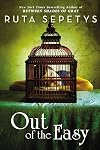
Until a little over half the book, I was pretty sure I was going to give this book at least four stars. As it is, I still enjoyed it a lot.
I enjoy Sepetys's simple, elegant prose. After the powerhouse that was [b:Between Shades of Grey|18133158|Between Shades of Grey|Ruta Sepetys|https://d.gr-assets.com/books/1433274621s/18133158.jpg|10870318], I hoped she would pull off another great book in Out of the Easy, and she did. The setting and the characters came alive for me instantly. I spent my last spring break in college in New Orleans, and I really enjoyed getting this glimpse into the historical city.
Ultimately, it was Patrick's story arc that really unsettled me. I'm not the kind of person that absolutely rails against love triangles, though I don't necessarily love them either. That being said, the one in this book wasn't annoying. Still, I didn't like how Patrick's story resolved.In the beginning, it seemed like Sepetys was maybe trying to fake us out to surprise us, but what happened was that I felt more attached to Patrick than Jesse, at least at first, and definitely wanted more closure with his story. He's gay, but he doesn't ever explicitly tell Josie--nor does she let him. Then, he just disappears, and in swoops Jesse. I actually liked Jesse, but I didn't like how this was handled. I also don't like the common message of YA romance that the guy who feels steady, safe, and comfortable is boring and wrong for you, whereas the guy you're sometimes scared of is show more good for you.
But seriously, Josie was just the kind of character you absolutely root for, and there were many poignant moments. There were also quite a lot of pageturning scenes.For example, desperately hoping that Josie will stick to her guns and not prostitute herself like her mother.
Overall, I enjoyed it, and am eager to see what Sepetys will write next. show less
I enjoy Sepetys's simple, elegant prose. After the powerhouse that was [b:Between Shades of Grey|18133158|Between Shades of Grey|Ruta Sepetys|https://d.gr-assets.com/books/1433274621s/18133158.jpg|10870318], I hoped she would pull off another great book in Out of the Easy, and she did. The setting and the characters came alive for me instantly. I spent my last spring break in college in New Orleans, and I really enjoyed getting this glimpse into the historical city.
Ultimately, it was Patrick's story arc that really unsettled me. I'm not the kind of person that absolutely rails against love triangles, though I don't necessarily love them either. That being said, the one in this book wasn't annoying. Still, I didn't like how Patrick's story resolved.
But seriously, Josie was just the kind of character you absolutely root for, and there were many poignant moments. There were also quite a lot of pageturning scenes.
Overall, I enjoyed it, and am eager to see what Sepetys will write next. show less
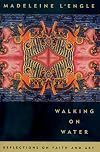
So this book wasn't exactly what I was expecting, but I ended up enjoying it nonetheless.
Though I haven't reread them in a while (something I plan to remedy soon), L'Engle's Wrinkle Quartet is without question one of my favorite series of children's books. And, as someone who loves Jesus and also really loves reading and writing, and wrestles with the question of how to read and write in a way that glorifies God, I naturally felt drawn toward the premise of this book.
L'Engle, though, by self-admission, has struggled more with her identity as a Christian than her identity as a writer or reader, whereas I feel both but would probably say the opposite is truer. That is, I know I want to love Jesus with all my heart, soul, mind, and strength, but I don't know if giving myself to reading and writing is the best way to do this. Thus, she starts more or less with the assumption that becoming absorbed in writing and reading is good. She also gets quite philosophical, which is not necessarily problematic, but also not what I was looking for. Still, she does explain her thoughts, or at least invite us into her own observations and questions, which I appreciated.
My favorite chapter by far was Chapter 10: The Journey Homeward, though there were things I disagreed with or needed to question throughout, that chapter included. It made me see what it might mean to love Jesus in my writing, and want to really position myself, with both discipline and letting go, to do so.
Ultimately, show more though this book wasn't what I was expecting, the fruit was positive: it drew me to Jesus and caused me to ask questions, and desire to write well.
I really appreciate L'Engle and hope I will be able to pick up where she left off. Which may sound arrogant, but I don't intend it to be--just that I think she really was onto something worth grasping. After reading this, I definitely want to read more of L'Engle's other books, as well. show less
Though I haven't reread them in a while (something I plan to remedy soon), L'Engle's Wrinkle Quartet is without question one of my favorite series of children's books. And, as someone who loves Jesus and also really loves reading and writing, and wrestles with the question of how to read and write in a way that glorifies God, I naturally felt drawn toward the premise of this book.
L'Engle, though, by self-admission, has struggled more with her identity as a Christian than her identity as a writer or reader, whereas I feel both but would probably say the opposite is truer. That is, I know I want to love Jesus with all my heart, soul, mind, and strength, but I don't know if giving myself to reading and writing is the best way to do this. Thus, she starts more or less with the assumption that becoming absorbed in writing and reading is good. She also gets quite philosophical, which is not necessarily problematic, but also not what I was looking for. Still, she does explain her thoughts, or at least invite us into her own observations and questions, which I appreciated.
My favorite chapter by far was Chapter 10: The Journey Homeward, though there were things I disagreed with or needed to question throughout, that chapter included. It made me see what it might mean to love Jesus in my writing, and want to really position myself, with both discipline and letting go, to do so.
Ultimately, show more though this book wasn't what I was expecting, the fruit was positive: it drew me to Jesus and caused me to ask questions, and desire to write well.
I really appreciate L'Engle and hope I will be able to pick up where she left off. Which may sound arrogant, but I don't intend it to be--just that I think she really was onto something worth grasping. After reading this, I definitely want to read more of L'Engle's other books, as well. show less
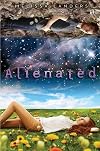
I've discovered I'm not big on sci-fi, especially aliens, but I'm really pleasantly surprised at how much I enjoyed this book. That being said, fans of sci-fi might be disappointed, because the science here, while enjoyable for me, is probably too light for any hardcore fans. This is romance first, sci-fi second.
What grabbed me from the first page was Cara's voice--Landers just got it spot-on. It's so fresh, passionate, relatable, and fun to read. Aelyx's voice took longer to grow on me, mainly because we start out with a lot of invented vocabulary that we don't know the meanings of right away, but it was also distinctive, if not quite as fiery and interesting as Cara's. I also like that Landers chose to write the two POVs in third person rather than first. I still felt connected to both characters, but third person helps rein in some of the more melodramatic aspects of multi-POV romance (basically, both characters gushing about each other from the beginning).
I tend to favor subtle (but clear) romance, and I think this one could have been a little subtler, but it was still sweet and believable overall, and the way it developed also felt believable to me.
Also, there were some examples of teenagers being somewhat crude and even hostile that I wasn't a fan of. There's quite a bit of violence.
Besides that, the only other thing that threw me off was the pacing. I think it was well-paced overall--the conflicts keep coming and nothing was really dragging. But because the show more downward spiral of public opinion against L'eihrs is introduced fairly early, there was a point in the middle of the book where things were just continuing to get worse and I couldn't help but think, "Ugh, when is this going to end?"
Even though we only meet him briefly, Eron's death hit me hard!
I actually really, really liked the ending, too. Felt like a fitting climax, and a satisfying resolution.
Overall, despite the serious plot points, this read as having a lighthearted tone, which I was a fan of. show less
What grabbed me from the first page was Cara's voice--Landers just got it spot-on. It's so fresh, passionate, relatable, and fun to read. Aelyx's voice took longer to grow on me, mainly because we start out with a lot of invented vocabulary that we don't know the meanings of right away, but it was also distinctive, if not quite as fiery and interesting as Cara's. I also like that Landers chose to write the two POVs in third person rather than first. I still felt connected to both characters, but third person helps rein in some of the more melodramatic aspects of multi-POV romance (basically, both characters gushing about each other from the beginning).
I tend to favor subtle (but clear) romance, and I think this one could have been a little subtler, but it was still sweet and believable overall, and the way it developed also felt believable to me.
Also, there were some examples of teenagers being somewhat crude and even hostile that I wasn't a fan of. There's quite a bit of violence.
Besides that, the only other thing that threw me off was the pacing. I think it was well-paced overall--the conflicts keep coming and nothing was really dragging. But because the show more downward spiral of public opinion against L'eihrs is introduced fairly early, there was a point in the middle of the book where things were just continuing to get worse and I couldn't help but think, "Ugh, when is this going to end?"
I actually really, really liked the ending, too. Felt like a fitting climax, and a satisfying resolution.
Overall, despite the serious plot points, this read as having a lighthearted tone, which I was a fan of. show less
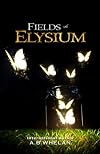
Overall, I get the premise and it's not bad, but I think it was not executed as well as it could have been.
The writing generally suffers from unidiomatic expressions that jerk me a little out of reading--by no means ubiquitous, but still a frequent occurrence--or overwriting. In that sense, and in the romance that developed, I thought a lot of Twilight, but thought that Twilight, of which I am not a huge fan, still did a better job with characterization and world-building.
I found myself skipping past long chunks talking about life back in LA; I wonder if they were fully necessary, or if they could have been more engagingly written.
The romance, like many I've read that try to write the hate-into-love path, didn't always feel believable to me. The hate didn't seem like real hate, and the love seemed to come kind of out of nowhere.
The characterization, which for me is the most crucial, was also weak. I found myself incredulous at a few different points with the various characters' reactions. For example, if Weston and Victor have been best friends for so long and Victor has even saved his life, why should tiny little circumstances cause one to blow up at the other?
The world-building wasn't bad. However--and this might be because I'm not as big a fan of sci-fi--some of the names seemed so clunky that I found myself disbelieving once again.
Again, I think I get the overall premise, and I appreciate the author's hard work and effort. But I have a fairly forgiving suspension of show more disbelief as a reader, and yet my disbelief came sharply into the picture many times in this story, ultimately causing me to stop reading after reading through about 25 chapters. show less
The writing generally suffers from unidiomatic expressions that jerk me a little out of reading--by no means ubiquitous, but still a frequent occurrence--or overwriting. In that sense, and in the romance that developed, I thought a lot of Twilight, but thought that Twilight, of which I am not a huge fan, still did a better job with characterization and world-building.
I found myself skipping past long chunks talking about life back in LA; I wonder if they were fully necessary, or if they could have been more engagingly written.
The romance, like many I've read that try to write the hate-into-love path, didn't always feel believable to me. The hate didn't seem like real hate, and the love seemed to come kind of out of nowhere.
The characterization, which for me is the most crucial, was also weak. I found myself incredulous at a few different points with the various characters' reactions. For example, if Weston and Victor have been best friends for so long and Victor has even saved his life, why should tiny little circumstances cause one to blow up at the other?
The world-building wasn't bad. However--and this might be because I'm not as big a fan of sci-fi--some of the names seemed so clunky that I found myself disbelieving once again.
Again, I think I get the overall premise, and I appreciate the author's hard work and effort. But I have a fairly forgiving suspension of show more disbelief as a reader, and yet my disbelief came sharply into the picture many times in this story, ultimately causing me to stop reading after reading through about 25 chapters. show less
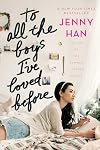
My rating might actually be closer to 3.5 stars, but I wanted to love this book so desperately that I think I'll just round up.
Read the first 16 chapters on Pulse It, and I absolutely loved it! However, also had a decent pause (at least a few weeks, maybe a month or so) between that and the rest of the book, so I do feel like I'll need to reread it at some point for continuity. :)
On the one hand, I was surprised that the main element in the summary--the letters being mailed--doesn't happen until Chapter 16. On the other hand, I think the setup is perfect. I was worried at the beginning that I wouldn't be able to keep track of the various boys Lara Jean had a crush on and I wouldn't have enough of a chance to get to know who she is... but Han's exposition in the beginning of this book was perfect. Such a strong sense of character, family, and place, all without infodumping or tedious storytelling.
The book kept me guessing at turns, and I like that all the characters get to be realistic and three-dimensional--even those who initially seem perfect, like Margot, and those that don't. I also love how much family figures into this. And of course, I can't even say how amazing it was to get to read about a half-Korean, as a Korean-American myself, though not biracial.
What really drove the story for me was the voice, and how much I loved Lara Jean. She's genuinely nice, but by no means perfect, and so utterly likable. I found myself laughing and smiling really often. I liked the show more other characters too, and I loved the relationships in the book.
The climax got intense for me--I just cringed and hurt for Lara Jean, and have no desire to relive this conflict again anytime soon. But while the resolution was not terrible, it is ultimately here where I felt like I wanted to dock 1.5 stars. It takes care of the important stuff, but for me this resolution was still too short.For example: I just really wanted to know what Peter's story about the rumors was, and to have a more definitive stance on what their relationship was going to be like.
Anyway, I still enjoyed it, though it's not a new favorite. I'm looking forward to seeing what else Han writes. :) I like her writing, I like this premise, and I really liked the characters and relationships.
P.S. Yes, I found the cover and the typography quite gorgeous, too. show less
Read the first 16 chapters on Pulse It, and I absolutely loved it! However, also had a decent pause (at least a few weeks, maybe a month or so) between that and the rest of the book, so I do feel like I'll need to reread it at some point for continuity. :)
On the one hand, I was surprised that the main element in the summary--the letters being mailed--doesn't happen until Chapter 16. On the other hand, I think the setup is perfect. I was worried at the beginning that I wouldn't be able to keep track of the various boys Lara Jean had a crush on and I wouldn't have enough of a chance to get to know who she is... but Han's exposition in the beginning of this book was perfect. Such a strong sense of character, family, and place, all without infodumping or tedious storytelling.
The book kept me guessing at turns, and I like that all the characters get to be realistic and three-dimensional--even those who initially seem perfect, like Margot, and those that don't. I also love how much family figures into this. And of course, I can't even say how amazing it was to get to read about a half-Korean, as a Korean-American myself, though not biracial.
What really drove the story for me was the voice, and how much I loved Lara Jean. She's genuinely nice, but by no means perfect, and so utterly likable. I found myself laughing and smiling really often. I liked the show more other characters too, and I loved the relationships in the book.
The climax got intense for me--I just cringed and hurt for Lara Jean, and have no desire to relive this conflict again anytime soon. But while the resolution was not terrible, it is ultimately here where I felt like I wanted to dock 1.5 stars. It takes care of the important stuff, but for me this resolution was still too short.
Anyway, I still enjoyed it, though it's not a new favorite. I'm looking forward to seeing what else Han writes. :) I like her writing, I like this premise, and I really liked the characters and relationships.
P.S. Yes, I found the cover and the typography quite gorgeous, too. show less
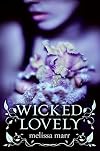
Probably 2.5 stars. I read a lot of great reviews about this book, which made me really want to read it. It was fine, but I was still somewhat disappointed.
What felt like near-constant italics for the thoughts of various characters was pretty distracting. Also, some parts of the book were kind of weird and confusing. Overall, it's definitely more romance than anything else. I actually like the way the romances work out, but I didn't particularly love any of it, and I don't feel like I had a favorite character, besides maybe Seth.
I might keep reading, but I don't feel compelled to. On the other hand, I do think the book ends well, and satisfyingly--such that it could stand alone quite well.
What felt like near-constant italics for the thoughts of various characters was pretty distracting. Also, some parts of the book were kind of weird and confusing. Overall, it's definitely more romance than anything else. I actually like the way the romances work out, but I didn't particularly love any of it, and I don't feel like I had a favorite character, besides maybe Seth.
I might keep reading, but I don't feel compelled to. On the other hand, I do think the book ends well, and satisfyingly--such that it could stand alone quite well.
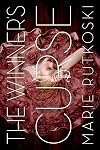
That was exquisite.
I had heard many positive things about this book, and went in wondering if it could possibly live up to the hype. I'm so glad to say that, for me, it did. I kept hearing comparisons to [b:Graceling|3236307|Graceling (Graceling Realm, #1)|Kristin Cashore|https://d.gr-assets.com/books/1331548394s/3236307.jpg|3270810], and thus hoped that The Winner's Curse would have the beautiful writing, solid world-building, and intricate plotting of Graceling minus the kind of explicit and weird romance and certain weird themes. And I would say that that's exactly what I got.
The writing was lyrical and evocative, yet unpretentious. I was occasionally thrown off-kilter by point of view switches within paragraphs, and a seeming surplus of short, choppy sentences (especially in the opening chapters of the novel), but for the most part, I found myself relishing Rutkoski's writing. The characters are wonderful--you get such a keen sense of both their strength and their vulnerability, but I also feel like you are allowed to discover them for yourselves. (I'm thinking in particular of Tris from [b:Divergent|13335037|Divergent (Divergent, #1)|Veronica Roth|https://d.gr-assets.com/books/1328559506s/13335037.jpg|13155899]. Though I enjoyed that book, and liked Tris enough, I felt like Roth kept pounding me over the head with "Tris is strong!" A direct mention of Kestrel's strength only came across once here, or at least as far as I remember, yet I understood from what I saw of show more her that, for all the relatable, vulnerable, uncertain parts of her, there are also strong, courageous, and really intelligent parts of her.)
Though intrigued by the premise, I also found myself concerned. Is Rutkoski a writer that can handle all the many, many complex dynamics involved in a romance that's supposed to derive from a slave-mistress relationship? I was also hoping, being that it's YA, that it wouldn't be a series of dark, explicit, tempestuous scenes. On all these scores, I found myself satisfied. The romance is built slowly, subtly--without drama, except what arises naturally from the weighty circumstances involved. Rutkoski's skill in handling many different sensitive scenes and relationships impressed me.
The only other thing I can say, really, is that the romantic scenes, while by no means heavy, usually had just one or two details too many for me (but I am the biggest fan of as subtle as subtle gets).
Overall, I was completely engrossed in the story, in the world Rutkoski built, in her characters. And as someone who personally has a really hard time reading books that are highly dramatic (I mean, mostly, in narrative tone, though also events, I suppose), I loved that Rutkoski put her characters through high-stakes situations, with realistic reactions, all without becoming melodramatic. As I was reading, I found myself so thrilled, and kept hoping and hoping that the book wasn't suddenly going to let me down. And it didn't.
It's been such a long time since I rated a book--especially a contemporary novel--five stars. I'm glad to do it for The Winner's Curse, and I keep hoping with slight dread (but also great anticipation) that the remaining two books in the trilogy will be as lovely as this one. show less
I had heard many positive things about this book, and went in wondering if it could possibly live up to the hype. I'm so glad to say that, for me, it did. I kept hearing comparisons to [b:Graceling|3236307|Graceling (Graceling Realm, #1)|Kristin Cashore|https://d.gr-assets.com/books/1331548394s/3236307.jpg|3270810], and thus hoped that The Winner's Curse would have the beautiful writing, solid world-building, and intricate plotting of Graceling minus the kind of explicit and weird romance and certain weird themes. And I would say that that's exactly what I got.
The writing was lyrical and evocative, yet unpretentious. I was occasionally thrown off-kilter by point of view switches within paragraphs, and a seeming surplus of short, choppy sentences (especially in the opening chapters of the novel), but for the most part, I found myself relishing Rutkoski's writing. The characters are wonderful--you get such a keen sense of both their strength and their vulnerability, but I also feel like you are allowed to discover them for yourselves. (I'm thinking in particular of Tris from [b:Divergent|13335037|Divergent (Divergent, #1)|Veronica Roth|https://d.gr-assets.com/books/1328559506s/13335037.jpg|13155899]. Though I enjoyed that book, and liked Tris enough, I felt like Roth kept pounding me over the head with "Tris is strong!" A direct mention of Kestrel's strength only came across once here, or at least as far as I remember, yet I understood from what I saw of show more her that, for all the relatable, vulnerable, uncertain parts of her, there are also strong, courageous, and really intelligent parts of her.)
Though intrigued by the premise, I also found myself concerned. Is Rutkoski a writer that can handle all the many, many complex dynamics involved in a romance that's supposed to derive from a slave-mistress relationship? I was also hoping, being that it's YA, that it wouldn't be a series of dark, explicit, tempestuous scenes. On all these scores, I found myself satisfied. The romance is built slowly, subtly--without drama, except what arises naturally from the weighty circumstances involved. Rutkoski's skill in handling many different sensitive scenes and relationships impressed me.
The only other thing I can say, really, is that the romantic scenes, while by no means heavy, usually had just one or two details too many for me (but I am the biggest fan of as subtle as subtle gets).
Overall, I was completely engrossed in the story, in the world Rutkoski built, in her characters. And as someone who personally has a really hard time reading books that are highly dramatic (I mean, mostly, in narrative tone, though also events, I suppose), I loved that Rutkoski put her characters through high-stakes situations, with realistic reactions, all without becoming melodramatic. As I was reading, I found myself so thrilled, and kept hoping and hoping that the book wasn't suddenly going to let me down. And it didn't.
It's been such a long time since I rated a book--especially a contemporary novel--five stars. I'm glad to do it for The Winner's Curse, and I keep hoping with slight dread (but also great anticipation) that the remaining two books in the trilogy will be as lovely as this one. show less
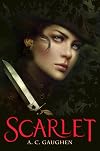
When I first started reading this book, I was a bit skeptical. I like straightforward narration, in style as much as in voice, and Scarlet's way of talking, like Marni's in [b:A Creature of Moonlight|18118589|A Creature of Moonlight|Rebecca Hahn|https://d.gr-assets.com/books/1384362178s/18118589.jpg|23850617], was not immediately my favorite. Plus, while she seemed like she could kick butt, I also worried that Scarlet was another girl who was independent to the point of being rude and mean.
But, as I kept reading, I got hooked. I've been to Nottinghamshire, and Edwinstowe and Sherwood Forest, so I loved just imagining those places coming alive with Gaughen's characters and scenes. I fell in love with Gaughen's Robin Hood and band. The plot, if not entirely unpredictable, moved faster than I expected, in a good way.
I dock stars, then, mainly for violence. There's a lot of it, and it's pretty graphic. As an extremely squeamish reader, there were many parts I tried to read quickly. But I admit that the action scenes were pretty exciting.
The romance was a bit more than I wanted, perhaps, yet still interesting. I do think that the main couple was well-matched.
A few twists took me by surprise, and I enjoyed that. Overall, I'm looking forward to reading on.
But, as I kept reading, I got hooked. I've been to Nottinghamshire, and Edwinstowe and Sherwood Forest, so I loved just imagining those places coming alive with Gaughen's characters and scenes. I fell in love with Gaughen's Robin Hood and band. The plot, if not entirely unpredictable, moved faster than I expected, in a good way.
I dock stars, then, mainly for violence. There's a lot of it, and it's pretty graphic. As an extremely squeamish reader, there were many parts I tried to read quickly. But I admit that the action scenes were pretty exciting.
The romance was a bit more than I wanted, perhaps, yet still interesting. I do think that the main couple was well-matched.
A few twists took me by surprise, and I enjoyed that. Overall, I'm looking forward to reading on.
I found The Pledge randomly on PulseIt, but liked it a lot more than I expected, though there were parts of it that also made me uncomfortable, mainly some of the violence and magic (though still not sure what the point of the main character fixating on the dancers in the club was either?). The Pledge isn't gory, but I am somewhat squeamish, so this is a bit more in terms of personal taste. I guess what it comes down to, though, is that I was able to enjoy it a lot overall, even though I'm not really a fan of dystopia and paranormal (though I end up reading a lot of it because it is so omnipresent in the YA market).
I was initially drawn to the premise of language playing a major role, because I love languages and the concept interested me. The book was off to a pretty slow start for me, but once I got through the first few chapters, I was pretty hooked.
The plot, if not startlingly original in its bare bones, was still interesting and, to me, enjoyable. I actually loved how the romance played out; different from what I've read in most YA novels recently.And personally, I thought Derting achieved a good balance between the proper reaction of a reasonable person to a stranger--i.e., distrust, discomfort, suspicion--and the romantic impulses of a teenager to someone attractive. I feel like I'm usually rolling my eyes at how desperately the main character flings herself onto a mysterious man she doesn't know at all. I enjoyed how Derting fleshed out Charlie's personality, and show more her reactions to Max fit her shy, sweet nature. And though it is difficult to develop trust in a total stranger (and thus something I would never prefer as the mode of romantic development in a book), the process it took them and Max's consistent character made it more plausible.
When it comes down to it, sometimes the writing felt a little heavy to me--sometimes--but there were also points when I really enjoyed certain turns of phrase. I don't know if, thematically, this novel covers much of depth; at least not much sticks out right away. But above everything, I enjoyed the characters and enjoyed the story. However, I have to say I was a little disappointed that this, too, is a trilogy, when I thought it stood alone quite well. I may end up checking out the sequel, but a preliminary glance has me think that I might be content to leave it here. show less
I was initially drawn to the premise of language playing a major role, because I love languages and the concept interested me. The book was off to a pretty slow start for me, but once I got through the first few chapters, I was pretty hooked.
The plot, if not startlingly original in its bare bones, was still interesting and, to me, enjoyable. I actually loved how the romance played out; different from what I've read in most YA novels recently.
When it comes down to it, sometimes the writing felt a little heavy to me--sometimes--but there were also points when I really enjoyed certain turns of phrase. I don't know if, thematically, this novel covers much of depth; at least not much sticks out right away. But above everything, I enjoyed the characters and enjoyed the story. However, I have to say I was a little disappointed that this, too, is a trilogy, when I thought it stood alone quite well. I may end up checking out the sequel, but a preliminary glance has me think that I might be content to leave it here. show less
I'm feeling pretty conflicted on what to rate Cress--but ultimately I'm thinking 3.5 or 4 stars.
On the one hand, though I at least knew to expect it this time, I once again couldn't help but think--really? I come to love Scarlet and Wolf so dearly,and now most of the book they're MIA? But I loved Cress and Thorne so much that, again, I ended up not being as huffy about it as I expected. Admittedly, in the beginning, they were two characters I got slightly annoyed with, but knew I would come to love, and I totally did.
Also, I was reminded again and again that Kai is one of my favorite characters ever--and also reminded of how much I love Cinder. I actually also really enjoyed Cinder and Thorne's friendship.
This book took me through a lot emotionally (which is to say that Meyer took her characters through a lot--there were times, especially in the middle third of the book, where I wondered why nothing could just go without a hitch at least once ), to the point where I thought that, like Cinder, I wouldn't be tempted to reread it anytime soon. However, I loved the last few chapters so much that I think I may indeed... especially now that I have to wait for Winter! Speaking of those last few chapters: finally! I had been waiting from the end of Cinder for when Kai and Cinder could reunite and Cinder could finally reveal everything, and... phew. Almost two full books later, finally!
Ultimately, Meyer created characters I really care about, and made them three-dimensional show more (largely aided through her choice of third-person omniscient POV), but also distinct from each other. There's not a romantic arc she's written so far that I haven't enjoyed thoroughly. My only nitpick is that the beginning of a lot of chapters, I felt, started with generic pronouns ("he" or "she"), sometimes going for quite a while before specifying which character it is. I could generally tell who Meyer was referring to, and perhaps she was going for a suspenseful tone, but considering how many characters' heads we get to go into, I think she'd be better off just clarifying each one from the get-go.
Though I gave them the same rating, I think I enjoyed [b:Scarlet|13206760|Scarlet (The Lunar Chronicles, #2)|Marissa Meyer|https://d202m5krfqbpi5.cloudfront.net/books/1342485529s/13206760.jpg|18390691] a lot more throughout, whereas it was mostly the ending of Cress that I loved more. show less
On the one hand, though I at least knew to expect it this time, I once again couldn't help but think--really? I come to love Scarlet and Wolf so dearly,
Also, I was reminded again and again that Kai is one of my favorite characters ever--and also reminded of how much I love Cinder. I actually also really enjoyed Cinder and Thorne's friendship.
This book took me through a lot emotionally (which is to say that Meyer took her characters through a lot--
Ultimately, Meyer created characters I really care about, and made them three-dimensional show more (largely aided through her choice of third-person omniscient POV), but also distinct from each other. There's not a romantic arc she's written so far that I haven't enjoyed thoroughly. My only nitpick is that the beginning of a lot of chapters, I felt, started with generic pronouns ("he" or "she"), sometimes going for quite a while before specifying which character it is. I could generally tell who Meyer was referring to, and perhaps she was going for a suspenseful tone, but considering how many characters' heads we get to go into, I think she'd be better off just clarifying each one from the get-go.
Though I gave them the same rating, I think I enjoyed [b:Scarlet|13206760|Scarlet (The Lunar Chronicles, #2)|Marissa Meyer|https://d202m5krfqbpi5.cloudfront.net/books/1342485529s/13206760.jpg|18390691] a lot more throughout, whereas it was mostly the ending of Cress that I loved more. show less
Well, this was a treat.
Hodge writes beautifully. Gorgeous cover aside, I felt wary when I saw the text on it ("Her mission was to kill him. Her destiny was to love him."), but I needn't have been. Rich and complex world-building, well-drawn and complicated characters (even the supporting characters ended up surprising me at various turns), and a plot that you wouldn't imagine could be so intricate when it's a fairy tale retelling and you think you know all that's coming next.
Also, the dialogue! It's been a while since I've read a book where I enjoyed the dialogue this much. There were several scenes I went back to and reread, just because I liked them so much. One in particular that I don't remember fully is (I believe) when Nyx and Ignifex are discussing Nyx's plans to kill him and she answers, at the end, "It would be rude to wake you."
It's also clear that Hodge loves language. I personally appreciated the nods she gave to Bible verses, although she used them in contexts that sometimes felt strange to me.
Cruel Beauty can join my rather short list of books in which hate turning into love is believably written. If it can't join my even shorter list of books in which physical attraction isn't an integral part in that transformation (I think [b:Pride and Prejudice|1885|Pride and Prejudice|Jane Austen|https://d202m5krfqbpi5.cloudfront.net/books/1320399351s/1885.jpg|3060926] is the only one that's so subtle on that front), I'm still quite impressed. This isn't a shoddily show more fabricated romance. There are real barriers to love, real reasons to hate. But the transformation is also real, and so is the love.Though this book also really emphasizes loving someone who is wicked, I wish it would go a step further and say that love involves not only seeing someone's faults and still choosing to love, but also loving someone too much to let him/her stay there. I guess the ending does symbolically get that across, though. I'm a fan of the ending.
The main downside for me, then, is that I have quite a weak stomach for the paranormal. I hate vampires, werewolves, witches--but demons most of all. I think I made it through because it became clear that, with the context Ignifex is in, he's not the devil as in Christianity. Overall, I'd say there was more that disturbed me in [b:Enchanted|12180248|Enchanted (Woodcutter Sisters #1)|Alethea Kontis|https://d202m5krfqbpi5.cloudfront.net/books/1354716929s/12180248.jpg|17151998] by Alethea Kontis than in this novel.
I will say, this book succeeds wonderfully as a YA fantasy romance. It's YA--and if slightly on the upper end for some suggestive comments, especially in the beginning, Hodge writes tastefully and the book is free from explicit violence, sex, and language. It's fantasy--and Hodge takes that seriously in this standalone novel, crafting a world that means something and can stand on its own even apart from romance. But it also is romance, which is central to the plot of the story and written well.
I went back and forth between whether I wanted to give this book three or four stars--and I still suspect that I'd give it 3.5--but the resolution was satisfying enough that I feel comfortable giving it four. I will say, though, that the interlude before the denouement felt agonizing and I did wish for more once the resolution arrived. Alas!
And--well, I'm delighted. This was a satisfying read. show less
Hodge writes beautifully. Gorgeous cover aside, I felt wary when I saw the text on it ("Her mission was to kill him. Her destiny was to love him."), but I needn't have been. Rich and complex world-building, well-drawn and complicated characters (even the supporting characters ended up surprising me at various turns), and a plot that you wouldn't imagine could be so intricate when it's a fairy tale retelling and you think you know all that's coming next.
Also, the dialogue! It's been a while since I've read a book where I enjoyed the dialogue this much. There were several scenes I went back to and reread, just because I liked them so much. One in particular that I don't remember fully is (I believe) when Nyx and Ignifex are discussing Nyx's plans to kill him and she answers, at the end, "It would be rude to wake you."
It's also clear that Hodge loves language. I personally appreciated the nods she gave to Bible verses, although she used them in contexts that sometimes felt strange to me.
Cruel Beauty can join my rather short list of books in which hate turning into love is believably written. If it can't join my even shorter list of books in which physical attraction isn't an integral part in that transformation (I think [b:Pride and Prejudice|1885|Pride and Prejudice|Jane Austen|https://d202m5krfqbpi5.cloudfront.net/books/1320399351s/1885.jpg|3060926] is the only one that's so subtle on that front), I'm still quite impressed. This isn't a shoddily show more fabricated romance. There are real barriers to love, real reasons to hate. But the transformation is also real, and so is the love.
The main downside for me, then, is that I have quite a weak stomach for the paranormal. I hate vampires, werewolves, witches--but demons most of all. I think I made it through because it became clear that, with the context Ignifex is in, he's not the devil as in Christianity. Overall, I'd say there was more that disturbed me in [b:Enchanted|12180248|Enchanted (Woodcutter Sisters #1)|Alethea Kontis|https://d202m5krfqbpi5.cloudfront.net/books/1354716929s/12180248.jpg|17151998] by Alethea Kontis than in this novel.
I will say, this book succeeds wonderfully as a YA fantasy romance. It's YA--and if slightly on the upper end for some suggestive comments, especially in the beginning, Hodge writes tastefully and the book is free from explicit violence, sex, and language. It's fantasy--and Hodge takes that seriously in this standalone novel, crafting a world that means something and can stand on its own even apart from romance. But it also is romance, which is central to the plot of the story and written well.
I went back and forth between whether I wanted to give this book three or four stars--and I still suspect that I'd give it 3.5--but the resolution was satisfying enough that I feel comfortable giving it four. I will say, though, that the interlude before the denouement felt agonizing and I did wish for more once the resolution arrived. Alas!
And--well, I'm delighted. This was a satisfying read. show less
I never finished reading this book while it was on FictionPress, though I remember hearing a lot about it and starting to read it. I was naturally curious to check it out.
Overall, I liked it, but I don't know if anything stood out for me. The writing was fine, though not excellent. I found the constant change of what Maas was calling her characters a bit unnecessarily distracting (for example, soon after we meet Chaol, within a page he might be called Chaol, Captain Westfall, and Captain of the Palace Guard). I did feel for the characters and like them, though I don't know if I felt a deep connection with any of them.
I think where Throne of Glass shines most is probably world-building--to the point where it'd definitely be confusing to keep track of without that map at the beginning. Maas's many drafts make themselves apparent by all the detail she is able to bring in to the various kingdoms that exist, and their various internal and external politics.
I liked the romance, but I found myself a little disappointed, too.Don't get me wrong, I like Chaol. But I also like Dorian, and feel like Celaena is being unfair in disregarding his feelings--though I guess she also doesn't really know their extent. At the same time, her choice makes sense. Argh!
Another reason I knocked off stars is because the book was both more violent and sensual than I can usually stomach. (Thankfully, I'm not an excessively visual person, or else some of these gory deaths would have given me show more nightmares.)
Overall, I liked it and I want to keep reading, but I'm not sure I can say it's memorable. I guess we'll see!
P.S. Am I the only one who noticed how much Maas's author picture resembles the cover? Clearly they're not the same people, but I still found myself taken aback. show less
Overall, I liked it, but I don't know if anything stood out for me. The writing was fine, though not excellent. I found the constant change of what Maas was calling her characters a bit unnecessarily distracting (for example, soon after we meet Chaol, within a page he might be called Chaol, Captain Westfall, and Captain of the Palace Guard). I did feel for the characters and like them, though I don't know if I felt a deep connection with any of them.
I think where Throne of Glass shines most is probably world-building--to the point where it'd definitely be confusing to keep track of without that map at the beginning. Maas's many drafts make themselves apparent by all the detail she is able to bring in to the various kingdoms that exist, and their various internal and external politics.
I liked the romance, but I found myself a little disappointed, too.
Another reason I knocked off stars is because the book was both more violent and sensual than I can usually stomach. (Thankfully, I'm not an excessively visual person, or else some of these gory deaths would have given me show more nightmares.)
Overall, I liked it and I want to keep reading, but I'm not sure I can say it's memorable. I guess we'll see!
P.S. Am I the only one who noticed how much Maas's author picture resembles the cover? Clearly they're not the same people, but I still found myself taken aback. show less
Full disclosure: I received a free ARC of this book from the agent who represents this author. However, there were no conditions for my receiving this galley, and all opinions are my own.
Actual rating: 3.5 stars. I'm conflicted on what to rate this; I didn't love every part of it, but I think that what it did, it did well. You know those dystopias that are actually paranormal romance with the cloak of dystopia an excuse? Those dystopias where the alternate society they imagine isn't really particularly plausible, and the world is therefore not, in the end, too scary.
This is not one of those.
I know a lot of reviewers hate those dystopias-that-are-not-really-dystopias, but I actually am not one of them. I prefer books with a positive arc, so if I'm going to read something like dystopia, it's actually comforting not to have everything just going massively downhill. That being said, I've often disliked those books because an author who takes little care with world-building is often an author whose writing is weak all-around.
In any case, Jordan here has built a society that I found plausible, and therefore terrifying--even if she doesn't go into the science of the kill gene. I think she does a great job of slowly introducing us into just how far this society is willing to go to contain HTS carriers, and doing it from the perspective of Davy, whose life has always been easy before, is really effective. After all, Davy totally succeeded in the old system--the very system that is show more now marking her as a threat and treating her as less than human.
Davy is not necessarily immediately likeable; in some ways, she isvery spoiled. But for all that, it was easy for me to connect with her emotionally. Maybe it was the fact that, even in the beginning of the narrative, she doesn't totally take what she has for granted; she recognizes she's one of the really lucky ones.
So, as her life starts falling apart upon being identified as an HTS carrier, that really resonated with me emotionally. And as things keep getting worse, I was completely on board and scared of what would happen to her.
In many ways, this book is scary: it's talking about a lawless society where people are treated as less than human. In fact, towards the end, I even started thinking about the Holocaust--although things do not yet go quite that far in this book. But there are some bright patches: Davy has friends, if few in comparison to her enemies.
One of my major regrets is that Davy does not have any close female friends. Yeah, I get that sometimes that happens--but I think that could have helped to balance (and possibly strengthen) her romance, if Sean weren't the only person around that is in touch with her emotions. I do like Sean, though--a "bad boy" who's actually not a creep or a jerk, but treats Davy well.
The writing was also great and definitely page-turning; I was in no danger of getting bored or disconnected from the narrative. I liked that Sophie's family was present, at least for the beginning of the book, and it was a healthy, functional family--but I was disappointed in her parents' reactions to her being diagnosed. Also, would have loved some non-white characters in there.
Anyway, it got me thinking, and even if I didn't love it all the way through, I thought it was quite well-done. I'm a bit scared to read on, but I probably will. Except that reviews seem to say that Sean disappears and everything kind of goes crazy... Maybe I won't. show less
Actual rating: 3.5 stars. I'm conflicted on what to rate this; I didn't love every part of it, but I think that what it did, it did well. You know those dystopias that are actually paranormal romance with the cloak of dystopia an excuse? Those dystopias where the alternate society they imagine isn't really particularly plausible, and the world is therefore not, in the end, too scary.
This is not one of those.
I know a lot of reviewers hate those dystopias-that-are-not-really-dystopias, but I actually am not one of them. I prefer books with a positive arc, so if I'm going to read something like dystopia, it's actually comforting not to have everything just going massively downhill. That being said, I've often disliked those books because an author who takes little care with world-building is often an author whose writing is weak all-around.
In any case, Jordan here has built a society that I found plausible, and therefore terrifying--even if she doesn't go into the science of the kill gene. I think she does a great job of slowly introducing us into just how far this society is willing to go to contain HTS carriers, and doing it from the perspective of Davy, whose life has always been easy before, is really effective. After all, Davy totally succeeded in the old system--the very system that is show more now marking her as a threat and treating her as less than human.
Davy is not necessarily immediately likeable; in some ways, she isvery spoiled. But for all that, it was easy for me to connect with her emotionally. Maybe it was the fact that, even in the beginning of the narrative, she doesn't totally take what she has for granted; she recognizes she's one of the really lucky ones.
So, as her life starts falling apart upon being identified as an HTS carrier, that really resonated with me emotionally. And as things keep getting worse, I was completely on board and scared of what would happen to her.
In many ways, this book is scary: it's talking about a lawless society where people are treated as less than human. In fact, towards the end, I even started thinking about the Holocaust--although things do not yet go quite that far in this book. But there are some bright patches: Davy has friends, if few in comparison to her enemies.
One of my major regrets is that Davy does not have any close female friends. Yeah, I get that sometimes that happens--but I think that could have helped to balance (and possibly strengthen) her romance, if Sean weren't the only person around that is in touch with her emotions. I do like Sean, though--a "bad boy" who's actually not a creep or a jerk, but treats Davy well.
The writing was also great and definitely page-turning; I was in no danger of getting bored or disconnected from the narrative. I liked that Sophie's family was present, at least for the beginning of the book, and it was a healthy, functional family--but I was disappointed in her parents' reactions to her being diagnosed. Also, would have loved some non-white characters in there.
Anyway, it got me thinking, and even if I didn't love it all the way through, I thought it was quite well-done. I'm a bit scared to read on, but I probably will. Except that reviews seem to say that Sean disappears and everything kind of goes crazy... Maybe I won't. show less