
Michael Curtiz (1886–1962)
Author of Casablanca [1942 film]
About the Author
Series
Works by Michael Curtiz
Classic Christmas Collection (It's a Wonderful Life / White Christmas) (2006) — Director — 37 copies
10 Movie Adventure Pack, Vol. 1 — Director — 27 copies
Virginia City [1940 film] 13 copies
Mystery Classics: Eyes in the Night / The Kennel Murder Case / The Limping Man / The Spy in White (2005) — Director — 11 copies
Father's Little Dividend / Life with Father / The Last Time I Saw Paris (2002) — Director; Director — 11 copies
The Humphrey Bogart Collection: The Big Sleep / The Maltese Falcon / Casablanca / Key Largo (2000) — Director — 8 copies
Original Family Classics 3 Films: Where the Red Fern Grows / The Proud Rebel / Seven Alone [DVD] (2015) — Director — 8 copies
Best of Bogart: The Maltese Falcon / Casablanca / The Treasure of the Sierra Madre / The African Queen (2014) — Director — 7 copies
John Wayne: The Fox Westerns Collection: The Big Trail / North to Alaska / The Comancheros / The Undefeated (2008) — Director — 5 copies
Francis of Assisi 4 copies
Silver Screen Icons: Doris Day (Romance on the high seas / Calamity Jane / Love me or leave me / Please don't eat the daisies) — Director — 4 copies
Gone with the Wind / Casablanca / Doctor Zhivago (Triple Feature Video) — Director — 3 copies
Francis of Assisi (video dvd 2005) 3 copies
Hollywood Western Collection — Director — 3 copies
The Joan Crawford Collection: Humoresque / Possessed / The Damned Don't Cry / The Women / Mildred Pierce (2005) — Director — 3 copies
White Christmas / The Little Prince / Scrooge (Triple Feature Video) — Director — 2 copies
The Errol Flynn Collection [Captain Blood, The Private Lives of Elizabeth and Essex, The Adventures of Robin Hood, They Died with Their Boots On] — Director — 2 copies
Elvis 4-Movie Collection Vol 2 (Blue Hawaii / Easy Come, Easy Go / King Creole / Paradise, Hawaiian Style) (2013) — Director — 2 copies
Holiday Inn / White Christmas — Director — 2 copies
livro fisico com dvd coleco folha grandes biografias no cinema v 10 meu reino por um amor (1900) 2 copies, 1 review
Huckleberry Finn / The Proud Rebel / Walking Thunder (Triple Feature Video) — Director — 2 copies
Lionel Atwill: Murders in the Zoo / Doctor X /Man Made Monster /The Mad Doctor of Market Street / The Strange Case of Doctor Rx / Night Monster (1932) — Director — 1 copy
Lights! Camera! Elvis! Collection (Blue Hawaii / Easy Come, Easy Go / Fun in Acapulco / G.I. Blues / Girls! Girls! Girls! / King Creole / Roustabout / Paradise Hawaiian Style) — Director — 1 copy
5 Star Mystery: Volume 2 — Director — 1 copy
The Bogart Collection (Casablanca / The Maltese Falcon / To Have and Have Not / The Big Sleep / The Treasure of the Sierra Madre) (2003) — Director — 1 copy
White Christmas / It's a Wonderful Life / The Bell's of St Mary's — Director — 1 copy
Mandalay [and] The Strange Love of Molly Louvain (Double Feature Video) — Director — 1 copy
Divided We Fall - 10 Civil War Movies: Abraham Lincoln , Hearts in Bondage, The Arizona Kid, Colorado, Santa Fe Trail, Renegade Girl, The Proud Rebel, Drums in the Deep South,… (2015) — Director — 1 copy
Sons of Liberty [1939 film] — Director — 1 copy
Kennel Murder Case [and] British Intelligence (Double Feature Video) — Director — 1 copy
The Egyptian [Region 2] 1 copy
Yankee Doodle Dandy 1 copy
Mammy 1 copy
Doctor X [and] The Return of Doctor X (Double Feature Video) — Director — 1 copy
The Man In The Net 1 copy
International Crime 5 Star Mystery (Video) — Director — 1 copy
Associated Works
The Errol Flynn Signature Collection, Vol. 1 (Captain Blood / The Private Lives of Elizabeth and Essex / The Sea Hawk / They Died with Their Boots On / Dodge City / The Adventures… (2005) — Director — 19 copies, 1 review
The Doris Day Collection: Volume 2 — Director — 13 copies
The Errol Flynn Signature Collection, Vol. 2 (The Charge of the Light Brigade / Gentleman Jim / The Adventures of Don Juan / The Dawn Patrol / Dive Bomber) — Director — 9 copies, 1 review
James Cagney: The Signature Collection: The Bride Came C.O.D. / Captains of the Clouds / The Fighting 69th / Torrid Zone / The West Point Story (2005) — Director — 7 copies
20th Century Fox Studio Classics Collection: Volume 5 (Francis of Assisi / The Gospel Road / A Man Called Peter / The Song of Bernadette) — Director — 5 copies
4 Film Favorites: Elvis Presley Blues (G.I. Blues / King Creole / Jailhouse Rock / Viva Las Vegas) (2014) — Director — 4 copies
TCM Greatest Classic Gangsters Films Collection: Edward G. Robinson (2012) — Director; Director — 4 copies
Dorothy Mackaill Pre-Code Double Feature : Bright Lights/The Reckless Hour — Director — 2 copies
Errol Flynn Westerns Collection: Montana / Rocky Mountain / San Antonio / Virginia City (2008) — Director — 2 copies
Casablanca • Roman Holiday • The Amateur — Director — 1 copy
Tagged
Common Knowledge
- Legal name
- Kaminer, Manó Kertész (birth)
- Other names
- Kertész, Mihály
- Birthdate
- 1886-12-24
- Date of death
- 1962-04-10
- Gender
- male
- Education
- Markoszy University
Royal Academy of Theatre and Art, Budapest, Hungary - Occupations
- actor
film producer
film director - Short biography
- Michael Curtiz was born Manó Kertész Kaminer to a middle-class Jewish family in Budapest, Hungary. His father was an architect and his mother an opera singer. He made his stage debut as a child in one of his mother's operas. At age 17, Curtiz ran away from home to join the circus, performing as a juggler, acrobat and mime. He later attended Markoszy University and the Royal Academy of Theater and Art in Budapest. He then became an actor and director with the Hungarian National Theatre. He spent six months working on his craft in Denmark, returning to Hungary to serve in the army during World War I. He went back to filmmaking in 1915 and left Hungary four years later, settling in Vienna. There he directed a number of movies and caught the attention of Jack Warner, head of Warner Bros. Studios in the USA. In 1926, Warner brought Curtiz to Hollywood, where he became a prolific filmmaker. He directed four or five films a year in several different genres, among them The Adventures of Robin Hood (1938), Casablanca (1942), Yankee Doodle Dandy (1942), and Mildred Pierce (1945), now considered classics. He was famous for his skill in creating lavish productions on minimal budgets, as well as for his autocratic ways. He directed many Academy Award-winning performances. Curtiz made his last film in 1961, a year before his death at age 74.
- Nationality
- Hungary (birth)
USA - Birthplace
- Budapest, Hungary
- Places of residence
- Vienna, Austria
Hollywood, California, USA - Place of death
- Hollywood, California, USA
- Burial location
- Forest Lawn Memorial Park Glendale, Los Angeles County, California, USA
- Associated Place (for map)
- California, USA
Members
Reviews
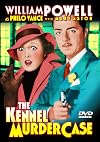
S.S. Van Dine's Philo Vance has sadly been all but forgotten today, seeming too perfect and erudite for today’s reading audience. The dapper detective was adapted to film several times, however. The Kennel Murder Case is by far the best film adaptation of the highbrow sleuth. Famed director Michael Curtiz used that early 1930s soft focus look and a well-written and witty script to bring Vance to life in the form of William Powell, who proved perfect for the part.
From the opening moments show more of Vance at the Long Island Kennel Club with his dog, Captain McDavish, this is a classy and breezily-paced little mystery. The murder of Hilda Lake’s dog escalates into a human murder with lots of suspects. But how was the murder committed, since the victim is found dead in a room locked from the inside? It’s just the type of puzzle relished by Philo Vance, so he cancels his vacation cruise to lend Detective Heath (Eugene Pallet) a hand.
A young and very stylish Mary Astor stars as Hilda Lake, with a supporting cast which includes Helen Vinson, Ralph Morgan, Frank Conroy, and Paul Cavanagh. James Lee Liang as a cook obsessed with Chinese treasures adds flavor to this delicious little concoction. Vance has a locked room puzzle to solve, which could make this film seem stage-bound. Director Curtiz, however, manages enough flair and visual touches to offset that drawing-room feel many early 1930's mysteries had.
Shady business dealings, spurned affections, and valuable Chinese artifacts all play a part in this tight little mystery. Powell’s Vance is uptown, cool as a cucumber, and fun to watch as he’s always one step ahead of everyone else. In many ways, what makes Van Dine’s written characterization of Philo Vance seem insufferable to modern readers, lends the screen Vance, influenced by William Powell’s charm, almost hip. Vance’s solution to the mystery is unique, but the best part is the fun we have getting there.
This is a great little rainy night mystery for those times you’re in a nostalgic mood. Mystery lovers won’t want to miss this little gem. show less
From the opening moments show more of Vance at the Long Island Kennel Club with his dog, Captain McDavish, this is a classy and breezily-paced little mystery. The murder of Hilda Lake’s dog escalates into a human murder with lots of suspects. But how was the murder committed, since the victim is found dead in a room locked from the inside? It’s just the type of puzzle relished by Philo Vance, so he cancels his vacation cruise to lend Detective Heath (Eugene Pallet) a hand.
A young and very stylish Mary Astor stars as Hilda Lake, with a supporting cast which includes Helen Vinson, Ralph Morgan, Frank Conroy, and Paul Cavanagh. James Lee Liang as a cook obsessed with Chinese treasures adds flavor to this delicious little concoction. Vance has a locked room puzzle to solve, which could make this film seem stage-bound. Director Curtiz, however, manages enough flair and visual touches to offset that drawing-room feel many early 1930's mysteries had.
Shady business dealings, spurned affections, and valuable Chinese artifacts all play a part in this tight little mystery. Powell’s Vance is uptown, cool as a cucumber, and fun to watch as he’s always one step ahead of everyone else. In many ways, what makes Van Dine’s written characterization of Philo Vance seem insufferable to modern readers, lends the screen Vance, influenced by William Powell’s charm, almost hip. Vance’s solution to the mystery is unique, but the best part is the fun we have getting there.
This is a great little rainy night mystery for those times you’re in a nostalgic mood. Mystery lovers won’t want to miss this little gem. show less
“That's one fight you Yanks didn't win. But take it easy. We'll send the vet right over!” — Tex
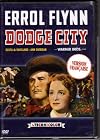
Errol Flynn cut a dashing trail through the American West for the first time in Dodge City. Flynn, an Australian, always worried he would not be accepted as a western hero. But rather than mold him to a type, Flynn's charisma and charm helped put his own stamp on the genre, making for a delightful if bit different entry of wagon trains and wild towns. Everything about this western is show more slightly different, from Flynn's wide-brimmed hat, to the film's deceptively easygoing manner, camouflaging the lighting pace of director Michael Curtiz. The original screenplay by Robert Buckner is an enjoyable piece of entertainment. You know you're watching a western, yet it has a different feel than the usual oater. Dodge City was simply Flynn and the WB stock company saddling up, and the results are fabulous.
Th film opens in Kansas after the Civil War. Wade Hatton (Flynn) and his trail pals are helping Colonel Dodge (Henry O'Neil) bring the railroad and the civilization that would follow along with it. It is here that the bitter conflict with Jeff Surrett (Bruce Cabot) and his henchman Yancy (Victor Jory) comes into play for the first time.
Six years later, Wade and his pals, Rusty (Alan Hale) and Tex (Guinn “Big Boy” Williams), are taking their herd to Dodge. They’ve offered protection to a wagon train carrying young and lovely Abbie Irving (Olivia de Havilland). Her rambunctious brother will force a tragedy upon the trail for which she blames Wade. Orphaned and traveling West, she’s delivered to her aunt and uncle in Dodge, a wild and lawless town rife with fun and danger.
Alan Hale has some fun screen moments trying to reform, while Guinn Williams does the opposite, resulting in perhaps the greatest saloon brawl ever filmed. It is fun to watch, as is everything in this film; especially Flynn, who somehow managed to seem more Aussie here than usual, yet create his own niche in the western.
The cheating and killing by the earlier-mentioned Surrett and his man Yancey will finally go too far, however, when a young boy Wade was fond of loses his life during a disturbance. That’s when Wade finally accepts the offer as Sheriff of Dodge City. He cleans up the town with Rusty and Tex, as families begin to return, while the paper Abbie now works for begins exposing Surrett and his hold on the town, leading to an exciting technicolor showdown.
There is a wonderful ending for fans of Flynn and de Havilland, and silent film fans will be glad to catch a glimpse of silent star Monte Blue as Barlow, still kicking around in films in 1939. This one is simply fun, and the perfect film for a Saturday morning when you want to kick back. show less
Errol Flynn cut a dashing trail through the American West for the first time in Dodge City. Flynn, an Australian, always worried he would not be accepted as a western hero. But rather than mold him to a type, Flynn's charisma and charm helped put his own stamp on the genre, making for a delightful if bit different entry of wagon trains and wild towns. Everything about this western is show more slightly different, from Flynn's wide-brimmed hat, to the film's deceptively easygoing manner, camouflaging the lighting pace of director Michael Curtiz. The original screenplay by Robert Buckner is an enjoyable piece of entertainment. You know you're watching a western, yet it has a different feel than the usual oater. Dodge City was simply Flynn and the WB stock company saddling up, and the results are fabulous.
Th film opens in Kansas after the Civil War. Wade Hatton (Flynn) and his trail pals are helping Colonel Dodge (Henry O'Neil) bring the railroad and the civilization that would follow along with it. It is here that the bitter conflict with Jeff Surrett (Bruce Cabot) and his henchman Yancy (Victor Jory) comes into play for the first time.
Six years later, Wade and his pals, Rusty (Alan Hale) and Tex (Guinn “Big Boy” Williams), are taking their herd to Dodge. They’ve offered protection to a wagon train carrying young and lovely Abbie Irving (Olivia de Havilland). Her rambunctious brother will force a tragedy upon the trail for which she blames Wade. Orphaned and traveling West, she’s delivered to her aunt and uncle in Dodge, a wild and lawless town rife with fun and danger.
Alan Hale has some fun screen moments trying to reform, while Guinn Williams does the opposite, resulting in perhaps the greatest saloon brawl ever filmed. It is fun to watch, as is everything in this film; especially Flynn, who somehow managed to seem more Aussie here than usual, yet create his own niche in the western.
The cheating and killing by the earlier-mentioned Surrett and his man Yancey will finally go too far, however, when a young boy Wade was fond of loses his life during a disturbance. That’s when Wade finally accepts the offer as Sheriff of Dodge City. He cleans up the town with Rusty and Tex, as families begin to return, while the paper Abbie now works for begins exposing Surrett and his hold on the town, leading to an exciting technicolor showdown.
There is a wonderful ending for fans of Flynn and de Havilland, and silent film fans will be glad to catch a glimpse of silent star Monte Blue as Barlow, still kicking around in films in 1939. This one is simply fun, and the perfect film for a Saturday morning when you want to kick back. show less

Absolute mess. Predictable yet illogical. You can see where they want things to go from a mile away, yet they use the clumsiest of plot devices to get them there. I don't know why it survived over the years. The Shop Around the Corner should hold its place in the pantheon. At least I've now ticked it off my list and will never have to watch it again. There's also a dose of military propaganda thrown in for good measure. I can't stand Bing Crosby. Self-satisfied air permeates all his roles. I show more used to adore Danny Kaye when I was a kid; now I find him tolerable, but I can't quite feel that childhood spark. Apparently Vera-Ellen was bulimic, and some of her costumes were designed to hide her skinniness. show less
“And what in heaven's name brought you to Casablanca?” — Renault
“My health. I came to Casablanca for the waters.” — Rick
“The waters? What waters? We’re in the desert!” — Renault
“I was misinformed.” — Rick
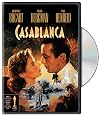
Any film buff watching this screen classic today will certainly get a sense of having seen this formula over and over. Howard Hawks remade it in a fashion — and actually improved upon it in some ways by putting his distinct spin on it — in To Have and Have show more Not. While it often gets overpraised because it is a beloved favorite of critics, it also doesn’t receive the credit due it. The four strongest performances here, namely Bogart, Rains, Lorre, and Joy Page, who rarely even gets a mention, didn't get the Academy Award. It can be argued that any solid studio director from this period could have made a great film out of the terrific screenplay from Howard Koch and Julius and Philip Epstein, and the fine cast assembled. But it is a film which is more than the sum of its parts, and the reason why it has been copied so often over the years.
Bogart is Rick Blaine, doing okay running Rick’s Cafe Americain in Casablanca, in French Morocco. Everyone must go through Casablanca to get to Lisbon, and freedom from the turmoil brought about by the War’s ever expanding boundaries. Rick runs his cafe and gambling house unencumbered by politics, looking out only for himself and a few close and loyal employees like Sam (Dooley Wilson) and Carl (S.Z. Sakall). Peter Lorre is marvelous as the criminal who worships Rick, and seeks his approval. It is really what happens to Ugarte (Lorre) which turns Rick in favor of the French Resistance; though it won't become evident until the film is nearly over. It is perhaps, the most interesting relationship in the film, made more so due to Lorre’s small amount of screen time.
Ugarte leaves Rick a letter of transit which can't even be questioned, when in pops Rick’s reason for hiding out in Casablanca — Ilsa Lund (Ingrid Bergman). Rick's bitter disillusionment with love all goes back to what happened in Paris, where Ilsa left him holding his heart in his hands. The flashback montages were in part directed by Don Siegel, who would direct Mitchum and Greer in The Big Steal, and later become well known for Dirty Harry with Clint Eastwood. Ilsa isn't alone, however, bringing along her husband, Victor Laszlo (Paul Henreid). He is the lead figure behind the movement to rid the French of the Germans, who would prefer he never make it to Lisbon.
Caught in between is the pragmatic Captain Renault — Claude Rains in a splendid turn, full of larceny and humor. It is never clear exactly which side he is on. Ilsa wants her husband Victor to escape with his life but Rick isn't so ready to hand over those transit papers; not without some graveling and an explanation for the way he was burned by her.
Bergman proved a good second choice for Ilsa. The viewer knows she’s messed Rick up, and wants it to be righted, while at the same time sensing those two don’t belong together. Her casting opposite Bogart makes the ending easier to take than had someone with more natural chemistry with Bogart been cast in the role. Don’t get me wrong, they are good together in a timeless classic, but that bit of ‘unbelievability’ in their pairing works in the film’s favor at the legendary ending to this film. Howard Hawks had Bogart and Bacall, for example, go off together at the end of To Have and Have Not, which was his own take on Casablanca.
Before we get to the famous ending of Casablanca, however, there are some terrific moments from Joy Page as a young wife fleeing Bulgaria, desperate to get she and her husband out of Casablanca. What Rick does to help her out, and get around her making a mistake with Renault, highlights the effect Ugarte’s killing had on Rick, who at heart is a romantic. Once he knows the reason behind what happened in Paris, he'll come to the same decision the viewer has about where Isla belongs.
Casablanca won the Academy Award for Best Picture, Screenplay, and Direction (Michael Curtiz). Bogart would have won for Best Actor, Rains for Supporting Actor, and Joy Page for Best Supporting Actress in a different time and place. While this isn’t quite the romantic noir masterpiece of Preminger’s Laura, it is one amazingly smooth blend of genres — including noir — which pleases every film buff, and makes it one of the great films of all time. Silent film fans might can even catch a glimpse of star Monte Blue as an uncredited American. Bogart and Bergman fans can enjoy watching this one over and over, as it is one of those films almost universally cherished by movie lovers. show less
“My health. I came to Casablanca for the waters.” — Rick
“The waters? What waters? We’re in the desert!” — Renault
“I was misinformed.” — Rick
Any film buff watching this screen classic today will certainly get a sense of having seen this formula over and over. Howard Hawks remade it in a fashion — and actually improved upon it in some ways by putting his distinct spin on it — in To Have and Have show more Not. While it often gets overpraised because it is a beloved favorite of critics, it also doesn’t receive the credit due it. The four strongest performances here, namely Bogart, Rains, Lorre, and Joy Page, who rarely even gets a mention, didn't get the Academy Award. It can be argued that any solid studio director from this period could have made a great film out of the terrific screenplay from Howard Koch and Julius and Philip Epstein, and the fine cast assembled. But it is a film which is more than the sum of its parts, and the reason why it has been copied so often over the years.
Bogart is Rick Blaine, doing okay running Rick’s Cafe Americain in Casablanca, in French Morocco. Everyone must go through Casablanca to get to Lisbon, and freedom from the turmoil brought about by the War’s ever expanding boundaries. Rick runs his cafe and gambling house unencumbered by politics, looking out only for himself and a few close and loyal employees like Sam (Dooley Wilson) and Carl (S.Z. Sakall). Peter Lorre is marvelous as the criminal who worships Rick, and seeks his approval. It is really what happens to Ugarte (Lorre) which turns Rick in favor of the French Resistance; though it won't become evident until the film is nearly over. It is perhaps, the most interesting relationship in the film, made more so due to Lorre’s small amount of screen time.
Ugarte leaves Rick a letter of transit which can't even be questioned, when in pops Rick’s reason for hiding out in Casablanca — Ilsa Lund (Ingrid Bergman). Rick's bitter disillusionment with love all goes back to what happened in Paris, where Ilsa left him holding his heart in his hands. The flashback montages were in part directed by Don Siegel, who would direct Mitchum and Greer in The Big Steal, and later become well known for Dirty Harry with Clint Eastwood. Ilsa isn't alone, however, bringing along her husband, Victor Laszlo (Paul Henreid). He is the lead figure behind the movement to rid the French of the Germans, who would prefer he never make it to Lisbon.
Caught in between is the pragmatic Captain Renault — Claude Rains in a splendid turn, full of larceny and humor. It is never clear exactly which side he is on. Ilsa wants her husband Victor to escape with his life but Rick isn't so ready to hand over those transit papers; not without some graveling and an explanation for the way he was burned by her.
Bergman proved a good second choice for Ilsa. The viewer knows she’s messed Rick up, and wants it to be righted, while at the same time sensing those two don’t belong together. Her casting opposite Bogart makes the ending easier to take than had someone with more natural chemistry with Bogart been cast in the role. Don’t get me wrong, they are good together in a timeless classic, but that bit of ‘unbelievability’ in their pairing works in the film’s favor at the legendary ending to this film. Howard Hawks had Bogart and Bacall, for example, go off together at the end of To Have and Have Not, which was his own take on Casablanca.
Before we get to the famous ending of Casablanca, however, there are some terrific moments from Joy Page as a young wife fleeing Bulgaria, desperate to get she and her husband out of Casablanca. What Rick does to help her out, and get around her making a mistake with Renault, highlights the effect Ugarte’s killing had on Rick, who at heart is a romantic. Once he knows the reason behind what happened in Paris, he'll come to the same decision the viewer has about where Isla belongs.
Casablanca won the Academy Award for Best Picture, Screenplay, and Direction (Michael Curtiz). Bogart would have won for Best Actor, Rains for Supporting Actor, and Joy Page for Best Supporting Actress in a different time and place. While this isn’t quite the romantic noir masterpiece of Preminger’s Laura, it is one amazingly smooth blend of genres — including noir — which pleases every film buff, and makes it one of the great films of all time. Silent film fans might can even catch a glimpse of star Monte Blue as an uncredited American. Bogart and Bergman fans can enjoy watching this one over and over, as it is one of those films almost universally cherished by movie lovers. show less
Lists
Awards


You May Also Like


Associated Authors
Statistics
- Works
- 135
- Also by
- 17
- Members
- 4,596
- Popularity
- #5,477
- Rating
- 3.9
- Reviews
- 80
- ISBNs
- 217
- Languages
- 5
- Favorited
- 1