
Frank Capra (1897–1991)
Author of It's a Wonderful Life [1946 film]
About the Author
Image credit: Courtesy of the NYPL Digital Gallery (image use requires permission from the New York Public Library)
Series
Works by Frank Capra
Classic Christmas Collection (It's a Wonderful Life / White Christmas) (2006) — Director — 37 copies
Why We Fight: The Battle of Britain / The Battle of Russia / The Battle of China — Director — 12 copies, 4 reviews
Frank Capra: The Early Collection: Ladies of Leisure / Rain or Shine / The Miracle Woman / Forbidden / Bitter Tea of General Yen (1930) — Director — 5 copies
The Frank Capra Collection: It's A Wonderful Life / Mr. Smith Goes To Washington / You Can't Take It With You / It Happened One Night [DVD] — Director — 3 copies
Forbidden [1932 film] — Director — 2 copies
MGM Movie Collection: 3 Holiday Family Movies [DVD] — Director — 2 copies
l'Offensiva tedesca 1 copy
Scoppia la guerra 1 copy
l'Europa in fiamme 1 copy
Submarine (Silent) [DVD] 1 copy
The Younger Generation [DVD] 1 copy
la Battaglia d'Inghilterra 1 copy
la Campagna di Russia 1 copy
la Guerra cino-giapponese 1 copy
Sucedió Una Noche 1 copy
Classics Collection: Charade / Penny Serenade / It's A Wonderful Life / The Last Time I Saw Paris — Director — 1 copy
That Uncertain Feeling | Meet John Doe | Broken Blossoms — Director — 1 copy
WWII - Why We Fight (2-DVD) 1 copy
White Christmas / It's a Wonderful Life / The Bell's of St Mary's — Director — 1 copy
Christmas Collector's Pack (The Bells of St. Mary's / It's a Wonderful Life) (2001) — Director — 1 copy
2 Movie Collector’s Pack: It Happened One Night [and] You Can't Take It With You — Director — 1 copy
2 Movie Collector’s Pack: Mr. Deeds Goes To Town [and] Mr. Smith Goes To Washington — Director — 1 copy
Dirigible [1931 film] — Director — 1 copy
Memphis Belle / Prelude to War — Director — 1 copy
WWII The Ultimate Collection: 30 Films — Director — 1 copy
Mr. Capra Goes to War: Frank Capra's World War II Documentaries — Director — 1 copy
Why We Fight, Volume 1 (Prelude to War / The Nazi Strike / Divide and Conquer / Battle of Britain) (2002) 1 copy
The True Glory 1 copy
Associated Works
AMC Movies: Gary Cooper Hollywood Classics — Director — 18 copies
James Stewart - It's A Wonderful Life/Harvey/Rear Window/Mr. Smith Goes To Washington [DVD] [1939] by James Stewart — Director — 2 copies
The Lady Vanishes / Gaslight / Arsenic and Old Lace — Director — 1 copy
Tagged
Common Knowledge
- Canonical name
- Capra, Frank
- Legal name
- Capra, Frank Russell
- Other names
- Capra, Francesco Rosario (original name)
- Birthdate
- 1897-05-18
- Date of death
- 1991-09-03
- Gender
- male
- Occupations
- film director
- Organizations
- American Academy of Arts and Letters (American Honorary, 1984)
- Awards and honors
- National Medal of Arts (1986)
- Relationships
- Capra, Frank, Jr. (offspring)
- Nationality
- Italy (birth)
USA (naturalized|1920) - Birthplace
- Bisacquino, Sicily, Italy
- Places of residence
- La Quinta, California, USA
- Place of death
- La Quinta, California, USA
- Associated Place (for map)
- California, USA
Members
Discussions
"The Meanest Man In Town"... in Pro and Con (January 2014)
Reviews
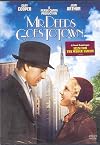
It was in Mr. Deeds Goes to Town that Frank Capra perfected the blend of comedy and social commentary that would become his trademark. The screwball comedy was graceful rather than frantic, and the social elements of Robert Riskin's fine screenplay are handled in an even-handed manner that earned Capra the second of his three Academy Awards for Best Director. Both Gary Cooper, as the tuba playing no-nonsense Longfellow Deeds, and Jean Arthur, as the reporter who exploits him until she falls show more for his goodness are wonderful in this true Capra classic.
Longfellow Deeds (Cooper) lives in the small town of Mandrake Falls where he earns his living writing greeting card poems and spends his free time playing the tuba. He is less than enthused when a bunch of big city attorneys show up at his door to tell him he has just inherited 20 million dollars from a relative he’s never met. They want him to sign over his power of attorney. Deeds goes to the city with them mainly so he can get a look at Grant's Tomb.
Cooper’s Deeds is honest and good, but no pushover. His initial reluctance about the situation proves wise as everyone wants to mooch off him while at the same time making him look a fool. Deeds gives as good as he gets and wins over the crusty Cornelius Cobb (Lionell Stander) to his way of doing things, but he can't get around the way a certain Louise Bennet is mocking his every escapade in the papers, making him look like a country bumpkin.
But Deeds knows it doesn't matter when he meets the sweet Mary Dawson (Jean Arthur), a lady in distress who becomes his constant companion. The lonely deeds no longer has to go off by himself like he did back home, where he talked to an imaginary girl. He tells Mary that she makes up for all the fakes he's met and writes a poem to her telling her how much he loves her. But nothing is as it seems to Deeds.
Arthur is wonderful as the cynical reporter who slowly realizes that Longfellow is straightforward and honest. She realizes it is everyone else’s viewpoint that is distorted. But will the truth ruin everything? Deeds is ready to pack it up and head back to Mandrake Falls until a starving farmer during the Great Depression gives Deeds an idea. It sets in motion a courtroom showdown where, as Cobb says, “Lamb Bites Wolf!”
Cooper and Arthur are memorable together in this wonderful Frank Capra classic. You’ll definitely get choked up when she reads Longfellow's poem about her on the steps of her apartment. Arthur does, because the words he has said earlier to a group of published poets making fun of him echo in her heart: "I guess it's alright to hurt someone as long as you don't care how much you hurt them."
If all the great Capra classics were represented by a vase full of red roses, this would be the one white rose in the center. It is flawless and pure, and represents everything that was special about the films of the first director allowed to have his name above the title. After seeing this film, you'll know why. show less
Longfellow Deeds (Cooper) lives in the small town of Mandrake Falls where he earns his living writing greeting card poems and spends his free time playing the tuba. He is less than enthused when a bunch of big city attorneys show up at his door to tell him he has just inherited 20 million dollars from a relative he’s never met. They want him to sign over his power of attorney. Deeds goes to the city with them mainly so he can get a look at Grant's Tomb.
Cooper’s Deeds is honest and good, but no pushover. His initial reluctance about the situation proves wise as everyone wants to mooch off him while at the same time making him look a fool. Deeds gives as good as he gets and wins over the crusty Cornelius Cobb (Lionell Stander) to his way of doing things, but he can't get around the way a certain Louise Bennet is mocking his every escapade in the papers, making him look like a country bumpkin.
But Deeds knows it doesn't matter when he meets the sweet Mary Dawson (Jean Arthur), a lady in distress who becomes his constant companion. The lonely deeds no longer has to go off by himself like he did back home, where he talked to an imaginary girl. He tells Mary that she makes up for all the fakes he's met and writes a poem to her telling her how much he loves her. But nothing is as it seems to Deeds.
Arthur is wonderful as the cynical reporter who slowly realizes that Longfellow is straightforward and honest. She realizes it is everyone else’s viewpoint that is distorted. But will the truth ruin everything? Deeds is ready to pack it up and head back to Mandrake Falls until a starving farmer during the Great Depression gives Deeds an idea. It sets in motion a courtroom showdown where, as Cobb says, “Lamb Bites Wolf!”
Cooper and Arthur are memorable together in this wonderful Frank Capra classic. You’ll definitely get choked up when she reads Longfellow's poem about her on the steps of her apartment. Arthur does, because the words he has said earlier to a group of published poets making fun of him echo in her heart: "I guess it's alright to hurt someone as long as you don't care how much you hurt them."
If all the great Capra classics were represented by a vase full of red roses, this would be the one white rose in the center. It is flawless and pure, and represents everything that was special about the films of the first director allowed to have his name above the title. After seeing this film, you'll know why. show less
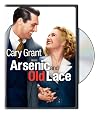
“Have you suddenly gone crazy?” — Priscilla Lane
“No, no, I don’t think so. But it’s only a matter of time.” — Cary Grant
Grab a big cauldron, stir in two sweet little old ladies with the unusual hobby of murdering lonely old men and burying them in the cellar, mix in a nephew who’s a sadistic killer, sprinkle in another nephew who thinks he’s Teddy Roosevelt, then add to the pot yet one more nephew who’s normal, and heading to Niagra Falls for a honeymoon with his very show more pretty bride, and what you have is one of the funniest screwball comedies ever made!
Frank Capra of all people, famous for his blend of comedy and social commentary, was dying to do this picture after seeing the stage play by Joseph Kesselring. Julias J. and Philip G. Epstein wrote the very dark yet very funny screenplay. Once Cary Grant and pretty Priscilla Lane signed on, a screen classic was born. Grant’s takes and double-takes in this film are hilarious, and part of the reason everyone loves Cary Grant. Since everyone knows the premise of this film favorite, I won’t be spoiling anything by talking about it.
Mortimer Brewster (Grant) is the successful playwright of “The Bachelor’s Bible” so he is attempting is to marry his lovely sweetheart Elaine Harper (Priscilla Lane) in secret, before the press gets wind of it and have a field day. But when the couple stops by after the wedding on their way to Niagra Falls, he discovers something that turns his day upside down!
Grant’s reaction to discovering his Aunt Martha (Jean Adair) and Aunt Abby (Josephine Hull) are hiding a body in the window seat is a riot. His reactions are even more hilarious when they admit to having several bodies buried in the cellar! It seems his crazy brother who thinks he’s Teddy Roosevelt, thinks they’ve died of yellow fever, and has been giving them a proper burial in what he believes to be the Panama Canal.
Elaine has been next door at her father's house (James Gleason) and can’t understand why Mortimer is acting so strangely, and trying get rid of her. While Mortimer is trying to get Teddy institutionalized his long-lost and quite diabolical brother Jonathan (Raymond Massey) shows up with his crazy little plastic surgeon (Peter Lorre) in tow. They’ve got a stiff of their own on their hands.Just who the nervous little plastic surgeon has cut Jonathan to look like is another riot.
Friendly cop on the beat O'Hara (Jack Carson) stops by for more fun, and there is a wild ending that somehow manages to work everything out. Mortimer has told his young wife, after all: “Insanity runs in my family. It practically gallops!" Elaine may not believe him, but a trip to the cellar this Halloween night might change her mind!
Grant is terrific here and more than makes up for a couple of slow spots. Priscilla Lane has always been a favorite of mine, acquitting herself nicely, and quite attractively as always. If you want to see a darkly hilarious screwball comedy from a director who practically invented the genre, this is your film right here. One of Grant’s finest and most frantic performances. show less
“No, no, I don’t think so. But it’s only a matter of time.” — Cary Grant
Grab a big cauldron, stir in two sweet little old ladies with the unusual hobby of murdering lonely old men and burying them in the cellar, mix in a nephew who’s a sadistic killer, sprinkle in another nephew who thinks he’s Teddy Roosevelt, then add to the pot yet one more nephew who’s normal, and heading to Niagra Falls for a honeymoon with his very show more pretty bride, and what you have is one of the funniest screwball comedies ever made!
Frank Capra of all people, famous for his blend of comedy and social commentary, was dying to do this picture after seeing the stage play by Joseph Kesselring. Julias J. and Philip G. Epstein wrote the very dark yet very funny screenplay. Once Cary Grant and pretty Priscilla Lane signed on, a screen classic was born. Grant’s takes and double-takes in this film are hilarious, and part of the reason everyone loves Cary Grant. Since everyone knows the premise of this film favorite, I won’t be spoiling anything by talking about it.
Mortimer Brewster (Grant) is the successful playwright of “The Bachelor’s Bible” so he is attempting is to marry his lovely sweetheart Elaine Harper (Priscilla Lane) in secret, before the press gets wind of it and have a field day. But when the couple stops by after the wedding on their way to Niagra Falls, he discovers something that turns his day upside down!
Grant’s reaction to discovering his Aunt Martha (Jean Adair) and Aunt Abby (Josephine Hull) are hiding a body in the window seat is a riot. His reactions are even more hilarious when they admit to having several bodies buried in the cellar! It seems his crazy brother who thinks he’s Teddy Roosevelt, thinks they’ve died of yellow fever, and has been giving them a proper burial in what he believes to be the Panama Canal.
Elaine has been next door at her father's house (James Gleason) and can’t understand why Mortimer is acting so strangely, and trying get rid of her. While Mortimer is trying to get Teddy institutionalized his long-lost and quite diabolical brother Jonathan (Raymond Massey) shows up with his crazy little plastic surgeon (Peter Lorre) in tow. They’ve got a stiff of their own on their hands.Just who the nervous little plastic surgeon has cut Jonathan to look like is another riot.
Friendly cop on the beat O'Hara (Jack Carson) stops by for more fun, and there is a wild ending that somehow manages to work everything out. Mortimer has told his young wife, after all: “Insanity runs in my family. It practically gallops!" Elaine may not believe him, but a trip to the cellar this Halloween night might change her mind!
Grant is terrific here and more than makes up for a couple of slow spots. Priscilla Lane has always been a favorite of mine, acquitting herself nicely, and quite attractively as always. If you want to see a darkly hilarious screwball comedy from a director who practically invented the genre, this is your film right here. One of Grant’s finest and most frantic performances. show less
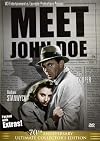
“I’ve been lonely and hungry for something practically all my life.” — Long John Willoughby
This Frank Capra film, more so than his others, was shaded more towards drama than humor. Not without humor or charm, as evidenced in many scenes between Barbara Stanwyck and Gary Cooper, the tone of the Robert Riskin screenplay, based on a story by Richard Connell and Robert Presnell, has more serious implications, however, than Capra's other films. For that reason, and perhaps because many show more surviving prints of this film are not as good as the others, Meet John Doe sometimes gets unfairly dismissed when films of this extraordinary director are discussed. This was the meat in what many call Capracorn.
Barbara Stanwyck is Ann Mitchell, a reporter soon to be unemployed when her paper is gobbled up by D.B. Norton (Edward Arnold). Desperate to keep the thirty dollar a week salary that keeps her two young sisters and her mom (Spring Byington) afloat, she begs editor Henry Connell (James Gleason) for her job back, but her plea falls on deaf ears. She decides to go out in a blaze, writing a column in which she purports to have received a letter from one John Doe, who, because of the injustice in the world, the state of civilization, and the downtrodden, plans to kill himself at Christmas.
A groundswell of support for Doe gets Ann her job back, but now she and boss Connell must find a 'real' John Doe or their heads will roll. In walks Long John Willoughby (Gary Cooper), a starving baseball player with a bad wing. He and his pal, Colonel (Walter Brennan), are just hungry enough to play along. Colonel has reservations from the get-go, however, afraid that Long John will become a helot — a guy with a bank account. Long John just wants to earn enough to get the arm he injured pitching a 19 inning game fixed by Bonesetter Brown, but his shy affection for Ann keeps him around long enough to make a radio speech. Written from words in her father's diary, his speech spreads the John Doe movement all across the country. But Colonel sees the train wreck coming, and takes off.
Clubs start up everywhere, only the John Does allowed to join. People start treating their neighbors with kindness, showing the spirit of Christmas on a day-to-day basis. D.B. Norton, however, has political aspirations, and sees a way to twist the movement to fit his ambitions. It is Henry Connell who clues in Long John on what is about to happen, letting the air out of his balloon and shattering his smitten image of Ann, with her chestnut hair and great legs. What follows, as the country discovers John Doe was a fake, will lead Long John to a rooftop overlooking the city on a snowy Christmas night.
Stanwyck is wonderful here, as Ann slowly comes to realize she has found a man like her father but may have helped to destroy him. Cooper is memorable as Long John Willoughby, a shy ball player who realizes he has come to stand for more than he ever could have on the pitching mound. Brennan is his usual great character, looking out for Long John as much as he can. Some warm and sentimental moments between Cooper's Long John and Stanwyck's Ann humanize the social drama, and offer great charm. In particular, Cooper's scene with Ann's mom, whose help he needs to ask her daughter to marry him, has a sweetness to it that is long gone from today's films. The baseball scene in a hotel room, when they play pretend ball, is a classic.
This is a wonderful film about the little guy that sometimes gets over-analyzed. Capra was simply reminding people that the first John Doe came a long time ago, and people still weren't listening, often fooled by words, and those who would twist something decent to their own sordid advantage. This film that works best if you forget it is a Frank Capra picture, and just enjoy it on its own merits. It can then be placed proudly beside the director's other classics on your movie shelf. A masterpiece, with an unforgettable performance by Coop. show less
This Frank Capra film, more so than his others, was shaded more towards drama than humor. Not without humor or charm, as evidenced in many scenes between Barbara Stanwyck and Gary Cooper, the tone of the Robert Riskin screenplay, based on a story by Richard Connell and Robert Presnell, has more serious implications, however, than Capra's other films. For that reason, and perhaps because many show more surviving prints of this film are not as good as the others, Meet John Doe sometimes gets unfairly dismissed when films of this extraordinary director are discussed. This was the meat in what many call Capracorn.
Barbara Stanwyck is Ann Mitchell, a reporter soon to be unemployed when her paper is gobbled up by D.B. Norton (Edward Arnold). Desperate to keep the thirty dollar a week salary that keeps her two young sisters and her mom (Spring Byington) afloat, she begs editor Henry Connell (James Gleason) for her job back, but her plea falls on deaf ears. She decides to go out in a blaze, writing a column in which she purports to have received a letter from one John Doe, who, because of the injustice in the world, the state of civilization, and the downtrodden, plans to kill himself at Christmas.
A groundswell of support for Doe gets Ann her job back, but now she and boss Connell must find a 'real' John Doe or their heads will roll. In walks Long John Willoughby (Gary Cooper), a starving baseball player with a bad wing. He and his pal, Colonel (Walter Brennan), are just hungry enough to play along. Colonel has reservations from the get-go, however, afraid that Long John will become a helot — a guy with a bank account. Long John just wants to earn enough to get the arm he injured pitching a 19 inning game fixed by Bonesetter Brown, but his shy affection for Ann keeps him around long enough to make a radio speech. Written from words in her father's diary, his speech spreads the John Doe movement all across the country. But Colonel sees the train wreck coming, and takes off.
Clubs start up everywhere, only the John Does allowed to join. People start treating their neighbors with kindness, showing the spirit of Christmas on a day-to-day basis. D.B. Norton, however, has political aspirations, and sees a way to twist the movement to fit his ambitions. It is Henry Connell who clues in Long John on what is about to happen, letting the air out of his balloon and shattering his smitten image of Ann, with her chestnut hair and great legs. What follows, as the country discovers John Doe was a fake, will lead Long John to a rooftop overlooking the city on a snowy Christmas night.
Stanwyck is wonderful here, as Ann slowly comes to realize she has found a man like her father but may have helped to destroy him. Cooper is memorable as Long John Willoughby, a shy ball player who realizes he has come to stand for more than he ever could have on the pitching mound. Brennan is his usual great character, looking out for Long John as much as he can. Some warm and sentimental moments between Cooper's Long John and Stanwyck's Ann humanize the social drama, and offer great charm. In particular, Cooper's scene with Ann's mom, whose help he needs to ask her daughter to marry him, has a sweetness to it that is long gone from today's films. The baseball scene in a hotel room, when they play pretend ball, is a classic.
This is a wonderful film about the little guy that sometimes gets over-analyzed. Capra was simply reminding people that the first John Doe came a long time ago, and people still weren't listening, often fooled by words, and those who would twist something decent to their own sordid advantage. This film that works best if you forget it is a Frank Capra picture, and just enjoy it on its own merits. It can then be placed proudly beside the director's other classics on your movie shelf. A masterpiece, with an unforgettable performance by Coop. show less

A little over a week ago, I checked this book out from my college library to use for a research paper. Glancing over the worn binding and Capra’s impish, Sicilian grin on the cover, I never dreamed that it would so completely overtake my reading life for the next ten days.
Let’s get this straight: when one is writing four research papers in a single semester, and checking books out for all of them, one isn’t supposed to actually read any of the books all the way through. Something will show more inevitably get lost in the shuffle of conflicting demands. Yet director Frank Capra’s autobiography is so fascinating and compelling a read that I could find no way to resist it, and threw the unspoken rules of undergraduate research to the wind.
In one passage of The Name Above the Title, Capra writes about what he refers to as “Gee Whiz!” movies, pictures that feature a broad outlook and larger-than-life characters, as opposed to darker, more “realistic” films. By that measure, this could easily be billed as a “Gee Whiz!” autobiography. This is not to say that it is factually incorrect, as some critics have suggested. “Surely no life was ever lived this way,” Ray Carney writes in American Vision: The Films of Frank Capra. “The official, optimistic party line of the book … is a kind of desperate whistling in the dark to cover up the profound crises of confidence and identity of a man who could never adequately convince himself of the ultimate value of his life and work.” This could possibly be true—I am certainly not an expert in the matter—but I am inclined to take Capra at his word when he says that some people simply see the world in fairy-tale terms, and he is one of them. Just because his life reads like one of his movies doesn’t mean he copied the tale from one of them, and not vice versa.
Besides, he is shockingly frank about the hard times he went through, including two long periods of depression. One of these might have ended in his death were it not for a strange visitor he received—a little man who called Capra a coward and an offense to God, and demanded he use the gifts he had been given for the good of his fellow men. This pulled him out of his slump and could well have been a turning point in his life, but it wasn’t all daffodils and butterflies after that. Of his cinematic creations, he most resembles the honest but conflicted George Bailey, rather than the more childlike characters of Jefferson Smith or Longfellow Deeds.
However, because I like fairy-tales, and because Capra is so adept at telling them, the first section of the book is my favorite, chronicling his rise from a life of poverty to winning his personal “Grail,” the Oscar. In places his writing is unpolished, but it is full of character and charm.
Fans of Capra and future filmmakers simply must take a look at this, but I recommend to everyone as an absolutely fantastic read.
Who knows? It might even make a pretty good movie. show less
Let’s get this straight: when one is writing four research papers in a single semester, and checking books out for all of them, one isn’t supposed to actually read any of the books all the way through. Something will show more inevitably get lost in the shuffle of conflicting demands. Yet director Frank Capra’s autobiography is so fascinating and compelling a read that I could find no way to resist it, and threw the unspoken rules of undergraduate research to the wind.
In one passage of The Name Above the Title, Capra writes about what he refers to as “Gee Whiz!” movies, pictures that feature a broad outlook and larger-than-life characters, as opposed to darker, more “realistic” films. By that measure, this could easily be billed as a “Gee Whiz!” autobiography. This is not to say that it is factually incorrect, as some critics have suggested. “Surely no life was ever lived this way,” Ray Carney writes in American Vision: The Films of Frank Capra. “The official, optimistic party line of the book … is a kind of desperate whistling in the dark to cover up the profound crises of confidence and identity of a man who could never adequately convince himself of the ultimate value of his life and work.” This could possibly be true—I am certainly not an expert in the matter—but I am inclined to take Capra at his word when he says that some people simply see the world in fairy-tale terms, and he is one of them. Just because his life reads like one of his movies doesn’t mean he copied the tale from one of them, and not vice versa.
Besides, he is shockingly frank about the hard times he went through, including two long periods of depression. One of these might have ended in his death were it not for a strange visitor he received—a little man who called Capra a coward and an offense to God, and demanded he use the gifts he had been given for the good of his fellow men. This pulled him out of his slump and could well have been a turning point in his life, but it wasn’t all daffodils and butterflies after that. Of his cinematic creations, he most resembles the honest but conflicted George Bailey, rather than the more childlike characters of Jefferson Smith or Longfellow Deeds.
However, because I like fairy-tales, and because Capra is so adept at telling them, the first section of the book is my favorite, chronicling his rise from a life of poverty to winning his personal “Grail,” the Oscar. In places his writing is unpolished, but it is full of character and charm.
Fans of Capra and future filmmakers simply must take a look at this, but I recommend to everyone as an absolutely fantastic read.
Who knows? It might even make a pretty good movie. show less
Lists
Awards


You May Also Like


Associated Authors
Statistics
- Works
- 112
- Also by
- 9
- Members
- 3,493
- Popularity
- #7,279
- Rating
- 4.0
- Reviews
- 76
- ISBNs
- 202
- Languages
- 6
- Favorited
- 1


