
Elizabeth Eulberg
Author of Prom and Prejudice
About the Author
Series
Works by Elizabeth Eulberg
Associated Works
Tagged
Common Knowledge
- Birthdate
- 20th century
- Gender
- female
- Birthplace
- Wisconsin, USA
- Places of residence
- New York, New York, USA
- Associated Place (for map)
- USA
Members
Reviews
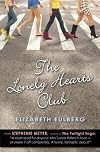
I picked up Elizabeth Eulberg's THE LONELY HEARTS CLUB just when I needed it most. I was going through a difficult breakup and was pretty disillusioned, much like our main character Penny. She's completely given up on the opposite sex and is determined to start anew - without a boy to complicate things.
Penny swears off boys, and highly encourages that her friends do so too, but this book isn't really about a woman, or girl, scorned. It's about being true to who you are, about doing things show more for you, and about realizing who your true friends are and being faithful to those relationships.
It's easy to lose your identity when you're in a relationship, to blow off your friends because you'd rather spend all your time with him, to slowly make someone else's interests your own. THE LONELY HEARTS CLUB celebrates individuality, strong girls, and healthy relationships with a quirky main character leading the way. Penny doesn't sit around and mope after her heart is broken, she's proactive. She looks around her and she sees how destructive her peers are to themselves, all in the name of boys. Eventually, Penny comes to realize that it isn't necessarily boys that are the issue... and, even though, deep down, many girls are aware of the truths Penny and her friends learn, it's comforting to see the characters achieving this realization and making the same journey many of us will take ourselves.
I enjoyed Penny's character, but was thankful for the secondary characters as well. I think most girls will identify with our main character, but, if not, they'll definitely find something in common with one of her friends. Not only does this allow for a deeper connection between the characters and the reader, it allows Eulberg to demonstrate how the lessons The Lonely Hearts Club members learn apply to every girl.
And we can't expect our heroine to swear off boys forever, can we? Her blossoming romance is adorable and I found myself rooting for the boy in question!
I believe every mother, daughter, and sister should take the time to read this book. I haven't sworn off boys forever, but I'll be entering my next relationship with the lessons from THE LONELY HEARTS CLUB in the back of my mind. show less
Penny swears off boys, and highly encourages that her friends do so too, but this book isn't really about a woman, or girl, scorned. It's about being true to who you are, about doing things show more for you, and about realizing who your true friends are and being faithful to those relationships.
It's easy to lose your identity when you're in a relationship, to blow off your friends because you'd rather spend all your time with him, to slowly make someone else's interests your own. THE LONELY HEARTS CLUB celebrates individuality, strong girls, and healthy relationships with a quirky main character leading the way. Penny doesn't sit around and mope after her heart is broken, she's proactive. She looks around her and she sees how destructive her peers are to themselves, all in the name of boys. Eventually, Penny comes to realize that it isn't necessarily boys that are the issue... and, even though, deep down, many girls are aware of the truths Penny and her friends learn, it's comforting to see the characters achieving this realization and making the same journey many of us will take ourselves.
I enjoyed Penny's character, but was thankful for the secondary characters as well. I think most girls will identify with our main character, but, if not, they'll definitely find something in common with one of her friends. Not only does this allow for a deeper connection between the characters and the reader, it allows Eulberg to demonstrate how the lessons The Lonely Hearts Club members learn apply to every girl.
And we can't expect our heroine to swear off boys forever, can we? Her blossoming romance is adorable and I found myself rooting for the boy in question!
I believe every mother, daughter, and sister should take the time to read this book. I haven't sworn off boys forever, but I'll be entering my next relationship with the lessons from THE LONELY HEARTS CLUB in the back of my mind. show less

Sometimes there is nothing like a good YA novel. Past Perfect Life by Elizabeth Eulberg hits it right on the mark. In the spirit of two of my favorite YA novelists, Julie Buxbaum and Robin Benway, who coincidently are Eulberg's blurbers, this book works on many levels. It has an intriguing story line, believable characters, and honest emotion and authenticity.
Almost 18 year old high school senior Ally Smith has a good life with her father in a small town in Wisconsin. She is a top student, show more planning for college, and has good and loyal friends. But her world is turned up side down when she discovers she was a missing child for 15 years. So, who is she really and how can she determine her true identity when she is thrust into a "new" family with her mother (who she had been told was dead), her step father and half sister while over 1,000 miles away from the place she considers home, her school, her friends and her budding relationship with a special boy?
Eulberg does an excellent job exploring Ally's search for herself under very trying circumstances in a realistic and sensitive way. It will make you think about the meaning of family in all its complexities. I cried a lot at the end. show less
Almost 18 year old high school senior Ally Smith has a good life with her father in a small town in Wisconsin. She is a top student, show more planning for college, and has good and loyal friends. But her world is turned up side down when she discovers she was a missing child for 15 years. So, who is she really and how can she determine her true identity when she is thrust into a "new" family with her mother (who she had been told was dead), her step father and half sister while over 1,000 miles away from the place she considers home, her school, her friends and her budding relationship with a special boy?
Eulberg does an excellent job exploring Ally's search for herself under very trying circumstances in a realistic and sensitive way. It will make you think about the meaning of family in all its complexities. I cried a lot at the end. show less
 This review was written for LibraryThing Early Reviewers.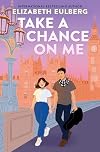
I thought "Take a Chance on Me" was just going to be another sweet rom-com, and it was, but it also had depth, focusing on self-acceptance and developing a healthy relationship with food. When Evie arrives at her father’s home in London after being hurt by her U.S. friends, she doesn’t expect to meet, let alone fall for, a boy busker who is quietly struggling with the loss of someone very important to him.
I liked Evie and Aiden, as well as his friends Dev and Fiona, while Poppy, an show more ex-girlfriend of Evie’s dad, was an absolute star. Evie’s father, however, really annoyed me. Not only was he obsessed with his looks and diet, but the way he treated his daughter, whom he only saw on rare occasions, made it hard to sympathise with him.
Overall, this was a warm and heartfelt read with likable characters and a thoughtful message, even if some parts felt predictable. A solid 3.5 stars for a sweet romance that offered a bit more substance than expected. show less
I liked Evie and Aiden, as well as his friends Dev and Fiona, while Poppy, an show more ex-girlfriend of Evie’s dad, was an absolute star. Evie’s father, however, really annoyed me. Not only was he obsessed with his looks and diet, but the way he treated his daughter, whom he only saw on rare occasions, made it hard to sympathise with him.
Overall, this was a warm and heartfelt read with likable characters and a thoughtful message, even if some parts felt predictable. A solid 3.5 stars for a sweet romance that offered a bit more substance than expected. show less

This review will probably be longer than the short book itself, but unfortunately the author has inspired me to go off on a diatribe.
Eulberg tries to incorporate some good messages into this novel but I’m not sure she doesn’t undermine herself at most turns. Her biggest messages seem to be:
(1) There is nothing “wrong” with being gay; in fact, there is no reason for gay kids and their romances and romance angstiness to be treated any differently than hetero romance and angst. The show more author does a great job on this score.
(2) Preoccupation with looks is absurd and does not indicate true worth. Here, I think Eulberg submarines her own case. In the story, Lexi Anderson, 16, has a seven-year-old sister, Mackenzie (“Mac”) who is pretty much a fictional incarnation of Honey Boo Boo (the nickname of seven-year-old child beauty pageant participant Alana Thompson, who appears in a reality tv show along with her family.) Lexi is considered the one with “the great personality” while Mac is “the beauty.” (Lexi explains that “When a guy uses great personality to describe a girl, it’s the polite way of saying fat and ugly.”) Presumably, the author (via Lexi) aims to show us this is not the case. But the way she goes about it actually vitiates her point.
First of all, notice how fat is paired with ugly. Fat is also paired with unpleasantness in general: the mother is not only a horrid, screeching caricature of pageant moms, but is overweight to boot. The obesity helps contribute to her image of being repulsive. Moreover, Lexi frequently makes observations like this one:
"One of the benefits of having a morbidly obese mother is that it has made me overly paranoid about my weight. I stick to mostly non-processed foods, which is basically the opposite of what Mom eats. So I’m not fat and I’m not the most disgusting girl in my class, but I’m nowhere near the prettiest.”
Message: fat equals disgusting.
I’d love to be able to report that Lexi goes on to develop some understanding for her mother, who is divorced, emotionally devastated, financially strapped, and afraid for her future. So okay, she might use food as a way to relax and/or as an antidepressant. How many of us are free enough of those tendencies to throw stones and not exhibit a little compassion? But Lexi’s only epiphany is that you don’t need to look like a full-blown beauty pageant contestant (i.e., tons of hairspray, makeup, provocative clothing, and an anorexic frame) in order to thrive and be happy. But a little bit certainly helps, to Lexi’s mind.
In fact, one of the worst things about the book, to me, is that Lexi turns out, when primped up with makeup and short skirts and tight tees, to be “a hottie” afterall. Thus, she really is a babe, destroying the whole argument that one can simply be a great girl with a great personality and still get the guy or be valuable or whatever other positive message the author would like to convey. What if she weren’t actually a “hottie” in disguise?
This is such a common meme it is almost unrecognizable on a conscious level. But think about The Ugly Duckling. Sure, the duckling got its “revenge” against the bullies when it turned into a beautiful swan, but what about if it just grew up to be an older ugly duck?
And then there’s this most awful bit: When Lexi finally starts dressing for school like a sex kitten, her best friend Cam reports that boys are talking about her:
"Cam sighs. ‘They’re all like…’ Cam makes her voice low, ‘Dude, have you seen Lexi, she’s looking hot, wouldn’t mind getting me a piece of that.’ You know, stupid guy stuff.”
Wait for it:
Lexi:
"‘Really?’ I try to not make it known how happy this makes me.”
Gaaaah! The author never takes this issue on at all (except obliquely in reference to the pageants), i.e., the perception of girls as sex objects and worse yet, girls being HAPPY to be thought of in that way. GAAAAH! How bad is the societal addiction of women to look attractive to men that “finally” being totally objectified makes girls HAPPY? Gaaaaah!
Lexi does manage to have some good insights in spite of these plot elements that negate them. For instance, she comes to understand that:
"...high school is exactly like a beauty pageant. … Instead of a tiara,” she observes, “you’re anointed worthy of a spot at the Beautiful People table [in the cafeteria].”
She also has lots to say about the vileness of pimping little girls in the beauty pageants, although disappointingly, no sophisticated insights on gender, sexuality, power relationships, or even sexual trafficking, which could have been appropriate under the circumstances. And finally, both she and her little sister Mac occasionally sound much more sophisticated than their years, although its possible that living on the pageant circuit can do that to you.
So let’s move on to the good things:
1. The book is fast paced, and keeps your interest.
2. The chapter titles are very clever, reminiscent of the style used in Hold Me Closer, Necromancer.
3. I like Lexi’s constant impulse to interrogate her own behavior and motivations, and to try to be a good person, or at least recognize when she is not.
4. As mentioned above, I love the way the author developed the story with Lexi’s BGayFF Benny. It’s done well enough that I [almost] can forgive the tired trope of Lead Girl’s Best Friend Who Is A Gay Guy.
5. There is a lot of humor, and a spot-on description of the concerns a teenage girl would have on her first date.
6. The story has not one but TWO “hair tuck” quotes for my hair tuck database (and once again a cute guy with a “crooked smile.” Why oh why didn’t a start a database for THOSE passages too?)
Evaluation: I was made very uncomfortable by the handling of both weight and beauty issues in this book. While it seemed as if the author had good intentions, I think maybe she couldn’t quite escape her own socialization. To me, the story didn't seem as “empowering” as I think she intended it. show less
Eulberg tries to incorporate some good messages into this novel but I’m not sure she doesn’t undermine herself at most turns. Her biggest messages seem to be:
(1) There is nothing “wrong” with being gay; in fact, there is no reason for gay kids and their romances and romance angstiness to be treated any differently than hetero romance and angst. The show more author does a great job on this score.
(2) Preoccupation with looks is absurd and does not indicate true worth. Here, I think Eulberg submarines her own case. In the story, Lexi Anderson, 16, has a seven-year-old sister, Mackenzie (“Mac”) who is pretty much a fictional incarnation of Honey Boo Boo (the nickname of seven-year-old child beauty pageant participant Alana Thompson, who appears in a reality tv show along with her family.) Lexi is considered the one with “the great personality” while Mac is “the beauty.” (Lexi explains that “When a guy uses great personality to describe a girl, it’s the polite way of saying fat and ugly.”) Presumably, the author (via Lexi) aims to show us this is not the case. But the way she goes about it actually vitiates her point.
First of all, notice how fat is paired with ugly. Fat is also paired with unpleasantness in general: the mother is not only a horrid, screeching caricature of pageant moms, but is overweight to boot. The obesity helps contribute to her image of being repulsive. Moreover, Lexi frequently makes observations like this one:
"One of the benefits of having a morbidly obese mother is that it has made me overly paranoid about my weight. I stick to mostly non-processed foods, which is basically the opposite of what Mom eats. So I’m not fat and I’m not the most disgusting girl in my class, but I’m nowhere near the prettiest.”
Message: fat equals disgusting.
I’d love to be able to report that Lexi goes on to develop some understanding for her mother, who is divorced, emotionally devastated, financially strapped, and afraid for her future. So okay, she might use food as a way to relax and/or as an antidepressant. How many of us are free enough of those tendencies to throw stones and not exhibit a little compassion? But Lexi’s only epiphany is that you don’t need to look like a full-blown beauty pageant contestant (i.e., tons of hairspray, makeup, provocative clothing, and an anorexic frame) in order to thrive and be happy. But a little bit certainly helps, to Lexi’s mind.
In fact, one of the worst things about the book, to me, is that Lexi turns out, when primped up with makeup and short skirts and tight tees, to be “a hottie” afterall. Thus, she really is a babe, destroying the whole argument that one can simply be a great girl with a great personality and still get the guy or be valuable or whatever other positive message the author would like to convey. What if she weren’t actually a “hottie” in disguise?
This is such a common meme it is almost unrecognizable on a conscious level. But think about The Ugly Duckling. Sure, the duckling got its “revenge” against the bullies when it turned into a beautiful swan, but what about if it just grew up to be an older ugly duck?
And then there’s this most awful bit: When Lexi finally starts dressing for school like a sex kitten, her best friend Cam reports that boys are talking about her:
"Cam sighs. ‘They’re all like…’ Cam makes her voice low, ‘Dude, have you seen Lexi, she’s looking hot, wouldn’t mind getting me a piece of that.’ You know, stupid guy stuff.”
Wait for it:
Lexi:
"‘Really?’ I try to not make it known how happy this makes me.”
Gaaaah! The author never takes this issue on at all (except obliquely in reference to the pageants), i.e., the perception of girls as sex objects and worse yet, girls being HAPPY to be thought of in that way. GAAAAH! How bad is the societal addiction of women to look attractive to men that “finally” being totally objectified makes girls HAPPY? Gaaaaah!
Lexi does manage to have some good insights in spite of these plot elements that negate them. For instance, she comes to understand that:
"...high school is exactly like a beauty pageant. … Instead of a tiara,” she observes, “you’re anointed worthy of a spot at the Beautiful People table [in the cafeteria].”
She also has lots to say about the vileness of pimping little girls in the beauty pageants, although disappointingly, no sophisticated insights on gender, sexuality, power relationships, or even sexual trafficking, which could have been appropriate under the circumstances. And finally, both she and her little sister Mac occasionally sound much more sophisticated than their years, although its possible that living on the pageant circuit can do that to you.
So let’s move on to the good things:
1. The book is fast paced, and keeps your interest.
2. The chapter titles are very clever, reminiscent of the style used in Hold Me Closer, Necromancer.
3. I like Lexi’s constant impulse to interrogate her own behavior and motivations, and to try to be a good person, or at least recognize when she is not.
4. As mentioned above, I love the way the author developed the story with Lexi’s BGayFF Benny. It’s done well enough that I [almost] can forgive the tired trope of Lead Girl’s Best Friend Who Is A Gay Guy.
5. There is a lot of humor, and a spot-on description of the concerns a teenage girl would have on her first date.
6. The story has not one but TWO “hair tuck” quotes for my hair tuck database (and once again a cute guy with a “crooked smile.” Why oh why didn’t a start a database for THOSE passages too?)
Evaluation: I was made very uncomfortable by the handling of both weight and beauty issues in this book. While it seemed as if the author had good intentions, I think maybe she couldn’t quite escape her own socialization. To me, the story didn't seem as “empowering” as I think she intended it. show less
Lists
Awards


You May Also Like


Associated Authors
Statistics
- Works
- 24
- Also by
- 2
- Members
- 2,839
- Popularity
- #9,037
- Rating
- 3.7
- Reviews
- 163
- ISBNs
- 133
- Languages
- 5
- Favorited
- 1
