
Candida Höfer
Author of Libraries
About the Author
Candida Höfer was born in 1944 in Eberswalde, Province of Brandenburg, Germany. In 1968, she began working for newspapers as a portrait photographer and in 1970, became as an assistant to Werner Bokelberg. She later attended the Kunstakademie Düsseldorf from 1973 to 1982, where she studied film show more under Ole John and, from 1976, photography under Bernd Becher. She was one of the first of Becher's students to use color, showing her work as slide projections. In 1979, she began taking color photographs of interiors of public buildings, such as offices, banks, and waiting rooms. Her breakthrough work was a series of photographs showing guest workers in Germany, after which she concentrated on the subjects of Interiors, Rooms and Zoological Gardens. (Bowker Author Biography) show less
Works by Candida Höfer
Hier groeien boeken uit de grond : Nederlandse bibliotheken en bibliothecarissen (2004) 13 copies, 1 review
Associated Works
Tagged
Common Knowledge
- Canonical name
- Höfer, Candida
- Birthdate
- 1944-02-04
- Gender
- female
- Occupations
- photographer
- Nationality
- Germany
- Birthplace
- Eberswalde, Brandenburg, Deutschland
- Places of residence
- Cologne, Germany
- Associated Place (for map)
- Cologne, Germany
Members
Reviews
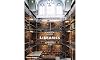
Un altro libro da "vedere" piuttosto che leggere. Una famosa fotografa di interni che da oltre 30 anni cerca con le sue immagini di far capire al pubblico come osservare gli spazi, le forme, i luoghi e le persone che leggono e lavorano con i libri. Non per il piacere di vedere ed essere visti, ma per penetrare l'intimità interna di un pensiero, un'idea, una impressione. Tanti pensieri, innumerevoli idee ed impressioni legate al mondo dei libri. Da queste immagini si ricava la sensazione che show more le biblioteche sono senza dubbio il sogno di chi "produce" i libri. E chi fa questi libri, e li fa ad alto livello, sa bene che Candida Hofer li fa rivivere inquadrandoli da par suo in quelle che possono essere definite cattedrali del sapere: le biblioteche.
I luoghi sono tanti, diversi, unici. L' Escorial in Spagna, il Whitney Museum a New York, Villa Medici a Roma, l'Università di Amburgo, la Bibliothèque nationale de France a Parigi, il Museo Archeologico di Madrid, la Pierpont Morgan Library in New York per nominarne solo alcune.
Tutte immagini scelte, mirate ai luoghi dedicati, assolutamente prive di presenza umana. E' come se l'autrice delle foto avesse volutamente evitare di immettere sulla scena il personaggio principale dello spettacolo, il lettore, interprete principale dello spettacolo che è la lettura. Una decisione del genere può suscitare sconcerto e disappunto, ma va capita. Candida Hofer ha voluto categorizzare in assoluto quei luoghi speciali che sono le biblioteche, che si presentano come cattedrali del sapere. Ha "frantumato", per così dire, la sua visione dei posti che costituiscono una biblioteca. Ne sono venute fuori immagini di angoli, sezioni secondarie, particolari e dettagli che solo in apparenza sembrano futili o di secondo piano. E' come se la fotografa avesse voluto farci entrare davvero nell'anima dei luoghi, carpirne i sentimenti, ascoltarne le voci che escono da quegli scaffali, quelle stanze, quei tavoli solitari, quei fogli, solo in apparenza sparpagliati, un angolo illuminato con un tavolo nudo e due sedie vuote, uno scrittorio con alcuni libri, lunghe file di sedie in attesa di essere sedute, colonne e colonne di volumi, pagine, schede e schedari, fiumi di parole dette e trascritte, provenienti da un "altrove" irraggiungibile. Ma gli autori sembrano essere tutti qui presenti. Aleggiano in queste fotografie presenze e assenze. Le prime sono gli autori, le seconde sono i lettori. Entrambe le categorie si ritrovano in quegli spazi lasciati liberi e vuoti, volutamente. Si affolleranno però ogni qual volta le pagine del volume verranno sfogliate. Come adesso sto facendo io per parlarvene. E i pensieri corrono e si materializzano nella mia mente, creando continuamente altre immagini che mi appartengono, ma non sapevo che fossero mie. Perché già vissute e viste altrove. La stessa cosa accadrà con altri lettori, i quali vedranno cose che io non vedrò mai perché non mi appartengono. Questa è la magia di queste immagini di Biblioteche.
Che questo libro sia un inno alle biblioteche del mondo è certo anche perché, in un ambiente del genere, non poteva mancare chi di libri e di biblioteche davvero se ne intende: Umberto Eco, l'esperto più biblio e più presente che ci sia in tutto il mondo. Con una lunga introduzione intitolata "De Biblioteca" il nostro grande intellettuale recita la sua "preghiera" nelle vesti liturgiche che un ufficio del genere presuppone. E non poteva iniziare il suo sermone senza citare un altro "santone" biblico, nel senso di "biblio", qual è Jorge Luis Borges e la sua "Biblioteca di Babele". A dire il vero il testo di questo intervento non è stato scritto appositamente per questo libro-immagini sulle Biblioteche di Candida Hofer. Si tratta solo del testo del discorso che il grande semiologo italiano fece in occasione del 25° anniversario della fondazione della Biblioteca Comunale di Milano nel Marzo del 1981, già pubblicata anche altrove. Ogni occasione è buona per un bibliomane che si rispetti tirare fuori dal cassetto i suoi fogli esclusivi e passarli "gratuitamente" al lettore. Anche questo libro ha, infatti, un costo piuttosto elevato. Non si tratta di essere venali, ma le sterline sono sterline e questo libro costa £ 35.35 spese escluse. Anche i libri hanno un costo. E il professore lo sa bene... show less
I luoghi sono tanti, diversi, unici. L' Escorial in Spagna, il Whitney Museum a New York, Villa Medici a Roma, l'Università di Amburgo, la Bibliothèque nationale de France a Parigi, il Museo Archeologico di Madrid, la Pierpont Morgan Library in New York per nominarne solo alcune.
Tutte immagini scelte, mirate ai luoghi dedicati, assolutamente prive di presenza umana. E' come se l'autrice delle foto avesse volutamente evitare di immettere sulla scena il personaggio principale dello spettacolo, il lettore, interprete principale dello spettacolo che è la lettura. Una decisione del genere può suscitare sconcerto e disappunto, ma va capita. Candida Hofer ha voluto categorizzare in assoluto quei luoghi speciali che sono le biblioteche, che si presentano come cattedrali del sapere. Ha "frantumato", per così dire, la sua visione dei posti che costituiscono una biblioteca. Ne sono venute fuori immagini di angoli, sezioni secondarie, particolari e dettagli che solo in apparenza sembrano futili o di secondo piano. E' come se la fotografa avesse voluto farci entrare davvero nell'anima dei luoghi, carpirne i sentimenti, ascoltarne le voci che escono da quegli scaffali, quelle stanze, quei tavoli solitari, quei fogli, solo in apparenza sparpagliati, un angolo illuminato con un tavolo nudo e due sedie vuote, uno scrittorio con alcuni libri, lunghe file di sedie in attesa di essere sedute, colonne e colonne di volumi, pagine, schede e schedari, fiumi di parole dette e trascritte, provenienti da un "altrove" irraggiungibile. Ma gli autori sembrano essere tutti qui presenti. Aleggiano in queste fotografie presenze e assenze. Le prime sono gli autori, le seconde sono i lettori. Entrambe le categorie si ritrovano in quegli spazi lasciati liberi e vuoti, volutamente. Si affolleranno però ogni qual volta le pagine del volume verranno sfogliate. Come adesso sto facendo io per parlarvene. E i pensieri corrono e si materializzano nella mia mente, creando continuamente altre immagini che mi appartengono, ma non sapevo che fossero mie. Perché già vissute e viste altrove. La stessa cosa accadrà con altri lettori, i quali vedranno cose che io non vedrò mai perché non mi appartengono. Questa è la magia di queste immagini di Biblioteche.
Che questo libro sia un inno alle biblioteche del mondo è certo anche perché, in un ambiente del genere, non poteva mancare chi di libri e di biblioteche davvero se ne intende: Umberto Eco, l'esperto più biblio e più presente che ci sia in tutto il mondo. Con una lunga introduzione intitolata "De Biblioteca" il nostro grande intellettuale recita la sua "preghiera" nelle vesti liturgiche che un ufficio del genere presuppone. E non poteva iniziare il suo sermone senza citare un altro "santone" biblico, nel senso di "biblio", qual è Jorge Luis Borges e la sua "Biblioteca di Babele". A dire il vero il testo di questo intervento non è stato scritto appositamente per questo libro-immagini sulle Biblioteche di Candida Hofer. Si tratta solo del testo del discorso che il grande semiologo italiano fece in occasione del 25° anniversario della fondazione della Biblioteca Comunale di Milano nel Marzo del 1981, già pubblicata anche altrove. Ogni occasione è buona per un bibliomane che si rispetti tirare fuori dal cassetto i suoi fogli esclusivi e passarli "gratuitamente" al lettore. Anche questo libro ha, infatti, un costo piuttosto elevato. Non si tratta di essere venali, ma le sterline sono sterline e questo libro costa £ 35.35 spese escluse. Anche i libri hanno un costo. E il professore lo sa bene... show less
Libraries are a book producer's dream. Since nobody photographs libraries as beautifully as Hofer, it seemed only natural to dedicate one of her publications to the splendid and intimate cathedrals of knowledge across Europe and the US: the Escorial in Spain, the Whitney Museum in New york, Villa Medici in Rome, the Hamburg University library, the Bibliotheque nationale de France in Paris, the Museo Archeologico in Madrid, and Pierpont Morgan Library in New York, to name just a few. Almost show more completely devoid of people, as is Candida Hofer's trademark, these pictures radiate a comforting serenity that is exceptional in contemporary photography. show less
Hier groeien boeken uit de grond -Books Grow Out of the Ground Here. Dutch Libraries and Librarians. Photographed by Candida Höfer and Bert Nienhuis by Candida Höfer

‘Books Grow Out of the Ground Here’, taken from a poem by P.A. de Génestet, is the title of a long project now come to fruition. Huis Marseille proudly presents the photographs that Candida Höfer (1944) and Bert Nienhuis (1944) recently took of 25 Dutch libraries and librarians. Höfer depicted the interiors of the libraries, while Nienhuis made portraits of the librarians. The participating libraries were carefully selected by Huis Marseille in collaboration with the Koninklijke show more Bibliotheek and the Netherlands Institute for Art History. The results of this unique commission can be seen early this spring.
Not only is this the first time that Candida Höfer is exhibiting in the Netherlands, she is also showing work that has never been exhibited before. A student of Bernd Becher at the Dusseldorfer Kunstakademie and last year one of the two German participants in the Venice Biennale, Höfer has for years ranked among the top in international photography. Her work can be defined as the evocative mapping of public rooms, halls and spaces that are partly shaped by their use. The library has developed as a distinct subtype within this. Her photographs are additionally about atmosphere, history and the ‘patina’ of human life that is so clearly left on many public spaces. The visual quality of her work is timeless and monumental, marked by great refinement in her usage of both coloration and natural light. More than enough reason for commissioning Candida Höfer to depict the rich diversity of old and new libraries in the Netherlands.
The library is a culturally determined storage space, albeit one with a partly public and traditionally often representative purpose. The 25 libraries ultimately selected for this project not only vary widely in appearance; they each stand for different types of collections and users. Thus there are university, public, museum, and private libraries, as well as an ecclesiastical, a legal and a royal collection. The selection is intended to be a representative and lavish cross-section of what the Netherlands has to offer. It is certainly not an exhaustive survey; there are many more libraries of no lesser quality.
Bert Nienhuis’s portraits of the librarians (directors, curators, administrators, etc.) have given a human countenance to the library. Although often invisible to the public, the librarian is the driving force behind these collections of books. He, and sometimes she, not only represents the power and the effectiveness of the book, but also and to an ever-increasing degree the logistical management so inseparably connected with the functioning of the library. With this commission, Bert Nienhuis has again proven his visual prowess as a portrait photographer. His portraits are contemporary and imaginative; they put the spectre of the librarian as ‘bookworm’ once and for all behind us. Bert Nienhuis has been associated since 1975 with Vrij Nederland, a weekly magazine in which he earned great fame with his penetrating portraits of national and international celebrities.
The contrast between the two photographers is great. They each personify a different aspect of the profession. One works autonomously and evocatively (also in commissioned situations), the other as a documentarian and primarily on commission. The project further accentuates this contrast by setting the black and white of Bert Nienhuis opposite the colours of Candida Höfer, while also maintaining a difference in size. show less
Not only is this the first time that Candida Höfer is exhibiting in the Netherlands, she is also showing work that has never been exhibited before. A student of Bernd Becher at the Dusseldorfer Kunstakademie and last year one of the two German participants in the Venice Biennale, Höfer has for years ranked among the top in international photography. Her work can be defined as the evocative mapping of public rooms, halls and spaces that are partly shaped by their use. The library has developed as a distinct subtype within this. Her photographs are additionally about atmosphere, history and the ‘patina’ of human life that is so clearly left on many public spaces. The visual quality of her work is timeless and monumental, marked by great refinement in her usage of both coloration and natural light. More than enough reason for commissioning Candida Höfer to depict the rich diversity of old and new libraries in the Netherlands.
The library is a culturally determined storage space, albeit one with a partly public and traditionally often representative purpose. The 25 libraries ultimately selected for this project not only vary widely in appearance; they each stand for different types of collections and users. Thus there are university, public, museum, and private libraries, as well as an ecclesiastical, a legal and a royal collection. The selection is intended to be a representative and lavish cross-section of what the Netherlands has to offer. It is certainly not an exhaustive survey; there are many more libraries of no lesser quality.
Bert Nienhuis’s portraits of the librarians (directors, curators, administrators, etc.) have given a human countenance to the library. Although often invisible to the public, the librarian is the driving force behind these collections of books. He, and sometimes she, not only represents the power and the effectiveness of the book, but also and to an ever-increasing degree the logistical management so inseparably connected with the functioning of the library. With this commission, Bert Nienhuis has again proven his visual prowess as a portrait photographer. His portraits are contemporary and imaginative; they put the spectre of the librarian as ‘bookworm’ once and for all behind us. Bert Nienhuis has been associated since 1975 with Vrij Nederland, a weekly magazine in which he earned great fame with his penetrating portraits of national and international celebrities.
The contrast between the two photographers is great. They each personify a different aspect of the profession. One works autonomously and evocatively (also in commissioned situations), the other as a documentarian and primarily on commission. The project further accentuates this contrast by setting the black and white of Bert Nienhuis opposite the colours of Candida Höfer, while also maintaining a difference in size. show less
A coffee table book of gorgeous colour photos of European libraries. There are also some modern photos of server rooms or desks are less appealing but in their own way compelling, charting the evolution of the library and how materials are now stored electronically. Most of the photos showcase empty buildings and I preferred the photos that included people. People give scale to some of the rooms that otherwise were hard to imagine, and, as the only point of libraries is for them to be used, show more the people-less library seems especially forlorn. The photos do fuel fantasies of working in one of these places. show less
Lists
You May Also Like


Associated Authors
Statistics
- Works
- 28
- Also by
- 2
- Members
- 660
- Popularity
- #38,227
- Rating
- 4.2
- Reviews
- 14
- ISBNs
- 33
- Languages
- 5
