
Maile Chapman
Author of Your Presence Is Requested at Suvanto
Works by Maile Chapman
Associated Works
Fairy Tale Review: The Grey Issue — Contributor — 2 copies
Tagged
Common Knowledge
- Gender
- female
- Education
- The Evergreen State College
Syracuse University - Nationality
- USA
- Associated Place (for map)
- USA
Members
Reviews

“Sunny withholds judgment but she knows, sometimes this happiness, this passive acceptance, sometimes it is the beginning of decline.”
Sunny Taylor is an American nurse who seeks employment in a private hospital in Finland, escaping bitter memories and looking to soothe them in the cold and remote location. Thus she begins her work at Suvanto, a spa-like hospital focused on caring for wealthy women who are there for various reasons. Some need genuine medical attention, others simply need show more to be attended to, and a few lack any other place that feels like home. All of them easily leaving behind husbands and family for the refuge of Suvanto.
Besides Sunny, an independent and skillful nurse, we meet Julia, a hostile and baiting old woman, and Pearl, a childish socialite absorbed in her own amusement. All of them are at Suvanto to escape, but what they avoid is unique to each. What unites them is the need to have nothing matter, no complications to deal with. Suvanto provides them with an excuse to be treated for medical conditions when really they are there for leisure. The numbing routine of crafts and walks and gazing at the frozen sea affects them, in a way the reader does not foresee.
Chapman builds the characters slowly and delicately. Sunny, soon after her eager arrival, is at odds with herself, as she desperately wants to matter: “Here, without anything truly at risk, she feels like she’s merely pretending, in everything. The work is nearly meaningless, and life is nothing but a search for meaning, yes? Isn’t that right? […] Doesn’t that mean for as long as she remains here, completing such tasks, she is wasting her energy? Wasting her life?” Rather than finding contentment in a job well-done, she begins to unravel. She begins to question the true motivation of the women who come to Suvanto.
Julia, a former dancer who arrives to manipulate and harass the staff, elicits no sympathy from Sunny as she creates contention and ill-will in the hospital. And then Pearl arrives, a repeat visitor; a wealthy woman who buys jewels as others might buy candy, eager to fall into her routine. Of her, we read: “She likes to move from place to place, most especially when the place exists without her, and can be returned to with no explanations, no responsibilities. With frequent departures she conceals the fact that she cannot form friendships.” Her lack of connection to a fixed location becomes a pivotal point in understanding her character and the meaning of Suvanto.
The pace of the story is slow and spends its time focusing on the details of Finland, the relationships between the women and their battles for attention, and the change in composure that Sunny experiences in her new locale. The pace can be deceptive, as Chapman is knitting together the details that will become significant and apparent once the whole is created. Her writing is light and airy, while the content is not. She uses phrases that stop you in your tracks, as when Sunny experiences ‘a reverse déjà vu’. She employs the changing light and seasons in Finland, even the changing time of day to illustrate insidious allusions.
At times, Sunny is sleepless and haggard to the point of seeing imaginary faces, and she reminds me of the main character in Hunger, by Knut Hamsun. She faces confusion and a delirium that rushes her forward, headlong into the events as they unfold. As she explores the cold outskirts of the hospital, we read:
“The tight face is a shield, it is the way her working self conceals this other, silent self, the one who roams alone out on the paths. It is a protection, but once she is out in the cold she feels it as pain across her forehead and jaw. She is ignoring the rustling memory of her own voice…It is precarious and loud, this humming act of ignoring the obsessive repetitions of the day.” show less
Sunny Taylor is an American nurse who seeks employment in a private hospital in Finland, escaping bitter memories and looking to soothe them in the cold and remote location. Thus she begins her work at Suvanto, a spa-like hospital focused on caring for wealthy women who are there for various reasons. Some need genuine medical attention, others simply need show more to be attended to, and a few lack any other place that feels like home. All of them easily leaving behind husbands and family for the refuge of Suvanto.
Besides Sunny, an independent and skillful nurse, we meet Julia, a hostile and baiting old woman, and Pearl, a childish socialite absorbed in her own amusement. All of them are at Suvanto to escape, but what they avoid is unique to each. What unites them is the need to have nothing matter, no complications to deal with. Suvanto provides them with an excuse to be treated for medical conditions when really they are there for leisure. The numbing routine of crafts and walks and gazing at the frozen sea affects them, in a way the reader does not foresee.
Chapman builds the characters slowly and delicately. Sunny, soon after her eager arrival, is at odds with herself, as she desperately wants to matter: “Here, without anything truly at risk, she feels like she’s merely pretending, in everything. The work is nearly meaningless, and life is nothing but a search for meaning, yes? Isn’t that right? […] Doesn’t that mean for as long as she remains here, completing such tasks, she is wasting her energy? Wasting her life?” Rather than finding contentment in a job well-done, she begins to unravel. She begins to question the true motivation of the women who come to Suvanto.
Julia, a former dancer who arrives to manipulate and harass the staff, elicits no sympathy from Sunny as she creates contention and ill-will in the hospital. And then Pearl arrives, a repeat visitor; a wealthy woman who buys jewels as others might buy candy, eager to fall into her routine. Of her, we read: “She likes to move from place to place, most especially when the place exists without her, and can be returned to with no explanations, no responsibilities. With frequent departures she conceals the fact that she cannot form friendships.” Her lack of connection to a fixed location becomes a pivotal point in understanding her character and the meaning of Suvanto.
The pace of the story is slow and spends its time focusing on the details of Finland, the relationships between the women and their battles for attention, and the change in composure that Sunny experiences in her new locale. The pace can be deceptive, as Chapman is knitting together the details that will become significant and apparent once the whole is created. Her writing is light and airy, while the content is not. She uses phrases that stop you in your tracks, as when Sunny experiences ‘a reverse déjà vu’. She employs the changing light and seasons in Finland, even the changing time of day to illustrate insidious allusions.
At times, Sunny is sleepless and haggard to the point of seeing imaginary faces, and she reminds me of the main character in Hunger, by Knut Hamsun. She faces confusion and a delirium that rushes her forward, headlong into the events as they unfold. As she explores the cold outskirts of the hospital, we read:
“The tight face is a shield, it is the way her working self conceals this other, silent self, the one who roams alone out on the paths. It is a protection, but once she is out in the cold she feels it as pain across her forehead and jaw. She is ignoring the rustling memory of her own voice…It is precarious and loud, this humming act of ignoring the obsessive repetitions of the day.” show less
Maile Chapman's dark and surprising first novel, YOUR PRESENCE IS REQUESTED AT SUVARNO, is a slow-burning cauldron of evil. I had never heard of Chapman, but she is obviously a young woman wise beyond her years and will, to my mind, be a literary voice well worth watching. And what a voice it is.
The novel is like nothing I've ever read before, with an epigraph from Euripides' THE BACCHAE, the appropriateness of which only becomes clear deep into the story with a mysterious and savage act, show more preceded by a surrealistic scene in which the privileged and spoiled "up-patient" women of the Suvanto hospital/rest home stand on the icy shore of a frozen bay watching the passage of a comet, mourning the sudden loss of one of their number. "Poor Julia" is repeated among them, "so that Julia's name is heard like the crying of a flock of geese overhead in the darkness ..."
I could almost hear the ululating mournful cries, and sense the loss they felt, and suddenly that Greek epigraph applied, with its "gleam of awesome fire in heaven" and women who "stood straight up, with staring eyes."
Chapman has created a cast of complex and memorable characters with American nurse Sunny Taylor and resident-patients Julia Day, Pearl Webb, Mary Minder, and Laimi Lehti. The long nights of 1920s northern Finland are a setting worthy of Poe (or, in our own time, perhaps Stephen King), but Greek tragedy has also heavily influenced Chapman, both in story and in style. Because, in addition to the overarching omniscient narrator voice, the reader also gets lengthy passages in the second person, and, perhaps more importantly, from the "we" viewpoint, suggesting the women patients in the role of Greek chorus, watching and commenting as the events slowly and inexorably unfold.
It's been over forty years since I read Euripides, but Chapman's take on that ancient Greek playwright makes me want to revisit his work.
I would urge readers who may at first be impatient with the pace of the novel to persevere. Because it picks up and begins to roll rapidly downhill to a chilling and horrifying conclusion you could not have guessed and will not soon forget. This is simply one hell of a good read that leaves you with much to think about. Highly recommended. show less
The novel is like nothing I've ever read before, with an epigraph from Euripides' THE BACCHAE, the appropriateness of which only becomes clear deep into the story with a mysterious and savage act, show more preceded by a surrealistic scene in which the privileged and spoiled "up-patient" women of the Suvanto hospital/rest home stand on the icy shore of a frozen bay watching the passage of a comet, mourning the sudden loss of one of their number. "Poor Julia" is repeated among them, "so that Julia's name is heard like the crying of a flock of geese overhead in the darkness ..."
I could almost hear the ululating mournful cries, and sense the loss they felt, and suddenly that Greek epigraph applied, with its "gleam of awesome fire in heaven" and women who "stood straight up, with staring eyes."
Chapman has created a cast of complex and memorable characters with American nurse Sunny Taylor and resident-patients Julia Day, Pearl Webb, Mary Minder, and Laimi Lehti. The long nights of 1920s northern Finland are a setting worthy of Poe (or, in our own time, perhaps Stephen King), but Greek tragedy has also heavily influenced Chapman, both in story and in style. Because, in addition to the overarching omniscient narrator voice, the reader also gets lengthy passages in the second person, and, perhaps more importantly, from the "we" viewpoint, suggesting the women patients in the role of Greek chorus, watching and commenting as the events slowly and inexorably unfold.
It's been over forty years since I read Euripides, but Chapman's take on that ancient Greek playwright makes me want to revisit his work.
I would urge readers who may at first be impatient with the pace of the novel to persevere. Because it picks up and begins to roll rapidly downhill to a chilling and horrifying conclusion you could not have guessed and will not soon forget. This is simply one hell of a good read that leaves you with much to think about. Highly recommended. show less

A refreshingly different novel that had the atmosphere of a Finnish winter, claustrophobic, dark and cold. We are at the Suvanto hospital and on the upper floor are foreign privileged women whose husbands are working in Finland and who are ill, lonely, have mental health issues or all three. Nurse Sunny is in charge of this ward of women and she too has fled from her past to hide in this hospital. She hides herself and her emotions. Beautiful descriptions of the weather, the sauna rituals, show more the women talking. Well written and thoroughly enjoyable read. If you find the pace slow at first stick with it and your persistence will be rewarded. show less
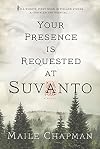
Set in Finland in the 1920s, Your Presence is Requested at Suvanto takes us into life at a convalescent hospital. Sunny Taylor is an American nurse in charge of the patients on a floor where the illnesses are not as serious and where an underlying tension builds as the winter deepens. This book is all about atmosphere. I had a sense of unease throughout the entire book. Chapman spends much of the book creating tension. The plot doesn't really get rolling until the final third of the book. show more But the atmosphere was enough to pull me back into the book every night. show less
Lists
A Novel Cure (1)
Awards

You May Also Like


Associated Authors
Statistics
- Works
- 4
- Also by
- 4
- Members
- 153
- Popularity
- #136,479
- Rating
- 3.5
- Reviews
- 10
- ISBNs
- 8
- Languages
- 1