
Friedrich Christian Delius (1943–2022)
Author of Portrait of the Mother as a Young Woman
About the Author
Image credit: Friedrich Christian Delius (boekomslag)
Works by Friedrich Christian Delius
Deutscher Herbst : drei Romane in einem Band : ein Held der inneren Sicherheit, Mogadischu Fensterplatz, Himmelfahrt eines Staatsfeindes (1997) 6 copies
Konservativ in 30 Tagen. Ein Hand- und Wörterbuch Frankfurter Allgemeinplätze (1988) 4 copies, 1 review
Warum ich schon immer recht hatte - und andere Irrtümer. Ein Leitfaden für deutsches Denken. (2003) 4 copies
«Darling, it’s Dilius!»: Erinnerungen mit großem A | Platz 1 der SWR Bestenliste März 2023 (2023) 3 copies
Der Held und sein Wetter : ein Kunstmittel und sein ideologischer Gebrauch im Roman des bürgerlichen Realismus (2012) 2 copies
Peter Lohmeyer liest F. C. Delius, Der Sonntag, an dem ich Weltmeister wurde : ungekürzte Lesung 1 copy
Die unsichtbaren Blitze: Gedichte (Rotbücher / Im Abo. 1,- billiger, ausser den literarischen -L-) (1981) 1 copy
Llibertat berlinesa actual 1 copy
Associated Works
Three Contemporary German Novellas: A Runaway Horse, Lenz, and Sunday I Became World Champion (2000) 13 copies
Als de dagen van het jaar verhalen uit de Westduitse werkelijkheid 1970-heden (1985) — Author — 3 copies
Tagged
Common Knowledge
- Canonical name
- Delius, Friedrich Christian
- Birthdate
- 1943-02-13
- Date of death
- 2022-05-30
- Gender
- male
- Education
- Freie Universität Berlin
- Occupations
- writer
- Organizations
- Deutsche Akademie für Sprache und Dichtung
- Awards and honors
- Georg-Büchner Prize (2011)
Joseph Breitbach Prize (2007)
Walter-Hasenclever-Literaturpreis (2004) - Nationality
- Germany
- Birthplace
- Roma, Italy
- Places of residence
- Wehrda, Hessen, Germany
Berlin, Germany - Place of death
- Berlin, Deutschland
- Associated Place (for map)
- Germany
Members
Reviews

When I was growing up, it took me a long time before I realised that "iron curtain" was a metaphor. The German-German border was the most frightening and vivid manifestation of what the Cold War was about, and the picture conjured up by Churchill's famous words didn't seem any more extravagant than what I was told about this peculiar half-country, whose only apparent raison d'être was to prevent its own citizens from leaving...
Delius takes the frightening part of this picture for granted, show more and focusses on its absurdity in his lightly-fictionalised version of the true story of Klaus Müller (less prosaically named Paul Gompitz in the book) and his plan to visit Italy in the tradition established by another notable (if rather less hairy) Saxon eccentric, Johann Gottfried Seume, in 1802. Gompitz is presented to us as a Svejk-like figure, following his dream with a dogged, bizarre, but in some way also thoroughly reasonable determination. The plan is more than six years in the making, but when it comes down to it, he never shows impatience. If the right weather conditions don't arise, he will simply have to wait until next year. Of course, we, the readers, have the benefit of hindsight, and are anxiously watching the clock to see if he will be able to put his great project into effect before November 1989, when history makes it redundant. But Delius cleverly avoids any reference to this: we have to work the irony out for ourselves.
There are plenty of heroic stories of escapes from the DDR - many of which ended tragically, of course - but the great thing about Gompitz is that he doesn't want to escape, or to make a new life for himself in the West. He simply wants to do what any normal person in any normal, developed country can do: treat himself to the holiday he has dreamed of, and then come home and return to his normal life. By highlighting the complete disproportion between the extraordinary effort Gompitz puts in (and the risks he has to run) and the ordinariness of his objective, Delius gives us the clearest possible illustration of how far the DDR had managed to distort logic and reality by the 1980s.
There are some wonderful descriptions of the distorted world of the DDR - one that particularly stuck in my mind is the scene where Gompitz is lying on a nudist beach on the beautiful island of Hiddensee when he sees three naked men approaching and not only realises at once that they are Stasi, but is even able to spot which of the three is the officer. As Edwin says, it's also a fascinating sailing book, with a lot of convincing detail about how Gompitz made his escape in a 5m open sailing dinghy. I don't know the waters around Rügen, but I was able to follow it all on a chart, and it seemed to make sense. show less
Delius takes the frightening part of this picture for granted, show more and focusses on its absurdity in his lightly-fictionalised version of the true story of Klaus Müller (less prosaically named Paul Gompitz in the book) and his plan to visit Italy in the tradition established by another notable (if rather less hairy) Saxon eccentric, Johann Gottfried Seume, in 1802. Gompitz is presented to us as a Svejk-like figure, following his dream with a dogged, bizarre, but in some way also thoroughly reasonable determination. The plan is more than six years in the making, but when it comes down to it, he never shows impatience. If the right weather conditions don't arise, he will simply have to wait until next year. Of course, we, the readers, have the benefit of hindsight, and are anxiously watching the clock to see if he will be able to put his great project into effect before November 1989, when history makes it redundant. But Delius cleverly avoids any reference to this: we have to work the irony out for ourselves.
There are plenty of heroic stories of escapes from the DDR - many of which ended tragically, of course - but the great thing about Gompitz is that he doesn't want to escape, or to make a new life for himself in the West. He simply wants to do what any normal person in any normal, developed country can do: treat himself to the holiday he has dreamed of, and then come home and return to his normal life. By highlighting the complete disproportion between the extraordinary effort Gompitz puts in (and the risks he has to run) and the ordinariness of his objective, Delius gives us the clearest possible illustration of how far the DDR had managed to distort logic and reality by the 1980s.
There are some wonderful descriptions of the distorted world of the DDR - one that particularly stuck in my mind is the scene where Gompitz is lying on a nudist beach on the beautiful island of Hiddensee when he sees three naked men approaching and not only realises at once that they are Stasi, but is even able to spot which of the three is the officer. As Edwin says, it's also a fascinating sailing book, with a lot of convincing detail about how Gompitz made his escape in a 5m open sailing dinghy. I don't know the waters around Rügen, but I was able to follow it all on a chart, and it seemed to make sense. show less
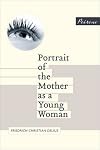
In Portrait Of The Mother, a young pregnant woman walks through Rome, on her way to a concert in a church. She is German, and it's January 1943. She is waiting in Rome for her husband to return from duty on the African front, and as she walks through the city her thoughts circle around in the way that they do when one is walking - new thoughts are sparked by the things you see or by memories linked to the place you're in, and old preoccupations return. The whole book is told in one long show more sentence, but with paragraph breaks, so it felt almost that I was reading at walking pace, with one paragraph per breath.
She's quite a naive young woman, self-conscious about the fact that she doesn't really understand anything about Italy, its history or culture, and wary of the Catholic/Mediterranean goings-on - as a result, she lives in a little bit of a bubble. Steeped in both her strong religious faith and all the wartime propaganda, she tries not to think about difficult things like food shortages, her possibly traitorous thoughts about wanting her husband to be with her, or indeed the hints that she's heard from both her father and husband that they don't truly support the Fuhrer. Instead she seeks out places which remind her of her husband or her faith, "little islands of reassurance" in "the dangerous sea of the hospitable and harsh, beautiful and uncanny city".
Despite her naivety, somehow she becomes a sympathetic character as we spend the morning with her. And the impact of the war is very well conveyed in small details - the espresso bar, tightly shuttered since coffee became unavailable except for those with connections; "the daily death announcements Fallen in action, which were printed ever smaller". The climax of the book - the concert - is an incredibly beautiful summation of all the emotions that have built up to this point.
and once again, before she continued on her way, she looked to the left of the twin churches into Via del Babuino, down which she had already walked four times this week, Monday and Tuesday, Thursday and Friday, the street of letters and packages, the street of the signs of life she hoped for, the street of happiness, from where she had returned yesterday with two letters from Gert, received at the Wehrmacht headquarters, full of gratitude after a first glance at his lines and the silent, short prayer: He's alive! Thank you, O benevolent God!, and this is why, of the three streets which ran radially between the domed churches towards the obelisk, she knew Babuino best of all, her street of happiness and gratitude, show less
She's quite a naive young woman, self-conscious about the fact that she doesn't really understand anything about Italy, its history or culture, and wary of the Catholic/Mediterranean goings-on - as a result, she lives in a little bit of a bubble. Steeped in both her strong religious faith and all the wartime propaganda, she tries not to think about difficult things like food shortages, her possibly traitorous thoughts about wanting her husband to be with her, or indeed the hints that she's heard from both her father and husband that they don't truly support the Fuhrer. Instead she seeks out places which remind her of her husband or her faith, "little islands of reassurance" in "the dangerous sea of the hospitable and harsh, beautiful and uncanny city".
Despite her naivety, somehow she becomes a sympathetic character as we spend the morning with her. And the impact of the war is very well conveyed in small details - the espresso bar, tightly shuttered since coffee became unavailable except for those with connections; "the daily death announcements Fallen in action, which were printed ever smaller". The climax of the book - the concert - is an incredibly beautiful summation of all the emotions that have built up to this point.
and once again, before she continued on her way, she looked to the left of the twin churches into Via del Babuino, down which she had already walked four times this week, Monday and Tuesday, Thursday and Friday, the street of letters and packages, the street of the signs of life she hoped for, the street of happiness, from where she had returned yesterday with two letters from Gert, received at the Wehrmacht headquarters, full of gratitude after a first glance at his lines and the silent, short prayer: He's alive! Thank you, O benevolent God!, and this is why, of the three streets which ran radially between the domed churches towards the obelisk, she knew Babuino best of all, her street of happiness and gratitude, show less

Evocative is the word I will use to describe this beautifully written story. Okay, I would use the word sublime as well. Introspective and observational in nature, Delius has captured the essence of a 19-year-old German woman, 8-months pregnant and adrift "in the dangerous sea of the hospitable and harsh, beautiful and uncanny city" of Rome. Margaret (the girl's name) does not speak the local language and as such, finds herself trying to explain the sights and sounds that surround her via show more her innocent, devout Protestant upbringing. Delius' portrayal of Rome, in particular Margaret's walk from the German-run mission hospital to the Lutheran Gospel on Via Sicilia is vividly descriptive but it is Margaret's attempts to dissuade new ideas that threaten to make her lower her shield of naivete and start to question the German point of view on things like the war, attitudes towards Jews and Italians, and even start to examine her station and circumstances. Emotionally, the reader is exposed to Margaret's fear of dissent and the repression she sees in the faces of the individuals passing by during her walk.
For me this story has the same quiet contemplation and examination found in Virginia Woolf's [Mrs. Dalloway]. This story is also written in the stream of consciousness style, comprising of an inner monologue. I tend to enjoy quiet, contemplative stories and like the stream of consciousness style, but I understand that this may not be another reader's idea of a good read. If you find a story written as one 119-page run-on sentence, this story may not appeal to you.
As one review has put it, "This is an absolutely beautiful meditation on life, love, war, cruelty, faith, humanity" and one that I highly recommend, if anything, to experience the wonderful poetic prose the story is written in. show less
For me this story has the same quiet contemplation and examination found in Virginia Woolf's [Mrs. Dalloway]. This story is also written in the stream of consciousness style, comprising of an inner monologue. I tend to enjoy quiet, contemplative stories and like the stream of consciousness style, but I understand that this may not be another reader's idea of a good read. If you find a story written as one 119-page run-on sentence, this story may not appeal to you.
As one review has put it, "This is an absolutely beautiful meditation on life, love, war, cruelty, faith, humanity" and one that I highly recommend, if anything, to experience the wonderful poetic prose the story is written in. show less

To readers who have no experience with the absurdities of living in the former German Democratic Republic, Der Spaziergang von Rostock nach Syrakus may appear to be a work of satire. It is, and is meant to be, notwithstanding the fact that the absurdity of life in the DDR was sadly very, very real. And while many of the main characters escapades, his reasonings and actions are fictional, and while not actually real, they most certainly seem to belong to the stock of likely, perhaps somewhat show more exaggerated, but very, very plausible actions and ways of thinking that belonged to that historic period. Therefore, future readers can read this short novel both as a satire and a source of understanding life in the then-German Democratic Republic (DDR).
Part of the satirical aspect of Der Spaziergang von Rostock nach Syrakus lies in the dramatic irony, that the reader already knows that the whole plot, as built up from 1981 to 1988 (- 1989) is obsolete in view of historic reality, as it would unfold after the summer of 1989. In 1981, the main character decides that he intends to travel to Italy, a country outside the so-called "East Block', beyond the reach of ordinary citizens. His journey is inspired by Johann Gottfried Seume's Spaziergang nach Syrakus im Jahre 1802. In the course of the novel, it becomes clear that there is no way Paul Gompitz can do this legally, i.e. with permission from the authorities, and therefore he decides to undertake his journey by illegal means, which, in practical terms meant that he had "to escape" from the GDR. The novel minutely describes the planning, preparation and execution of Gompitz's plan. Part of the sublime absurdity of the novel lies in the fact that Gompitz sincerely intends to voluntarily return to the GDR after his journey, a contingency the authorities barely know how to handle.
The novel can also be read as an absurd adventure, and may be of particular interest to people who like reading about sailing. show less
Part of the satirical aspect of Der Spaziergang von Rostock nach Syrakus lies in the dramatic irony, that the reader already knows that the whole plot, as built up from 1981 to 1988 (- 1989) is obsolete in view of historic reality, as it would unfold after the summer of 1989. In 1981, the main character decides that he intends to travel to Italy, a country outside the so-called "East Block', beyond the reach of ordinary citizens. His journey is inspired by Johann Gottfried Seume's Spaziergang nach Syrakus im Jahre 1802. In the course of the novel, it becomes clear that there is no way Paul Gompitz can do this legally, i.e. with permission from the authorities, and therefore he decides to undertake his journey by illegal means, which, in practical terms meant that he had "to escape" from the GDR. The novel minutely describes the planning, preparation and execution of Gompitz's plan. Part of the sublime absurdity of the novel lies in the fact that Gompitz sincerely intends to voluntarily return to the GDR after his journey, a contingency the authorities barely know how to handle.
The novel can also be read as an absurd adventure, and may be of particular interest to people who like reading about sailing. show less
Lists
Awards


You May Also Like


Associated Authors
Statistics
- Works
- 45
- Also by
- 2
- Members
- 544
- Popularity
- #45,826
- Rating
- 3.5
- Reviews
- 21
- ISBNs
- 110
- Languages
- 6
- Favorited
- 2