
Anna Seghers (1900–1983)
Author of The Seventh Cross
About the Author
Anna Seghers was born to a wealthy Jewish family in Mainz. During the twenties she established a modest reputation as a writer committed to social reform. In 1933, when Hitler came to power, Seghers went into exile in France. When France capitulated to the Nazis, she proceeded to Mexico, barely show more escaping the gestapo. In 1942 she published her novel The Seventh Cross, which tells of seven prisoners who attempt to leave a Nazi labor camp and elude the police. It was immediately translated into English and became an international best-seller. In 1947 she settled in East Berlin, where she was greeted as a national heroine. Seghers began to publish even more prolifically, producing novels and stories in the style of socialist realism. In 1966 she was named president of the East German Writers' Union, an office in which she had considerable influence on cultural policy. She resigned, for personal reasons, in 1978. Seghers's prose is notable for its epic scope and psychological insight. Her reputation, like that of Brecht, remains somewhat clouded by unresolved questions of complicity with the Stalinist regime in former East Germany. After the unification of Germany in 1990, archivists uncovered a novel of hers entitled Der gerechte Richter (The Just Judge), which was critical of the state and which she had deliberately withheld from publication. (Bowker Author Biography) show less
Image credit: Anna Seghers, 1952
Works by Anna Seghers
Crisanta 4 copies
Geschichten aus Mexiko 4 copies
Drei Erzählungen. Aufstand der Fischer von St. Barbara. Die Gefährten. Das wirkliche Blau (1968) 3 copies
Erzaehlungen Band 1 (SL 102) 3 copies
Sämtliche Erzählungen : 1924 - 1980. – [1]: Der letzte Mann der Höhle : Erzählungen 1924 - 1933 (1994) 2 copies
Die Tochter der Delegierten 2 copies
Sämtliche Erzählungen : 1924 - 1980. – [2]: Reise ins Elfte Reich : Erzählungen 1934 - 1946 (1994) 2 copies
Das Argonautenschiff 2 copies
Romane und Erzählungen. Das siebte Kreuz. Transit. Die Toten bleiben jung. Erzählungen. (1992) 2 copies
Varjupaik ja teisi jutte 2 copies
Auf dem Wege zur amerikanischen Botschaft und andere Erzählungen (Bibliothek verbrannter Bücher) (2008) 2 copies
Die Hochzeit von Haiti 1 copy
Gewöhnliches und gefährliches Leben: Ein Briefwechsel aus der Zeit des Exils, 1939-1946 (German Edition) (1986) 1 copy
Das siebte Kreuz 1 copy
Las Bodas de Haití : relatos 1 copy
Mrtví nestárnou 1 copy
Em Trânsito 1 copy
Εκείνο ακριβώς το μπλέ 1 copy
Blood Money 1 copy
Ölü Kızların Gezisi 1 copy
Транзит 1 copy
Die Kinder : 3 Erzählungen 1 copy
Der Mann und sein Name 1 copy
KUOLLEET PYSYVÄT NUORINA 2 1 copy
Shledání 1 copy
Sämtliche Erzählungen : 1924 - 1980. – [3]: Die Hochzeit von Haiti : Erzählungen 1948 - 1949 (1994) 1 copy
Erzählungen. Band 2 1 copy
Gerçekliğin Evrensel Mirası 1 copy
Kamp-feller 1 copy
Niezwykłe spotkania 1 copy
Associated Works
The New Sufferings of Young W. and Other Stories from the German Democratic Republic (1997) — Contributor — 12 copies
Berliner Ensemble Adaptations : The tutor {Manheim/Sauerlander} + Coriolanus {Manheim} + The trial of Joan of Arc at Rouen, 1431 {Manheim/Sauerlander} + Don Juan {Manheim} +… (2014) — Original author [Joan of Arc] — 7 copies
Ein Haus mit vielen Zimmern: Autorinnen erzählen vom Schreiben (edition fünf 27) (German Edition) (2015) — Contributor — 2 copies
Es muss einer den Frieden beginnen: Jahrhundertautoren gegen den Krieg (2014) — Contributor — 2 copies, 1 review
Tagged
Common Knowledge
- Legal name
- Reiling, Netty
- Other names
- Зегерс, Анна
- Birthdate
- 1900-11-19
- Date of death
- 1983-06-01
- Gender
- female
- Education
- University of Cologne
University of Heidelberg - Occupations
- short story writer
novelist
political activist - Organizations
- Communist Party of Germany
- Awards and honors
- Georg Büchner Preis (1947)
- Relationships
- Radvanyi, Jean (grandson)
- Short biography
- Anna Seghers, née Reiling, was born to a German Jewish family in Mainz. Her father Isidor Reiling was an antiquarian and art dealer and her mother Hedwig Fuld came from a very wealthy Frankfurt family. She studied subjects as diverse as history, literature, and Chinese at the Universities of Cologne and Heidelberg, earning a doctorate in art history. She became serious about writing during her last year at university and in late 1924 published her first story, "Die Toten auf der Insel Djal" (The Dead on the Island of Djal). In 1925, she married Laszlo Rádványi, also known as Johann Lorenz Schmidt, a Hungarian Jewish Communist and teacher, with whom she had two children, and went to live in Berlin. She joined the German Communist Party in 1928. Her first novel, Die Gefährten, published in 1932, was a warning against the dangers of fascism, which led to her being arrested by the Nazis. By 1934, she had gone into exile via Zurich to Paris. After Germany invaded France during World War II, she fled to Marseilles and a year later to Mexico, where she founded the anti-fascist Heinrich-Heine-Klub, named after the poet, and Freies Deutschland (Free Germany), an academic journal. In 1939, she published The Seventh Cross, for which she received the Büchner-Prize in 1947. It was published in the USA in 1942 and adapted into a Hillywood film in 1944. The Seventh Cross was one of the very few depictions of Nazi concentration camps, in either literature or the cinema, during World War II. Her best-known story was "The Outing of the Dead Girls" (1946), an autobiographical reminiscence of a pre-World War I school excursion on the Rhine. After the war, she returned to Germany, eventually settling in East Berlin.
- Nationality
- Germany
- Birthplace
- Mainz, Germany
- Places of residence
- Heidelberg, Germany
Marseille, France
Mexico City, Mexico
Berlin, Germany
Meudon, France - Place of death
- Berlin, Germany
- Burial location
- Dorotheenstädtischer Friedhof, Berlin, Germany
- Map Location
- Germany
Members
Reviews
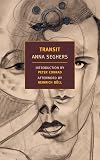
I loved this book set in 1940 Marseille, France as refugees attempt to flee Europe to the safety of other countries. The book is narrated by a young German man (we never learn his real name) who has escaped prison camps in Germany, by swimming across the Rhine, and France. While in Paris, he is asked by a friend to deliver a letter to a man named Weidel. He discovers that Weidel has committed suicide and discovers an unfinished manuscript and some letters to Weidel's wife. He makes his way show more to Marseille to find this wife and when there appropriates the name and papers of Weidel. Once in Marseille, he joins the absurd lifestyle of those waiting for their multiple papers and permissions to allow them to travel abroad, dealing with unhelpful, incompetent people and systems that rarely allow things to move along smoothly. The young man enjoys his life in Marseille and the people he meets and doesn't actually want to leave, though he's only allowed to stay if he's trying to leave. He ends up unintentionally finding Weidel's wife and his experiences entwine with hers.
There is obviously a lot of action going on here, but actually the book is just as much about the boredom, inanity, and just waiting of life in Marseille. There is much time spent in cafes, eating pizza and drinking wine, and talking about the transit visa process. People share little about their actual selves but make connections through their shared, even if not talked about, experiences. I loved the tone of this book, the absurdity of the situations, and the subtle insights into this aspect of the war experience.
Anna Seghers herself lived an interesting life. She was a German Jewish Communist who left Germany in the 1930s for France. During the war she left France through Marseille for Mexico, later returning to live in East Germany. She obviously drew on her experiences in Marseille to craft this book as she wrote it upon arriving in Mexico. I would highly recommend this book and will be keeping it to reread sometime in the future. show less
There is obviously a lot of action going on here, but actually the book is just as much about the boredom, inanity, and just waiting of life in Marseille. There is much time spent in cafes, eating pizza and drinking wine, and talking about the transit visa process. People share little about their actual selves but make connections through their shared, even if not talked about, experiences. I loved the tone of this book, the absurdity of the situations, and the subtle insights into this aspect of the war experience.
Anna Seghers herself lived an interesting life. She was a German Jewish Communist who left Germany in the 1930s for France. During the war she left France through Marseille for Mexico, later returning to live in East Germany. She obviously drew on her experiences in Marseille to craft this book as she wrote it upon arriving in Mexico. I would highly recommend this book and will be keeping it to reread sometime in the future. show less

Irgendwann Anfang des letzten Jahrhunderts: Die Fischer von St. Barbara leben mehr schlecht als recht von ihrer Arbeit. Die Anteile, die sie von Reeder Bredel für ihre Fänge erhalten, reichen schwerlich zum Überleben. Doch Widerstand regt sich kaum, bis Hull auf die Insel kommt. Ihm gelingt es die Männer davon zu überzeugen, nur zu deutlich verbesserten Bedingungen die Arbeit wieder aufzunehmen. Es ist, als ob sie auf einen wie ihn nur gewartet hätten: Schnell sind sich alle einig, show more auch die aus den umliegenden Dörfern, und geeint treten sie vor die Vertreter der Reederei, um ihre Forderungen vorzubringen. Doch diese sind alles andere als bereit, den Wünschen der Fischer nachzugeben. Die Fronten verhärten sich, es kommt zu Auseinandersetzungen, einer stirbt und langsam beginnt der Bund der Streikenden sich zu lockern.
Die Autorin schildert eine frühkapitalistische Gesellschaft, deren Mitglieder sich ihrem Schicksal scheinbar ergeben haben und vom Leben nichts mehr erwarten, bis es einem Einzelnen gelingt, sie aus ihrer Lethargie zu reißen und auf ein gemeinsames Ziel einzuschwören.
So elend und trübselig das Leben der Bewohner von St. Barbara wirkt, so trist und grau erscheinen auch die Gegend und das Wetter. Anna Seghers beschreibt diese Welt in bemerkenswert ausdrucksvollen Bildern, die man so schnell nicht wieder vergisst ('Hull verfolgte ... die weiße Narbe die das Schiff dem Meere riss, die wieder heilte und wieder riss, und wieder heilte und wieder riss.' oder 'Dumpf und unbeweglich, bleigrau und regenschwer starrten Himmel und Erde gegeneinander wie die Platten einer ungeheuren hydraulischen Presse.').
Mit Ulrike Krumbiegel als Vorleserin wurde eine gute Wahl getroffen. Die spröde Sprache einzelner Personen (insbesondere Marie) vermittelt sie ebenso überzeugend wie die allgemeine schwermütige Grundstimmung, die dieses Buch beherrscht. Einziges Manko: Es sind viel zu wenig Abschnitte auf den CDs, die zudem auch nur schwierig festzustellen sind. Eine Pause mitten in einer CD ist somit nur unter erschwerten Bedingungen möglich. show less
Die Autorin schildert eine frühkapitalistische Gesellschaft, deren Mitglieder sich ihrem Schicksal scheinbar ergeben haben und vom Leben nichts mehr erwarten, bis es einem Einzelnen gelingt, sie aus ihrer Lethargie zu reißen und auf ein gemeinsames Ziel einzuschwören.
So elend und trübselig das Leben der Bewohner von St. Barbara wirkt, so trist und grau erscheinen auch die Gegend und das Wetter. Anna Seghers beschreibt diese Welt in bemerkenswert ausdrucksvollen Bildern, die man so schnell nicht wieder vergisst ('Hull verfolgte ... die weiße Narbe die das Schiff dem Meere riss, die wieder heilte und wieder riss, und wieder heilte und wieder riss.' oder 'Dumpf und unbeweglich, bleigrau und regenschwer starrten Himmel und Erde gegeneinander wie die Platten einer ungeheuren hydraulischen Presse.').
Mit Ulrike Krumbiegel als Vorleserin wurde eine gute Wahl getroffen. Die spröde Sprache einzelner Personen (insbesondere Marie) vermittelt sie ebenso überzeugend wie die allgemeine schwermütige Grundstimmung, die dieses Buch beherrscht. Einziges Manko: Es sind viel zu wenig Abschnitte auf den CDs, die zudem auch nur schwierig festzustellen sind. Eine Pause mitten in einer CD ist somit nur unter erschwerten Bedingungen möglich. show less

I read an ARC (Netgalley) of the NYRB edition translated by Margot Bettauer Dembo.
There is a breakout at a German concentration camp for political prisoners in the 1930s. Seven men escape. Seven 'crosses' are erected in front of the parade ground, and the officer in charge of the camp announces that all the men will be returned.
Told through multiple voices, as inexorably the Nazi regime hunts down the tired, underfed, overworked and tortured men on the run, I found this slow at first. Then show more the pace accelerates as prisoner after prisoner is tracked down. Seghers shows the great courage (often alongside fear) required to step out from the crowd and challenge the system. At first it seems impossible that anyone will make it, when even small children are weaponised to hunt. Guards stand at every crossing point on the river. Wives and girlfriends are taken in, questioned. Photos of the escapees are posted in the press. Alongside the narrative of escape, friends question what they can do to help (if they can help?) but in the rural areas around the camp men and women largely continue their daily lives.
One of the other reviewers who has recently read this book on LT talks about the similarities to the present day. I also felt this, Seghers points to the difficulties of opposing unjust political systems, but you never feel that it is anything less than vital that we do. This is more than a narrative of heroes, of those who are somehow different from everyone else, superhuman. Instead, she acknowledges the role of chance, of people who are flawed human beings, of the power of friendship and of challenging the idea of those who claim opposition is impossible.
I think the style is of its time (1942) - I wondered how it would have been edited if submitted today. But an amazing book.
Recommended.
(and then read Transit!) show less
There is a breakout at a German concentration camp for political prisoners in the 1930s. Seven men escape. Seven 'crosses' are erected in front of the parade ground, and the officer in charge of the camp announces that all the men will be returned.
Told through multiple voices, as inexorably the Nazi regime hunts down the tired, underfed, overworked and tortured men on the run, I found this slow at first. Then show more the pace accelerates as prisoner after prisoner is tracked down. Seghers shows the great courage (often alongside fear) required to step out from the crowd and challenge the system. At first it seems impossible that anyone will make it, when even small children are weaponised to hunt. Guards stand at every crossing point on the river. Wives and girlfriends are taken in, questioned. Photos of the escapees are posted in the press. Alongside the narrative of escape, friends question what they can do to help (if they can help?) but in the rural areas around the camp men and women largely continue their daily lives.
One of the other reviewers who has recently read this book on LT talks about the similarities to the present day. I also felt this, Seghers points to the difficulties of opposing unjust political systems, but you never feel that it is anything less than vital that we do. This is more than a narrative of heroes, of those who are somehow different from everyone else, superhuman. Instead, she acknowledges the role of chance, of people who are flawed human beings, of the power of friendship and of challenging the idea of those who claim opposition is impossible.
I think the style is of its time (1942) - I wondered how it would have been edited if submitted today. But an amazing book.
Recommended.
(and then read Transit!) show less
Between the history of how and when this book was written and the execution of the novel, this ended up being a fascinating and enjoyable read. [[Anna Seghers]] was a German Jewish woman with communist beliefs born in 1900. She fled Germany in in the 1930s to France and, when France no longer felt safe, left for Mexico. It was in Mexico in 1942 that this book was published.
In [The Seventh Cross], seven prisoners escape from one of Hitler's concentration camps. They split up immediately and show more most are quickly captured, but the action follows George Heisler. He somehow manages to avoid the Gestapo, even though he has no real plan and makes several mistakes. George is not particularly a hero. He is just a man who wants to be free. During the week following his escape, while he is trying to get to a safe space, we see an enormous cross section of German life. There are people unaffected by and uninterested in the political change. There are people benefitting from the new system and turning a blind eye. There are people who are scared of Hitler's policies but go with the flow because they don't know what else to do. There are people working against the new system but in extreme hiding with their beliefs. And because this is all believed in extreme secrecy, George doesn't know who to trust and those he turns to don't know who to trust either.
I thought it was brilliant that the novel isn't about what you think it would be about. From the description, I was expecting more about the escape from the concentration camp. I was expecting to hear a lot about the beliefs of the men who escaped and why they were in the camp in the first place. By not addressing this, Seghers makes clear that there wasn't much rhyme or reason to who ended up targeted by the Gestapo. George was politically against Hitler, but he was young and it's doubtful to me that he was doing anything particularly effective. And once George escapes, it wasn't a high-octane thriller.
I really enjoyed this. [[Anna Seghers]] is a great writer. This book was published at a time when it made a great impact on readers around the world and began to clue people in to what had happened in Germany. This book was a great mix of a novel that was enjoyable to read and opens up some insight into a troubling era. show less
In [The Seventh Cross], seven prisoners escape from one of Hitler's concentration camps. They split up immediately and show more most are quickly captured, but the action follows George Heisler. He somehow manages to avoid the Gestapo, even though he has no real plan and makes several mistakes. George is not particularly a hero. He is just a man who wants to be free. During the week following his escape, while he is trying to get to a safe space, we see an enormous cross section of German life. There are people unaffected by and uninterested in the political change. There are people benefitting from the new system and turning a blind eye. There are people who are scared of Hitler's policies but go with the flow because they don't know what else to do. There are people working against the new system but in extreme hiding with their beliefs. And because this is all believed in extreme secrecy, George doesn't know who to trust and those he turns to don't know who to trust either.
I thought it was brilliant that the novel isn't about what you think it would be about. From the description, I was expecting more about the escape from the concentration camp. I was expecting to hear a lot about the beliefs of the men who escaped and why they were in the camp in the first place. By not addressing this, Seghers makes clear that there wasn't much rhyme or reason to who ended up targeted by the Gestapo. George was politically against Hitler, but he was young and it's doubtful to me that he was doing anything particularly effective. And once George escapes, it wasn't a high-octane thriller.
I really enjoyed this. [[Anna Seghers]] is a great writer. This book was published at a time when it made a great impact on readers around the world and began to clue people in to what had happened in Germany. This book was a great mix of a novel that was enjoyable to read and opens up some insight into a troubling era. show less
Lists
Awards


You May Also Like


Associated Authors
Statistics
- Works
- 148
- Also by
- 12
- Members
- 2,608
- Popularity
- #9,849
- Rating
- 3.9
- Reviews
- 61
- ISBNs
- 269
- Languages
- 12
- Favorited
- 6


