
Christa Wolf (1929–2011)
Author of Cassandra
About the Author
Christa Wolf was born on March 18, 1929, in Landsberg, which is now Gorzow, Poland. Her father joined the Nazi Party and she became a member of the girls' version of the Hitler Youth. In 1949, she joined the Socialist Unity Party and studied German literature at universities in Jena and Leipzig. show more She wrote numerous novels during her lifetime including The Divided Heaven, The Quest for Christa T., A Model Childhood, and Cassandra. She won several awards including the Heinrich Mann Prize in 1963 and Thomas Mann Prize for literature in 2010. She died on December 1, 2011 at the age of 82. (Bowker Author Biography) show less
Image credit: Christa Wolf, 1963. Foto von Irene Eckleben. (Deutsches Bundesarchiv Bild 183-B0509-0010-006)
Series
Works by Christa Wolf
Erzählungen 3 copies
Cassandra (Tascabili e/o Vol. 1) 2 copies
Incident 2 copies
In diesen Jahren 1 copy
Wolf Christa 1 copy
Notícias sobre Christa T 1 copy
Erään naisen elämä 1 copy
Der geteilte Himmel Erzhlung 1 copy
Funció d'estiu 1 copy
Избранное 1 copy
August 1 copy
Wolf, Christa Archive 1 copy
2008 1 copy
I djetinjstvo zar ne 1 copy
Akademische Feier anlässlich der Verleihung der Ehrendoktorwürde an Christa Wolf am 31. Januar 1990 (1990) 1 copy
Model de copilarie 1 copy
Kassandra, Erzählung, und Voraussetzung einer Erzählung: Kassandra, Frankfurter Poetik-Vorlesung (1999) 1 copy
Podijeljeno nebo 1 copy
Associated Works
A History of Women in the West, Volume V: Toward a Cultural Identity in the Twentieth Century (1992) — Contributor — 232 copies, 2 reviews
Die Sammlung der Nationalgalerie : 1945-1968 : Der geteilte Himmel : die Dokumentation einer Ausstellung (2014) — Contributor — 6 copies
Daughters of Eve: Women's Writing from the German Democratic Republic (European Women Writers) (1993) — Contributor — 4 copies
Tagged
Common Knowledge
- Canonical name
- Wolf, Christa
- Legal name
- Wolf, Christa Ihlenfeld
- Other names
- Ihlenfeld, Christa (birth name)
- Birthdate
- 1929-03-18
- Date of death
- 2011-12-01
- Gender
- female
- Education
- University of Jena
University of Leipzig - Occupations
- editor
lecturer
journalist
literary critic
novelist
essayist - Organizations
- German Writers' Union
Verlag Neues Leben
Mitteldeutscher Verlag
Neue deutsche Literatur - Awards and honors
- Georg Büchner Preis (1980)
Austrian State Prize for European Literature (1984)
American Academy of Arts and Letters (Foreign Honorary ∙ Literature ∙ 1990)
Heinrich Mann Prize (1963)
Thomas Mann Prize for literature (2010)
Schiller Memorial Prize (1983) (show all 11)
Geschwister-Scholl-Preis (1987)
Elisabeth Langgässer Prize (1999)
Nelly Sachs Literature Prize (1999)
Deutscher Bücherpreis (2002)
Großer Literaturpreis der Bayerischen Akademie der Schönen Künste (2010) - Relationships
- Wolf, Gerhard (spouse)
- Short biography
- Christa Wolf, née Ihlenfeld, was born in Landsberg an der Warthe, Germany (present-day Gorzów Wielkopolski, Poland). At the end of World War II, her family fled the advance of the Red Army and settled in Mecklenburg, in what would become the German Democratic Republic (GDR) or East Germany. She went to high school in Gammelin, near Schwerin, and studied literature at the University of Jena and the University of Leipzig. At age 20, she became a member of the Socialist Party. In 1951, she married Gerhard Wolf, a writer and fellow student. After graduation, she worked for the German Writers' Union and as an editor for a publishing company.
She first made her mark as a writer with the novel Der geteilte Himmel (Divided Heaven) in 1963. Her subsequent works included Nachdenken über Christa T. (The Quest for Christa T., 1968), Kindheitsmuster (Patterns of Childhood, 1976), Kassandra (Cassandra, 1983), Störfall (Accident, 1987), Medea (1996), Auf dem Weg nach Tabou (On the Way to Taboo, 1994), and Stadt der Engel oder The Overcoat of Dr. Freud (City of Angels or The Overcoat of Dr. Freud, 2010).
By the 1980s, her realistic style and her feminism, as much as her open criticism of the GDR, had made her well-known in West Germany and internationally. She received numerous awards for her work, including the Heinrich Mann Prize (1963), the Georg Büchner Prize (1980), the Schiller Memorial Prize (1983), and the Geschwister-Scholl-Preis (1987). After German reunification, she was awarded the Elisabeth Langgässer Prize (1999) and the Nelly Sachs Literature Prize, and became the first recipient of the Deutscher Bücherpreis (German Book Prize) in 2002 for lifetime achievement. In 1993, the release of documents compiled by the GDR secret police known as the Stasi showed that she had informed on fellow authors from 1959 to 1962. - Nationality
- Germany
- Birthplace
- Landsberg an der Warthe, Province of Brandenburg, Germany (now Poland)
- Places of residence
- Berlin, Germany
Landsberg an der Warthe, Germany
Mecklenburg, Germany - Place of death
- Berlin, Germany
- Burial location
- Dorotheenstadt Cemetery, Berlin, Germany
- Map Location
- Germany
Members
Reviews
Trigger warning: Mild references to suicide
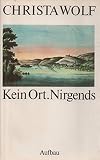
This short novel is an account of a fictional meeting between German writers Heinrich von Kleist and Karoline von Günderrode in 1804. Although it is possible that these two met, as they moved around similar circles, nothing is known about a possible meeting. The other people appearing in the story are real, though, too - among them famous writers Clemens von Brentano and Bettine von Arnim.
These writers and associates meet in a small town on the show more Rhine river where they drink, discuss their art and other topics, and socialize.
Kleist and Günderrode both feel like outsiders at the gathering, and the story is told alternating between each of their perspectives, while sometimes adding other paragraphs or sentences. The style is very poetic, sometimes truly like a poem, and every sentences carries meaning.
While Kleist and Günderrode first just observe each other and their interaction with the other guests, they later have a conversation during a walk outside. The conversations both at the party and during the walk touch upon many different topics: Psychology, the self, the role of art and artists, writing, expectations of life, gender, emancipation etc.
Kleist and Günderrode are connected in their despair because they cannot adjust to what is expected of them - Kleist as a man in the Prussian state who has a very different idea of life than those surrounding him, Günderrode as someone who would like to do much more than is possible for a woman of her time and who is patronized by male writers when they read her poetry. The title of the novel refers to the feeling that they cannot find any place where they can really be themselves, and there are allusions to the only way out they are able to see, which is suicide. In fact, both writers committed suicide, Günderrode in 1806 and Kleist in 1811.
Wolf was one of the most important writers of the GDR and many passages of this text can be seen in this light: The difficulties of writers living under that regime. To me, this political interpretation was not as relevant, though, and I concerned myself rather with the individual circumstances and with the feelings of the characters, and the parallels to today's society. show less
This short novel is an account of a fictional meeting between German writers Heinrich von Kleist and Karoline von Günderrode in 1804. Although it is possible that these two met, as they moved around similar circles, nothing is known about a possible meeting. The other people appearing in the story are real, though, too - among them famous writers Clemens von Brentano and Bettine von Arnim.
These writers and associates meet in a small town on the show more Rhine river where they drink, discuss their art and other topics, and socialize.
Kleist and Günderrode both feel like outsiders at the gathering, and the story is told alternating between each of their perspectives, while sometimes adding other paragraphs or sentences. The style is very poetic, sometimes truly like a poem, and every sentences carries meaning.
While Kleist and Günderrode first just observe each other and their interaction with the other guests, they later have a conversation during a walk outside. The conversations both at the party and during the walk touch upon many different topics: Psychology, the self, the role of art and artists, writing, expectations of life, gender, emancipation etc.
Kleist and Günderrode are connected in their despair because they cannot adjust to what is expected of them - Kleist as a man in the Prussian state who has a very different idea of life than those surrounding him, Günderrode as someone who would like to do much more than is possible for a woman of her time and who is patronized by male writers when they read her poetry. The title of the novel refers to the feeling that they cannot find any place where they can really be themselves, and there are allusions to the only way out they are able to see, which is suicide. In fact, both writers committed suicide, Günderrode in 1806 and Kleist in 1811.
Wolf was one of the most important writers of the GDR and many passages of this text can be seen in this light: The difficulties of writers living under that regime. To me, this political interpretation was not as relevant, though, and I concerned myself rather with the individual circumstances and with the feelings of the characters, and the parallels to today's society. show less
’I am Medea, the sorceress, if you all will have it so. The wild woman, the foreigner. You shall not belittle me.’’
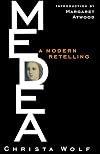
I’ve always declared-to the dismay of many- that if I ever had a daughter, I would name her Medea. My fascination with this larger-than-life woman has been undiminished ever since I started learning about the ancient, endless, eternal myths of my country from a relatively young age. Call me ‘’weird’’ but dark, controversial figures have accompanied me for the show more most part of my reading life. It also helped that my mother had the knowledge and the patience to explain to me how myths were made in a society of men, by men and for men. World Culture is loaded with mythical women who have been vilified as an excuse for the stupidity, disloyalty and absolute lack of courage on men’s part. Eve, Medea, Helen of Troy, Pandora, Circe, Phaedra, Jocasta...The list goes on and on….A woman can either be a whore or a saint. Too bad for the ‘’willing’’ ones because the first team makes for the best of stories. In this extraordinary moment in European Literature, Christa Wolf reimagines Medea’s story, focusing on her last days in Corinth and culminating with the death of her sons. The result is a haunting, raw elegy of broken promises and thwarted dreams….
’They’ve made what they need out of each of us. Out of you, the Hero, and out of me, the Wicked Witch. They’ve driven us apart like that.’’
People create myths to explain passions, hopes, wishes and inclinations. They need the heroes, the ones who battle against gods and men, as they need the scapegoats responsible when the hero goes astray. What happens when the Hero succeeds only after the Scapegoat has provided the necessary help? Well, noone cares about this tiny detail, all that matters is that the job is done. However, when everything crumbles because of disloyalty and ambition, it’s time for the Scapegoat to be driven out. Medea is either a healer or a bringer of curse. This is what the mob, the ever-changing, witless crowd believes. She is the Other, the Foreigner, the one who threatens the established order with her powers and invocations. Jason is blaming his obsession and lust to Medea, always unwilling to admit what a phony ‘’hero’’ he is. He doesn’t care anymore, the glory is his and it’s time to find a younger, docile wife who would worship him without questions and thoughts of her own…
‘’Is it a comfort to think that people everywhere fall short of the agreements they have made?’’
I feel that this quote expresses the essence of our times extremely accurately. In the outstanding introduction, Margaret Atwood refers to the political and social background and the status quo that shaped Wolf’s work. Coming from the troubled land of former East Germany, it is clear that her political and social views influenced her writing. How could it have been otherwise? Medea was written in 1996, six years after the reunification of Germany, and while reading, one can feel a deep sense of bitterness and intense distrust towards the institution of the state and the authorities. Knowing the political context, Medea becomes much more than a retelling of an ancient legend.
The writing and the characterization are unique. The portrait of Medea is moving, sad, haunting...There are quite a few exceptional descriptions of the city of Corinth and the nightly scenes are eerie, foreboding. Don’t expect any infanticides, gore, violence or sex and the end will surprise you. I will not compare Wolf’s work to Euripides or Seneca. Each one is a different beast, all masterpieces in their own right. However, I know which one I prefer. Wolf’s esoteric, haunting, solemn cry for the truth and for a world that turned out quite different than promised. For the innocent victims of the frustrations of the mighty, the demonization of the weakest links.
‘’Up there in the dark, night-blue sky, like a slightly tilted silver of peel, the crescent moon was still swimming, though on the wane, reminding me of my waning years, my Colchian moon, endowed with the power to pull the sun up over the edge of the earth every morning.’’ show less
I’ve always declared-to the dismay of many- that if I ever had a daughter, I would name her Medea. My fascination with this larger-than-life woman has been undiminished ever since I started learning about the ancient, endless, eternal myths of my country from a relatively young age. Call me ‘’weird’’ but dark, controversial figures have accompanied me for the show more most part of my reading life. It also helped that my mother had the knowledge and the patience to explain to me how myths were made in a society of men, by men and for men. World Culture is loaded with mythical women who have been vilified as an excuse for the stupidity, disloyalty and absolute lack of courage on men’s part. Eve, Medea, Helen of Troy, Pandora, Circe, Phaedra, Jocasta...The list goes on and on….A woman can either be a whore or a saint. Too bad for the ‘’willing’’ ones because the first team makes for the best of stories. In this extraordinary moment in European Literature, Christa Wolf reimagines Medea’s story, focusing on her last days in Corinth and culminating with the death of her sons. The result is a haunting, raw elegy of broken promises and thwarted dreams….
’They’ve made what they need out of each of us. Out of you, the Hero, and out of me, the Wicked Witch. They’ve driven us apart like that.’’
People create myths to explain passions, hopes, wishes and inclinations. They need the heroes, the ones who battle against gods and men, as they need the scapegoats responsible when the hero goes astray. What happens when the Hero succeeds only after the Scapegoat has provided the necessary help? Well, noone cares about this tiny detail, all that matters is that the job is done. However, when everything crumbles because of disloyalty and ambition, it’s time for the Scapegoat to be driven out. Medea is either a healer or a bringer of curse. This is what the mob, the ever-changing, witless crowd believes. She is the Other, the Foreigner, the one who threatens the established order with her powers and invocations. Jason is blaming his obsession and lust to Medea, always unwilling to admit what a phony ‘’hero’’ he is. He doesn’t care anymore, the glory is his and it’s time to find a younger, docile wife who would worship him without questions and thoughts of her own…
‘’Is it a comfort to think that people everywhere fall short of the agreements they have made?’’
I feel that this quote expresses the essence of our times extremely accurately. In the outstanding introduction, Margaret Atwood refers to the political and social background and the status quo that shaped Wolf’s work. Coming from the troubled land of former East Germany, it is clear that her political and social views influenced her writing. How could it have been otherwise? Medea was written in 1996, six years after the reunification of Germany, and while reading, one can feel a deep sense of bitterness and intense distrust towards the institution of the state and the authorities. Knowing the political context, Medea becomes much more than a retelling of an ancient legend.
The writing and the characterization are unique. The portrait of Medea is moving, sad, haunting...There are quite a few exceptional descriptions of the city of Corinth and the nightly scenes are eerie, foreboding. Don’t expect any infanticides, gore, violence or sex and the end will surprise you. I will not compare Wolf’s work to Euripides or Seneca. Each one is a different beast, all masterpieces in their own right. However, I know which one I prefer. Wolf’s esoteric, haunting, solemn cry for the truth and for a world that turned out quite different than promised. For the innocent victims of the frustrations of the mighty, the demonization of the weakest links.
‘’Up there in the dark, night-blue sky, like a slightly tilted silver of peel, the crescent moon was still swimming, though on the wane, reminding me of my waning years, my Colchian moon, endowed with the power to pull the sun up over the edge of the earth every morning.’’ show less
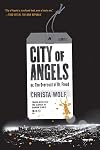
Who would you be if your country disappeared? What would happen to your identity? The nameless narrator of [City of Angels] is faced with just such questions. Arriving in Los Angeles in 1992, not that long after the fall of the Berlin Wall and the reunification of Germany, she made her own small but defiant gesture of solidarity with her country of East Germany, wondering "... whether it was really worth it to travel to the United States with the still-valid passport of a no-longer extant show more country". The immigration officer asked "Are you sure this country still exists?" "Yes, I am" she replied.
This is a complex novel, told in layers like an archeological exploration of the narrator's life, shifting back and forth in time as all recollection does. The narration is done in the present tense about that era twenty odd years ago. The trip to Los Angeles was at the invitation of The Center, an organization which brought small groups of intellectuals and artists from outside the US together for several months at a time, supporting them while they pursued their individual projects. The narrator's project was to uncover yet another identity, that of a German woman who had fled to the US before WWII. This woman had written a series of letters over more than thirty years, from 1945-1979, to a woman in East Germany who had bequeathed them in turn to the narrator. The letters were signed only "L". There were no envelopes, only the date and Los Angeles, for sender and recipient were careful not to incriminate each other in the paranoid world of the GDR.
During the narrator's time in Los Angeles, the former East Germany was going through turmoil as police and party records were opened, informers were identified and files were made public. Families and friendships fell apart. Getting the news from Germany each day was troubling, but then one day the narrator's own name appeared in news reports. Can you forget things you did long ago that have unintended consequences? This question came to haunt her. Trying to unravel the chain of events took the narrator further back in time. Distance is required and is obtained for this painful process by shifting from "I" to "you" in the narration, separating the self into now and then. "When I woke up I remembered our drives in the country, when you held the road atlas on your knees and looked for the country you could find refuge in, and you never found it..." She recalled an even earlier time as a small child, fleeing for the West with her family, away from the advancing Russians, and not making it across the river that would become the boundary. In such ways are our fates decided.
Emigrés and exiles, past and present, fill her life on the far edge of the American continent, an odd place from which to reflect back, yet one filled with the ghosts of earlier voices of dissent: Brecht, Garbo, Feuchtwanger, Thomas Mann and others. Reflections on the US and its citizens echo the puzzled reactions so many have in discussions with Americans. She is struck by "This bottomless need Americans have for safety, certainty, security"; the morning ritual of "How are you today?" where the expected answer is a variant of "Fine", because nobody really wants to know, nothing is expected - it's just "elevator syndrome"; the inability to say "communist" like any other word. She came to dread the questions that assumed she would not go back home, had been lucky to escape, as if one's country could be shrugged off like its out of date clothes.
City of Angels or the Overcoat of Dr Freud is an autobiographical novel digging as far into the soul as possible without quite reaching ...the border that the innermost secret draws around itself, and to cross that line would mean self-destruction. Eventually Wolf comes to the conclusion "I want to live in a world where there are still secrets". In the end would it be too painful to find out who we really are? show less
This is a complex novel, told in layers like an archeological exploration of the narrator's life, shifting back and forth in time as all recollection does. The narration is done in the present tense about that era twenty odd years ago. The trip to Los Angeles was at the invitation of The Center, an organization which brought small groups of intellectuals and artists from outside the US together for several months at a time, supporting them while they pursued their individual projects. The narrator's project was to uncover yet another identity, that of a German woman who had fled to the US before WWII. This woman had written a series of letters over more than thirty years, from 1945-1979, to a woman in East Germany who had bequeathed them in turn to the narrator. The letters were signed only "L". There were no envelopes, only the date and Los Angeles, for sender and recipient were careful not to incriminate each other in the paranoid world of the GDR.
During the narrator's time in Los Angeles, the former East Germany was going through turmoil as police and party records were opened, informers were identified and files were made public. Families and friendships fell apart. Getting the news from Germany each day was troubling, but then one day the narrator's own name appeared in news reports. Can you forget things you did long ago that have unintended consequences? This question came to haunt her. Trying to unravel the chain of events took the narrator further back in time. Distance is required and is obtained for this painful process by shifting from "I" to "you" in the narration, separating the self into now and then. "When I woke up I remembered our drives in the country, when you held the road atlas on your knees and looked for the country you could find refuge in, and you never found it..." She recalled an even earlier time as a small child, fleeing for the West with her family, away from the advancing Russians, and not making it across the river that would become the boundary. In such ways are our fates decided.
Emigrés and exiles, past and present, fill her life on the far edge of the American continent, an odd place from which to reflect back, yet one filled with the ghosts of earlier voices of dissent: Brecht, Garbo, Feuchtwanger, Thomas Mann and others. Reflections on the US and its citizens echo the puzzled reactions so many have in discussions with Americans. She is struck by "This bottomless need Americans have for safety, certainty, security"; the morning ritual of "How are you today?" where the expected answer is a variant of "Fine", because nobody really wants to know, nothing is expected - it's just "elevator syndrome"; the inability to say "communist" like any other word. She came to dread the questions that assumed she would not go back home, had been lucky to escape, as if one's country could be shrugged off like its out of date clothes.
City of Angels or the Overcoat of Dr Freud is an autobiographical novel digging as far into the soul as possible without quite reaching ...the border that the innermost secret draws around itself, and to cross that line would mean self-destruction. Eventually Wolf comes to the conclusion "I want to live in a world where there are still secrets". In the end would it be too painful to find out who we really are? show less

This is one of Wolf's most famous works - it takes the form of a first-person monologue set within the foreground timeframe of Cassandra's appearance in Aeschylus's Agamemnon. Expanding (a good deal) on her speeches in the play, Cassandra looks back on her life in Troy, the war and fall of the city, and the circumstances that have led to her impending murder by Clytemnestra. Although there's no formal metrical structure, and the narrative is basically a stream-of-consciousness mixing show more memories of different time-periods quite arbitrarily, Wolf does use a declamatory style that is at least "rhetorically aware" - it echoes the feel of the play, and this is a book you certainly have to imagine being read aloud.
For a feminist writer, the character of Cassandra is just a gift that keeps on giving. She's known above all as a woman doomed not to be listened to, and - as we know from Aeschylus - that was a punishment for saying "no" to sex with Apollo. And there are other traditions that she was a rape-victim and was forced into a political marriage by her father. But she's possibly also the first woman in literature who is there because of the work she does and not because of who her father or her husband is. And for Wolf, she's above all a representative of the transition from the matriarchal societies of the Minoan tradition to the hard new patriarchal culture of the Achaeans.
Cassandra's Troy, in Wolf's account, is being turned into a militaristic police-state by a Himmler-like figure called Eumelos who is fond of the "those who are not with us are against us" version of binary logic; those who still seek to follow the old ways and respect the mother-goddess are being forced underground.
Wolf is such a capable writer that none of this sounds like strident cliché when we meet it on the printed page, and Cassandra is a much more complex character than we might expect. She has a complex relationship with Aeneas, for instance, which seems to be there not for any obvious political reason but simply because Wolf found him an interesting character and wanted to work out for herself what he might be doing in the story. Definitely worth the effort. show less
For a feminist writer, the character of Cassandra is just a gift that keeps on giving. She's known above all as a woman doomed not to be listened to, and - as we know from Aeschylus - that was a punishment for saying "no" to sex with Apollo. And there are other traditions that she was a rape-victim and was forced into a political marriage by her father. But she's possibly also the first woman in literature who is there because of the work she does and not because of who her father or her husband is. And for Wolf, she's above all a representative of the transition from the matriarchal societies of the Minoan tradition to the hard new patriarchal culture of the Achaeans.
Cassandra's Troy, in Wolf's account, is being turned into a militaristic police-state by a Himmler-like figure called Eumelos who is fond of the "those who are not with us are against us" version of binary logic; those who still seek to follow the old ways and respect the mother-goddess are being forced underground.
Wolf is such a capable writer that none of this sounds like strident cliché when we meet it on the printed page, and Cassandra is a much more complex character than we might expect. She has a complex relationship with Aeneas, for instance, which seems to be there not for any obvious political reason but simply because Wolf found him an interesting character and wanted to work out for herself what he might be doing in the story. Definitely worth the effort. show less
Lists
German Literature (10)
Short and Sweet (1)
1980s (1)
Female Author (3)
Awards


You May Also Like


Associated Authors
Statistics
- Works
- 116
- Also by
- 17
- Members
- 5,623
- Popularity
- #4,405
- Rating
- 3.8
- Reviews
- 104
- ISBNs
- 499
- Languages
- 22
- Favorited
- 22

