
Heinrich Mann (1871–1950)
Author of Man of Straw
About the Author
Heinrich Mann wrote about artists and poets and voluptuaries, for whom art is a "perverse debauch." His novels set in Germany are usually grotesque caricatures with political implications; those set in Italy tend to be feverish riots of experience in an amoral world. His "Professor Unrat" (1905) show more was made into the famous film "The Blue Angel." "The Little Town" (1909) is perhaps his most benign novel. Heinrich Mann, like his brother Thomas Mann, fled Nazi Germany and came to the United States. His literary reputation is strongest in Europe. In the United States, his reputation is clouded partly by the rancor of his brilliant, hectic prose and partly by his admiration of the former Soviet Union. (Bowker Author Biography) show less
Image credit: Heinrich Mann, 1926
Series
Works by Heinrich Mann
The Letters of Heinrich and Thomas Mann, 1900-1949 (Weimar and Now: German Cultural Criticism, No 12) (1998) — Author — 27 copies, 1 review
Ausgewählte Erzählungen,Heinrich Mann. Vorw. von Hugo Loetscher. Mit 24 Zeichn. von George Grosz (1973) 4 copies
Der Untertan. Im Schlaraffenland — Author — 4 copies
Novellen I 3 copies
Das Herz. Novellen 2 copies
MAVİ MELEK 2 copies
Novellen II 2 copies
Die kleine Stadt Roman 2 copies
Bunte Gesellschaft: Novellen 2 copies
Die Welt der Herzen : Novellen 2 copies
Die große Sache 2 copies
亨利四世下 1 copy
El profesor Unirat 1 copy
Briefwechsel mit Félix Bertaux: 1922 - 1948 (Heinrich Mann, Gesammelte Werke in Einzelbänden) (2002) 1 copy
Una vita difficile : romanzo 1 copy
Sieben Jahre: Chronik der Gedanken und Vorgänge Essays (Heinrich Mann, Studienausgabe in Einzelbänden (Taschenbuchausgabe)) (1994) 1 copy
Kampf um München als Kulturzentrum: sechs Vorträge — Contributor — 1 copy
Сочинения в восьми томах 1 copy
Der Jüngling 1 copy
Die Jagd Nach Liebe 1 copy
Tinerețea lui Henri IV 1 copy
Die kleine Stadt. Roman. Ausgabe für buchclub 65. Mit einer Nachbemerkung von Gotthard Erler. (1971) 1 copy
Gesammelte Werke Band 12 1 copy
Zola. Essay 1 copy
Novellen Band I-III 1 copy
Oraselul 1 copy
Gesammelte Werke Band 11 1 copy
Die Boesen 1 copy
Mnais und Ginevra 1 copy
Heinrich Mann: Eine Freundschaft. Gustav Flaubert und George Sand. ( Literatur- Kommentar, 4). Text, Materialien, Kommentar. (1976) 1 copy
Novellen — Author — 1 copy
Pippo Spano 1 copy
亨利四世上 1 copy
In memoriam Karel Capek 1 copy
Der Vater 1 copy
IV. Henrik Regény 1 copy
Ένας αργοπορημένος έρωτας 1 copy
亨利四世中 1 copy
Ingerul albastru 1 copy
Diktatur der Vernunft 1 copy
Novellen III 1 copy
Voltaire - Goethe 1 copy
Верноподданный Роман 1 copy
Associated Works
Menschheitsdämmerung : Ein Dokument des Expressionismus : mit Biographien und Bibliographien (1920) — Author, some editions — 101 copies, 2 reviews
Czarny pająk : opowieści niesamowite z literatury niemieckojęzycznej (1988) — Contributor — 3 copies
Tagged
Common Knowledge
- Legal name
- Mann, Ludwig Heinrich
- Birthdate
- 1871-03-27
- Date of death
- 1950-12-03
- Gender
- male
- Occupations
- writer
- Relationships
- Mann, Thomas (brother)
Mann, Viktor (brother)
Mann, Katia (sister-in-law)
Mann Borghese, Elisabeth (niece)
Mann, Golo (nephew)
Mann, Michael (nephew) (show all 8)
Mann, Erika (niece)
Mann, Monika (niece) - Nationality
- Germany
- Birthplace
- Lübeck, Germany
- Places of residence
- Lübeck, Germany
Berlin, Germany
Munich, Bavaria, Germany
Nice, France
Santa Monica, California, USA - Place of death
- Santa Monica, California, USA
- Burial location
- Dorotheenstädtischer Friedhof, Berlin, Germany
- Associated Place (for map)
- Germany
Members
Reviews

If you've seen the film, you'll know Professor Unrat as a story about an authoritarian middle-aged schoolmaster who makes a fool of himself by falling in love (or rather - four-link in luff-again...) with a music hall singer. It turns out that there's a lot more to it than that. After twenty-six years in a small, provincial town indoctrinating middle-class boys with the authoritarian values of Wilhelm II's Prussia, the lonely, widowed Dr Raat has lost all sense of proportion. For him, the show more struggle to maintain his authority and fight against the hated nickname "Unrat" (=rubbish) has become a life-and-death matter. Everyone in town is either a current or former pupil or one of their family members, and he imagines that all of them are fuming over the unconcluded schoolroom battles of twenty years ago as much as he is. It never occurs to him that they might now think of the punishments and humiliations he inflicted with affectionate nostalgia...
What happens when Unrat visits the Blaue Engel and meets the singer Rosa Fröhlich is thus not just about sex: more importantly for Unrat, it's the first time in decades that he's talked to someone who is completely outside the closed world of the small town and the school. It gives him the liberating opportunity to realise sides of himself that have been locked up by the overriding concern for authority and appearances, and it lets him see that behind all that repressive force there is a huge anger at the community he's been living in for so long, and a corresponding desire for revenge. Rosa turns out to be the instrument he can use to strike back at them, to reveal the hypocrisy and double standards in the respectable pillars of the local establishment and to use it to push them over. Unfortunately, he is also in love with her, and he finds himself torn between his desire for absolute possession and his strategic need to use her as a disturbing influence. The book moves slightly oddly from vicious classroom satire via backstage realism into Balzac-style black revenge, but then at the last minute seems to escape back to a slightly unconvinced moralism. Very strange, but interesting.
You can't help feeling a little sorry for Lübeck's 500-year-old grammar school, the Katharineum, which managed to appear (unnamed, but quite recognisable) in the worst possible light in two of the best-known German novels of the 20th century before we were even halfway through that century's first decade. Apart from being the school where Unrat taught, it's of course also the one where Hanno Buddenbrook spends what might well have been the worst schoolday in literary history. But I suppose that's the risk any school runs with famous pupils.
The book was used as the basis for the film Der blaue Engel by Josef von Sternberg in 1930. The film is supposed to be a classic of German cinema, but it doesn't have all that much to do with the book, and is only really interesting (unless you're a big fan of early talkies) because of Marlene Dietrich's brilliant performance and a couple of memorable songs. Emil Jannings is wooden and unconvincing as Unrat, and the three schoolboys have obviously been kept back for 15 to 20 years, rather than the one or two called for in the book. show less
What happens when Unrat visits the Blaue Engel and meets the singer Rosa Fröhlich is thus not just about sex: more importantly for Unrat, it's the first time in decades that he's talked to someone who is completely outside the closed world of the small town and the school. It gives him the liberating opportunity to realise sides of himself that have been locked up by the overriding concern for authority and appearances, and it lets him see that behind all that repressive force there is a huge anger at the community he's been living in for so long, and a corresponding desire for revenge. Rosa turns out to be the instrument he can use to strike back at them, to reveal the hypocrisy and double standards in the respectable pillars of the local establishment and to use it to push them over. Unfortunately, he is also in love with her, and he finds himself torn between his desire for absolute possession and his strategic need to use her as a disturbing influence. The book moves slightly oddly from vicious classroom satire via backstage realism into Balzac-style black revenge, but then at the last minute seems to escape back to a slightly unconvinced moralism. Very strange, but interesting.
You can't help feeling a little sorry for Lübeck's 500-year-old grammar school, the Katharineum, which managed to appear (unnamed, but quite recognisable) in the worst possible light in two of the best-known German novels of the 20th century before we were even halfway through that century's first decade. Apart from being the school where Unrat taught, it's of course also the one where Hanno Buddenbrook spends what might well have been the worst schoolday in literary history. But I suppose that's the risk any school runs with famous pupils.
The book was used as the basis for the film Der blaue Engel by Josef von Sternberg in 1930. The film is supposed to be a classic of German cinema, but it doesn't have all that much to do with the book, and is only really interesting (unless you're a big fan of early talkies) because of Marlene Dietrich's brilliant performance and a couple of memorable songs. Emil Jannings is wooden and unconvincing as Unrat, and the three schoolboys have obviously been kept back for 15 to 20 years, rather than the one or two called for in the book. show less

A small Italian town is thrown into chaos by the arrival of an opera company to perform a new work by a local composer, the first theatrical performance in the town in thirty-eight and three-quarter years. The presence of the singers leads to a flare-up of the smouldering conflict between the liberal faction of professionals and veterans of Garibaldi's campaigns, headed by Advocate Belotti, and the conservative, clerical faction of small traders, headed by the irascible and combative priest show more Don Taddeo. But it also exposes a bewildering number of personal lusts, greeds, jealousies and revenge-struggles within the community.
Mann explicitly structures the book like an opera, with big opening and closing choruses as the singers arrive on the mail-coach and leave again, a spectacular sustained centre-piece taking us through the chaos both front-of-house and backstage during the tumultuous premiere of The poor Tonietta, and then two more scenes with the entire cast onstage: a Meistersinger-style riot in the main square and the night-time burning-down of Café Progress, which transforms seamlessly to Don Taddeo's big scene during mass in the cathedral. In between there are any number of romantic trysts in gardens and dark alleys, interspersed with jolly café conversation scenes.
There is a ludicrously oversized cast of named characters for a book of this length (around 400 pages), and Mann has fun "burying" characters who will later become important, slipping them in to play insignificant roles in the crowded ensemble scenes. Another very important part of his technique is to present a lot of crucial plot information to us only as gossip, so that we are never entirely sure who is sleeping with whom. But neither are any of the characters in the book, and a lot of actions people take turn out to have been based on false information.
Fun in detail, a lively evocation of Italian small-town life, but maybe a bit frustrating when you try to make something out of it as a complete novel. show less
Mann explicitly structures the book like an opera, with big opening and closing choruses as the singers arrive on the mail-coach and leave again, a spectacular sustained centre-piece taking us through the chaos both front-of-house and backstage during the tumultuous premiere of The poor Tonietta, and then two more scenes with the entire cast onstage: a Meistersinger-style riot in the main square and the night-time burning-down of Café Progress, which transforms seamlessly to Don Taddeo's big scene during mass in the cathedral. In between there are any number of romantic trysts in gardens and dark alleys, interspersed with jolly café conversation scenes.
There is a ludicrously oversized cast of named characters for a book of this length (around 400 pages), and Mann has fun "burying" characters who will later become important, slipping them in to play insignificant roles in the crowded ensemble scenes. Another very important part of his technique is to present a lot of crucial plot information to us only as gossip, so that we are never entirely sure who is sleeping with whom. But neither are any of the characters in the book, and a lot of actions people take turn out to have been based on false information.
Fun in detail, a lively evocation of Italian small-town life, but maybe a bit frustrating when you try to make something out of it as a complete novel. show less
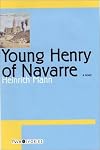
One of the most fascinating and historically accurate works of fiction that I have read. My only complaint is that there is not an emotional layer; it's hard to connect with Henry. I cheered him on in battle and would liked to have felt his grief over the death of his mother; but the author did not permit this.
Henri Quatre - Roman in 2 Bänden: 1. Bd.: Die Jugend des Königs Henri Quatre, 2. Bd.: Die Vollendung des Königs Henri Quatre by Heinrich Mann

This review refers to the 2vol. 1956 edition of the Aufbau Verlag, Berlin.
Heinrich Mann’s monumental two-part novel - it is a misconception to designate each as a ‘member of a series’: it is one work! - were first published by the Querido Verlag in Amsterdam, the first part, Die Jugend des Königs Henri Quatre, in 1935, Die Vollendung des Königs Henri Quatre, in 1938 (https://commons.wikimedia.org/wiki/File:Mann,_Heinrich_Henri_Quatre.jpg). The publishing house was founded in 1933 and show more published German language authors who had to emigrate and whose books, like those of Heinrich Mann, were burned by the Nazis.
Alfred Kantorowicz writes in the Nachwort that the first idea to write about ‘the good king Henri’ as he is still remembered, came to Heinrich Mann in 1925 when visiting the palace of Pau where Henri of Navarre, the later Henri IV of France was born in 1553 and where he grew up. Kantorowicz got to know personally Heinrich Mann in exile in France and his Nachwort is informative.
One needs to remember that this is a novel, not a biography; the author will have taken ‘poetic license’ but, I trust, not knowingly falsified events and characters. The novel is a character study above all. H.M. describes the development of Henry’s mind and thinking that is formed by the events, his rationality - in that Henry IV is, as is Montaigne whom he meets, a forerunner of the enlightenment - in his will to overcome the religious antagonisms, fanaticism and cold-blooded slaughters. The novel fascinates by the psychology of the complex and in their contradictions very human personalities of the king, his loves, his friends and adversaries, by the political intrigues, the religious wars … It is one of the great novels of the 20th century. Why is it then that it is lacking in popularity among readers (at least among the predominately english-language LT contributors)? Too demanding?
Oder sind es diese pessimistischen Sätzen über die menschliche Natur, die H.M. Montaigne zuschreibt, aber direkt auf das, während der Entstehung des Romans tobende, 1000jährige Reich anspielen? : „Geblendete, die nur toben und nichts erkennen: so stellt in der Regel das Geschlecht der Menschen sich dar.“ (I-470) und später: „…, da ein Volk erst nach Abschaffung des Denkens wirklich total werden kann.“ (I-645) Und Guise als Hitler: „Wer nicht dem Führer blinden Gehorsam schwor, war verloren. …“ (I-581); „‘Heil’ brüllt sein mörderischer Geheimbund, den er total und eins mit dem Land will.“ (I-583)
Über Kunst: Alexander Farnese, Herzog von Parma, Feldherr: - ein Künstler: „ihn drängt es, seine Kunst zu üben … mit seiner großen Theatermaschine … ein Kunstwerk der Strategie.“ (II-80)
Über das Kunstwerk: “So ging es nicht zu. Ist aber die Wahrheit.“ (II-523) Mit diesem Satz scheint H.M. auch seinen Roman zu kommentieren.
Und rückblickend auf sein Leben: „Man schämt sich während eines längeren Lebens vieler Handlungen …“ (II-565); Erstaunen über ein verfehltes Leben: Henri Valois: „‘War alles nur Irrtum ….’ (I-598)
Und endlich: „Die Partei, deren ganzen Bestand der Haß der Völker und Menschen ausmacht, ist überall, wird überall und immer sein.“ (II-849) Wie wahr! (I-19) show less
Heinrich Mann’s monumental two-part novel - it is a misconception to designate each as a ‘member of a series’: it is one work! - were first published by the Querido Verlag in Amsterdam, the first part, Die Jugend des Königs Henri Quatre, in 1935, Die Vollendung des Königs Henri Quatre, in 1938 (https://commons.wikimedia.org/wiki/File:Mann,_Heinrich_Henri_Quatre.jpg). The publishing house was founded in 1933 and show more published German language authors who had to emigrate and whose books, like those of Heinrich Mann, were burned by the Nazis.
Alfred Kantorowicz writes in the Nachwort that the first idea to write about ‘the good king Henri’ as he is still remembered, came to Heinrich Mann in 1925 when visiting the palace of Pau where Henri of Navarre, the later Henri IV of France was born in 1553 and where he grew up. Kantorowicz got to know personally Heinrich Mann in exile in France and his Nachwort is informative.
One needs to remember that this is a novel, not a biography; the author will have taken ‘poetic license’ but, I trust, not knowingly falsified events and characters. The novel is a character study above all. H.M. describes the development of Henry’s mind and thinking that is formed by the events, his rationality - in that Henry IV is, as is Montaigne whom he meets, a forerunner of the enlightenment - in his will to overcome the religious antagonisms, fanaticism and cold-blooded slaughters. The novel fascinates by the psychology of the complex and in their contradictions very human personalities of the king, his loves, his friends and adversaries, by the political intrigues, the religious wars … It is one of the great novels of the 20th century. Why is it then that it is lacking in popularity among readers (at least among the predominately english-language LT contributors)? Too demanding?
Oder sind es diese pessimistischen Sätzen über die menschliche Natur, die H.M. Montaigne zuschreibt, aber direkt auf das, während der Entstehung des Romans tobende, 1000jährige Reich anspielen? : „Geblendete, die nur toben und nichts erkennen: so stellt in der Regel das Geschlecht der Menschen sich dar.“ (I-470) und später: „…, da ein Volk erst nach Abschaffung des Denkens wirklich total werden kann.“ (I-645) Und Guise als Hitler: „Wer nicht dem Führer blinden Gehorsam schwor, war verloren. …“ (I-581); „‘Heil’ brüllt sein mörderischer Geheimbund, den er total und eins mit dem Land will.“ (I-583)
Über Kunst: Alexander Farnese, Herzog von Parma, Feldherr: - ein Künstler: „ihn drängt es, seine Kunst zu üben … mit seiner großen Theatermaschine … ein Kunstwerk der Strategie.“ (II-80)
Über das Kunstwerk: “So ging es nicht zu. Ist aber die Wahrheit.“ (II-523) Mit diesem Satz scheint H.M. auch seinen Roman zu kommentieren.
Und rückblickend auf sein Leben: „Man schämt sich während eines längeren Lebens vieler Handlungen …“ (II-565); Erstaunen über ein verfehltes Leben: Henri Valois: „‘War alles nur Irrtum ….’ (I-598)
Und endlich: „Die Partei, deren ganzen Bestand der Haß der Völker und Menschen ausmacht, ist überall, wird überall und immer sein.“ (II-849) Wie wahr! (I-19) show less
Lists
Awards


You May Also Like


Associated Authors
Statistics
- Works
- 172
- Also by
- 11
- Members
- 2,903
- Popularity
- #8,823
- Rating
- 3.8
- Reviews
- 32
- ISBNs
- 338
- Languages
- 18
- Favorited
- 9


