
John Arlott (1914–1991)
Author of The Oxford Companion to World Sports and Games
About the Author
Works by John Arlott
Cricket : the great all-rounders : studies of ten of the finest all-rounders of cricket history (1969) 4 copies
Cricket; the great bowlers: studies of ten great bowlers of cricket history (1968) 4 copies, 1 review
TEST MATCH DIARY, 1953: A PERSONAL, DAY-BY-DAY ACCOUNT OF THE TEST SERIES, ENGLAND-AUSTRALIA (1953) 3 copies
Cricket, The English ballgame 2 copies
Ton-up for Somerset 1 copy
Clausentum : sonnets 1 copy
Wickets, Tries And Goals 1 copy
Cricket in the counties 1 copy
Test Match Diary - 1953 1 copy
Cricket in the Counties 1 copy
ILLUSTRATED GUIDE TO BRITAIN 1 copy
Farewell to True Bookshops 1 copy
Associated Works
Harold Gimblett: Tormented Genius of Cricket (A Star book) (1982) — Foreword, some editions — 14 copies
Tagged
Common Knowledge
- Legal name
- Arlott, Leslie Thomas John
- Birthdate
- 1914-02-25
- Date of death
- 1991-12-14
- Gender
- male
- Education
- Queen Mary's Grammar School, UK
- Occupations
- cricket writer
broadcaster
clerk
police officer - Organizations
- British Broadcasting Corporation
Liberal Party - Nationality
- England
UK - Birthplace
- Basingstoke, Hampshire, England, UK
- Places of residence
- New Alresford, Hampshire, England, UK
- Place of death
- Alderney, Channel Islands
- Associated Place (for map)
- Hampshire, England, UK
Members
Reviews
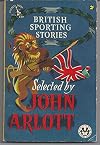
Includes 'The cup final of 1934', a rather one-sided view of Manchester City's victory over Portsmouth in the 1934 FA Cup Final. Sadly, though, the author, Frank Swift died 5 years after the publication of this book in the Munich air crash.
it was the Arlott name that sprang out to me from the shelves of the Oxfam bookshop near Bedford Square in London. There it was on a copy of British sporting stories selected by John Arlott, a Pocket book edition published and distributed by the News of show more the World in 1953. I was one year old then. The Pocket book emblem was a kangaroo reading a book. The cover design is striking. A rampant lion dominates. The king of the jungle carries a cricket bat, a rugby ball and a football, old balls of the brown leather variety, those that absorbed the damp. The lion proudly carries a bright union jack.
I have come across other editions of this anthology but it was news to me that within the book there is a story entitled The cup final of 1934 by Frank Swift. Those immersed in the lore of Portsmourh Football Club can recite the dates of Pompey cup final appearances and the outcomes.
1929 Lost to Bolton 0-2
1934 Lost to Manchester City (unluckily) 1-2
1939 Beat the mighty Wolves 4-1 and held the cup for longer than anyone else before or since
2008 Beat Cardiff City 1-0
2010 Lost to Chelsea 0-1
On top of that there was the wartime cup final of 1942, a victory over Brentford.
There are different views about everything including the 1934 Cup Final. Frank Swift, Manchester City's young goalkeeper on the day, recounts events from his own viewpoint. Inevitably it is all about Manchester City, himself and their glory, Matt Busby among their number. Tales handed down to me explain that defeat was down to the injury to Jimmy Allen, Pompey's centre half. There were no substitutes in those days. Pompey were ahead and let in two goals late on after Allen's injury. It was simple. That was that. Injustice. To read Swift's account is galling for a Pompey fan. We know the ending, the sadness and the misery. We have to endure the transformation of a nervous goalie into hero. We have to tolerate the histrionics, the fainting of the keeper at the end. But we also know that glory was to come later in 1939 and 2008.
We are also aware of the tragedy that befell Swift and so many others in 1958. show less
it was the Arlott name that sprang out to me from the shelves of the Oxfam bookshop near Bedford Square in London. There it was on a copy of British sporting stories selected by John Arlott, a Pocket book edition published and distributed by the News of show more the World in 1953. I was one year old then. The Pocket book emblem was a kangaroo reading a book. The cover design is striking. A rampant lion dominates. The king of the jungle carries a cricket bat, a rugby ball and a football, old balls of the brown leather variety, those that absorbed the damp. The lion proudly carries a bright union jack.
I have come across other editions of this anthology but it was news to me that within the book there is a story entitled The cup final of 1934 by Frank Swift. Those immersed in the lore of Portsmourh Football Club can recite the dates of Pompey cup final appearances and the outcomes.
1929 Lost to Bolton 0-2
1934 Lost to Manchester City (unluckily) 1-2
1939 Beat the mighty Wolves 4-1 and held the cup for longer than anyone else before or since
2008 Beat Cardiff City 1-0
2010 Lost to Chelsea 0-1
On top of that there was the wartime cup final of 1942, a victory over Brentford.
There are different views about everything including the 1934 Cup Final. Frank Swift, Manchester City's young goalkeeper on the day, recounts events from his own viewpoint. Inevitably it is all about Manchester City, himself and their glory, Matt Busby among their number. Tales handed down to me explain that defeat was down to the injury to Jimmy Allen, Pompey's centre half. There were no substitutes in those days. Pompey were ahead and let in two goals late on after Allen's injury. It was simple. That was that. Injustice. To read Swift's account is galling for a Pompey fan. We know the ending, the sadness and the misery. We have to endure the transformation of a nervous goalie into hero. We have to tolerate the histrionics, the fainting of the keeper at the end. But we also know that glory was to come later in 1939 and 2008.
We are also aware of the tragedy that befell Swift and so many others in 1958. show less

John Arlott was one of the great cricket writers and broadcasters and while this isn't his greatest work; more a series of short biographies written over the years, a mix of Hampshire players, some of which were new to me, other English players and a smattering of international cricketers.
In Arlott's hands, all his subjects are the finest in the world, even if bald statistics suggest otherwise. For those that are the best, like Barry Richards, Arlott almost undersells Richards' talent as a show more batsman, but overall few cricketers would have held back from reading what Arlott had to say about them. show less
In Arlott's hands, all his subjects are the finest in the world, even if bald statistics suggest otherwise. For those that are the best, like Barry Richards, Arlott almost undersells Richards' talent as a show more batsman, but overall few cricketers would have held back from reading what Arlott had to say about them. show less
I like the 'A second-hand bookshop' poem: Like a cloak hangs the bookshop smell, Soothing, unique and reminding: The book-collector knows its spell'. And in The old cricketer, Arlott captures the joy and sensation of a catch: 'He leaps once more, with eager spring, To catch the brief-glimpsed, flying ball and quickens to its sudden sting;'

A wonderful little gem of a book about a fascinating piece of (sadly, now-lost) London and tobacco history. Written by a famous cricket commentator, and with a foreword by author Kingsley Amis. Pure nostalgia!
Awards

You May Also Like


Associated Authors
Statistics
- Works
- 88
- Also by
- 4
- Members
- 609
- Popularity
- #41,275
- Rating
- 4.0
- Reviews
- 7
- ISBNs
- 59