
Jason R. Karp
Author of How to Survive Your PhD
About the Author
Image credit: Jason Karp
Works by Jason R. Karp
Tagged
Common Knowledge
- Canonical name
- Karp, Jason R.
- Legal name
- Karp, Jason R.
- Birthdate
- 20th Century
- Gender
- male
- Nationality
- USA
- Associated Place (for map)
- USA
Members
Reviews
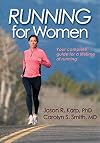
Does anybody else look at this title and say, "Running for women? Did you catch any?" Seriously, though, I feel so motivated to run after reading this book. I am actually not a serious runner, but I do run/jog occasionally, and I've certainly stepped up my program since reading this. I feel like I've learned a lot about running - how to do it, and the science behind training, which was very interesting. Basically, it appears to boil down to - women run better and feel better when they have show more more estrogen (within normal parameters) inside their bodies. Also, you should eat more carbohydrates than proteins, and more proteins than fats, because of the way your body uses fuel, which was described in detail, but is too long for this review.
I did have a few questions as a novice runner after reading this book, though. There was a lot of terminology that you might not get as a novice runner. Take, for instance, this excerpt from the section detailing acidosis threshold workouts: "AT Run - Run continually at AT pace, starting at about 3 miles (5K; 15 to 20 minutes) and increasing up to 6 miles..." As I read this section, while it seemed like very sensible advice, if you knew what the authors were talking about, um, I'm not sure that I did. What is AT pace? So, you're supposed to run three miles per day at first in 15 to 20 minutes, and then increase to about six miles per day? And that's a standard 5K pace? What if you can't run that fast? Does that mean you're not ready for AT training? How do you know which particular things you should train for and when? There was more of a detailed plan on page 133, and you could quite easily follow it, even without knowing such details, but still, I'd like to know.
Also, there were many exercises given, for strength training, plyometric training, and stretches. How do you know how many of these you should be doing? Should you do them every day? If so, for how long? All of them, or just some of them? There was a lot of information in this book, and it wasn't really sorted out for you, so if you don't really know what you're doing going in, while I have no doubt you will become fitter using this information, the responsibility will still mostly be on you to devise your own plan. As a total beginner (well, not TOTAL - I do like to run with a 5K training app - but still, a definite novice), I would have liked a program to be spelled out for me a little more.
I found the calorie calculation info to be practically incomprehensible. Or perhaps I was just stymied by the fact that it involves measuring your body fat, and you apparently can't do that at home, or on the spur of the moment, since this should be "performed by someone trained in body composition assessment". That is undoubtedly the best, most accurate method, but I still wished that there was a quick way to get a ballpark figure.
So, I feel like I learned a lot, but I have a long way to go, and what this book did, in large part, is show me what I don't know and need to learn about. There must be better books out there to get the complete beginner into running. On the other hand, if you already know a bit about the sport, and you're training for a big race, this book could become indispensable to you. show less
I did have a few questions as a novice runner after reading this book, though. There was a lot of terminology that you might not get as a novice runner. Take, for instance, this excerpt from the section detailing acidosis threshold workouts: "AT Run - Run continually at AT pace, starting at about 3 miles (5K; 15 to 20 minutes) and increasing up to 6 miles..." As I read this section, while it seemed like very sensible advice, if you knew what the authors were talking about, um, I'm not sure that I did. What is AT pace? So, you're supposed to run three miles per day at first in 15 to 20 minutes, and then increase to about six miles per day? And that's a standard 5K pace? What if you can't run that fast? Does that mean you're not ready for AT training? How do you know which particular things you should train for and when? There was more of a detailed plan on page 133, and you could quite easily follow it, even without knowing such details, but still, I'd like to know.
Also, there were many exercises given, for strength training, plyometric training, and stretches. How do you know how many of these you should be doing? Should you do them every day? If so, for how long? All of them, or just some of them? There was a lot of information in this book, and it wasn't really sorted out for you, so if you don't really know what you're doing going in, while I have no doubt you will become fitter using this information, the responsibility will still mostly be on you to devise your own plan. As a total beginner (well, not TOTAL - I do like to run with a 5K training app - but still, a definite novice), I would have liked a program to be spelled out for me a little more.
I found the calorie calculation info to be practically incomprehensible. Or perhaps I was just stymied by the fact that it involves measuring your body fat, and you apparently can't do that at home, or on the spur of the moment, since this should be "performed by someone trained in body composition assessment". That is undoubtedly the best, most accurate method, but I still wished that there was a quick way to get a ballpark figure.
So, I feel like I learned a lot, but I have a long way to go, and what this book did, in large part, is show me what I don't know and need to learn about. There must be better books out there to get the complete beginner into running. On the other hand, if you already know a bit about the sport, and you're training for a big race, this book could become indispensable to you. show less
 This review was written for LibraryThing Early Reviewers.
I thought this was going to be "just another book about women running" but it's got a lot of detail that most books don't cover. For example, how exactly are women different from men (if you believe in such gender binary-ness) and how does this affect women's training? Honestly I don't think there's a huge difference in the way men and women should train based on what I learned in this book, but it does explain some effects that the menstrual cycle and hormones have on women based on what show more "time of the month" it is and how if can make you feel better/worse while running.
Very useful chapters on running during pregnancy, menopause and in "old age." I also appreciated the chapter on the female triad (disordered eating / amenorrhea / bone loss) which will hopefully help some women avoid having problems from over training.
The oddest thing about this book was reading about the suggested hydration methods, especially after having just read Waterlogged. This book suggests drinking 10 oz every 15-20 minutes (!!!!!!) while running. Definitely overkill! Maybe the authors of Running for Women should have a chat with Timothy Noakes. show less
Very useful chapters on running during pregnancy, menopause and in "old age." I also appreciated the chapter on the female triad (disordered eating / amenorrhea / bone loss) which will hopefully help some women avoid having problems from over training.
The oddest thing about this book was reading about the suggested hydration methods, especially after having just read Waterlogged. This book suggests drinking 10 oz every 15-20 minutes (!!!!!!) while running. Definitely overkill! Maybe the authors of Running for Women should have a chat with Timothy Noakes. show less
This review was written for LibraryThing Early Reviewers.I'm always looking for books to help improve my running, and hoped this would offer something unique out of the plethora of "running for women" books on the market. The first thing I noticed is that this is reminiscent of a textbook, it is a heavy trade paperback with lots of information both textual and visual. Running for Women includes a great deal of information on the physical differences between men and women, and how those differences affect running. Of course, I'm not sure how strict show more these differences really are as every person's body is different and I tend to think of a spectrum versus a "type" of body when considering many gender differences (such as size and strength of certain muscles for instance). Running for Women emphasizes a training program that revolves around a woman's menstrual cycle, which to be honest seems a bit strange to me, but I would be willing to give it a shot if it helped my running! I also appreciated the emphasis of women's strengths in running-which, in general, is endurance/long runs since in many books it is simply stated that men have the upper hand and will be (in general) faster. The information provided for pregnant and older runners is also a nice inclusion, as many women do continue running! Overall an interesting and thought provoking book that can help inform and inspire runners, although I do think that some of it is a bit...hokey. show less
This review was written for LibraryThing Early Reviewers.When I first received this book, I thought it would be another one of those encouragement books, full of "You can do it!" Or that it would be another treatise on the types of shoes to buy, how to build up stamina in five easy steps, or whatever that I'd read before.
This is not that book. This book explores the science behind running, and it gets into detail. Part I talks about how to train in relation to your age, your menstrual cycle, and what happens to your body at menopause. It explains show more why men and women run differently, and is really encouraging about distance running, saying that there is little biological reason supporting that women are any worse off than men in terms of very long distance running. Part II goes into training. It talks about building up a base, training for different purposes, the physiological differences between running up and downhill, and how to buy the right bra. It never says "you should run three miles for this result" and instead gives you a more nuanced opinion depending on your factors. Section II discusses health and wellness, including injuries, how to stretch and target muscles, nutrition including timing fluids, protein, carbs, and fat.
I'm not at expert on running or any sport. This book made me understand that there is a lot that goes into a running regime, and a lot that you can control, and that you can keep building in the sport your whole life. show less
This is not that book. This book explores the science behind running, and it gets into detail. Part I talks about how to train in relation to your age, your menstrual cycle, and what happens to your body at menopause. It explains show more why men and women run differently, and is really encouraging about distance running, saying that there is little biological reason supporting that women are any worse off than men in terms of very long distance running. Part II goes into training. It talks about building up a base, training for different purposes, the physiological differences between running up and downhill, and how to buy the right bra. It never says "you should run three miles for this result" and instead gives you a more nuanced opinion depending on your factors. Section II discusses health and wellness, including injuries, how to stretch and target muscles, nutrition including timing fluids, protein, carbs, and fat.
I'm not at expert on running or any sport. This book made me understand that there is a lot that goes into a running regime, and a lot that you can control, and that you can keep building in the sport your whole life. show less
This review was written for LibraryThing Early Reviewers.Lists
Statistics
- Works
- 13
- Members
- 107
- Popularity
- #180,614
- Rating
- 3.9
- Reviews
- 14
- ISBNs
- 21
