
Humayun Azad
Author of I Remember Abbu
Works by Humayun Azad
ফুলের গন্ধে ঘুম আসে না 1 copy
সাক্ষাৎকার 1 copy
শ্রেষ্ঠ কবিতা 1 copy
হুমায়ুন আজাদের প্রবচনগুচ্ছ 1 copy
Matal Taroni 1 copy
Lal Nil Dipabli ba Bangla Shaityer Jibani: Red and Blue Lamps or a Biography of Bengali Literature 1 copy
সব কিছু ভেঙে পড়ে 1 copy
Tagged
Common Knowledge
- Gender
- male
Members
Reviews

This is two books posing as one: a memoir from a son (converted into a daughter for no good reason when it was translated) about his father who disappeared during the 1971 revolution that resulted in an independent Bangladesh. The first third is written from the point of view of a very small child about how she sees and experiences her father. The middle third is largely written about the events of 1971 (by a daughter whose voice has suddenly gotten rather inexplicably older). The last third show more rather shakily tries to combine the first two. Notwithstanding my reservations about this particular book, I’d be interested in reading more from Azad—but there’s nothing else available in English. show less
A poignant novella told from the perspective of a very young girl living through Bangladesh's war of independence in the early 1970s. The fact that the story is told from the uncomprehending perspective of such a young child, and because I admittedly know quite little about the history of Bangladesh, meant that I Remember Abbu came across a tad more generic to me than maybe it should have. The highly repetitive nature of some passages didn't help. At least in English translation, perhaps show more readable more as a historical or cultural artefact than as a piece of fiction. show less
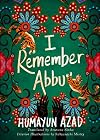
Humayun Azad is a Bangladeshi author, poet and Bangla linguist. His writings take a stand against corruption, military rule and fundamentalism. His feminist treatise Naree was banned in Bangladesh. In 2004 an assassination attempt was made on his life by the Jama’atul Mujahideen Bangladesh, a reprisal against Azah’s political satire against fundamentalist Islam. Less than six months later he was found dead in his apartment in Germany, a death his family believe was a killing by show more extremists.
His novel, I Remember Abbu, is set in Dhaka, Bangladesh in 1971. Bangladesh was originally the Bengal region of India, ruled by local kings, emperors and then the British until 1947. At this point India became independent, as did the newly formed country of Pakistan, carved out of India during the partition, by the British, to create a Muslim homeland. Pakistan was divided into two parts more than 1300 miles apart. The official language of East Pakistan was Bangla or Bengali until Pakistan made Urdu the sole national language. The suppression of the language, the fact that the Prime Minister-elect Sheikh Mujibur Rahman was not allowed to take office, and other issues, eventually led to the Bangladesh war of independence from Pakistan in 1971. The Pakistani army and its supporters massacred students, intellectuals, politicians and Hindus in the 1971 Bangladesh genocide in which 0.3 to 3 million people were killed and another few million fled to India. The name Bangladesh stems from the word Bangla, its language.
The novel tells the story of a young girl’s memories of her father-her Abbu-and their close relationship, the games they played, the stories he told. In the beginning there is warmth and simplicity. As the novel moves on there is loss and heartbreak. When she is four years old her University lecturer father becomes more involved in the fight to protect his beloved language Bangla and the fight for independence, culminating in the tragic day he does not return home. The girl’s memories are interspersed with excerpts from Abbu’s diary. There are protests and marches, people calling out, “Victory to Bangla!” and there are deaths, hiding and fear. This book is small in size but big in impact. It takes some skill to write the perspective of a toddler and young child while educating an adult audience. show less
His novel, I Remember Abbu, is set in Dhaka, Bangladesh in 1971. Bangladesh was originally the Bengal region of India, ruled by local kings, emperors and then the British until 1947. At this point India became independent, as did the newly formed country of Pakistan, carved out of India during the partition, by the British, to create a Muslim homeland. Pakistan was divided into two parts more than 1300 miles apart. The official language of East Pakistan was Bangla or Bengali until Pakistan made Urdu the sole national language. The suppression of the language, the fact that the Prime Minister-elect Sheikh Mujibur Rahman was not allowed to take office, and other issues, eventually led to the Bangladesh war of independence from Pakistan in 1971. The Pakistani army and its supporters massacred students, intellectuals, politicians and Hindus in the 1971 Bangladesh genocide in which 0.3 to 3 million people were killed and another few million fled to India. The name Bangladesh stems from the word Bangla, its language.
The novel tells the story of a young girl’s memories of her father-her Abbu-and their close relationship, the games they played, the stories he told. In the beginning there is warmth and simplicity. As the novel moves on there is loss and heartbreak. When she is four years old her University lecturer father becomes more involved in the fight to protect his beloved language Bangla and the fight for independence, culminating in the tragic day he does not return home. The girl’s memories are interspersed with excerpts from Abbu’s diary. There are protests and marches, people calling out, “Victory to Bangla!” and there are deaths, hiding and fear. This book is small in size but big in impact. It takes some skill to write the perspective of a toddler and young child while educating an adult audience. show less
Statistics
- Works
- 14
- Members
- 35
- Popularity
- #405,583
- Rating
- 3.2
- Reviews
- 3
- ISBNs
- 9
- Languages
- 1