
Gardiner Harris
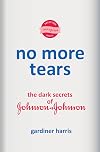
Author of No More Tears: The Dark Secrets of Johnson & Johnson
About the Author
Image credit: via Amazon.com
Works by Gardiner Harris
Associated Works
Tagged
Common Knowledge
- Gender
- male
- Occupations
- journalist
- Organizations
- The Courier-Journal
The New York Times - Nationality
- USA
- Associated Place (for map)
- USA
Members
Reviews
I’m editing for clarity, but my POV is still the same.
I received a Kindle copy of this from Random House via Netgalley and very much appreciate the opportunity to give this a read. For those inclined towards NF with an investigative journalism orientation and focus on corporate malfeasance and/or the dark side of a well-known American company and brand, this is definitely iin your ballpark.
After reading, I’ve become convinced that J&J killed my grandma and possibly both of my parents. show more All three were administered different J&J products that were subjects of this book. I’ll never know for sure; but, I’m far from alone in that boat. As it turns out, J&J is indirectly responsible for a shocking number of deaths attributable to greed, avarice, and corruption.
This is a highly readable book that organizes and distills decades of material and articles. It’s well-researched, written, and sourced. The writing is accessible, neither dumbed down, nor pretentiously academic. The buzz and recognition it’s gotten (and continuing to get) are rightfully deserved.
I am one of the ones taught in b-school that J&J represents the pinnacle of corporate ethics in America (and globally) - a company with a mission to put people over profits. Oh, I had heard rumors and negative press whispers here and there, but this lays out the case against J&J through several of its products and brands. In the aggregate, it’s damning.
The level of corruption and corporate depravity is shocking That J&J was able to operate this way for so long and many of the brands and products discussed are still on the market and in wide use is a failure of many people. That’s especially true of medical “experts” and doctors trusted by patients and families, but also those who comprise consumers' pharma/medical product safety net. J&J knowingly and repeated lied under oath, falsified documents and research studies, and intentionally operated outside the purview of regulatory bodies. They did so knowing with certainty their products were harming patients and increasing death rates and - for money - chose to do it anyway both inside and outside of the US, often to the most vulnerable of patients - pregnant, children, elderly, poor and sick.
J&J didn’t act in a vacuum, either. They were aided and abetted by doctors/nurses, pharmacies, surgeons, medical educaiton and institutions, medical research journals, the FDA, lobbyists, lawyers and judges, journalists, ad and PR execs, and many others who were paid and either became a J&J shill or simply turned away under the auspice of plausible deniability.
I'm glad I read this, but I don’t think I’ve every been so enraged, outraged, and revolted at the scope of injustice combined with the lack of responsibility and accountability. J&J was (is?) a criminal enterprise run by amoral sociopaths.
One more thing: Although I’m glad it was published, I can’t help but wonder why now, and why this way. Once again, as seems to be a pattern, the jounalistic standard seems to be to stifle a story until there’s low risk of telling it.
When it comes to public safety and health vs. corporate or profit interests, better now than never shouldn’t be our bar, and it’s cold comfort to those who lost loved ones. show less
I received a Kindle copy of this from Random House via Netgalley and very much appreciate the opportunity to give this a read. For those inclined towards NF with an investigative journalism orientation and focus on corporate malfeasance and/or the dark side of a well-known American company and brand, this is definitely iin your ballpark.
After reading, I’ve become convinced that J&J killed my grandma and possibly both of my parents. show more All three were administered different J&J products that were subjects of this book. I’ll never know for sure; but, I’m far from alone in that boat. As it turns out, J&J is indirectly responsible for a shocking number of deaths attributable to greed, avarice, and corruption.
This is a highly readable book that organizes and distills decades of material and articles. It’s well-researched, written, and sourced. The writing is accessible, neither dumbed down, nor pretentiously academic. The buzz and recognition it’s gotten (and continuing to get) are rightfully deserved.
I am one of the ones taught in b-school that J&J represents the pinnacle of corporate ethics in America (and globally) - a company with a mission to put people over profits. Oh, I had heard rumors and negative press whispers here and there, but this lays out the case against J&J through several of its products and brands. In the aggregate, it’s damning.
The level of corruption and corporate depravity is shocking That J&J was able to operate this way for so long and many of the brands and products discussed are still on the market and in wide use is a failure of many people. That’s especially true of medical “experts” and doctors trusted by patients and families, but also those who comprise consumers' pharma/medical product safety net. J&J knowingly and repeated lied under oath, falsified documents and research studies, and intentionally operated outside the purview of regulatory bodies. They did so knowing with certainty their products were harming patients and increasing death rates and - for money - chose to do it anyway both inside and outside of the US, often to the most vulnerable of patients - pregnant, children, elderly, poor and sick.
J&J didn’t act in a vacuum, either. They were aided and abetted by doctors/nurses, pharmacies, surgeons, medical educaiton and institutions, medical research journals, the FDA, lobbyists, lawyers and judges, journalists, ad and PR execs, and many others who were paid and either became a J&J shill or simply turned away under the auspice of plausible deniability.
I'm glad I read this, but I don’t think I’ve every been so enraged, outraged, and revolted at the scope of injustice combined with the lack of responsibility and accountability. J&J was (is?) a criminal enterprise run by amoral sociopaths.
One more thing: Although I’m glad it was published, I can’t help but wonder why now, and why this way. Once again, as seems to be a pattern, the jounalistic standard seems to be to stifle a story until there’s low risk of telling it.
When it comes to public safety and health vs. corporate or profit interests, better now than never shouldn’t be our bar, and it’s cold comfort to those who lost loved ones. show less
No More Tears: The Dark Side of Johnson & Johnson by Gardiner Harris is a 2025 Random House publication.
This book is not an easy book to digest, but it is an important read. For years, like many, I held a certain image of Johnson & Johnson – a company synonymous with trust, especially in the realm of baby products.
My initial skepticism began years ago, sparked by research into the Tylenol Murders, which revealed a side of J&J far removed from its wholesome public facade. This book has show more not only confirmed those suspicions but has added layers of truly disturbing information to my understanding.
Gardiner Harris, leveraging his investigative journalism background, meticulously uncovers a pattern of corporate behavior that is, frankly, outrageous. While the Tylenol crisis was presented as a triumph of corporate responsibility, Harris peels back the layers to show how it was, in many ways, a masterclass in PR spin, designed to protect the company's image without fully addressing the underlying issues. (For those interested, a Netflix documentary on the Tylenol Murders briefly features Harris and offers an interesting parallel.)
What truly chills the reader are the subsequent revelations detailed within these pages. The book systematically exposes how J&J allegedly knew for an extended period about the ovarian cancer link to its baby powder, and even the presence of asbestos in it. But this is merely the tip of the iceberg. Harris delves into a litany of alarming instances, including:
The devastating side effects of Risperdal prescriptions, impacting children and causing strokes in the elderly.
The questionable practices surrounding Procrit, which amounted to what the author describes as Medicare fraud.
The marketing of the Fentanyl Patch as "less addictive" than OxyContin.
The severe complications, including strokes and unintended pregnancies, linked to the Ortho Evra Patch.
The alleged deception regarding the Pinnacle Hip Implant, leading to toxic debris and implant failures.
The launch of the Prolift Vaginal Mesh without FDA approval, resulting in severe complications before its eventual ban.
J&J consistently prioritized ‘market’ over safety. Despite systemic failures in the system and regulatory failures, at the end of the day, this company made a conscious decision to manipulate regulators and bribe doctors- who got some lucrative kickbacks. . It was all intentional. They knew what they were doing would cause harm, pain, and death and they just didn’t care. It’s bad when J&J is not only compared to the ‘Sackler’s’ but given the edge over who was the evilest of the two. J&J didn’t get the big headlines the Sackler’s did though, but they were even more complicit.
I could rage write forever- I think this is an important book and one everyone should read. It’s not an easy read, especially when speaking of Risperdal as it affects the more vulnerable- children and the elderly. This could have happened to any of us at any given time. I personally feel I might have dodged a bullet with the Prolift mesh- a treatment for pelvic floor issues. This was not an option I pursued, but it was on the table. When I read about the suffering these women endured it made the hair stand up on the back of my neck.
Overall, Harris has written a powerful and sobering reminder that even the most trusted brands and corporations have a dark side. While there were settlements, there are still trials set in the future, and more lawsuits still pending, and J&J is scrutinized a little closer, this book brings educates the public more fully. Still the company seems to always land on its feet… at least for now. Someday though, a reckoning is sure to take place, and they will finally, well and truly, face the judgment they so richly deserve.
5 stars show less
This book is not an easy book to digest, but it is an important read. For years, like many, I held a certain image of Johnson & Johnson – a company synonymous with trust, especially in the realm of baby products.
My initial skepticism began years ago, sparked by research into the Tylenol Murders, which revealed a side of J&J far removed from its wholesome public facade. This book has show more not only confirmed those suspicions but has added layers of truly disturbing information to my understanding.
Gardiner Harris, leveraging his investigative journalism background, meticulously uncovers a pattern of corporate behavior that is, frankly, outrageous. While the Tylenol crisis was presented as a triumph of corporate responsibility, Harris peels back the layers to show how it was, in many ways, a masterclass in PR spin, designed to protect the company's image without fully addressing the underlying issues. (For those interested, a Netflix documentary on the Tylenol Murders briefly features Harris and offers an interesting parallel.)
What truly chills the reader are the subsequent revelations detailed within these pages. The book systematically exposes how J&J allegedly knew for an extended period about the ovarian cancer link to its baby powder, and even the presence of asbestos in it. But this is merely the tip of the iceberg. Harris delves into a litany of alarming instances, including:
The devastating side effects of Risperdal prescriptions, impacting children and causing strokes in the elderly.
The questionable practices surrounding Procrit, which amounted to what the author describes as Medicare fraud.
The marketing of the Fentanyl Patch as "less addictive" than OxyContin.
The severe complications, including strokes and unintended pregnancies, linked to the Ortho Evra Patch.
The alleged deception regarding the Pinnacle Hip Implant, leading to toxic debris and implant failures.
The launch of the Prolift Vaginal Mesh without FDA approval, resulting in severe complications before its eventual ban.
J&J consistently prioritized ‘market’ over safety. Despite systemic failures in the system and regulatory failures, at the end of the day, this company made a conscious decision to manipulate regulators and bribe doctors- who got some lucrative kickbacks. . It was all intentional. They knew what they were doing would cause harm, pain, and death and they just didn’t care. It’s bad when J&J is not only compared to the ‘Sackler’s’ but given the edge over who was the evilest of the two. J&J didn’t get the big headlines the Sackler’s did though, but they were even more complicit.
I could rage write forever- I think this is an important book and one everyone should read. It’s not an easy read, especially when speaking of Risperdal as it affects the more vulnerable- children and the elderly. This could have happened to any of us at any given time. I personally feel I might have dodged a bullet with the Prolift mesh- a treatment for pelvic floor issues. This was not an option I pursued, but it was on the table. When I read about the suffering these women endured it made the hair stand up on the back of my neck.
Overall, Harris has written a powerful and sobering reminder that even the most trusted brands and corporations have a dark side. While there were settlements, there are still trials set in the future, and more lawsuits still pending, and J&J is scrutinized a little closer, this book brings educates the public more fully. Still the company seems to always land on its feet… at least for now. Someday though, a reckoning is sure to take place, and they will finally, well and truly, face the judgment they so richly deserve.
5 stars show less
No More Tears: The Dark Secrets of Johnson & Johnson by Gardiner Harris is an excellent, very highly recommended, well researched and documented investigative exposé on the Johnson & Johnson corporation. Harris uncovers decades of deceitful practices including hiding, ignoring, or changing research, lying, and using their money and power to influence doctors and media. As Harris states, for all intents and purposes, J&J was a criminal enterprise that embraced a corporate pattern of greed show more and misconduct while hiding the truth from consumers.
It is pointed out that one consistent theme is how unsurprising so many findings were. This is something that many readers will take note of as we remember the decades long question about the safety of talc and recall when the dangers of Tylenol were brought to light. It was disturbing how long J&J dug in and didn't take the talc out of their baby powder. J&J always put their business interests first whenever it appeared they would be impacted by awareness and regulation of any of their products due to research and studies demonstrating negative consequences on public health.
The information is presented in 5 parts. Part I opens with the history of J&J, and continues with sections on Johnson's Baby Powder and Tylenol. Part II Prescription Drugs, has sections on Procrit, Risperdal, Duragesic, and the Ortho Evra Birth Control Patch. Part III Medical Devices contains sections on the Pinnacle Metal on Metal Hip implant and Prolift Vaginal Mesh. Part IV on Vaccination covers Covid. Following this are pages of notes which serve to thoroughly document all the information.
Harris ends with seven actions that should be taken. Briefly they are: 1. Doctors should be barred from taking money as gifts from drug companies. 2. States should stop certifying continuing medical education courses funded by drug and device companies. 3. The FDA needs to be funded by taxpayers, not the drug industry. 4. Companies and executives should be punished for lying under oath to the FDA and courts. 5. States should repeal laws that forbid personal injury suits or punitive damages against FDA approved products. 6. The American media organizations need to do some deep soul searching to figure out how they so thoroughly missed the monster in their midst. 7. There must be a wholesale reassessment of the very system where the conglomerate was allowed to thrive.
This is a must read exceptional analysis of well documented research which exposes information that everyone should know. Thanks to Random House for providing me with an advance reader's copy via NetGalley. My review is voluntary and expresses my honest opinion.
http://www.shetreadssoftly.com/2025/03/no-more-tears.html show less
It is pointed out that one consistent theme is how unsurprising so many findings were. This is something that many readers will take note of as we remember the decades long question about the safety of talc and recall when the dangers of Tylenol were brought to light. It was disturbing how long J&J dug in and didn't take the talc out of their baby powder. J&J always put their business interests first whenever it appeared they would be impacted by awareness and regulation of any of their products due to research and studies demonstrating negative consequences on public health.
The information is presented in 5 parts. Part I opens with the history of J&J, and continues with sections on Johnson's Baby Powder and Tylenol. Part II Prescription Drugs, has sections on Procrit, Risperdal, Duragesic, and the Ortho Evra Birth Control Patch. Part III Medical Devices contains sections on the Pinnacle Metal on Metal Hip implant and Prolift Vaginal Mesh. Part IV on Vaccination covers Covid. Following this are pages of notes which serve to thoroughly document all the information.
Harris ends with seven actions that should be taken. Briefly they are: 1. Doctors should be barred from taking money as gifts from drug companies. 2. States should stop certifying continuing medical education courses funded by drug and device companies. 3. The FDA needs to be funded by taxpayers, not the drug industry. 4. Companies and executives should be punished for lying under oath to the FDA and courts. 5. States should repeal laws that forbid personal injury suits or punitive damages against FDA approved products. 6. The American media organizations need to do some deep soul searching to figure out how they so thoroughly missed the monster in their midst. 7. There must be a wholesale reassessment of the very system where the conglomerate was allowed to thrive.
This is a must read exceptional analysis of well documented research which exposes information that everyone should know. Thanks to Random House for providing me with an advance reader's copy via NetGalley. My review is voluntary and expresses my honest opinion.
http://www.shetreadssoftly.com/2025/03/no-more-tears.html show less

This book unravels Johnson & Johnson's decades-long image as an admirable and ethical company, one product at a time. It starts with Johnson & Johnson's Baby Powder and Tylenol, then moves on to Procrit (a medication used to treat anemia), Risperdal (an antipsychotic used to treat schizophrenia and aggressive behavior in elderly patients with dementia and children with autism), Duragesic (an opioid pain patch), and the Ortho Evra birth control patch. It wraps up with medical devices, such as show more the Pinnacle metal-on-metal hip implant and the Prolift vaginal mesh, and Johnson & Johnson's COVID vaccine. This isn't just a book about one company, however. It's a look at the at the many failings and corporate loopholes present in the FDA and American healthcare system.
There's a lot here, laid out in a way intended to make it clear that Johnson & Johnson spent decades selling products its own studies had shown to be dangerous. In some cases, the dangers weren't immediately apparent, but some of the products discussed in this book were known from the start to be dangerous and to either impart no more benefits than other products already on the market or to even make things worse for patients. Even J&J's best example of its ethical behavior, its massive 1982 Tylenol recall is shown to be yet another example of bad behavior dressed up as something better.
This is not the book you want to read if you need any kind of reassurance about the state of American healthcare. There are bribery schemes, conveniently skewed peer-reviewed studies, an FDA that isn't nearly as tough as its reputation, and well-meaning doctors convinced that the problems reported by their patients are due to errors on their part rather than issues with the products they're using that J&J was already well aware of. I spent the baby powder section thinking about anyone I've ever known who's had ovarian cancer. The part about the Pinnacle metal-on-metal hip implant had me thinking, uncomfortably, about the hip replacements I'll eventually need.
This was a worthwhile read, but also horrible. Yay, capitalism. I'll have to figure out a way to purge it from my brain when it comes time for those hip implants. Goodness knows I'll already be anxious enough.
(Original review posted on A Library Girl's Familiar Diversions.) show less
There's a lot here, laid out in a way intended to make it clear that Johnson & Johnson spent decades selling products its own studies had shown to be dangerous. In some cases, the dangers weren't immediately apparent, but some of the products discussed in this book were known from the start to be dangerous and to either impart no more benefits than other products already on the market or to even make things worse for patients. Even J&J's best example of its ethical behavior, its massive 1982 Tylenol recall is shown to be yet another example of bad behavior dressed up as something better.
This is not the book you want to read if you need any kind of reassurance about the state of American healthcare. There are bribery schemes, conveniently skewed peer-reviewed studies, an FDA that isn't nearly as tough as its reputation, and well-meaning doctors convinced that the problems reported by their patients are due to errors on their part rather than issues with the products they're using that J&J was already well aware of. I spent the baby powder section thinking about anyone I've ever known who's had ovarian cancer. The part about the Pinnacle metal-on-metal hip implant had me thinking, uncomfortably, about the hip replacements I'll eventually need.
This was a worthwhile read, but also horrible. Yay, capitalism. I'll have to figure out a way to purge it from my brain when it comes time for those hip implants. Goodness knows I'll already be anxious enough.
(Original review posted on A Library Girl's Familiar Diversions.) show less
Lists
Awards


You May Also Like
Associated Authors
Statistics
- Works
- 2
- Also by
- 2
- Members
- 333
- Popularity
- #71,380
- Rating
- 4.1
- Reviews
- 19
- ISBNs
- 5