
Noah Hawley
Author of Before the Fall
About the Author
Noah Hawley is an Emmy, Golden Globe, Critics' Choice, and Peabody Award-winning author, screenwriter and producer. Noah is the author of A Conspiracy of Tall Men (1998), Other People's Weddings (2004), The Punch (2008), The Good Father (2012), and Before the Fall (2016). He also wrote the script show more for the feature film Lies and Alibis. (Bowker Author Biography) show less
Image credit: Noah Hawley
Series
Works by Noah Hawley
Fargo Seasons 1-3 4 copies
Associated Works
Tagged
Common Knowledge
- Canonical name
- Hawley, Noah
- Birthdate
- 1967-05-10
- Gender
- male
- Education
- Sarah Lawrence College
- Relationships
- Armstrong, Louise (mother)
- Short biography
- Noah Hawley is an American television writer and producer, screenwriter, and bestselling author, known for creating and writing the FX television series Fargo (2014–present) and Legion (2017–2019). Hawley earlier worked on the television series Bones (2005–2008), The Unusuals (2009), and My Generation (2010).
Hawley was born and raised in New York City, New York. His mother, Louise Armstrong, was a non-fiction writer and activist, and his maternal grandmother was a playwright. His father, Tom Hawley, was a businessman. He has a twin brother, Alexi, who is a writer for the television show The Following and the creator of State of Affairs.
Hawley graduated from Sarah Lawrence College with a degree in political science in 1989. He worked for the Legal Aid Society in New York City, dealing with cases involving child abuse and neglect. He later moved to San Francisco. He worked in computer programming at law firms and as a paralegal.
He has published five novels: A Conspiracy of Tall Men (1998), Other People's Weddings (2004), The Punch (2008), The Good Father (2012), and Before the Fall (2016). - Nationality
- USA
- Birthplace
- New York, New York, USA
- Associated Place (for map)
- New York, USA
Members
Reviews
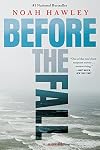
The author of this novel is the Emmy, PEN, Peabody, Critics' Choice, and Golden Globe Award-winning creator of the TV show “Fargo." This story is a thriller-ish mystery but also a very clever political and social commentary.
The story begins with the crash of a private plane returning to New York City from Martha’s Vineyard. The plane was carrying eleven people, including a couple of very important figures. One was David Bateman, the founder of fictional ALC News (written to sound a lot show more like Fox News), the number one cable news network in the country. Another was Ben Kipling, who was about to be indicted by the SEC for laundering billions of dollars for countries that sponsored terrorism, such as North Korea and Yemen.
Miraculously, there are two survivors of the crash. Scott Burroughs, 47, a not-very-successful artist and a former member of his high school and college swim teams, swam for eight hours through the darkness in the Atlantic with a dislocated shoulder and with Bateman's son, four-year-old JJ, on his back. Scott had been invited on the plane by Maggie Bateman, who got to know him at the local Farmer’s Market.
The story of the downed plane is reported by the ALC network’s Bill Cunningham, a Rush Limbaugh type of media figure who cares more for sensationalism than the facts, and who has decided that it is suspicious that this nobody, Scott, was on the plane, and moreover, survived the crash. He declares that “no one on earth can convince me there wasn’t some kind of foul play involved.” ALC ratings soar.
David’s network had become so successful because he realized that “. . . people didn’t want just information. They wanted to know what it meant. They wanted perspective. They needed something to react against.”
Cunningham was the perfect spokesman for this “club of the like-minded”:
"Cunningham was David’s gift to the world, the angry white man people invited into their living rooms to call bullshit at the world . . . who told us what we wanted to hear, which was that the reason we were losing out in life was not that we were losers, but that someone was reaching into our pockets, our companies, our country and taking what was rightfully ours.
. . .
. . . [He appealed to] the people who had been searching their whole lives for someone to say out loud what they’d always felt in their hearts.”
Cunningham digs deeper into the life of Scott Burroughs, using a hacker to help him find Burroughs and monitor his activities, which Cunningham then announces to the world via his broadcasts.
Scott largely ignores the media mania; he is busy trying to process what happened to him and why he survived. He worries about the boy, JJ, whom he saved, and he struggles - along with the government officials who question him - to remember what happened on that plane before it went down. Scott insists he is not special, but understands that people need heroes and “to believe that magic is still possible.” Nevertheless, he has a hard time facing what his life has become.
As the chapters unfold from different points of view, we get ever closer to finding out what happened on that plane. Still, the ending is a stunner.
Discussion: The author turns his sharp wit to pillorying the media’s fixation with sensation; it’s tendency to make too much out of too little and sometimes ruin lives in the process; the willingness of some people to latch onto those who voice aloud what they don’t have the nerve to say because it would expose their prejudices and vindictiveness; and the ways that money and greed drive so much of what happens and what is valued in America.
But the author does all this without a bit of didactism. Rather, he has deftly fashioned a plot that explores simultaneously the farcical hold over Americans of a sensationalist media [its extension into the realm of politics comes to mind] and the impersonal cruelty of disasters, whether caused by Mother Nature or human nature, that can change or end one’s life in an instant.
Evaluation: This book held my attention the whole way through, and raised an incredible amount of issues that could similarly engage book clubs. It is deliciously wicked but with a surprising tenderness and compassion for the human condition. A great read!
Note: Sony Pictures has acquired the rights to the story. show less
The story begins with the crash of a private plane returning to New York City from Martha’s Vineyard. The plane was carrying eleven people, including a couple of very important figures. One was David Bateman, the founder of fictional ALC News (written to sound a lot show more like Fox News), the number one cable news network in the country. Another was Ben Kipling, who was about to be indicted by the SEC for laundering billions of dollars for countries that sponsored terrorism, such as North Korea and Yemen.
Miraculously, there are two survivors of the crash. Scott Burroughs, 47, a not-very-successful artist and a former member of his high school and college swim teams, swam for eight hours through the darkness in the Atlantic with a dislocated shoulder and with Bateman's son, four-year-old JJ, on his back. Scott had been invited on the plane by Maggie Bateman, who got to know him at the local Farmer’s Market.
The story of the downed plane is reported by the ALC network’s Bill Cunningham, a Rush Limbaugh type of media figure who cares more for sensationalism than the facts, and who has decided that it is suspicious that this nobody, Scott, was on the plane, and moreover, survived the crash. He declares that “no one on earth can convince me there wasn’t some kind of foul play involved.” ALC ratings soar.
David’s network had become so successful because he realized that “. . . people didn’t want just information. They wanted to know what it meant. They wanted perspective. They needed something to react against.”
Cunningham was the perfect spokesman for this “club of the like-minded”:
"Cunningham was David’s gift to the world, the angry white man people invited into their living rooms to call bullshit at the world . . . who told us what we wanted to hear, which was that the reason we were losing out in life was not that we were losers, but that someone was reaching into our pockets, our companies, our country and taking what was rightfully ours.
. . .
. . . [He appealed to] the people who had been searching their whole lives for someone to say out loud what they’d always felt in their hearts.”
Cunningham digs deeper into the life of Scott Burroughs, using a hacker to help him find Burroughs and monitor his activities, which Cunningham then announces to the world via his broadcasts.
Scott largely ignores the media mania; he is busy trying to process what happened to him and why he survived. He worries about the boy, JJ, whom he saved, and he struggles - along with the government officials who question him - to remember what happened on that plane before it went down. Scott insists he is not special, but understands that people need heroes and “to believe that magic is still possible.” Nevertheless, he has a hard time facing what his life has become.
As the chapters unfold from different points of view, we get ever closer to finding out what happened on that plane. Still, the ending is a stunner.
Discussion: The author turns his sharp wit to pillorying the media’s fixation with sensation; it’s tendency to make too much out of too little and sometimes ruin lives in the process; the willingness of some people to latch onto those who voice aloud what they don’t have the nerve to say because it would expose their prejudices and vindictiveness; and the ways that money and greed drive so much of what happens and what is valued in America.
But the author does all this without a bit of didactism. Rather, he has deftly fashioned a plot that explores simultaneously the farcical hold over Americans of a sensationalist media [its extension into the realm of politics comes to mind] and the impersonal cruelty of disasters, whether caused by Mother Nature or human nature, that can change or end one’s life in an instant.
Evaluation: This book held my attention the whole way through, and raised an incredible amount of issues that could similarly engage book clubs. It is deliciously wicked but with a surprising tenderness and compassion for the human condition. A great read!
Note: Sony Pictures has acquired the rights to the story. show less

A recent widow and her two adult sons navigate resentment, loss, and grief, each in their own way. I really enjoyed this one, despite all three characters being difficult to warm up to. Hawley explores the idea of family and what we owe to it, while also developing complex characters who act self-destructively but always with self-awareness. This could be a totally dark book, but it's lightened by some subtle humor and an ending that I found very touching.
4 stars
4 stars
Alfred Hitchcock coined the word MacGuffin to signify a plot device that attracts the audience's attention to build suspense but has no relevance to the outcome. Noah Hawley’s novel, BEFORE THE FALL, is chock full of MacGuffins. Most work well enough to keep one turning the pages of this thriller about a mysterious plane crash in the waters off Martha’s Vineyard.
The corporate jet carried 11 people and all but 2 died. Several of the victims could have been targets for an attack on the show more plane. David Bateman is a wealthy media mogul (think Roger Ailes) who is running a news network that is prone to manufacturing sensational stories (think Fox News). Undoubtedly, he had enemies. Also on the plane is Bateman’s 9-year-old daughter, Rachel, who had previously been kidnapped for ransom. Ben Kipling is a Wall Street financier who is about to be indicted for laundering money for some pretty dubious gangster types who might well want to silence him. Gil, the Bateman’s bodyguard is a former Israeli security agent with a dubious backstory. Could he be a target? The co-pilot, Charlie Busch, has been stalking Emma Lightner, the pretty flight attendant. Charlie is a ne’er-do-well Texan with political connections that got him pilot training in the National Guard (think George W. Bush). Prior to arriving for the flight, he had not slept and had been taking drugs and alcohol. Could he be impaired? If one finds this list of suspects insufficiently suspicious, also consider the novels protagonist, Scott Burroughs, who hitched a ride on the fateful flight. He is a middle-aged former drunk and minor artist whose oeuvre consists of paintings of disasters—strange and definitely suspicious. Unfortunately, the reveal at the novel’s end is a little underwhelming, but the MacGuffins are great!
Along with JJ, the Bateman’s 4-year-old son, Scott survives the crash and miraculously manages to swim to Montauk with a dislocated shoulder and towing the boy. We are told that he was inspired to accomplish this feat because of an early childhood admiration for Jack LaLane. That’s right—the 50’s fitness buff who did all kinds of amazing things like swim with a boat in tow containing several people. Of course, Hawley glosses over the fact that Scott is no longer a swimmer and is undoubtedly out of shape due to his recent sedentariness, alcoholism and the 47 years he is carrying. For the sake of the plot, however, the reader is encouraged to overlook this jarring inconsistency.
For a thriller that is entirely dependent of characters to build suspense, Hawley’s characters are curiously cartoonish. The females don’t seem important enough to have been given more than passing attention mainly as tools for the male characters. While receiving more attention, the males are lacking in nuance. Many are essentially thinly disguised caricatures of celebrities (see above). Possibly the most egregious would be Bill Cunningham, the loudmouthed, bullying, opinionated conservative talk show host on Bateman’s network (think Bill O’Reilly). An equally obnoxious man is the husband of Maggie’s sister, Eleanor, who becomes JJ’s guardian. His main interest seems to be getting his hands on JJ’s considerable inheritance.
Hawley aspires to insert topical themes in his narrative, but these tend to come across as rants, rather than analysis. Certainly the misuse of media to create titillating stories is paramount. However, other themes are less prominent but evident as well. These include the toxic confusion of power with masculinity, the downside of celebrity, and the nature of art.
Although he has written other novels, Hawley’s reputation rests on writing for television. Cable TV series (e.g., Fargo) offer a writer much more freedom to develop plot and characters than one finds in the typical FX movie today, yet this novel lacks that level of subtlety. Instead it reads like a screenplay for an action picture, which it likely may become. show less
The corporate jet carried 11 people and all but 2 died. Several of the victims could have been targets for an attack on the show more plane. David Bateman is a wealthy media mogul (think Roger Ailes) who is running a news network that is prone to manufacturing sensational stories (think Fox News). Undoubtedly, he had enemies. Also on the plane is Bateman’s 9-year-old daughter, Rachel, who had previously been kidnapped for ransom. Ben Kipling is a Wall Street financier who is about to be indicted for laundering money for some pretty dubious gangster types who might well want to silence him. Gil, the Bateman’s bodyguard is a former Israeli security agent with a dubious backstory. Could he be a target? The co-pilot, Charlie Busch, has been stalking Emma Lightner, the pretty flight attendant. Charlie is a ne’er-do-well Texan with political connections that got him pilot training in the National Guard (think George W. Bush). Prior to arriving for the flight, he had not slept and had been taking drugs and alcohol. Could he be impaired? If one finds this list of suspects insufficiently suspicious, also consider the novels protagonist, Scott Burroughs, who hitched a ride on the fateful flight. He is a middle-aged former drunk and minor artist whose oeuvre consists of paintings of disasters—strange and definitely suspicious. Unfortunately, the reveal at the novel’s end is a little underwhelming, but the MacGuffins are great!
Along with JJ, the Bateman’s 4-year-old son, Scott survives the crash and miraculously manages to swim to Montauk with a dislocated shoulder and towing the boy. We are told that he was inspired to accomplish this feat because of an early childhood admiration for Jack LaLane. That’s right—the 50’s fitness buff who did all kinds of amazing things like swim with a boat in tow containing several people. Of course, Hawley glosses over the fact that Scott is no longer a swimmer and is undoubtedly out of shape due to his recent sedentariness, alcoholism and the 47 years he is carrying. For the sake of the plot, however, the reader is encouraged to overlook this jarring inconsistency.
For a thriller that is entirely dependent of characters to build suspense, Hawley’s characters are curiously cartoonish. The females don’t seem important enough to have been given more than passing attention mainly as tools for the male characters. While receiving more attention, the males are lacking in nuance. Many are essentially thinly disguised caricatures of celebrities (see above). Possibly the most egregious would be Bill Cunningham, the loudmouthed, bullying, opinionated conservative talk show host on Bateman’s network (think Bill O’Reilly). An equally obnoxious man is the husband of Maggie’s sister, Eleanor, who becomes JJ’s guardian. His main interest seems to be getting his hands on JJ’s considerable inheritance.
Hawley aspires to insert topical themes in his narrative, but these tend to come across as rants, rather than analysis. Certainly the misuse of media to create titillating stories is paramount. However, other themes are less prominent but evident as well. These include the toxic confusion of power with masculinity, the downside of celebrity, and the nature of art.
Although he has written other novels, Hawley’s reputation rests on writing for television. Cable TV series (e.g., Fargo) offer a writer much more freedom to develop plot and characters than one finds in the typical FX movie today, yet this novel lacks that level of subtlety. Instead it reads like a screenplay for an action picture, which it likely may become. show less
For the past couple of years I have been OBSESSED with the FX show “Fargo”. I love the movie, but the show has knocked it out of the park the two seasons it has been on, with a third coming up in the nearish future. I seriously can’t wait because I LOVE this show, and I love how it portrays the deep and violent underbellies of Minnesota life. While still being so damn Minnesotan. Little did I realize that Noah Hawley, the showrunner for that series, is also an author. I didn’t show more realize this until after I had checked out his most recent novel “Before The Fall”, and once I did I was pretty damn excited and even more intrigued by it. Hawley has a skill for writing and creating complex and nuanced characters, as seen in Bear and Peggy and Molly and Lorne Malvo on the show he’s in charge of. It shouldn’t be much surprise that he brought that same skill and nuance to a number of his characters in “Before The Fall”. Well, a few of them anyway.
Since the cast is characters is pretty big and their fates sealed from the get go, Hawley only has to really show a little bit of motivation for how each person got on this ill fated plane, and what role, if any, they played in it’s crash. Much of the focus, however, is on former addict and down on his luck painter Scott, an artist with a need to try and understand tragedy and accidents even before he survives a plane crash. Scott is by far the most interesting character in this book, because it is mostly through his eyes that we see the aftermath of such a tragedy. I liked Scott as a character, a pretty good guy trying to figure himself out who finds himself the center of a tragedy, and the person that everyone is trying to get answers from. He wasn’t necessarily a hero in a stereotypical sense; he did what he could in an emergency and was able to save himself and J.J., the four year old lone survivor to a media fortune. But of course the fact he isn’t perfect or the ideal heroic figure, that works against him in the eyes of some, which was a fascinating angle to take. He is a wonderful foil to Eleanor, J.J.’s aunt through his mother, who has been thrust into motherhood while in intense grief. Both Scott and Eleanor care very deeply about J.J., but neither of them really know how to adjust to their new roles that have been heaped upon them, be it hero or mother. It seemed kind of on the nose that Eleanor’s husband Doug was just the worst, more interested in dollar signs than his wife or nephew as they navigate their grief, but he just goes to show that Eleanor is strong, and deep. Perhaps his two dimensional characterization is just there to bolster her when she can stand on her own two feet, but I liked having a clear person to hate, so that’s fine!
And along with that, we see how the world tries to make sense, and tries to point fingers towards blame, and how the media (especially media with vested interests in outcomes) can drive a narrative. The media has been accused of influencing people’s opinions a lot lately, especially in the sense of putting info out there that isn’t totally true, or is flat out false. “Before The Fall” focuses a lot on this plot point, as one of the victims, David Bateman, was the head of a Fox News-esque network that is very controversial because of how it spins things or emphasizes sensationalism over facts. The face of the network, Bill Cunningham, is both incredibly stereotypical and yet one of the more intriguing character in the book, as his need to know what happened to his friend and mentor completely clouds his already super cloudy professional judgement. This of course leads to a very bloodthirsty Witch Hunt that his viewers, and other media, partake in. On one hand you feel for him because he’s very clearly in mourning, but on the other he’s such a bastard for exploiting this tragedy for ratings that you can’t help but hate him as well. So yeah, a bit stereotypical, but at the same time you kind of have to wonder about him. He never really gets a full exploration like many of the other players, but isn’t just flat and boring in his wretchedness like Doug. Friggin’ Doug.
I enjoyed how this book slowly revealed the backstories of the victims of the plane crash, showing the things happening in their immediate lives right before their deaths, or in some cases the events that REALLY put them on this path. I do think that it was kind of a fizzle out in some ways, however, as while we get all this background, so much of it doesn’t really end up being totally relevant to the plot and the outcome. But then, that in and of itself is kind of perfect, because that’s the point. Sometimes things happen, randomly, coincidentally, and these things may not actually matter in the long run, at least at the end of all things. These things may just happen but other things outside of your control can change your destiny. That’s the problem Cunningham never quite figures out, and while some may find it to be pointless, I find it poignant as all get out. And so very “Fargo”.
So while it ended up taking me on a long chase and sometimes superfluously, I did end up really enjoying “Before The Fall”. The twists and turns were a fun ride, and I liked how it ended even if it wasn’t what I have come to expect from thriller mysteries such as these. I say check it out. show less
Since the cast is characters is pretty big and their fates sealed from the get go, Hawley only has to really show a little bit of motivation for how each person got on this ill fated plane, and what role, if any, they played in it’s crash. Much of the focus, however, is on former addict and down on his luck painter Scott, an artist with a need to try and understand tragedy and accidents even before he survives a plane crash. Scott is by far the most interesting character in this book, because it is mostly through his eyes that we see the aftermath of such a tragedy. I liked Scott as a character, a pretty good guy trying to figure himself out who finds himself the center of a tragedy, and the person that everyone is trying to get answers from. He wasn’t necessarily a hero in a stereotypical sense; he did what he could in an emergency and was able to save himself and J.J., the four year old lone survivor to a media fortune. But of course the fact he isn’t perfect or the ideal heroic figure, that works against him in the eyes of some, which was a fascinating angle to take. He is a wonderful foil to Eleanor, J.J.’s aunt through his mother, who has been thrust into motherhood while in intense grief. Both Scott and Eleanor care very deeply about J.J., but neither of them really know how to adjust to their new roles that have been heaped upon them, be it hero or mother. It seemed kind of on the nose that Eleanor’s husband Doug was just the worst, more interested in dollar signs than his wife or nephew as they navigate their grief, but he just goes to show that Eleanor is strong, and deep. Perhaps his two dimensional characterization is just there to bolster her when she can stand on her own two feet, but I liked having a clear person to hate, so that’s fine!
And along with that, we see how the world tries to make sense, and tries to point fingers towards blame, and how the media (especially media with vested interests in outcomes) can drive a narrative. The media has been accused of influencing people’s opinions a lot lately, especially in the sense of putting info out there that isn’t totally true, or is flat out false. “Before The Fall” focuses a lot on this plot point, as one of the victims, David Bateman, was the head of a Fox News-esque network that is very controversial because of how it spins things or emphasizes sensationalism over facts. The face of the network, Bill Cunningham, is both incredibly stereotypical and yet one of the more intriguing character in the book, as his need to know what happened to his friend and mentor completely clouds his already super cloudy professional judgement. This of course leads to a very bloodthirsty Witch Hunt that his viewers, and other media, partake in. On one hand you feel for him because he’s very clearly in mourning, but on the other he’s such a bastard for exploiting this tragedy for ratings that you can’t help but hate him as well. So yeah, a bit stereotypical, but at the same time you kind of have to wonder about him. He never really gets a full exploration like many of the other players, but isn’t just flat and boring in his wretchedness like Doug. Friggin’ Doug.
I enjoyed how this book slowly revealed the backstories of the victims of the plane crash, showing the things happening in their immediate lives right before their deaths, or in some cases the events that REALLY put them on this path. I do think that it was kind of a fizzle out in some ways, however, as while we get all this background, so much of it doesn’t really end up being totally relevant to the plot and the outcome. But then, that in and of itself is kind of perfect, because that’s the point. Sometimes things happen, randomly, coincidentally, and these things may not actually matter in the long run, at least at the end of all things. These things may just happen but other things outside of your control can change your destiny. That’s the problem Cunningham never quite figures out, and while some may find it to be pointless, I find it poignant as all get out. And so very “Fargo”.
So while it ended up taking me on a long chase and sometimes superfluously, I did end up really enjoying “Before The Fall”. The twists and turns were a fun ride, and I liked how it ended even if it wasn’t what I have come to expect from thriller mysteries such as these. I say check it out. show less
Lists
Awards


You May Also Like


Associated Authors
Statistics
- Works
- 22
- Also by
- 2
- Members
- 4,643
- Popularity
- #5,432
- Rating
- 3.7
- Reviews
- 299
- ISBNs
- 146
- Languages
- 14
- Favorited
- 1