
Dan Brown (1)
Author of The Da Vinci Code
For other authors named Dan Brown, see the disambiguation page.
About the Author
Dan Brown was born in Exeter, New Hampshire on June 22, 1964. He was a graduate of Amherst College and Phillips Exeter Academy, where he spent time as an English teacher before turning his efforts to writing. In 1996, his interest in code-breaking and covert government agencies led him to write his show more first novel, Digital Fortress, which quickly became a #1 national bestselling eBook. In its first week on sale, The Da Vinci Code debuted at #1 on The New York Times Bestseller list, simultaneously topping bestseller lists at The Wall Street Journal, Publishers Weekly, and San Francisco Chronicle. Later, the book hit #1 on every major bestseller list in the country. The book was made into a motion picture by Columbia Pictures, starring Tom Hanks. Brown's other works include Deception Point; Angels and Demons, which was also adapted into a film, The Lost Symbol, and Inferno, which was recently adapted into a film. Origin is his latest New York Times bestseller. His novels have been translated and published in more than 50 languages around the world. (Bowker Author Biography) show less
Image credit: Dan Brown en 2017
Series
Works by Dan Brown
Digital Fortress / Deception Point / Angels and Demons / The Da Vinci Code (2005) 97 copies, 1 review
Angels & Demons / The Da Vinci Code / Deception Point / Digital Fortress / The Lost Symbol (2014) — Author — 4 copies
Angels & Demons / Deception Point 4 copies
Dan Brown's Robert Langdon Tetralogy Hardcover Set: Angel's & Demons / The Da Vinci Code / The Lost Symbol / Inferno (2000) 3 copies
Best Books as Seen on TV: Breaking the Da Vinci Code/Miraculous the Mission/The Search for Heaven (2005) 3 copies
Dan Brown teaches writing thrillers 2 copies
Angels & Demons / Inferno 1 copy
Complete Robert Langdon Series by Dan Brown: Angels & Demons, The Da Vinci Code, The Lost Symbol, Inferno, and Origin (2009) 1 copy
Inferno [abridged audio] 1 copy
Deception Point / Angels and Demons / Digital Fortress — Author — 1 copy
Associated Works
Wordplay: The Philosophy, Art, and Science of Ambigrams (1992) — Foreword, some editions — 260 copies, 1 review
The Da Vinci Code Illustrated Screenplay: Behind the Scenes of the Major Motion Picture (2006) — Foreword — 71 copies, 1 review
Reader's Digest Condensed Books: The Da Vinci Code • Up and Down the Dales • The Return of the Dancing Master • A Gathering Light (2004) 11 copies
A Da Vinci-kód | A csillagvizsgáló | Az utolsó detektív | Csodák éve (2005) — Author — 4 copies, 1 review
Tagged
Common Knowledge
- Canonical name
- Brown, Dan
- Legal name
- Brown, Daniel Gerhard
- Other names
- Brown, Danielle
- Birthdate
- 1964-06-22
- Gender
- male
- Education
- Phillips Exeter Academy, Exeter, New Hampshire
Amherst College (1986, B.A., English, Spanish) - Occupations
- teacher
writer
singer
author - Organizations
- National Academy of Songwriters
- Awards and honors
- Time Magazine's 100 Most Influential People in The World (2005)
- Agent
- George Wieser
Oga Wieser
Jack Elwell - Relationships
- Brown, Blythe (ex-wife)
- Short biography
- Avviatosi inizialmente all'attività di cantante-musicista, dal 1993 e per alcuni anni fu insegnante di inglese presso la Phillips Exeter Academy.
Lasciato l'insegnamento nel 1996, si dedica a tempo pieno alla scrittura creativa. - Nationality
- USA
- Birthplace
- Exeter, New Hampshire, USA
- Places of residence
- Exeter, New Hampshire, USA
- Map Location
- USA
Members
Reviews
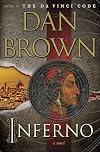
In generosity, or in drunkenness, I might consider giving Dan an extra 1/2 star. But don't press me on it, because I might turn on you.
The best thing that ever happened to Dan Brown was Ron Howard. What great movies Howard has made out of adolescent drivel! What a genius Howard is ... for I truly love the "Dan Brown movies", but I have nothing but pity for the man who wrote the books -- and for the editor who let them escape into the world. I know, I know, Mr. Brown is laughing all the way show more to the bank. That's fine. He's got a great business going, and kudos to him for that because everybody has to pay the rent at the end of the day. But let's not pretend for a minute -- not even a nano-second -- that Dan Brown is a writer.
There is absolutely no complexity here. The complicated part was trying to fight my way through Brown's convoluted, almost-impenetrable juvenile reasonings.
Long before I had reached page 161, where the provost is circling the bottle of scotch, and "counting the days until his responsibilities to this client were over..." I had been circling my own liquor cabinet to see if there was anything in there to pull me through this one.
I read it. I read it to the bitter end, to page 462, where the Epilogue puts an end to my own particular brand of "inferno". I read it because it was a gift from my loving, significant other, who probably holds a secret passive-aggressive sentiment to my demise. (In his defence, he doesn't read fiction, ever, and only watches the movies, so he thinks the books are "just as good.") Poor sod, he. Poor sod me, for having been the recipient.
My daughter was delivering more complex plot lines at age 3 with Wonder Woman dolls, than we find in Brown's Inferno. My list of all the things I didn't like about the book are probably longer than 462 pages, so I will bow to the other great reviewers. In truth, I just don't want to relive the pain of Dan Brown by enumerating all his failings in this book. It was difficult enough to have lived through it the first time.
I should have listened to the song more closely, "I Would Do Anything for Love". Wisely, the man says, "... but I won't do that." I shouldn't have done it! show less
The best thing that ever happened to Dan Brown was Ron Howard. What great movies Howard has made out of adolescent drivel! What a genius Howard is ... for I truly love the "Dan Brown movies", but I have nothing but pity for the man who wrote the books -- and for the editor who let them escape into the world. I know, I know, Mr. Brown is laughing all the way show more to the bank. That's fine. He's got a great business going, and kudos to him for that because everybody has to pay the rent at the end of the day. But let's not pretend for a minute -- not even a nano-second -- that Dan Brown is a writer.
There is absolutely no complexity here. The complicated part was trying to fight my way through Brown's convoluted, almost-impenetrable juvenile reasonings.
Long before I had reached page 161, where the provost is circling the bottle of scotch, and "counting the days until his responsibilities to this client were over..." I had been circling my own liquor cabinet to see if there was anything in there to pull me through this one.
I read it. I read it to the bitter end, to page 462, where the Epilogue puts an end to my own particular brand of "inferno". I read it because it was a gift from my loving, significant other, who probably holds a secret passive-aggressive sentiment to my demise. (In his defence, he doesn't read fiction, ever, and only watches the movies, so he thinks the books are "just as good.") Poor sod, he. Poor sod me, for having been the recipient.
My daughter was delivering more complex plot lines at age 3 with Wonder Woman dolls, than we find in Brown's Inferno. My list of all the things I didn't like about the book are probably longer than 462 pages, so I will bow to the other great reviewers. In truth, I just don't want to relive the pain of Dan Brown by enumerating all his failings in this book. It was difficult enough to have lived through it the first time.
I should have listened to the song more closely, "I Would Do Anything for Love". Wisely, the man says, "... but I won't do that." I shouldn't have done it! show less
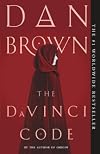
Dan Brown’s The Da Vinci Code is a masterful blend of history, art, and suspense that delivers an unforgettable reading experience. Brown crafts a gripping mystery from start to finish, weaving in intricate puzzles and historical secrets that keep readers on the edge of their seats. The fast-paced narrative, paired with meticulously researched references to religious and artistic symbols, makes the plot feel both immersive and intellectually stimulating.
The protagonist, Robert Langdon, show more leads readers through a whirlwind of clues that challenge conventions and unravel an ancient mystery tied to Western civilization’s most sacred institutions. The twists and revelations are brilliantly executed, heightening the sense of urgency and thrill in each chapter. Brown’s ability to make complex ideas accessible without compromising depth adds a layer of sophistication to this thrilling read.
In sum, The Da Vinci Code is a triumph in modern thriller fiction—a page-turner that will leave you questioning long after you’ve turned the last page. show less
The protagonist, Robert Langdon, show more leads readers through a whirlwind of clues that challenge conventions and unravel an ancient mystery tied to Western civilization’s most sacred institutions. The twists and revelations are brilliantly executed, heightening the sense of urgency and thrill in each chapter. Brown’s ability to make complex ideas accessible without compromising depth adds a layer of sophistication to this thrilling read.
In sum, The Da Vinci Code is a triumph in modern thriller fiction—a page-turner that will leave you questioning long after you’ve turned the last page. show less
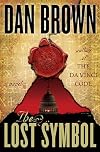
Stop me if you’ve heard this one before.
Harvard symbologist Robert Langdon is traveling to an exotic locale when he happens across a grisly scene involving clues only he can decipher. Together with his trusty, busty female companion, he sets off in a race against time, hounded simultaneously by the mysterious force that set all this in motion and officialdom. Naturally, it turns out those in charge were trying to help him all along, and this whole time the secret force was really Mr. show more Withers, the corrupt real-estate developer.
Or something. The TV may have been on in the background when I was finishing the novel. Man, Scooby and the gang are fortunate only the old/physiognomally deficient try to pull things. Otherwise, who KNOWS what might happen?
At this point, I think we can safely classify Dan Brown’s novels as genre fiction, even if that genre is “Dan Brown.” Using a formula of 65% thriller/suspense, 25% detective/history (which includes symbology), and 5% movie, he manages to craft very good Dan Brown novels.
In fact, I’d say they’re some of the finest Dan Brown novels ever produced—if you don’t count the novelization of the National Treasure movies.
(Speaking of terrible movies, even reaching as far back as The Da Vinci Code—the novel—you can tell he takes a screenplay approach to writing. This is especially evident when you count the twists, chases and action-heavy parts, which occur at almost the same rate they do in a movie: About one every 10 minutes or so.)
The Lost Symbol is a straight-up Dan Brown, with one small deviation: the conclusion. For whatever reason, his wife Brown decided Symbol needed more endings than Return of the King, probably because he couldn’t just write in a bunch of hulking eagles to get out of the corner he’d written himself into. A significant chunk of the ending—when all is supposed to be revealed and you learn the secret of the “lost symbol”—reads like Dan Brown wanting to prove he’s more than just a hack.
Unfortunately, he did so in a spectacularly hacky way. Across acres of pages he expounds upon man and divinity, using pseudo-philosophy to back up his claims that, frankly, don’t really matter anyway. Let’s face it, if fully half your audience actually believes the remains of Mary Magdalene are entombed in the Louvre and descendants of Christ walk the earth protected by the Knights Templar, you’re not going to chart a new intellectual course for humanity.
You’d be lucky to convince them to join Oprah’s book club.
But of course, the usual caveat: I don’t like Dan Brown’s books, I didn’t expect to like this one, so hey—big surprise. If you enjoy his writing, you’ll probably enjoy this one. Rather than sesquipedally wax on about all the over-arching, unworkable problems with the book, I decided to go the IMDB route and nit-pick over the smallest errors I could find while reading the book.
In no particular order:
- Sato, who heads up the CIA’s Office of Security (depicted as a super police force) is described as being born “behind the fences of Manzanar,” and is “a toughened survivor who never forgot the horrors of war, or the perils of insufficient military intelligence.” Assuming the insufficient military intelligence is referring to Pearl Harbor (which was mentioned just prior) and the “horrors of war” refer to WWII, there’s a bit of a problem with the timeline. The first prisoners arrived in Manzanar in March 1942, and the camp was cleared out by November 1945. The Pearl Harbor thing can be forgiven if you’re just referring to her imprisonment behind the bars, but at best she was three and a half years old when she got out. In other words, barely old enough to remember anything.
- The CIA is called in when a potentially damaging video is threatened to be leaked. The perp in question is a U.S. citizen, in the U.S., and threatening other U.S. citizens. The FBI would have been called in, not the CIA. There’s no conceivable possibility that the CIA would have jurisdiction.
- Robert Langdon is riding from the airport to downtown Washington in a limo when he comments to himself, “So this is how the other half lives.” Robert Langdon, the tenured professor at Harvard who in the chronology of the series has written numerous books that are actually read by people (he’s often recognized by the other characters), is amazed at how rich folk live? Maybe in the first book you could pass him off as everyman (Harvard professor) who does good, but not anymore. At this point, he’s at least sitting at Thomas Friedman-level celebrity, constantly being asked to write articles and show up on TV.
- “Smiling, he now pulled out Peter Solomon’s iPhone and admired the text message he had sent Katherine several minutes earlier. Got your messages. All’s fine. Busy day. Forgot appointment with Dr. Abaddon. Sorry not to mention him sooner. Long story. Am headed to lab now. If available, have Dr. Abaddon join us inside. I trust him fully, and I have much to tell you both. —Peter” The novel goes to great lengths to prove he is, in fact, using an iPhone to send that text message. That text message that’s 250 characters. Since he’s from America, we know he’s using AT&T. From their Web site: “A text message can be up to 160 characters in length. Messages sent or received that are longer than 160 characters will be delivered in multiple segments. Each segment will be billed as a separate message.”This by no means is the extent of his manipulation of technology/science (”noetic science” is heavily pushed, despite lacking any semblance of actual “science”), but still an easy oversight. Also, who the hell would tap out “Dr. Abaddon” twice?
- “This phone had served Mal’akh well … but now it was time it became untraceable. He climbed behind the wheel, put the car in gear, and crept forward until he heard the sharp crack of the iPhone imploding.”
It’s an Internet-proven fact that iPhones don’t necessarily die when being run over by cars. Seriously, dude, at least Google that stuff before you throw it in your bestseller.
- In an instant, Katherine realized that the only light in the entire space was coming from her cell phone, illuminating the side of her face. “Send help,” she whispered to the guard. “And get to Wet Pod to help Trish.” Then she quietly closed her phone, extinguishing the light. What’s wrong with this one, you ask? From 65 pages earlier: “Katherine Solomon felt a wave of relief to see the name on her iPhone.” It takes quite a feat of strength to close an iPhone.
- “NFC playoffs,” Nunez replied. “Everyone’s watching the Redskins tonight …” Really? The Redskins making the playoffs? Nobody told me this was science fiction. show less
Harvard symbologist Robert Langdon is traveling to an exotic locale when he happens across a grisly scene involving clues only he can decipher. Together with his trusty, busty female companion, he sets off in a race against time, hounded simultaneously by the mysterious force that set all this in motion and officialdom. Naturally, it turns out those in charge were trying to help him all along, and this whole time the secret force was really Mr. show more Withers, the corrupt real-estate developer.
Or something. The TV may have been on in the background when I was finishing the novel. Man, Scooby and the gang are fortunate only the old/physiognomally deficient try to pull things. Otherwise, who KNOWS what might happen?
At this point, I think we can safely classify Dan Brown’s novels as genre fiction, even if that genre is “Dan Brown.” Using a formula of 65% thriller/suspense, 25% detective/history (which includes symbology), and 5% movie, he manages to craft very good Dan Brown novels.
In fact, I’d say they’re some of the finest Dan Brown novels ever produced—if you don’t count the novelization of the National Treasure movies.
(Speaking of terrible movies, even reaching as far back as The Da Vinci Code—the novel—you can tell he takes a screenplay approach to writing. This is especially evident when you count the twists, chases and action-heavy parts, which occur at almost the same rate they do in a movie: About one every 10 minutes or so.)
The Lost Symbol is a straight-up Dan Brown, with one small deviation: the conclusion. For whatever reason, his wife Brown decided Symbol needed more endings than Return of the King, probably because he couldn’t just write in a bunch of hulking eagles to get out of the corner he’d written himself into. A significant chunk of the ending—when all is supposed to be revealed and you learn the secret of the “lost symbol”—reads like Dan Brown wanting to prove he’s more than just a hack.
Unfortunately, he did so in a spectacularly hacky way. Across acres of pages he expounds upon man and divinity, using pseudo-philosophy to back up his claims that, frankly, don’t really matter anyway. Let’s face it, if fully half your audience actually believes the remains of Mary Magdalene are entombed in the Louvre and descendants of Christ walk the earth protected by the Knights Templar, you’re not going to chart a new intellectual course for humanity.
You’d be lucky to convince them to join Oprah’s book club.
But of course, the usual caveat: I don’t like Dan Brown’s books, I didn’t expect to like this one, so hey—big surprise. If you enjoy his writing, you’ll probably enjoy this one. Rather than sesquipedally wax on about all the over-arching, unworkable problems with the book, I decided to go the IMDB route and nit-pick over the smallest errors I could find while reading the book.
In no particular order:
- Sato, who heads up the CIA’s Office of Security (depicted as a super police force) is described as being born “behind the fences of Manzanar,” and is “a toughened survivor who never forgot the horrors of war, or the perils of insufficient military intelligence.” Assuming the insufficient military intelligence is referring to Pearl Harbor (which was mentioned just prior) and the “horrors of war” refer to WWII, there’s a bit of a problem with the timeline. The first prisoners arrived in Manzanar in March 1942, and the camp was cleared out by November 1945. The Pearl Harbor thing can be forgiven if you’re just referring to her imprisonment behind the bars, but at best she was three and a half years old when she got out. In other words, barely old enough to remember anything.
- The CIA is called in when a potentially damaging video is threatened to be leaked. The perp in question is a U.S. citizen, in the U.S., and threatening other U.S. citizens. The FBI would have been called in, not the CIA. There’s no conceivable possibility that the CIA would have jurisdiction.
- Robert Langdon is riding from the airport to downtown Washington in a limo when he comments to himself, “So this is how the other half lives.” Robert Langdon, the tenured professor at Harvard who in the chronology of the series has written numerous books that are actually read by people (he’s often recognized by the other characters), is amazed at how rich folk live? Maybe in the first book you could pass him off as everyman (Harvard professor) who does good, but not anymore. At this point, he’s at least sitting at Thomas Friedman-level celebrity, constantly being asked to write articles and show up on TV.
- “Smiling, he now pulled out Peter Solomon’s iPhone and admired the text message he had sent Katherine several minutes earlier. Got your messages. All’s fine. Busy day. Forgot appointment with Dr. Abaddon. Sorry not to mention him sooner. Long story. Am headed to lab now. If available, have Dr. Abaddon join us inside. I trust him fully, and I have much to tell you both. —Peter” The novel goes to great lengths to prove he is, in fact, using an iPhone to send that text message. That text message that’s 250 characters. Since he’s from America, we know he’s using AT&T. From their Web site: “A text message can be up to 160 characters in length. Messages sent or received that are longer than 160 characters will be delivered in multiple segments. Each segment will be billed as a separate message.”This by no means is the extent of his manipulation of technology/science (”noetic science” is heavily pushed, despite lacking any semblance of actual “science”), but still an easy oversight. Also, who the hell would tap out “Dr. Abaddon” twice?
- “This phone had served Mal’akh well … but now it was time it became untraceable. He climbed behind the wheel, put the car in gear, and crept forward until he heard the sharp crack of the iPhone imploding.”
It’s an Internet-proven fact that iPhones don’t necessarily die when being run over by cars. Seriously, dude, at least Google that stuff before you throw it in your bestseller.
- In an instant, Katherine realized that the only light in the entire space was coming from her cell phone, illuminating the side of her face. “Send help,” she whispered to the guard. “And get to Wet Pod to help Trish.” Then she quietly closed her phone, extinguishing the light. What’s wrong with this one, you ask? From 65 pages earlier: “Katherine Solomon felt a wave of relief to see the name on her iPhone.” It takes quite a feat of strength to close an iPhone.
- “NFC playoffs,” Nunez replied. “Everyone’s watching the Redskins tonight …” Really? The Redskins making the playoffs? Nobody told me this was science fiction. show less
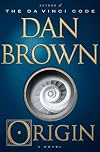
What if God had competition... and it came from Silicon Valley?
Origin is classic Dan Brown: a high-speed chase through art, science, and faith, powered by code, cathedrals, and an AI with sass. While the formula is familiar, the questions linger: Where do we come from? Where are we going? Brown doesn’t promise answers, but he wraps the asking in sleek tech and ancient intrigue.
Origin is classic Dan Brown: a high-speed chase through art, science, and faith, powered by code, cathedrals, and an AI with sass. While the formula is familiar, the questions linger: Where do we come from? Where are we going? Brown doesn’t promise answers, but he wraps the asking in sleek tech and ancient intrigue.
Lists
Luetut kirjat (4)
French Books (1)
Guilty Pleasures (1)
READ 2025 (1)
Delete This List (1)
al.vick-series (1)
READ 2026 (1)
FAB 2025 (1)
BBC Big Read (1)
TDCD BOOK LIST (1)
Five star books (1)
Secret Histories (1)
Page Turners (1)
Unread books (1)
Arctic novels (1)
Books to Read (1)
100 New Classics (1)
Art of Reading (2)
Books I've Read (2)
el (2)
Overdue Podcast (3)
Books I've read (3)
Carole's List (3)
BitLife (1)
Pageturners (1)
Florida (1)
Next in Series (1)
Read in 2006 (1)
Read These Too (1)
One Day (1)
BBC Top Books (1)
mom (1)
Awards


You May Also Like


Associated Authors
Statistics
- Works
- 53
- Also by
- 9
- Members
- 218,464
- Popularity
- #19
- Rating
- 3.5
- Reviews
- 4,318
- ISBNs
- 1,724
- Languages
- 48
- Favorited
- 439


