
Matt Howarth
Author of The Residents: Freak Show
About the Author
Image credit: Self portrait
Series
Works by Matt Howarth
Post-Mortem 2 copies
Those Annoying Post Bros. #13 2 copies
Those Annoying Post Bros. #12 2 copies
Those Annoying Post Bros. #11 2 copies
Those Annoying Post Bros. #14 2 copies
Uberdub #1 1 copy
Particle Dreams #6 1 copy
Keif Llama : Xeno-Tech #1 1 copy
Particle Dreams #1 1 copy
Particle Dreams 4 1 copy
Particle Dreams 5 1 copy
Savage Henry. No. 26 1 copy
The Cardboard Condo Concert 1 copy
The Mighty Virus 1 copy
Those Annoying Post Bros. #4 1 copy
Those Annoying Post Bros. #6 1 copy
Those Annoying Post Bros. #8 1 copy
Konny and Czu #1 1 copy
Star Crossed #2 1 copy
Associated Works
Tagged
Common Knowledge
- Gender
- male
Members
Reviews

I've been reading Matt Howarth's comics for over 25 years, and this graphic novel is definitely an anomaly: no aliens or electronic music or time travel or bizarre violence. It's a terribly human story about the contemporary decline of the American economy and the atomization of our society. All the art is in Howarth's inimitable style, and the characters' expressions (verbal and visual) are engaging and believable. The end of it is a couple of pages of goofy sentimentalism that I could show more easily have done without. show less
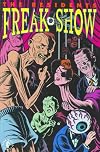
A whole gallery of graphic artists present vignettes of Residents' imagined "freaks" separated out into chapter through an introducing ringmaster. These are gritty, earthy tales with backstories and tragedy. The comic came packaged in a Freak Show Special Edition.
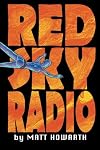
Set in the far future, this book is about a group of freelancers who harvest gases from a Jovian planet.
Peri Fairchild is one of the divers who has been physically modified to survive in vacuum. She could become very rich harvesting gases from the gas giant Baltuss, but she is addicted to diving. All of the freelance divers live in an abandoned space hotel. Harvest Corp., the corporation who runs the harvest operation, considers the divers to be pirates, and would love to destroy the space show more hotel, if only they could find it (it's not as easy as it sounds). Another big headache for Harvest is the existence of Red Sky Radio, a pirate radio station that plays really good music, instead of the boring crap that comes from Harvest.
Dezi is an older miner, who has several personal secrets. He also loves to start rumors, just to see what will happen. He whispers to Peri that Harvest has developed killer robot drones, to pick off the "pirates" one at a time. During a mining trip in Baltuss' atmosphere, Peri spots one, and freaks out. None of the other miners will believe her. During another mining trip, accompanied by Juul, a recent defector from Harvest, Peri spots another "drone" and Juul shoots it with his laser gun. They have just done what Harvest has been unable to do for years, put Red Sky Radio off the air.
The other miners are convinced that this is the just the first move by Harvest Corp., and that the "final battle" is coming. Dezi admits to Peri and Juul that he is behind Red Sky Radio. It will take money to repair the transmitter, so Peri is obligated to go gas mining, for real this time. Meantime, one of Dezi's "secrets" causes the destruction of the entire Harvest Corp. base, and the moon on which it was built. Can both sides find a way to work together?
This is a very well-written story. It's nice and weird, and the inclusion of pirate radio certainly helps. The reader will not go wrong with this one. show less
Peri Fairchild is one of the divers who has been physically modified to survive in vacuum. She could become very rich harvesting gases from the gas giant Baltuss, but she is addicted to diving. All of the freelance divers live in an abandoned space hotel. Harvest Corp., the corporation who runs the harvest operation, considers the divers to be pirates, and would love to destroy the space show more hotel, if only they could find it (it's not as easy as it sounds). Another big headache for Harvest is the existence of Red Sky Radio, a pirate radio station that plays really good music, instead of the boring crap that comes from Harvest.
Dezi is an older miner, who has several personal secrets. He also loves to start rumors, just to see what will happen. He whispers to Peri that Harvest has developed killer robot drones, to pick off the "pirates" one at a time. During a mining trip in Baltuss' atmosphere, Peri spots one, and freaks out. None of the other miners will believe her. During another mining trip, accompanied by Juul, a recent defector from Harvest, Peri spots another "drone" and Juul shoots it with his laser gun. They have just done what Harvest has been unable to do for years, put Red Sky Radio off the air.
The other miners are convinced that this is the just the first move by Harvest Corp., and that the "final battle" is coming. Dezi admits to Peri and Juul that he is behind Red Sky Radio. It will take money to repair the transmitter, so Peri is obligated to go gas mining, for real this time. Meantime, one of Dezi's "secrets" causes the destruction of the entire Harvest Corp. base, and the moon on which it was built. Can both sides find a way to work together?
This is a very well-written story. It's nice and weird, and the inclusion of pirate radio certainly helps. The reader will not go wrong with this one. show less
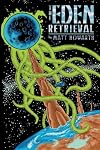
The Eden Retrieval by Matt Howarth poses a dilemma for the Cthulhu mythos fan. Its central premise is (as far as I know) quite unique in Cthulhu mythos fiction but it is otherwise a very flawed novel. Matt Howarth made his name with avant-garde comics, particularly Bugtown, where Cthulhu is a keyboard player of an interdimensional band, the Bulldaggers. The Eden Retrieval was published in 2005; it is a 222 page trade paperback POD from Lulu.com. Mr. Howarth provides the attractive cover and show more interior art. As in all books I've read from Lulu there are a fair number of typographical errors (no editorial help is given to the authors), including quite a few sentence fragments that appear inadvertent rather than deliberate.
I guess, considering he used Cthulhu as a character in his comic, Mr. Howarth has been a fan of the mythos for a while. Unfortunately he has bought into the Derleth version lock, stock and barrel, where Cthulhu et al are intrinsically evil, the intrinsically good Elder Gods punished them with imprisonment on earth and elsewhere, the Elder sign reigns supreme and magic is the order of the day. Oh, well, you can't have everything. I judge based on the entertainment value of the prose instead of whether the Derleth heresy is present. The very best thing about this novel was the premise. I know there have been space faring stories that invoke the Cthulhu mythos before. For example, in Jeffrey Thomas' Punktown novel Monstrocity, some of the alien races have their own library of ancient unspeakable books and their own names for the Great Old Ones, who apparently are trying to break into our dimension however and wherever they can. Basil Copper's Shaft Number 247 is his claustrophobic masterpiece. Russian Dolls by Robert Furey us a superb story about a space flight to Yuggoth. But nowhere else, I think, has anyone applied the genre of space opera to Cthulhu. In Matt Howarth's world human kind has spread beyond earth to the rest of the galaxy. They have met, befriended and just about subjugated peoples of many other species and planets. There has been a devastating war with AIs, fought to a standstill. Earth has been mostly forgotten. Now what would happen in such a galaxy if the stars came right and R'lyeh rose from the depths of the sea, and all the Great Old ones became manifest on earth? What a concept! Earth has had its apocalypse but humanity has already spread to the stars. The Deep Ones attacked, captured nuclear warheads and targeted R'lyeh to awaken the dreamers there. What would Cthulhu do? Would it notice? Unfortunately the prose and plotting do not do justice to the concept, on many levels. Princess Eden of the galactic royal family has crash landed on post apocalytptic earth. A team of bounty hunters and a royal warrior come separately to earth in an effort to rescue her. So what didn't work? First of all, there was insufficient cosmic scale. The world building was weak, not allowing my willing suspension of disbelief in context, you know what I mean? People left earth a mere 350 years ago, and in that time both forgot about old earth, conquered the entire galaxy and had a major war with an AI civilization. The time scale just doesn't work for this. Deep Ones on earth are described as loathsome, frightening and evil, but all humans interact with bizarre aliens every day so what makes the Deep Ones so grotesque? If the Great Old Ones returned and the stars were right, as happened a few hundred years ago, not long after humans achieved intergalactic space travel, why would they hang around earth? Could Shudde-M'ell be driven away with amplified visible light? Could Dagon be physically killed/destroyed with a plasma beam? Why is Cthulhu depicted as an aquatic being when it was really only trapped under the seas and in fact originally came from the stars? This further suggests that Mr. Howarth only has a nodding acquaintance with Lovecraft. Why was magic allowed in an age of ultimate science? Are the Deep Ones as stupid as depicted? How come humans are more agile than Deep Ones even in a thickened/gelatinous air environment? You get the picture. The second major problem I had was with the prose. Character development was nonexistent, a problem with much genre fiction. In comics caricatures are easier than characters. Dialogue was pretty weak, annoying instead of engaging. The frightening monsters out of legend were presented in a rather mundane fashion, easily thwarted by humans with space weapons. The biggest flaw was that the prose was pretty boring. It was a chore to read instead of fun, particularly the longer it went on.
Spoilers follow, so skip to the end if that bothers you.
Finally, the whole thing evolved around a subterfuge of Dagon. In a real cop out, Cthulhu never did awake, but Dagon didn't want Ithaqua and Shudde-M'ell to find out. Lame!
I wish I could give this a hearty recommendation, but I can't, really. Completists should take a look. And the premise is just begging for better treatment! After reading Charlie Stross' recent blog that I posted here, I have hopes a superb author may tackle the same subject matter soon, with better results. I guess I liked this better than The Iron Maiden, maybe perhaps as much as Hive. Maybe it's at the level of Other Nations, so not a hopeless loss like Dagon or A Darkness Inbred. I would really like to hear someone else's opinion.
Note: Since I orginally wrote this review, Tim Curran has weighed in on the space opera mythos genre with Tomb on a Dead Moon, a wonderful story in Cthulhu Unbound #2. show less
I guess, considering he used Cthulhu as a character in his comic, Mr. Howarth has been a fan of the mythos for a while. Unfortunately he has bought into the Derleth version lock, stock and barrel, where Cthulhu et al are intrinsically evil, the intrinsically good Elder Gods punished them with imprisonment on earth and elsewhere, the Elder sign reigns supreme and magic is the order of the day. Oh, well, you can't have everything. I judge based on the entertainment value of the prose instead of whether the Derleth heresy is present. The very best thing about this novel was the premise. I know there have been space faring stories that invoke the Cthulhu mythos before. For example, in Jeffrey Thomas' Punktown novel Monstrocity, some of the alien races have their own library of ancient unspeakable books and their own names for the Great Old Ones, who apparently are trying to break into our dimension however and wherever they can. Basil Copper's Shaft Number 247 is his claustrophobic masterpiece. Russian Dolls by Robert Furey us a superb story about a space flight to Yuggoth. But nowhere else, I think, has anyone applied the genre of space opera to Cthulhu. In Matt Howarth's world human kind has spread beyond earth to the rest of the galaxy. They have met, befriended and just about subjugated peoples of many other species and planets. There has been a devastating war with AIs, fought to a standstill. Earth has been mostly forgotten. Now what would happen in such a galaxy if the stars came right and R'lyeh rose from the depths of the sea, and all the Great Old ones became manifest on earth? What a concept! Earth has had its apocalypse but humanity has already spread to the stars. The Deep Ones attacked, captured nuclear warheads and targeted R'lyeh to awaken the dreamers there. What would Cthulhu do? Would it notice? Unfortunately the prose and plotting do not do justice to the concept, on many levels. Princess Eden of the galactic royal family has crash landed on post apocalytptic earth. A team of bounty hunters and a royal warrior come separately to earth in an effort to rescue her. So what didn't work? First of all, there was insufficient cosmic scale. The world building was weak, not allowing my willing suspension of disbelief in context, you know what I mean? People left earth a mere 350 years ago, and in that time both forgot about old earth, conquered the entire galaxy and had a major war with an AI civilization. The time scale just doesn't work for this. Deep Ones on earth are described as loathsome, frightening and evil, but all humans interact with bizarre aliens every day so what makes the Deep Ones so grotesque? If the Great Old Ones returned and the stars were right, as happened a few hundred years ago, not long after humans achieved intergalactic space travel, why would they hang around earth? Could Shudde-M'ell be driven away with amplified visible light? Could Dagon be physically killed/destroyed with a plasma beam? Why is Cthulhu depicted as an aquatic being when it was really only trapped under the seas and in fact originally came from the stars? This further suggests that Mr. Howarth only has a nodding acquaintance with Lovecraft. Why was magic allowed in an age of ultimate science? Are the Deep Ones as stupid as depicted? How come humans are more agile than Deep Ones even in a thickened/gelatinous air environment? You get the picture. The second major problem I had was with the prose. Character development was nonexistent, a problem with much genre fiction. In comics caricatures are easier than characters. Dialogue was pretty weak, annoying instead of engaging. The frightening monsters out of legend were presented in a rather mundane fashion, easily thwarted by humans with space weapons. The biggest flaw was that the prose was pretty boring. It was a chore to read instead of fun, particularly the longer it went on.
Spoilers follow, so skip to the end if that bothers you.
Finally, the whole thing evolved around a subterfuge of Dagon. In a real cop out, Cthulhu never did awake, but Dagon didn't want Ithaqua and Shudde-M'ell to find out. Lame!
I wish I could give this a hearty recommendation, but I can't, really. Completists should take a look. And the premise is just begging for better treatment! After reading Charlie Stross' recent blog that I posted here, I have hopes a superb author may tackle the same subject matter soon, with better results. I guess I liked this better than The Iron Maiden, maybe perhaps as much as Hive. Maybe it's at the level of Other Nations, so not a hopeless loss like Dagon or A Darkness Inbred. I would really like to hear someone else's opinion.
Note: Since I orginally wrote this review, Tim Curran has weighed in on the space opera mythos genre with Tomb on a Dead Moon, a wonderful story in Cthulhu Unbound #2. show less
You May Also Like
Associated Authors
Statistics
- Works
- 63
- Also by
- 8
- Members
- 171
- Popularity
- #124,898
- Rating
- 3.7
- Reviews
- 6
- ISBNs
- 17
- Favorited
- 1