
About the Author
Edward Achorn, a Pulitzer Prize finalist for Commentary and winner of the Yankee Quill Award, is the author of two acclaimed books about nineteenth-century baseball and American culture, Fifty-nine in '84 and The Summer of Beer and Whiskey. He lives in an 1840s farmhouse in Rehoboth, Massachusetts.
Image credit: Edward Achorn [credit: RIFuture.org]
Works by Edward Achorn
The Summer of Beer and Whiskey: How Brewers, Barkeeps, Rowdies, Immigrants, and a Wild Pennant Fight Made Baseball America's Game (2013) 184 copies, 4 reviews
Every Drop of Blood: The Momentous Second Inauguration of Abraham Lincoln (2020) 161 copies, 2 reviews
Fifty-Nine in '84 : Old Hoss Radbourn, Barehanded Baseball, and the Greatest Season a Pitcher Ever Had (2010) 137 copies, 6 reviews
The Lincoln Miracle: Inside the Republican Convention That Changed History (2023) 76 copies, 1 review
Tagged
Common Knowledge
- Canonical name
- Achorn, Edward
- Gender
- male
- Occupations
- editor
author - Organizations
- The Providence Journal
Society for American Baseball Research - Nationality
- USA
- Places of residence
- Providence, Rhode Island, USA
Westborough, Massachusetts, USA - Associated Place (for map)
- USA
Members
Reviews
The Summer of Beer and Whiskey: How Brewers, Barkeeps, Rowdies, Immigrants, and a Wild Pennant Fight Made Baseball America's Game by Edward Achorn
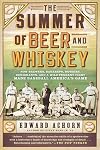
Interesting, well-researched book takes us back to a time when baseball was nothing like it is today--or for that matter, nothing like it was even 50 or 75 years ago. Back to the days when a team had two pitchers and one might pitch both ends of a doubleheader. Or when one of the owners might have to step in and play right field when a player was injured during the game and there were no substitutes available. Or when a pitcher could earn the name "Jumping Jack Jones" for his delivery, which show more included jumping in the air to throw his fastball. This is the story of the American Association in 1883 and the pennant race between the St. Louis Browns, the main focus on the book, and the Philadelphia Athletics. It's also a book that touches upon the story of Moses Fleetwood Walker, the major leagues' first black player, long before Jackie Robinson, and the hateful racism of baseball legend Cap Anson, who refused to let his team play if Walker was on the field. And there's so much more here as well. You'll come away with a much better understanding of 19th century baseball, including how the game itself was played, what the men who played it were like, what their owners were like, what travel was like (horrendous), and what the fanatics--because that was what they were called then--were like. How I would love to have a time machine that let me go back and see one of those great contests between the Browns and Athletics. show less
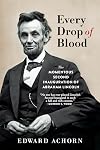
Do I really need another book on Lincoln? Of course, I do. This book gives a fascinating look at the days leading up to and following the inauguration of Lincoln for a second term. The focal point, his memorable address, is analyzed cogently. It was interesting to read how the editorial reactions across the country varied so widely; many entirely missing the beauty and significance of this speech. Rather than a triumphant and celebratory message, Lincoln showed that the war's cause -- show more slavery -- was a sin to be attributed to the entire nation. The author enlightens us that this deeper meaning is overshadowed by the so memorable phrases of the war continuing "until every drop of blood drawn by the lash, shall be paid by another drawn by the sword" and "With malice toward none; with charity toward all...".
The story also covers others who were in the picture as the day enfolded. Particularly featured were Walt Whitman, present in Washington during the war years, and John Wilkes Booth who came quite close to Lincoln on inauguration day. The breakdown of security for the president that permitted Booth to enter the theater box is astonishing to consider. Who knew that one of Booth's lovers was the daughter of a prominent senator, a circumstance covered up in the post assassination investigations. show less
The story also covers others who were in the picture as the day enfolded. Particularly featured were Walt Whitman, present in Washington during the war years, and John Wilkes Booth who came quite close to Lincoln on inauguration day. The breakdown of security for the president that permitted Booth to enter the theater box is astonishing to consider. Who knew that one of Booth's lovers was the daughter of a prominent senator, a circumstance covered up in the post assassination investigations. show less
Fifty-Nine in '84 : Old Hoss Radbourn, Barehanded Baseball, and the Greatest Season a Pitcher Ever Had by Edward Achorn

Unless baseball changes drastically - for instance, some MLB marketing genius finds that focus groups want six inning contests with two outs an inning - Charles "Old Hoss" Radbourn holds the safest record in the game: 59 wins (or 60; there is disagreement among the SABRtricians) pitching for the Providence Grays in 1884. And the season was then only 112 games. Radbourn started 73 and completed every one of them. He threw a total of 678-2/3 innings, struck out 441 batters and allowed a meager show more 104 earned runs. During the final 2½ months of the season, when he was effectively the Grays' only pitcher, his won-lost record was 35-4.
Edward Achorn's nearly day-by-day chronicle of this astonishing feat turns the record book into a real life drama. Charlie Radbourn was already regarded as the best pitcher in the National League when the 1884 season started. He was also Providence's highest paid player (at $3,000, then a solid middle class income). All was not well, however. At age 28, Radbourn's arm was already suffering constant soreness and inflammation. He sat out most of Spring training, nursing the limb back to life. In the early going, he performed well, but was outshone by his partner in the two-man rotation, the flamboyant fastballer Charlie Sweeney.
Tension grew between the pitchers. In the middle of July, it exploded. Enraged by real and imagined slights, Radbourn threw a tantrum on the field, was suspended by the club and faced the prospect of being blacklisted from the Major Leagues. He was on the verge of signing with the "outlaw" Union League when his rival committed a grosser outrage, arriving drunk for a game and leaving the park when he was ordered to switch positions with a relief pitcher. In the space of a week, Providence had gone from having the best rotation in baseball to the prospect of putting near-amateurs into the box. The owners seriously contemplated folding the club rather than risk losing their capital in the last half of the season.
The team was saved when Radbourn agreed to a remarkable deal. In return for receiving both his own and Sweeney's pay, he would undertake all of the pitching duties, with the further condition that, if the Grays won the National League pennant, he would be freed from the reserve clause at the end of the year. Working a grueling schedule while in constant pain, often unable to lift his right arm when he got out of bed in the morning, he kept throwing until the flag was clinched, then won both games of the first World Series, against the New York Metropolitans of the American Association.
Fifty-Nine in '84 relates how hard the struggle was, how often failure seemed inevitable, and how unstinting professionalism and unwavering "grit" enabled Radbourn to go on. It also gives a good sense of its subject's character: an intelligent, though poorly educated man, who loved his vocation, burned with ambition to be recognized as the best, shrugged off adulation, disliked socializing, drank more than was good for him, suffered the pangs of a seemingly hopeless (though at last requited) love, and was capable of walking onto the field day after day, limbering his reluctant arm until it could throw, and overpowering or outwitting the best hitters in the game. Radbourn was not, in many respects, a good man, but one cannot help admiring the way that he capably did his duty.
Along the way, the author paints a vivid, detailed picture of baseball in the 1880's, when it was already the modern game in essentials, but still primitive, dangerous and demanding. Players wore no gloves to protect their hands; substitutions were allowed only if a player became disabled; the solitary, usually ill-trained umpire had difficulty preventing rampant cheating; pitchers could throw at batters with impunity. Many a career ended with an incapacitating injury, and no pension or disability benefits afterward. Pitchers had especially brief moments of glory, their overused arms dead after a handful of seasons. Radbourn was typical in this respect. His record after his 1884 apogee was mediocre. In 1885, he fell to 28-21, and the Grays collapsed hopelessly. They lost 33 of their last 38 games. The owners gave up. They sold all the players, and a new St. Louis franchise replaced Providence.
Old Hoss soldiered on through 1891, when, after posting an 11-13 record and 4.25 ERA (very poor in that relatively low-scoring era), he retired, saying that he would not "take a $5,000 salary for $500 baseball". Unlike many of his fellow players, he had saved money and was able to live in modest affluence after leaving the game. Like many, he had contracted syphilis during his playing days. The disease carried him off at age 49.
While the book is a first class sports history, the baseball material is embellished with grim comments on the crime, corruption, disease and other discomforts of the late 19th Century, wandering rather far off-topic and ignoring the fact that, compared to the recent past, conditions were clean, elegant and redolent of progress. America was a vigorous, confident land. Describing it mostly in terms of the amenities that it lacked is anachronistic.
For the increasing number of readers who are fascinated by pre-modern baseball, this book is essential reading. The less fascinated may find it a bit digressive but nonetheless an engaging sidelight on our nation's less-remembered past. show less
Edward Achorn's nearly day-by-day chronicle of this astonishing feat turns the record book into a real life drama. Charlie Radbourn was already regarded as the best pitcher in the National League when the 1884 season started. He was also Providence's highest paid player (at $3,000, then a solid middle class income). All was not well, however. At age 28, Radbourn's arm was already suffering constant soreness and inflammation. He sat out most of Spring training, nursing the limb back to life. In the early going, he performed well, but was outshone by his partner in the two-man rotation, the flamboyant fastballer Charlie Sweeney.
Tension grew between the pitchers. In the middle of July, it exploded. Enraged by real and imagined slights, Radbourn threw a tantrum on the field, was suspended by the club and faced the prospect of being blacklisted from the Major Leagues. He was on the verge of signing with the "outlaw" Union League when his rival committed a grosser outrage, arriving drunk for a game and leaving the park when he was ordered to switch positions with a relief pitcher. In the space of a week, Providence had gone from having the best rotation in baseball to the prospect of putting near-amateurs into the box. The owners seriously contemplated folding the club rather than risk losing their capital in the last half of the season.
The team was saved when Radbourn agreed to a remarkable deal. In return for receiving both his own and Sweeney's pay, he would undertake all of the pitching duties, with the further condition that, if the Grays won the National League pennant, he would be freed from the reserve clause at the end of the year. Working a grueling schedule while in constant pain, often unable to lift his right arm when he got out of bed in the morning, he kept throwing until the flag was clinched, then won both games of the first World Series, against the New York Metropolitans of the American Association.
Fifty-Nine in '84 relates how hard the struggle was, how often failure seemed inevitable, and how unstinting professionalism and unwavering "grit" enabled Radbourn to go on. It also gives a good sense of its subject's character: an intelligent, though poorly educated man, who loved his vocation, burned with ambition to be recognized as the best, shrugged off adulation, disliked socializing, drank more than was good for him, suffered the pangs of a seemingly hopeless (though at last requited) love, and was capable of walking onto the field day after day, limbering his reluctant arm until it could throw, and overpowering or outwitting the best hitters in the game. Radbourn was not, in many respects, a good man, but one cannot help admiring the way that he capably did his duty.
Along the way, the author paints a vivid, detailed picture of baseball in the 1880's, when it was already the modern game in essentials, but still primitive, dangerous and demanding. Players wore no gloves to protect their hands; substitutions were allowed only if a player became disabled; the solitary, usually ill-trained umpire had difficulty preventing rampant cheating; pitchers could throw at batters with impunity. Many a career ended with an incapacitating injury, and no pension or disability benefits afterward. Pitchers had especially brief moments of glory, their overused arms dead after a handful of seasons. Radbourn was typical in this respect. His record after his 1884 apogee was mediocre. In 1885, he fell to 28-21, and the Grays collapsed hopelessly. They lost 33 of their last 38 games. The owners gave up. They sold all the players, and a new St. Louis franchise replaced Providence.
Old Hoss soldiered on through 1891, when, after posting an 11-13 record and 4.25 ERA (very poor in that relatively low-scoring era), he retired, saying that he would not "take a $5,000 salary for $500 baseball". Unlike many of his fellow players, he had saved money and was able to live in modest affluence after leaving the game. Like many, he had contracted syphilis during his playing days. The disease carried him off at age 49.
While the book is a first class sports history, the baseball material is embellished with grim comments on the crime, corruption, disease and other discomforts of the late 19th Century, wandering rather far off-topic and ignoring the fact that, compared to the recent past, conditions were clean, elegant and redolent of progress. America was a vigorous, confident land. Describing it mostly in terms of the amenities that it lacked is anachronistic.
For the increasing number of readers who are fascinated by pre-modern baseball, this book is essential reading. The less fascinated may find it a bit digressive but nonetheless an engaging sidelight on our nation's less-remembered past. show less
For more reviews and bookish posts visit: https://www.ManOfLaBook.com
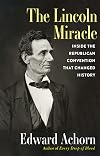
The Lincoln Miracle: Inside the Republican Convention That Changed History by Edward Achorn tells of the 1860 convention, where Abraham Lincoln was nominated by the Republican Party for president. His nomination was in no means guaranteed, and this consequential decision came as a surprise.
This book tells in great detail, day by day, action by action of the work to maneuver Republican delegates into voting for Lincoln show more instead of U.S. Sen. William H. Seward. Seward was more qualified than Abraham Lincoln for the position, a prominent figure, former governor of New York, and ally with political boss Thurlow Weed. Seward, however, suggested that there was a “higher law than the Constitution” when it came to slavery.
While a book about a political convention seems like a bore-fest, The Lincoln Miracle by Edward Achorn is exciting as it is informative. The machination and maneuvering of electing a candidate, from the many who ran (which worked in Lincoln’s favor) are electrifying and mesmerizing.
The author puts the Republican convention into the context of the national battle against slavery. The context doesn’t start, or stop, at the convention. Politics are local, and the local disputes shaped the nomination.
By using quotes from respectable and influential people of the era, such as Horace Greely (newspaper editor), and “Long” John Wentworth (Chicago mayor) Mr. Achorn puts the focus on the participants, not just Lincoln. I do wish, however, that he’d trimmed the quotes to their essential meaning.
The book gave me a thorough understanding, and a window to look through, of a crucial week in the history of the United States and the Republican Party. I realized that Lincoln’s nomination was a revolution within the party, but I underestimated how riveting it all was. show less
The Lincoln Miracle: Inside the Republican Convention That Changed History by Edward Achorn tells of the 1860 convention, where Abraham Lincoln was nominated by the Republican Party for president. His nomination was in no means guaranteed, and this consequential decision came as a surprise.
This book tells in great detail, day by day, action by action of the work to maneuver Republican delegates into voting for Lincoln show more instead of U.S. Sen. William H. Seward. Seward was more qualified than Abraham Lincoln for the position, a prominent figure, former governor of New York, and ally with political boss Thurlow Weed. Seward, however, suggested that there was a “higher law than the Constitution” when it came to slavery.
While a book about a political convention seems like a bore-fest, The Lincoln Miracle by Edward Achorn is exciting as it is informative. The machination and maneuvering of electing a candidate, from the many who ran (which worked in Lincoln’s favor) are electrifying and mesmerizing.
The author puts the Republican convention into the context of the national battle against slavery. The context doesn’t start, or stop, at the convention. Politics are local, and the local disputes shaped the nomination.
By using quotes from respectable and influential people of the era, such as Horace Greely (newspaper editor), and “Long” John Wentworth (Chicago mayor) Mr. Achorn puts the focus on the participants, not just Lincoln. I do wish, however, that he’d trimmed the quotes to their essential meaning.
The book gave me a thorough understanding, and a window to look through, of a crucial week in the history of the United States and the Republican Party. I realized that Lincoln’s nomination was a revolution within the party, but I underestimated how riveting it all was. show less
Lists
Awards


You May Also Like


Associated Authors
Statistics
- Works
- 6
- Members
- 561
- Popularity
- #44,551
- Rating
- 4.0
- Reviews
- 13
- ISBNs
- 14
- Favorited
- 1

