
Kitty Hart
Author of Return to Auschwitz
About the Author
Works by Kitty Hart
Tagged
Common Knowledge
- Other names
- Hart-Moxon, Kitty
- Birthdate
- 1926
- Gender
- female
- Education
- Royal Orthopaedic Hospital, Birmingham, England, UK
- Occupations
- memoirist
Holocaust survivor
nurse - Awards and honors
- OBE 2003
- Short biography
- Kitty Hart, née Felix, was born to a prosperous, middle-class Jewish family in the southern Polish town of Bielsko. In August 1939, to escape proximity to Nazi Germany, the family moved to Lublin. When Germany invaded Poland at the start of World War II the following month, they were confined to the Lublin Ghetto. During the winter of 1940-41, they attempted to escape to Russia but were refused at the border and returned to Lublin. They obtained false identity papers to pose as Polish Catholics and split up to increase their chance of survival. Her father and brother were killed. Kitty went with her mother to volunteer for work in Germany, but they were betrayed in 1943 and sent to the death camp at Auschwitz. In 1944, the two were taken along with several hundred prisoners to the Gross-Rosen concentration camp and then on a death march across the Sudeten mountains. They were eventually put on a train and shipped across Europe to Porta Westfalica in Germany to work in an underground factory. Then they were sent to Bergen-Belsen and later to a camp near Salzwedel. They survived to be liberated by the American army in 1945. Kitty and her mother worked as translators for the British Army and then emigrated to the UK. In 1949, she married Rudi Hart, an upholsterer with whom she had two sons. Her first book, the memoir I Am Alive, was published in 1961, and led to her being featured in a documentary, Kitty: Return to Auschwitz. The documentary in turn inspired her second volume of autobiography, Return to Auschwitz (1981). She later worked with the BBC to make another documentary, Death March: A Survivor's Story (2003). She trained as a nurse and worked at a nursing home and a private radiology firm.
- Nationality
- Poland (birth)
UK - Birthplace
- Bielsko, Poland
- Places of residence
- Lublin, Poland
Birmingham, England, UK - Associated Place (for map)
- Poland
Members
Reviews

This was a re-read for me; whether I read this book first in high school or college escapes me. It was grim reading then and it is grim re-reading it though very much worth the effort.
Kitty has a happy, adventurous life with skiing in the winters, beautiful mountains and a comfortable life in Bielsko, Poland. She is on vacation in August, 1939 when her father, a retired Austrian captain from the Great War, contacts his family to urge them to come home immediately. They are forced to flee to show more Lublin and the train containing their household goods was bombed in Cracow.
Once the Nazis invade Poland, on September 1, the Jews are eventually forced into the Lublin ghetto, and somehow Kitty's family survives intact. As time passes they decide to make a run for the Russian border (the Russians being less of a threat at the time than the Nazis). They are nearly across the frozen river when they are forced to turn back and go into hiding in the small community of Zabia Wola.
After a year, the family decides to split up for safety: her brother enlists in the Red Army, her father stays in Zabia Wola, and Kitty and her mother go into Germany as Polish-German workers. They are fluent in German as well as Polish, Kitty's mother taught English to young children, and for a while they work in Dresden.
In March, 1942, they and the other Jewish workers are betrayed, rounded up, and sent to Auschwitz-Birkenau. Her mother is assigned to the hospital, and Kitty does whatever she can to stay alive. She is able to figure out the unspoken camp rules, and she and her mother make a pact never to take food from a living prisoner. Kitty describes the horrible conditions in which she is now living: the mud, the constant bargaining for food, or better clothes, or clogs, the rolls calls, and how the anonymity of being one more shaved prisoner helped her survive.
Kitty is assigned to the Kanada Kommandos, the women who must sort through the belongings of the dead from the transports. Her recollections are especially necessary to Holocaust scholarship because before Auschwitz-Birkenau were liberated, the Kanada Kommandos were rounded up by the prison guards and shot. Kitty's mother was able to beg one of the camp guards to let her daughter stay with her on the train out of the camp, and he allowed it.
They survive the death march and are finally re-united with Kitty's maternal aunt who fled to Birmingham, England in 1938. Kitty then details her life after her Holocaust experiences, her studies to become a radiology technologist, and her marriage and two sons. show less
Kitty has a happy, adventurous life with skiing in the winters, beautiful mountains and a comfortable life in Bielsko, Poland. She is on vacation in August, 1939 when her father, a retired Austrian captain from the Great War, contacts his family to urge them to come home immediately. They are forced to flee to show more Lublin and the train containing their household goods was bombed in Cracow.
Once the Nazis invade Poland, on September 1, the Jews are eventually forced into the Lublin ghetto, and somehow Kitty's family survives intact. As time passes they decide to make a run for the Russian border (the Russians being less of a threat at the time than the Nazis). They are nearly across the frozen river when they are forced to turn back and go into hiding in the small community of Zabia Wola.
After a year, the family decides to split up for safety: her brother enlists in the Red Army, her father stays in Zabia Wola, and Kitty and her mother go into Germany as Polish-German workers. They are fluent in German as well as Polish, Kitty's mother taught English to young children, and for a while they work in Dresden.
In March, 1942, they and the other Jewish workers are betrayed, rounded up, and sent to Auschwitz-Birkenau. Her mother is assigned to the hospital, and Kitty does whatever she can to stay alive. She is able to figure out the unspoken camp rules, and she and her mother make a pact never to take food from a living prisoner. Kitty describes the horrible conditions in which she is now living: the mud, the constant bargaining for food, or better clothes, or clogs, the rolls calls, and how the anonymity of being one more shaved prisoner helped her survive.
Kitty is assigned to the Kanada Kommandos, the women who must sort through the belongings of the dead from the transports. Her recollections are especially necessary to Holocaust scholarship because before Auschwitz-Birkenau were liberated, the Kanada Kommandos were rounded up by the prison guards and shot. Kitty's mother was able to beg one of the camp guards to let her daughter stay with her on the train out of the camp, and he allowed it.
They survive the death march and are finally re-united with Kitty's maternal aunt who fled to Birmingham, England in 1938. Kitty then details her life after her Holocaust experiences, her studies to become a radiology technologist, and her marriage and two sons. show less

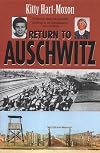
A woman's remarkable story of survival during Germany's occupation of Poland, one of the darkest times during WW2. Kitty Felix and her family survive the Lublin ghettos and try to cross into the Soviet Union, only to have to turn back and plan another way out of the ghetto. Bravely posing as laborers inside the Reich, Kitty and her mother are identified as Jews and subsequently imprisoned in Germany, where they receive a death sentence. After being forced in front of a long line of machine show more guns and made to face a brick wall, she and her mother escape death by a laughing firing squad, and are transferred to Auschwitz. Kitty and her mother survive eighteen horrifying months inside one of the most feared concentration camps and a death march across an icy, freezing Germany, before being liberated by American troops.
This is a story of a brave struggle to survive. It's heartbreaking to hear such horrendous crimes done to innocent lives. Kitty struggled to survive whatever way she had to, often times barely escaping extermination herself. Kitty pushed herself to live another day through hunger, mental torture, brutal whippings, illness, and some of the most unspeakable acts of brutality so she could live to tell the story of those that died and those that survived a genocide that DID happen. Kitty Hart once wore the number 39934 to prove it. This is her tale of terror inside Auschwitz and her return to Auschwitz as a free woman with her grown son in 1978. It's an amazing story and it moved me to tears. Everyone should read this book at least once. show less
This is a story of a brave struggle to survive. It's heartbreaking to hear such horrendous crimes done to innocent lives. Kitty struggled to survive whatever way she had to, often times barely escaping extermination herself. Kitty pushed herself to live another day through hunger, mental torture, brutal whippings, illness, and some of the most unspeakable acts of brutality so she could live to tell the story of those that died and those that survived a genocide that DID happen. Kitty Hart once wore the number 39934 to prove it. This is her tale of terror inside Auschwitz and her return to Auschwitz as a free woman with her grown son in 1978. It's an amazing story and it moved me to tears. Everyone should read this book at least once. show less
1903 Return to Auschwitz: The remarkable story of a girl who survived the Holocaust, by Kitty Hart (read 17 Jan 1985) The author was at Auschwitz and survived. It is a horrible story, and reading it is no fun. The author is not a wholly admirable character, but one cannot blame her--no wholly saint-like person could have survived as she did.
Lists
Statistics
- Works
- 2
- Members
- 123
- Popularity
- #162,200
- Rating
- 4.4
- Reviews
- 4
- ISBNs
- 12
- Languages
- 2