
Steven L. Layne
Author of The Teachers’ Night before Christmas
About the Author
Dr. Steven L. Layne serves as Professor of Literacy Education at Judson University in Elgin, Illinois, where he directs the university's Master of Education in Literacy program and codirects the university's doctoral program in Literacy Education. He is a fifteen-year veteran of public education, show more serving as a classroom teacher and reading specialist across a wide span of grade levels. Steven is a respected literacy consultant, motivational keynote speaker, and featured author who works with large numbers of educators and children during school visits and at conferences held throughout the world each year. His work has been recognized for outstanding contributions to the field of education research and teaching as well as writing for both children and young adults. show less
Series
Works by Steven L. Layne
Igniting a Passion for Reading: Successful Strategies for Building Lifetime Readers (2009) 162 copies, 5 reviews
Tagged
Common Knowledge
- Birthdate
- 1965-07-16
- Gender
- male
- Nationality
- USA
- Birthplace
- Crawfordsville, Indiana, USA
- Associated Place (for map)
- Indiana, USA
Members
Reviews
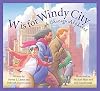
I'm a sucker for history of almost any kind, even children's books, if they are well-written. This one, "W Is for Windy City: A Chicago City" doesn't disappoint. The short poems for each letter of the alphabet range from cute and clever to a bit of a stretch, but they deffinately enhance the story of Chicago being told. In short, each letter of the alphabet is represented by at least one item in the city that begins with that letter: such as the "El" train system for "E", Lake Michigan and show more Lake Shore Drive for "L", "S" is represented by the famous Sculptures Chicago has, and the Brookfield and Lincoln Park Zoos represent the letter "Z". In addition to the drawings and the short poems, there are paragraphs of a goodly length talking about the items representing the letters. For example, on the "S = Sculpture" page, there is a paragraph about the unnamed Picasso sculpture in Daley Plaza, another with details on "The Flamingo" sculpture done by Alexander Calder and finally a paragraph about the Cloud Gate, AKA "The Bean".
I think that children of a variety of ages from 1st graders all the way up to 7th graders (the middle school grade where American History is typically first taught) would find this history of Chicago of interest and use. It is a well-written, well-researched and interesting book. For students who can handle books of greater depth and more scholarly research, this book could be used to wet their appetite or help them discover if this topic is one that they wish to investigate further, without intimidating them with hundreds of pages and a lack of pictures, on the contrary, "W Is for Windy City: A Chicago City" (and others of its ilk, there are tons of similar books on a multitude of themes as well as one for each of the 50 states) is full of colorful pictures and is very inviting. show less
I think that children of a variety of ages from 1st graders all the way up to 7th graders (the middle school grade where American History is typically first taught) would find this history of Chicago of interest and use. It is a well-written, well-researched and interesting book. For students who can handle books of greater depth and more scholarly research, this book could be used to wet their appetite or help them discover if this topic is one that they wish to investigate further, without intimidating them with hundreds of pages and a lack of pictures, on the contrary, "W Is for Windy City: A Chicago City" (and others of its ilk, there are tons of similar books on a multitude of themes as well as one for each of the 50 states) is full of colorful pictures and is very inviting. show less
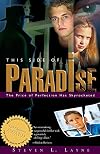
Steven Layne owes Ira Levin a beer.
Mr. Layne's entertaining Young Adult thriller concerns two boys, brothers, who are moving to the gated community of Paradise. Their father, who has become more and more distant lately, works for the head of the corporation that owns and runs Paradise as a sort of company town. It's perfect there. Clean streets, no crime, excellent schools, beautiful parks, wonderful homes. Everything safe and secure, nothing anyone ever need worry about could possible show more intrude. Paradise.
The narrator is the good son. His brother is not really a bad kid--he pushes the limits and questions the rules in a good-natured way--but he is always in some trouble with his school or with his father. Maybe a move to Paradise will do him some good, or so his father thinks. Things have become so bad between the two boys and their father that it has begun to take a toll on their mother's mental health. One day just before they move the two boys return home to find she has gone to a sort of convention for a week to rest and recharge. She'll meet them in Paradise.
But the woman the boys find waiting for them is not their mother. She may look like their mother, but they know it's not her.
While This Side of Paradise is not exactly an original idea, it is a good book, one that many young readers will enjoy. The narration is taut, designed to keep the pages turning and to leave the reader desperate to begin the next chapter. The boys are easy to identify with and to root for. There is a brief romance that doesn't get in the way of the thriller's plot. The villians are fun to hate and the good guys are fun to root for. The book does raise issues of conformity and can be read as social satire, the same way Ira Levin's The Stepford Wives could, but this never interferes with the reader's enjoyment of the book as a straightforward thriller.
I have a group of 7th grade students currently reading This Side of Paradise for the class book club. So far, their reviews are good. Three other groups are signed up for a chance to read it before the school year ends. I think it's going to be very popular. show less
Mr. Layne's entertaining Young Adult thriller concerns two boys, brothers, who are moving to the gated community of Paradise. Their father, who has become more and more distant lately, works for the head of the corporation that owns and runs Paradise as a sort of company town. It's perfect there. Clean streets, no crime, excellent schools, beautiful parks, wonderful homes. Everything safe and secure, nothing anyone ever need worry about could possible show more intrude. Paradise.
The narrator is the good son. His brother is not really a bad kid--he pushes the limits and questions the rules in a good-natured way--but he is always in some trouble with his school or with his father. Maybe a move to Paradise will do him some good, or so his father thinks. Things have become so bad between the two boys and their father that it has begun to take a toll on their mother's mental health. One day just before they move the two boys return home to find she has gone to a sort of convention for a week to rest and recharge. She'll meet them in Paradise.
But the woman the boys find waiting for them is not their mother. She may look like their mother, but they know it's not her.
While This Side of Paradise is not exactly an original idea, it is a good book, one that many young readers will enjoy. The narration is taut, designed to keep the pages turning and to leave the reader desperate to begin the next chapter. The boys are easy to identify with and to root for. There is a brief romance that doesn't get in the way of the thriller's plot. The villians are fun to hate and the good guys are fun to root for. The book does raise issues of conformity and can be read as social satire, the same way Ira Levin's The Stepford Wives could, but this never interferes with the reader's enjoyment of the book as a straightforward thriller.
I have a group of 7th grade students currently reading This Side of Paradise for the class book club. So far, their reviews are good. Three other groups are signed up for a chance to read it before the school year ends. I think it's going to be very popular. show less
I'm a sucker for history of almost any kind, even children's books, if they are well-written. This one, "W Is for Windy City: A Chicago City" doesn't disappoint. The short poems for each letter of the alphabet range from cute and clever to a bit of a stretch, but they deffinately enhance the story of Chicago being told. In short, each letter of the alphabet is represented by at least one item in the city that begins with that letter: such as the "El" train system for "E", Lake Michigan and show more Lake Shore Drive for "L", "S" is represented by the famous Sculptures Chicago has, and the Brookfield and Lincoln Park Zoos represent the letter "Z". In addition to the drawings and the short poems, there are paragraphs of a goodly length talking about the items representing the letters. For example, on the "S = Sculpture" page, there is a paragraph about the unnamed Picasso sculpture in Daley Plaza, another with details on "The Flamingo" sculpture done by Alexander Calder and finally a paragraph about the Cloud Gate, AKA "The Bean".
I think that children of a variety of ages from 1st graders all the way up to 7th graders (the middle school grade where American History is typically first taught) would find this history of Chicago of interest and use. It is a well-written, well-researched and interesting book. For students who can handle books of greater depth and more scholarly research, this book could be used to wet their appetite or help them discover if this topic is one that they wish to investigate further, without intimidating them with hundreds of pages and a lack of pictures, on the contrary, "W Is for Windy City: A Chicago City" (and others of its ilk, there are tons of similar books on a multitude of themes as well as one for each of the 50 states) is full of colorful pictures and is very inviting. show less
I think that children of a variety of ages from 1st graders all the way up to 7th graders (the middle school grade where American History is typically first taught) would find this history of Chicago of interest and use. It is a well-written, well-researched and interesting book. For students who can handle books of greater depth and more scholarly research, this book could be used to wet their appetite or help them discover if this topic is one that they wish to investigate further, without intimidating them with hundreds of pages and a lack of pictures, on the contrary, "W Is for Windy City: A Chicago City" (and others of its ilk, there are tons of similar books on a multitude of themes as well as one for each of the 50 states) is full of colorful pictures and is very inviting. show less
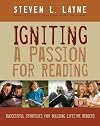
Building not only the skill to read, but the will to read. Layne introduces many practical ideas and experiences from the trenches about supporting students in building the will to read at all levels. He includes an active role for the school librarian. I finished the book feeling inspired, validated, and ready to implement some ideas that were new to me and to think of ways to continue to improve what is already being done.
Lists
Awards


You May Also Like


Associated Authors
Statistics
- Works
- 26
- Members
- 1,287
- Popularity
- #19,915
- Rating
- 3.7
- Reviews
- 30
- ISBNs
- 68
- Languages
- 1