
William Hartnell (1908–1975)
Author of Doctor Who: The Keys of Marinus [DVD]
Works by William Hartnell
Doctor Who - Lost in Time Collection of Rare Episodes - The William Hartnell Years 1963-1966 (1998) 37 copies, 3 reviews
Doctor Who [VHS] 1 copy
Doctor Who: Savages, The 1 copy
Doctor Who: Regeneration 1 copy
Doctor Who: Gunfighters, The 1 copy
Doctor Who: Sensorites, The 1 copy
Associated Works
Doctor Who : A Celebration—Two Decades Through Time and Space (1983) — "I Felt ike the Pied Piper," quotes given between 1965 and 1975 — 283 copies, 2 reviews
Doctor Who: The Beginning: An Unearthly Child / The Daleks / The Edge of Destruction (2006) — Actor — 114 copies, 2 reviews
Doctor Who: The Five Doctors [1983 TV episode] (1983) — Actor (previous footage) — 99 copies, 1 review
Doctor Who: The Edge of Destruction [DVD] — Actor — 9 copies
Doctor Who: The Sensorites (BBC Audio Collection) (2008) — Actor, some editions — 5 copies, 1 review
Doctor Who: Season 2 2 copies
Dr. Who Season 04 1 copy
Tagged
Common Knowledge
- Birthdate
- 1908-01-08
- Date of death
- 1975-04-23
- Gender
- male
- Occupations
- actor
- Nationality
- England
UK - Birthplace
- St Pancras, London, England, UK
- Associated Place (for map)
- England, UK
Members
Reviews

I saw a few of the Third Doctor's episodes, but really became a fan of 'Doctor Who' with the Fourth Doctor. I have seen one or two First Doctor episodes aired for anniversaries, but I'm not familiar with that era. I wasn't sure what to expect when I checked out Doctor Who: The Lost TV Episodes 1964-1965 from my local library, but I found the stories more interesting and enjoyable than I thought they would be.
The contents are:
'Marco Polo' [originally broadcast February - March 1964]
The TARDIS show more is broken. The Doctor, Susan, Ian, and Barbara wind up as part of Marco Polo's caravan. Marco Polo thinks that the Doctor's 'magic caravan' will be a gift that will inspire Kublai Khan to let him go home to Venice. He'll take the Doctor and his party back to Venice, so they can go home from there. Understandably, the Doctor takes a dim view of this plan. There's a young Chinese girl, Ping-Cho, who is in Marco Polo's charge as he takes her to meet her elderly bridegroom to be. Ping-Cho is not enthusiastic about the arranged marriage. There's a representative from recently-defeated enemies who is traveling to receive Kublai Khan's decree on what will happen to nis people. Listeners learn early on that this Tegana is Up to No Good, and may be pardoned should they wish they could shake Marco Polo and tell him to stop being a trusting twit where Tegana is concerned. Tegana is happy to try and make Marco Polo distrust the Doctor and companions.
There are plenty of perils and near deaths in this eight-part story, which aired on Saturdays from February 22 to April 4, 1964. I don't know how the original viewers stood the suspense.
'The Reign of Terror' [originally broadcast August-September 1964]
This one starts amusingly with the Doctor being certain that he has brought Ian and Barbara home, but Ian wants to check first. The Doctor is indignant, but Ian reminds him that the last time he'd thought he'd brought them home, they met Marco Polo.
The Doctor is at his arrogant worst and that puts them all in deadly peril. If they had all just gone back to the TARDIS as Ian and Barbara wanted, this would have been a very short story. The perils include being trapped in a place on fire, imprisonment, hard labor, and being sentenced to the guillotine.
Barbara makes a good point about a man whom her rescuers considered a traitor being a patriot to his faction, but Ian also makes a good point that the man would have had him killed.
There's an interview with Carol Ann Ford, who played Susan Foreman, in which she complains about how her character was written. I can understand her frustration with her role in this episode.
'The Crusade' [originally broadcast March-April 1965]
This is a story after Susan decided to stay on Earth with David Campbell, and was replaced by Vicki. Our travellers wind up in 11th century Palestine, where King Richard I, Lionheart, is at war with the great Saladin. In 'Reign of Terror' they found local fashions in a house that was a station for escaping France. This time they steal some already-stolen clothing. Barbara is captured (of course), along with one of Lionheart's men, William des Preaux. William claims to be his king and claims that Barbara is Richard's sister, the Princess Joanna. Their captor, evil El Akir, does not take it well when he finds out that he has been fooled. He has Barbara kidnapped.
Richard I has a plan to end the war that involves his sister, but Joanna is utterly against it. The Earl of Leicester is a jerk and makes trouble for the Doctor, Vicki, and Ian.
Barbara escapes and is rescued by a man named Haroun ed-Din, who conveniently wants El Akir dead because of what El Akir did to his elder daughter. The younger daughter, Safiya, and Barbara get in trouble of course, as does Haroun ed-Din.
Ian doesn't fare much better. At one point he is staked out and waiting for ants to come for the honey that has been smeared on him. Of course he uses his brains to outwit his captor, but runs into trouble again.
To be honest, as I was listening, I was thinking, Oh come on! as it seemed that every time Barbara escaped, she got captured again. At least she managed to locate Horoun ed-Din's missing elder daughter in El Aki's harem. Another member of the harem, Fatima, betrays Barbara. I rather liked Fatima's fate.
The very end of the episode was amusing.
'Galaxy 4' [originally broadcast September-October 1965]
This is a science fiction story rather than a trip into history. The TARDIS lands on an unknown planet. The planet is doomed to explode. The Doctor and his replacement companions, an orphaned teen from the 25th Century named Vicki Pallister, and a rescued astronaut from some time in our future named Steven Taylor, have landed on this planet. According to the TARDIS.fandom.com/wiki, this episode was originally written for Vicki, Ian, and Barbara. The actor for Steven Taylor got stuck with Barbara's lines in the rewrite, which he didn't like.
There are two crashed spaceships within walking distance of each other. One has four surviving members of the blond matriarchal Drahvins of the Planet Drahva in Galaxy 4. The leader is Maaga. The others are members of the cloned servant class. Drahvins One, Two, and Three really are dumb blondes.
The other race were Rills: reptilian in appearance, telepathic, and explorers. They breathe ammonia, so they stay inside their ship. Their small robots, dubbed 'Chumblies' by Vicki, are the ones that go outside.
The Doctor, Vicki, and Steven are trying to evade a chumbly when they are rescued by two Drahvins. Maaga tells the time travellers that the Rills say the planet will explode in 14 days. She says the Rills killed one of her surviving soldiers. Maaga wants the Doctor to get the Rills' ship.
The Doctor and Vicki get to go back to the TARDIS to verify what was said about the planet. Steven has to stay behind. He gets to fake being asleep for much of his role, although he does get in a good scene involving the Drahvin's ship's air lock.
The Doctor learns that the Rills were too optimistic. The planet has only two days left: tomorrow is the last full day.
The Rills tell a different version of events from the Drahvins. Which race to believe?
This is by far my favorite of the episodes in this collection.
'The Myth Makers' [originally broadcast October-November 1965]
The Doctor, Vicki, and Steven land near Troy during the Trojan War. The Doctor steps out of the TARDIS in time to startle Hector, so Achilles kills him. Achilles assumes that the Doctor is Zeus.
While the Greek gods are mentioned, they do not appear in this story. We're dealing with plausible events. The Doctor and Steven are with the Greeks when Paris and his soldiers find the TARDIS and bring it into the city. Cassandra, the High Priestess, orders what Paris calls a 'shrine' to be burned. That's when Vicki comes out. Cassandra is sure that Vicki is a sorceress bent on Troy's destruction, but King Priam doesn't believe her. He doesn't like 'Vicki' as a name and dubs the girl 'Cressida'.
Steven is assumed to be a Trojan spy by the Greeks and a Greek spy by the Trojans. He and Vicki wind up in the reasonably comfortable dungeon of Priam's palace. Vicki and King Priam's youngest son, Troilus, have taken a shine to each other, so he visits her in the dungeon.
The Doctor really doesn't want to suggest the Greeks build a wooden horse, but his first scheme for getting into the city had faulty calculations, so he's stuck with it.
Two characters are not as I am used to reading them portrayed. In this storyline Odysseus is a greedy and unpleasant warrior, although he's allowed to keep the intelligence and shrewdness of the legend. The other is Cassandra, High Priestess and prophetess. There's no Apollo curse here -- Cassandra is a doomsayer and she's not taken seriously. Even at the end, when she tells Odysseus what will happen to him, he dismisses her words. This Cassandra is nasty and vindictive. She wants Vicki put to death. Every time she shows up, it's easy to tell why no one listens to her.
There is a Cyclops, but he's human, Odysseus' mute, one-eyed man.
Katerina, one of Cassandra's handmaidens, is charged with keeping an eye on Vicki. This will change her life.
I'm old enough that, had I been British instead of American, I could have watched these episodes when I was a child. I can see why they captivated the imagination of the original viewers. show less
The contents are:
'Marco Polo' [originally broadcast February - March 1964]
The TARDIS show more is broken. The Doctor, Susan, Ian, and Barbara wind up as part of Marco Polo's caravan. Marco Polo thinks that the Doctor's 'magic caravan' will be a gift that will inspire Kublai Khan to let him go home to Venice. He'll take the Doctor and his party back to Venice, so they can go home from there. Understandably, the Doctor takes a dim view of this plan. There's a young Chinese girl, Ping-Cho, who is in Marco Polo's charge as he takes her to meet her elderly bridegroom to be. Ping-Cho is not enthusiastic about the arranged marriage. There's a representative from recently-defeated enemies who is traveling to receive Kublai Khan's decree on what will happen to nis people. Listeners learn early on that this Tegana is Up to No Good, and may be pardoned should they wish they could shake Marco Polo and tell him to stop being a trusting twit where Tegana is concerned. Tegana is happy to try and make Marco Polo distrust the Doctor and companions.
There are plenty of perils and near deaths in this eight-part story, which aired on Saturdays from February 22 to April 4, 1964. I don't know how the original viewers stood the suspense.
'The Reign of Terror' [originally broadcast August-September 1964]
This one starts amusingly with the Doctor being certain that he has brought Ian and Barbara home, but Ian wants to check first. The Doctor is indignant, but Ian reminds him that the last time he'd thought he'd brought them home, they met Marco Polo.
The Doctor is at his arrogant worst and that puts them all in deadly peril. If they had all just gone back to the TARDIS as Ian and Barbara wanted, this would have been a very short story. The perils include being trapped in a place on fire, imprisonment, hard labor, and being sentenced to the guillotine.
Barbara makes a good point about a man whom her rescuers considered a traitor being a patriot to his faction, but Ian also makes a good point that the man would have had him killed.
There's an interview with Carol Ann Ford, who played Susan Foreman, in which she complains about how her character was written. I can understand her frustration with her role in this episode.
'The Crusade' [originally broadcast March-April 1965]
This is a story after Susan decided to stay on Earth with David Campbell, and was replaced by Vicki. Our travellers wind up in 11th century Palestine, where King Richard I, Lionheart, is at war with the great Saladin. In 'Reign of Terror' they found local fashions in a house that was a station for escaping France. This time they steal some already-stolen clothing. Barbara is captured (of course), along with one of Lionheart's men, William des Preaux. William claims to be his king and claims that Barbara is Richard's sister, the Princess Joanna. Their captor, evil El Akir, does not take it well when he finds out that he has been fooled. He has Barbara kidnapped.
Richard I has a plan to end the war that involves his sister, but Joanna is utterly against it. The Earl of Leicester is a jerk and makes trouble for the Doctor, Vicki, and Ian.
Barbara escapes and is rescued by a man named Haroun ed-Din, who conveniently wants El Akir dead because of what El Akir did to his elder daughter. The younger daughter, Safiya, and Barbara get in trouble of course, as does Haroun ed-Din.
Ian doesn't fare much better. At one point he is staked out and waiting for ants to come for the honey that has been smeared on him. Of course he uses his brains to outwit his captor, but runs into trouble again.
To be honest, as I was listening, I was thinking, Oh come on! as it seemed that every time Barbara escaped, she got captured again. At least she managed to locate Horoun ed-Din's missing elder daughter in El Aki's harem. Another member of the harem, Fatima, betrays Barbara. I rather liked Fatima's fate.
The very end of the episode was amusing.
'Galaxy 4' [originally broadcast September-October 1965]
This is a science fiction story rather than a trip into history. The TARDIS lands on an unknown planet. The planet is doomed to explode. The Doctor and his replacement companions, an orphaned teen from the 25th Century named Vicki Pallister, and a rescued astronaut from some time in our future named Steven Taylor, have landed on this planet. According to the TARDIS.fandom.com/wiki, this episode was originally written for Vicki, Ian, and Barbara. The actor for Steven Taylor got stuck with Barbara's lines in the rewrite, which he didn't like.
There are two crashed spaceships within walking distance of each other. One has four surviving members of the blond matriarchal Drahvins of the Planet Drahva in Galaxy 4. The leader is Maaga. The others are members of the cloned servant class. Drahvins One, Two, and Three really are dumb blondes.
The other race were Rills: reptilian in appearance, telepathic, and explorers. They breathe ammonia, so they stay inside their ship. Their small robots, dubbed 'Chumblies' by Vicki, are the ones that go outside.
The Doctor, Vicki, and Steven are trying to evade a chumbly when they are rescued by two Drahvins. Maaga tells the time travellers that the Rills say the planet will explode in 14 days. She says the Rills killed one of her surviving soldiers. Maaga wants the Doctor to get the Rills' ship.
The Doctor and Vicki get to go back to the TARDIS to verify what was said about the planet. Steven has to stay behind. He gets to fake being asleep for much of his role, although he does get in a good scene involving the Drahvin's ship's air lock.
The Doctor learns that the Rills were too optimistic. The planet has only two days left: tomorrow is the last full day.
The Rills tell a different version of events from the Drahvins. Which race to believe?
This is by far my favorite of the episodes in this collection.
'The Myth Makers' [originally broadcast October-November 1965]
The Doctor, Vicki, and Steven land near Troy during the Trojan War. The Doctor steps out of the TARDIS in time to startle Hector, so Achilles kills him. Achilles assumes that the Doctor is Zeus.
While the Greek gods are mentioned, they do not appear in this story. We're dealing with plausible events. The Doctor and Steven are with the Greeks when Paris and his soldiers find the TARDIS and bring it into the city. Cassandra, the High Priestess, orders what Paris calls a 'shrine' to be burned. That's when Vicki comes out. Cassandra is sure that Vicki is a sorceress bent on Troy's destruction, but King Priam doesn't believe her. He doesn't like 'Vicki' as a name and dubs the girl 'Cressida'.
Steven is assumed to be a Trojan spy by the Greeks and a Greek spy by the Trojans. He and Vicki wind up in the reasonably comfortable dungeon of Priam's palace. Vicki and King Priam's youngest son, Troilus, have taken a shine to each other, so he visits her in the dungeon.
The Doctor really doesn't want to suggest the Greeks build a wooden horse, but his first scheme for getting into the city had faulty calculations, so he's stuck with it.
Two characters are not as I am used to reading them portrayed. In this storyline Odysseus is a greedy and unpleasant warrior, although he's allowed to keep the intelligence and shrewdness of the legend. The other is Cassandra, High Priestess and prophetess. There's no Apollo curse here -- Cassandra is a doomsayer and she's not taken seriously. Even at the end, when she tells Odysseus what will happen to him, he dismisses her words. This Cassandra is nasty and vindictive. She wants Vicki put to death. Every time she shows up, it's easy to tell why no one listens to her.
There is a Cyclops, but he's human, Odysseus' mute, one-eyed man.
Katerina, one of Cassandra's handmaidens, is charged with keeping an eye on Vicki. This will change her life.
I'm old enough that, had I been British instead of American, I could have watched these episodes when I was a child. I can see why they captivated the imagination of the original viewers. show less

If you're not already familiar with 1960s serialised television, or indeed archive recordings in general, this may not be the place for you. But this remains a valuable archive for those "in the know".
This is the first of five CD box sets featuring the audio recordings of every missing episode of 'Doctor Who' from the 1960s. The audio was recorded from the television set by eager young fans, in the pre-home media, pre-VHS days, sometimes by literally taking apart their early sets and show more finding a way to plug hefty microphones into the hardware! Luckily a few of those fans kept their recordings into adulthood and loaned them to the BBC once it was discovered that so many episodes had been wiped from the archives. Here they are augmented by minimalist stage directions read by actors from the program. (Not all episodes of every story are missing, but the "orphaned" episodes aren't usually available on streaming services, and are included here alongside their lost brethren.)
As mentioned, the archive quality of the recordings will annoy some listeners. Additionally, the storytelling style here - stories recorded in 1964 and 1965 - will be very different for people my age and younger, sometimes distressingly so. Stories are sometimes quite languid, they can be hard to categorise by genre, and - being for a family audience, which meant something broader than it does now, when we tend to think of "family" as being "for kids but with some hint-hint jokes for adults" - they make use of elements that were reasonable and commonplace for people of the 1960s but completely out-of-touch now. This includes acting styles, musical queues, variations in volume, and of course storytelling tropes; younger listeners may struggle sometimes with the male/female dynamic, or the screaming young women, or indeed the use of white actors to portray Asian characters in Marco Polo and The Crusade. Similarly the educational nature of some of the stories and the sometimes highbrow comedy of The Myth Makers may be challenging for some. Yet those are all inconsequential, being as these are historical artefacts. It should be noted that the general audience for these products is likely to be existing fans of the program rather than newcomers. As a result, the BBC chose not to saturate the stories in additional stage directions but instead to only give what is required; hardcore fans tend to want as much of the original audio as possible. This means sometimes there are action sequences or scene setups that leave much to the imagination, but again if you're familiar with some of the styles of the period you will be able to do so.
Many of the later missing stories fall into more easily definable genres, but this is a real mixed bag of content from the very first seasons of the program. This set is rapidly becoming redundant: Galaxy 4 and The Reign of Terror have their own dedicated home media releases with animation to cover the missing episodes; The Crusade now has an official photographic reconstruction on Blu-Ray; the other two stories will likely follow in that one's footsteps within the next five years.
Still, this set and its siblings are valuable ways to access the storytelling at the heart of these serials. In an age before expensive special effects, when each episode was written to a tight commission and then rehearsed in a single week before being tape recorded over a single night and then transmitted mere weeks later, the story is at the heart of these things. Additionally, listening to these on audio is a great way to connect the dots when watching the surviving serials on home media or streaming services.
An enjoyable collection. show less
This is the first of five CD box sets featuring the audio recordings of every missing episode of 'Doctor Who' from the 1960s. The audio was recorded from the television set by eager young fans, in the pre-home media, pre-VHS days, sometimes by literally taking apart their early sets and show more finding a way to plug hefty microphones into the hardware! Luckily a few of those fans kept their recordings into adulthood and loaned them to the BBC once it was discovered that so many episodes had been wiped from the archives. Here they are augmented by minimalist stage directions read by actors from the program. (Not all episodes of every story are missing, but the "orphaned" episodes aren't usually available on streaming services, and are included here alongside their lost brethren.)
As mentioned, the archive quality of the recordings will annoy some listeners. Additionally, the storytelling style here - stories recorded in 1964 and 1965 - will be very different for people my age and younger, sometimes distressingly so. Stories are sometimes quite languid, they can be hard to categorise by genre, and - being for a family audience, which meant something broader than it does now, when we tend to think of "family" as being "for kids but with some hint-hint jokes for adults" - they make use of elements that were reasonable and commonplace for people of the 1960s but completely out-of-touch now. This includes acting styles, musical queues, variations in volume, and of course storytelling tropes; younger listeners may struggle sometimes with the male/female dynamic, or the screaming young women, or indeed the use of white actors to portray Asian characters in Marco Polo and The Crusade. Similarly the educational nature of some of the stories and the sometimes highbrow comedy of The Myth Makers may be challenging for some. Yet those are all inconsequential, being as these are historical artefacts. It should be noted that the general audience for these products is likely to be existing fans of the program rather than newcomers. As a result, the BBC chose not to saturate the stories in additional stage directions but instead to only give what is required; hardcore fans tend to want as much of the original audio as possible. This means sometimes there are action sequences or scene setups that leave much to the imagination, but again if you're familiar with some of the styles of the period you will be able to do so.
Many of the later missing stories fall into more easily definable genres, but this is a real mixed bag of content from the very first seasons of the program. This set is rapidly becoming redundant: Galaxy 4 and The Reign of Terror have their own dedicated home media releases with animation to cover the missing episodes; The Crusade now has an official photographic reconstruction on Blu-Ray; the other two stories will likely follow in that one's footsteps within the next five years.
Still, this set and its siblings are valuable ways to access the storytelling at the heart of these serials. In an age before expensive special effects, when each episode was written to a tight commission and then rehearsed in a single week before being tape recorded over a single night and then transmitted mere weeks later, the story is at the heart of these things. Additionally, listening to these on audio is a great way to connect the dots when watching the surviving serials on home media or streaming services.
An enjoyable collection. show less

A well-meaning mad scientist forces the Doctor's companions to retrieve four "keys" which he's hidden around his world.
Possibly the worst story I've seen yet from Doctor Who outside of the 1980s. There's a bonus feature on the DVD which basically consists of the set designer apologizing for ten minutes about how bad this story is. (He also happens to mention some evidence of how appallingly clueless both the writer and director were.) It doesn't help any that the Doctor's only in three of show more the six episodes (with no explanation as to why, naturally - Terry Nation doesn't go in for that whole "making sense" thing).
Concept: C
Story: F
Characters: D
Dialog: C
Pacing: D
Cinematography: C
Special effects/design: F
Acting: D
Music: D
Enjoyment: D
GPA: 1.1/4 show less
Possibly the worst story I've seen yet from Doctor Who outside of the 1980s. There's a bonus feature on the DVD which basically consists of the set designer apologizing for ten minutes about how bad this story is. (He also happens to mention some evidence of how appallingly clueless both the writer and director were.) It doesn't help any that the Doctor's only in three of show more the six episodes (with no explanation as to why, naturally - Terry Nation doesn't go in for that whole "making sense" thing).
Concept: C
Story: F
Characters: D
Dialog: C
Pacing: D
Cinematography: C
Special effects/design: F
Acting: D
Music: D
Enjoyment: D
GPA: 1.1/4 show less
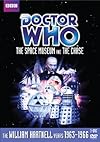
2 Good story lines with the Dalek one being the better with Peter Purves before he became a companion.
You May Also Like
Associated Authors
Statistics
- Works
- 30
- Also by
- 37
- Members
- 198
- Popularity
- #110,928
- Rating
- 3.8
- Reviews
- 16
- ISBNs
- 14