
Sarah Leonard
Author of Occupy! Scenes from Occupied America
Works by Sarah Leonard
Associated Works
The Man Who Mistook His Wife for a Hat and Other Clinical Tales (1985) — some editions — 13,052 copies, 237 reviews
Tagged
Common Knowledge
- Gender
- female
Members
Reviews
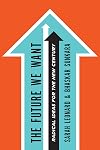
A series of short essays or papers on a variety of current social topics, including (in broad terms):
The criminal justice system in the USA and its problems
Feminism and work
Full Employment
Racism
Environmentalism
Education reform
Science research funding
Economic policy
The articles were articulate, thoughtful and engaging. The writers clearly care about the subject matter and envision a country that's better for many. Unfortunately their 'wants' come with few ideas on how to achieve those wants, show more so this is mostly a wish list. Without such concrete proposals for implementation, its difficult to assess the practicality of their proposals. In at least one instance, the essay is really just the minutes from a meeting. It will be interesting to see if they can organize enough to get some of their ideas into our political system and put to the test. show less
The criminal justice system in the USA and its problems
Feminism and work
Full Employment
Racism
Environmentalism
Education reform
Science research funding
Economic policy
The articles were articulate, thoughtful and engaging. The writers clearly care about the subject matter and envision a country that's better for many. Unfortunately their 'wants' come with few ideas on how to achieve those wants, show more so this is mostly a wish list. Without such concrete proposals for implementation, its difficult to assess the practicality of their proposals. In at least one instance, the essay is really just the minutes from a meeting. It will be interesting to see if they can organize enough to get some of their ideas into our political system and put to the test. show less
 This review was written for LibraryThing Early Reviewers.
Born out of massive political discontent and the Occupy movement, the collection of ten essays in this timely book each characterizes an important social problem before suggesting a solution. In each case the suggested solution is a bold shift toward socialism. Not your father’s failed soviet-style socialism, but a more enlightened form that learns from the earlier failures of a poorly-conceived ideology, the failure of today’s oligarchy disguised as democracy, the inequities of show more capitalism gone wild, and experiences of some of the most socially successful countries in the world.
You may not yet feel ready for this book. The editors and many of the contributors write for the Jacobian magazine, a political quarterly self-described as “a leading voice of the American left”. The authors dismiss the choices provided by the major political parties as trivial adjustments of the status quo and choose instead a range of bold—some may say radical—approaches. If the tone seems a bit angry at times, perhaps you are hearing the voices of oppression.
Each chapter addresses a theme, characterized by these summaries and quotations:
+ Advocating for a living wage and shorter work hours: “So long as there is one man who seeks employment and cannot obtain it, the hours of labor are too long”.
+ Imagining a more effective and equitable education system: “…education will be life and life will be education.”
+ To make black lives really matter, we need to recognize that: “The large-scale relegation of black Americans to poverty is the essential ‘race’ problem.”
+ Women are trapped in an underclass because: “they are required to engage in both production and reproduction.” Therefore … the first step toward woman’s freedom must be universal, twenty-four-hour child care.
+ Environmental protection and sustainability can be achieved through various forms of tax-and-dividend approaches: “divorcing individual consumption from production is looking more and more like the only way to live decently in the face of resource constraints.”
+ Noting that “Apple’s tremendously successful lines of products…incorporate twelve key innovations…developed by publicly funded research and development projects” a chapter argues for more public sharing in the fruits of innovation.
+ The cure for bad science “…involves reaffirming financial support for those agencies that already fund basic research.”
+ Finding the future of criminal justice requires: the hard work that could make “abolition of the police” possible.
+ Recognizing gay marriage is a start, but because “trans people are twice as likely as cisgender Americans to live in extreme poverty” we are far from achieving social equality.
+ Various ideas for restructuring ownership and control of firms seek to: “…sketch a rational economic mechanism that denies the pursuit of profit priority over the fulfillment of human needs.”
This book is as likely to alienate and enrage capitalists as it is to inspire, inform, and energize thoughtful people who have been excluded from our present economic, social, and political systems. The authors are neither crackpots nor traitors, far from it; they are clear thinking citizens concerned for the future of America. The authors have given careful thought to understanding the deep roots of the many problems we face and suggest bold and creative solutions.
This is a well-written, well-argued book addressing many of the most important problems Americans face today. The solutions offered are preliminary at best; each is better suited to initiating thoughtful dialogue than as templates for quick fixes. This book gives Americans much to consider as we continue our wise transformation from a tribal mindset toward a global perspective. show less
You may not yet feel ready for this book. The editors and many of the contributors write for the Jacobian magazine, a political quarterly self-described as “a leading voice of the American left”. The authors dismiss the choices provided by the major political parties as trivial adjustments of the status quo and choose instead a range of bold—some may say radical—approaches. If the tone seems a bit angry at times, perhaps you are hearing the voices of oppression.
Each chapter addresses a theme, characterized by these summaries and quotations:
+ Advocating for a living wage and shorter work hours: “So long as there is one man who seeks employment and cannot obtain it, the hours of labor are too long”.
+ Imagining a more effective and equitable education system: “…education will be life and life will be education.”
+ To make black lives really matter, we need to recognize that: “The large-scale relegation of black Americans to poverty is the essential ‘race’ problem.”
+ Women are trapped in an underclass because: “they are required to engage in both production and reproduction.” Therefore … the first step toward woman’s freedom must be universal, twenty-four-hour child care.
+ Environmental protection and sustainability can be achieved through various forms of tax-and-dividend approaches: “divorcing individual consumption from production is looking more and more like the only way to live decently in the face of resource constraints.”
+ Noting that “Apple’s tremendously successful lines of products…incorporate twelve key innovations…developed by publicly funded research and development projects” a chapter argues for more public sharing in the fruits of innovation.
+ The cure for bad science “…involves reaffirming financial support for those agencies that already fund basic research.”
+ Finding the future of criminal justice requires: the hard work that could make “abolition of the police” possible.
+ Recognizing gay marriage is a start, but because “trans people are twice as likely as cisgender Americans to live in extreme poverty” we are far from achieving social equality.
+ Various ideas for restructuring ownership and control of firms seek to: “…sketch a rational economic mechanism that denies the pursuit of profit priority over the fulfillment of human needs.”
This book is as likely to alienate and enrage capitalists as it is to inspire, inform, and energize thoughtful people who have been excluded from our present economic, social, and political systems. The authors are neither crackpots nor traitors, far from it; they are clear thinking citizens concerned for the future of America. The authors have given careful thought to understanding the deep roots of the many problems we face and suggest bold and creative solutions.
This is a well-written, well-argued book addressing many of the most important problems Americans face today. The solutions offered are preliminary at best; each is better suited to initiating thoughtful dialogue than as templates for quick fixes. This book gives Americans much to consider as we continue our wise transformation from a tribal mindset toward a global perspective. show less
This review was written for LibraryThing Early Reviewers.It's clear that many of the social problems the US faces are not responding to the "solutions" we've implemented. Simply raging against injustice doesn't fix anything. Eleven critics of the status quo have contributed essays that outline pragmatic solutions to issues such as gender and racial inequality, criminal justice, scientific research and more. Well-thought and clearly expressed solutions here have the added impetus of being possible.
Personally, I'm a big fan of thinking creatively show more to create the future we want. Humanity is on the cusp of the greatest change in our long history. Will we allow personal liberty to continue to erode or will we become the true democratic power we've given lip service to? Many of the ideas put forth have already proved themselves in other parts of the world. We once led the world... and can do so again if enough of us insist upon reforms that allow increasing numbers to thrive. This collection of essays is a nice jumpstart to imagining and implementing change. show less
Personally, I'm a big fan of thinking creatively show more to create the future we want. Humanity is on the cusp of the greatest change in our long history. Will we allow personal liberty to continue to erode or will we become the true democratic power we've given lip service to? Many of the ideas put forth have already proved themselves in other parts of the world. We once led the world... and can do so again if enough of us insist upon reforms that allow increasing numbers to thrive. This collection of essays is a nice jumpstart to imagining and implementing change. show less
This review was written for LibraryThing Early Reviewers.This collection of essays was not what I was expecting or hoping for. I was looking for innovative, forward-thinking, positive "radical ideas for the new century" (as the subtitle promises), but I found a lot of complaining about capitalism -- and sure, many complaints are warranted, but excessive focusing on the negative tends to weigh down the message -- and revisiting socialism as a blanket solution. I'm not against socialism, by any means, but new ideas are needed, or at least new ways show more of thinking about old ideas (perhaps borrowing what works from many different systems of thought to create something new, as an example). I was expecting something more aligned with the general premise and tone of TED talks, less focused on what has been done to us and more on what we can do. I also found the writing to be stilted and turgid, not allowing any individual voices to really emerge. I wanted a book to inspire, but unfortunately, I did not find it here. show less
This review was written for LibraryThing Early Reviewers.Lists
How it can be. (1)
You May Also Like
Associated Authors
Statistics
- Works
- 7
- Also by
- 1
- Members
- 194
- Popularity
- #112,876
- Rating
- 3.9
- Reviews
- 12
- ISBNs
- 9
- Languages
- 2
