
Nate Powell
Author of March: Book One
About the Author
Image credit: Ann Larie Valentine
Series
Works by Nate Powell
Walkie Talkie #3 4 copies
Walkie Talkie #4 3 copies
Run Issue #1 2 copies
The Twilight Zone #4 2 copies
All the Days Are Numbered So 2 copies
Walkie Talkie 1 copy
Frankenbones 1 copy
Cakewalk/Bets Are Off 1 copy
Conditions 1 copy
Wonderful Broken Thing 1 copy
Associated Works
Tagged
Common Knowledge
- Other names
- Featherweight MC
- Birthdate
- 1978
- Gender
- male
- Education
- George Washington University
School of Visual Arts - Occupations
- Comic book artist
graphic novelist
musician - Organizations
- Soophie Nun Squad
Harlan Records - Awards and honors
- Outstanding Cartooning Student
Shakespeare & Company Books Self-Publishing Grant
Ignatz Award for Outstanding Debut
2009 Ignatz Award for Outstanding Artist
2009 Los Angeles Times Book Prize (finalist)
2009 Eisner Award for Best Original Graphic Novel - Nationality
- USA
- Birthplace
- Little Rock, Arkansas, USA
- Places of residence
- Little Rock, Arkansas, USA
Great Falls, Montana, USA
Montgomery, Alabama, USA
North Little Rock, Arkansas, USA
East Lansing, Michigan, USA
South Hadley Falls, Massachusetts, USA (show all 8)
Providence, Rhode Island, USA
Bloomington, Indiana, USA - Map Location
- USA
Members
Reviews
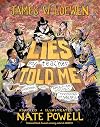
James W. Loewen gives a master class in historiography -- the study of how our history is written and who is writing it. He examines more than a dozen textbooks popular in our elementary and high schools to see the history we are passing to our children, and the results are sickening and anger inducing. Instead of being works of facts and opportunities for critical thinking, most of the books are little more than jingoistic propaganda designed to avoid offending parents and school boards show more with inconvenient truths about colonialism, slavery, racism, imperialism, and America's bloodiest mistakes in war and peace.
Steve Earle sums up my thoughts best: "And the most important thing to remember is, no matter what anybody tells you, it is never, ever unpatriotic or un-American to question any-fucking-thing in a democracy."
Even as a graphic adaptation of Loewen's original text, this is a dense and thought-provoking work that took me around five hours to read.
FOR REFERENCE:
Contents: Introduction. Something Has Gone Very Wrong -- 1. Handicapped by History: The Process of Hero Making -- 2. 1493: The True Importance of Christopher Columbus -- 3. The First Thanksgiving -- 4. Red Eyes -- 5. Gone With The Wind: The Invisibility of Racism in American History Textbooks -- 6. John Brown and Abraham Lincoln: The Invisibility of Antiracism in American History Textbooks -- 7. The Land of Opportunity -- 8. Watching Big Brother: What Textbooks Teach About The Federal Government -- 9. See No Evil: Choosing Not to Look at the War in Vietnam -- 10. Down The Memory Hole: The Disappearance of the Recent Past -- 11. History and the Future -- 12. Does This Way of Teaching History Work? -- Afterword. The Future Lies Ahead (And What to Do about Them) -- Ackknowledgments show less
Steve Earle sums up my thoughts best: "And the most important thing to remember is, no matter what anybody tells you, it is never, ever unpatriotic or un-American to question any-fucking-thing in a democracy."
Even as a graphic adaptation of Loewen's original text, this is a dense and thought-provoking work that took me around five hours to read.
FOR REFERENCE:
Contents: Introduction. Something Has Gone Very Wrong -- 1. Handicapped by History: The Process of Hero Making -- 2. 1493: The True Importance of Christopher Columbus -- 3. The First Thanksgiving -- 4. Red Eyes -- 5. Gone With The Wind: The Invisibility of Racism in American History Textbooks -- 6. John Brown and Abraham Lincoln: The Invisibility of Antiracism in American History Textbooks -- 7. The Land of Opportunity -- 8. Watching Big Brother: What Textbooks Teach About The Federal Government -- 9. See No Evil: Choosing Not to Look at the War in Vietnam -- 10. Down The Memory Hole: The Disappearance of the Recent Past -- 11. History and the Future -- 12. Does This Way of Teaching History Work? -- Afterword. The Future Lies Ahead (And What to Do about Them) -- Ackknowledgments show less
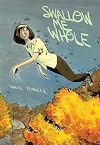
I really liked this. It's basically the story about two siblings dealing with school, friendships, family, significant others, mental disabilities, sanity, love, and finding your place in the world.
The art is beautiful and creative and just fun.
I read this all in one go, and it was a very enjoyable read. I loved all the characters - with all of their many, many flaws - and the story was brilliantly written, scripted, and worked, from beginning to end.
One thing that really stuck out to me was show more the relationship at the heart of this story: the two siblings, Ruth and Perry. In a world where fictional sibling relationships are constantly wrought with conflict, anger, jealousy, and avoidance, it is completely refreshing to see a close-knit, loving relationship between two kids. And not just two kids: two step-siblings of different genders and pursuits. The way they relate to each other and spend time together and stick out for each other and relate to their blood-related and step-parent(s) is beautiful and truly engaging. As the child of two re-married divorcees, the family chemistry in this story really reached out to me, and it was just remarkably written.
If you have the time, pick this up and take a look. show less
The art is beautiful and creative and just fun.
I read this all in one go, and it was a very enjoyable read. I loved all the characters - with all of their many, many flaws - and the story was brilliantly written, scripted, and worked, from beginning to end.
One thing that really stuck out to me was show more the relationship at the heart of this story: the two siblings, Ruth and Perry. In a world where fictional sibling relationships are constantly wrought with conflict, anger, jealousy, and avoidance, it is completely refreshing to see a close-knit, loving relationship between two kids. And not just two kids: two step-siblings of different genders and pursuits. The way they relate to each other and spend time together and stick out for each other and relate to their blood-related and step-parent(s) is beautiful and truly engaging. As the child of two re-married divorcees, the family chemistry in this story really reached out to me, and it was just remarkably written.
If you have the time, pick this up and take a look. show less
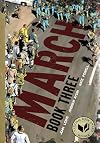
Best for: Anyone who thinks we don’t still need the voting rights act.
In a nutshell: This is the final – and longest – of three graphic novels about the life of John Lewis. It covers the mid-60s, culminating in the march from Selma to Montgomery and the passing of the voting rights act.
Line that sticks with me: “In Mississippi that summer we suffered more than 1000 arrests, 80 beatings, 35 shootings, 35 church burnings, and 30 bombings.”
Why I chose it: Because the first two books show more were great and I wanted to learn more.
Review: This final book covers a lot of ground, starting with a church bombing that killed four little girls, through voter registration drives that were accompanied by murders, and a peaceful march that ended up dubbed Bloody Sunday thanks to the vicious actions of the police.
It’s a rough read, but a critical one. I learned so much in the 250 pages, including more detail on some events that I had vaguely heard about previously. For example, I knew that the 1964 Democratic National Convention was contentious, but I didn’t know any of the details. It was so impressive to read about the very deliberate attempts to get the voices of the Mississippi Freedom Democratic Party heard.
Reading about the people who stood in line all day, not allowed to leave to drink water or use the bathroom, only to not be allowed to register to vote – or to be ‘allowed’ but then face ridiculously complicated literacy tests – was infuriating. Then to read about the passing of the voting rights act, and the triumph it was, only to be reminded about how the Supreme Court gutted it recently, leading to voter suppression during this most recent election. It’s like 20 steps forward, 19 steps back (forty years later).
Friday is going to happen, and some people will refer to the PEOTUS as President. Anyone who finds that deplorable but isn’t as well-educated on the past as they should be (like me) would be well advised to read this series to recognize what the fight for rights can look like. show less
In a nutshell: This is the final – and longest – of three graphic novels about the life of John Lewis. It covers the mid-60s, culminating in the march from Selma to Montgomery and the passing of the voting rights act.
Line that sticks with me: “In Mississippi that summer we suffered more than 1000 arrests, 80 beatings, 35 shootings, 35 church burnings, and 30 bombings.”
Why I chose it: Because the first two books show more were great and I wanted to learn more.
Review: This final book covers a lot of ground, starting with a church bombing that killed four little girls, through voter registration drives that were accompanied by murders, and a peaceful march that ended up dubbed Bloody Sunday thanks to the vicious actions of the police.
It’s a rough read, but a critical one. I learned so much in the 250 pages, including more detail on some events that I had vaguely heard about previously. For example, I knew that the 1964 Democratic National Convention was contentious, but I didn’t know any of the details. It was so impressive to read about the very deliberate attempts to get the voices of the Mississippi Freedom Democratic Party heard.
Reading about the people who stood in line all day, not allowed to leave to drink water or use the bathroom, only to not be allowed to register to vote – or to be ‘allowed’ but then face ridiculously complicated literacy tests – was infuriating. Then to read about the passing of the voting rights act, and the triumph it was, only to be reminded about how the Supreme Court gutted it recently, leading to voter suppression during this most recent election. It’s like 20 steps forward, 19 steps back (forty years later).
Friday is going to happen, and some people will refer to the PEOTUS as President. Anyone who finds that deplorable but isn’t as well-educated on the past as they should be (like me) would be well advised to read this series to recognize what the fight for rights can look like. show less
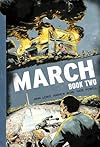
This was one helluva ride with the Freedom Riders. Unlike Book #1 in the series, which maintains an uplifting tone, this was a harrowing read, which is why it took me so long. The brutality of racism and segregation was hard to stomach, but it's a lesson that bears learning, especially in today's political climate.
In Book #1, Rep. John Lewis begins his story with the inauguration of President Barack Obama. That plot line continues in this book, but whereas in Book #1 it was frequently show more mentioned, in Book #2, it's not mentioned that often. It's used to underscore the contrast between the trying times of Lewis's youth in the civil rights struggle, and the hope present at the inauguration. In this way, the reader has a clearer understanding of how remarkable President Obama's election was, and all the pain, violence and sacrifice that it took to get there.
I'm beginning to develop the opinion that every human who is engaged in the struggle for equality should read this series. We have much to learn from the struggle for civil rights. It's not over. I am glad to see that this is now required reading in NYC high schools. I think that's pretty awesome! Young people especially need to hear the message of non-violence, and how much can be accomplished by a group of people working toward a common goal. This series also shows how difficult it was to maintain unity in the civil rights movement, and how it became fractured, but still maintained its power, and its momentum. show less
In Book #1, Rep. John Lewis begins his story with the inauguration of President Barack Obama. That plot line continues in this book, but whereas in Book #1 it was frequently show more mentioned, in Book #2, it's not mentioned that often. It's used to underscore the contrast between the trying times of Lewis's youth in the civil rights struggle, and the hope present at the inauguration. In this way, the reader has a clearer understanding of how remarkable President Obama's election was, and all the pain, violence and sacrifice that it took to get there.
I'm beginning to develop the opinion that every human who is engaged in the struggle for equality should read this series. We have much to learn from the struggle for civil rights. It's not over. I am glad to see that this is now required reading in NYC high schools. I think that's pretty awesome! Young people especially need to hear the message of non-violence, and how much can be accomplished by a group of people working toward a common goal. This series also shows how difficult it was to maintain unity in the civil rights movement, and how it became fractured, but still maintained its power, and its momentum. show less
Lists
Non-fiction (1)
1900s: America (1)
Graphic Novels (1)
Awards


You May Also Like


Associated Authors
Statistics
- Works
- 34
- Also by
- 12
- Members
- 10,498
- Popularity
- #2,267
- Rating
- 4.3
- Reviews
- 440
- ISBNs
- 95
- Languages
- 7
- Favorited
- 2