
Eleri Lynn
Author of Underwear: Fashion in Detail
Works by Eleri Lynn
Tagged
Common Knowledge
- Canonical name
- Lynn, Eleri
- Gender
- female
Members
Reviews

I've always been curious about underwear across history and I enjoy the snippets that occasionally pop up in the books I read but where those authors may have touched on one or two fascinating facts from history, in Underwear - Fashion in Detail by Eleri Lynn it's the author's sole focus.
Eleri Lynn is a curator at the Victoria and Albert Museum and the book is published by V&A Publishing which tells me she's at the height of her field with access to some of the best artefacts from history. show more It also tells me she's more than qualified to guide the reader through an evolution of underwear in this book.
Surprisingly, this evolution doesn't follow a chronological path, and the history of underwear is instead divided into the following chapters: Covering Up, Decoration, Control and Constrict, Fastenings, Support and Uplift, Volume and Inside Out.
This did create a little content overlap from time to time but not so much that I minded and in some cases it was helpful. I did have to smile when I read about drawers and knickers which were open at the crotch and weren't common in Britain until the 19th century.
"Early drawers, called pantaloons or pantalettes (long trouser-like undergarments for women), were introduced around the beginning of the century, but were not popular as they were considered too masculine and unhygienic. They were also considered immodest because they were cut quite long and were visible below the hem of the dress." Page 20
In the middle of the century (1850s) they were cut to a mid-calf length so as not to show beneath the skirt. Contrast that level of modesty with women's leggings, bike shorts and scrunch bum shorts today and I wonder what our ancestors would have made of our modesty standards - or the lack thereof - in the 2020s.
The author highlights the constantly evolving nature of fashion, showing how corset styles and construction changed and adapted across decades and centuries. A detail I found surprising was:
"The average corset was only expected to last about a year, as even very sturdy corsets would distort with wear." Page 94
As you would expect, the photographs of the V&A exhibits were detailed although sometimes it was hard to gain an appreciation of the entire garment. The accompanying illustrations were helpful but as a layperson, I would have appreciated some indication as to the front, back and side views as they weren't always obvious to me.
I've always found the bullet or torpedo shaped bra of the 1950s a strange fashion trend, and cringe when I see photos of Marilyn Monroe wearing them under a sweater. I remember when Madonna wore the conical corset designed by Jean Paul Gaultier in 1990 and in doing so turned soft feminine lingerie into a symbol of power and domination. This book helped me understand why it was that rosy pink colour, which was the most popular colour of underwear in the early to mid 1900s. That aside, I hope the bullet shaped bra never makes a return for the masses.
Here though, the author explains that the conical shaped bra included intricate concentric stitching and required padded inserts called falsies to fill out the shape and keep them from collapsing. I hadn't given much thought as to how the look was achieved so it was fun to consider it here. I wonder what the sweater girls would have made of the silicone chicken fillet inserts popular in the 1990s.
The sports bra gets a mention, but for some reason Lynn doesn't show us the plunge bra, and includes a photograph of the 'Ultrabra Perfection' balcony bra instead which was disappointing.
"Gossard launched the Ultrabra plunge bra in 1994, with the advertising tagline: 'Ultrabra, creating the ultimate cleavage'. It was followed by additions to the range, including 'Ultrabra Perfection', 'Ultrabra Light' and the 'Ultrabra Super Boost', which launched in 1999 with the slogan: 'Biggest Cleavage EVER... Or your money back!'"
I was also surprised not to see the wonder bra or push up bra, both of which seemed like significant fashion developments in the last 50 years and worthy of inclusion in a book like this. There was also no mention of Skims and the current shapewear trend which is as popular as ever.
The book ends suddenly and doesn't offer a conclusion on shifting trends over the centuries or any observations about the future of underwear. I did wonder if that was because the Victoria and Albert Museum collection includes historical items and curators focus on the past and present perhaps but not the potential future. That may be the reason, but given her expertise, I was keen to know Eleri's thoughts on the impact of changing technology and how future fabrics and changing materials will impact the underwear we wear in the future. show less
Eleri Lynn is a curator at the Victoria and Albert Museum and the book is published by V&A Publishing which tells me she's at the height of her field with access to some of the best artefacts from history. show more It also tells me she's more than qualified to guide the reader through an evolution of underwear in this book.
Surprisingly, this evolution doesn't follow a chronological path, and the history of underwear is instead divided into the following chapters: Covering Up, Decoration, Control and Constrict, Fastenings, Support and Uplift, Volume and Inside Out.
This did create a little content overlap from time to time but not so much that I minded and in some cases it was helpful. I did have to smile when I read about drawers and knickers which were open at the crotch and weren't common in Britain until the 19th century.
"Early drawers, called pantaloons or pantalettes (long trouser-like undergarments for women), were introduced around the beginning of the century, but were not popular as they were considered too masculine and unhygienic. They were also considered immodest because they were cut quite long and were visible below the hem of the dress." Page 20
In the middle of the century (1850s) they were cut to a mid-calf length so as not to show beneath the skirt. Contrast that level of modesty with women's leggings, bike shorts and scrunch bum shorts today and I wonder what our ancestors would have made of our modesty standards - or the lack thereof - in the 2020s.
The author highlights the constantly evolving nature of fashion, showing how corset styles and construction changed and adapted across decades and centuries. A detail I found surprising was:
"The average corset was only expected to last about a year, as even very sturdy corsets would distort with wear." Page 94
As you would expect, the photographs of the V&A exhibits were detailed although sometimes it was hard to gain an appreciation of the entire garment. The accompanying illustrations were helpful but as a layperson, I would have appreciated some indication as to the front, back and side views as they weren't always obvious to me.
I've always found the bullet or torpedo shaped bra of the 1950s a strange fashion trend, and cringe when I see photos of Marilyn Monroe wearing them under a sweater. I remember when Madonna wore the conical corset designed by Jean Paul Gaultier in 1990 and in doing so turned soft feminine lingerie into a symbol of power and domination. This book helped me understand why it was that rosy pink colour, which was the most popular colour of underwear in the early to mid 1900s. That aside, I hope the bullet shaped bra never makes a return for the masses.
Here though, the author explains that the conical shaped bra included intricate concentric stitching and required padded inserts called falsies to fill out the shape and keep them from collapsing. I hadn't given much thought as to how the look was achieved so it was fun to consider it here. I wonder what the sweater girls would have made of the silicone chicken fillet inserts popular in the 1990s.
The sports bra gets a mention, but for some reason Lynn doesn't show us the plunge bra, and includes a photograph of the 'Ultrabra Perfection' balcony bra instead which was disappointing.
"Gossard launched the Ultrabra plunge bra in 1994, with the advertising tagline: 'Ultrabra, creating the ultimate cleavage'. It was followed by additions to the range, including 'Ultrabra Perfection', 'Ultrabra Light' and the 'Ultrabra Super Boost', which launched in 1999 with the slogan: 'Biggest Cleavage EVER... Or your money back!'"
I was also surprised not to see the wonder bra or push up bra, both of which seemed like significant fashion developments in the last 50 years and worthy of inclusion in a book like this. There was also no mention of Skims and the current shapewear trend which is as popular as ever.
The book ends suddenly and doesn't offer a conclusion on shifting trends over the centuries or any observations about the future of underwear. I did wonder if that was because the Victoria and Albert Museum collection includes historical items and curators focus on the past and present perhaps but not the potential future. That may be the reason, but given her expertise, I was keen to know Eleri's thoughts on the impact of changing technology and how future fabrics and changing materials will impact the underwear we wear in the future. show less
***This book was reviewed for Yale University Press via Netgalley
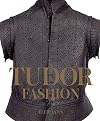
Despite my love for history, this is a time period I am not overly familiar with. In Tudor Fashion, Lynn takes the reader on a voyage back through time. Using archaeological and historical sources, we see how the fashions of the Tudors were less fanciful affectations, and were instead bold statements of rank and hierarchy, like the plumage of birds of paradise or peacocks. At a glance, one could know the proper place of any show more given person. And what of those who created the clothing, tended the wardrobes, repaired the elegant finery?
Chapter One takes a peek beneath the various layers, giving a better idea of just how all that finery went together! You also see how the styles changed over the Tudor period.
Chapter Two focused specifically on royal apparel and how it was used to denote the rank of the highest in the land. Courtiers could compete among themselves, but none could dare have plumage as fine as the monarchs.
Chapter Three looks at the rest of the court, from said courtiers all the way down to the servants. Also covered are the Sumptuary Laws, and the consequences of getting caught wearing the wrong thing.
Chapter Four answers a lot of questions I've always had about, well… how the bathrooming and hygiene worked with such fancy clothes, and how the clothes themselves were cared for.
Chapter Five details how clothes were selected for travel from residence to residence, and how new clothing choices were commissioned and created.
Chapter Six looks at what, exactly, happened to all that finery. Namely, it was gifted and reused, and repurposed over the ages, til there was nothing left of most originals.
For as fine as all this clothing and accessories were, I cannot imagine having to wear it! Most seems so unnecessary, but then, I'm a fairly simple person when it comes to clothing. And I like both myself, and my clothing, to be clean.
There really is little actual archaeological evidence left of Tudor clothing, so it was neat to see experimental aspects. This branch of archaeology fascinates me because it shows just how much knowledge we’ve lost over the centuries, but also our ingenuity in relearning our past.
One thing I found especially interesting was the level of alchemic symbolism associated with this finery. The stylised eyes and ears, and the serpent of the clothing of Elizabeth I, as depicted in the 'Rainbow’ painting.
The focus of this book was royal, and royal-adjacent. It unfortunately didn't cover military garb, ceremonial clothing, or dress associated with the church, which would be equally fascinating, but no doubt just as extensive in scope.
📚📚📚📚📚 Resplendent with colourful illustrations, and filled with fascinating stories, Tudor Fashion is a must for any history buff. show less
Despite my love for history, this is a time period I am not overly familiar with. In Tudor Fashion, Lynn takes the reader on a voyage back through time. Using archaeological and historical sources, we see how the fashions of the Tudors were less fanciful affectations, and were instead bold statements of rank and hierarchy, like the plumage of birds of paradise or peacocks. At a glance, one could know the proper place of any show more given person. And what of those who created the clothing, tended the wardrobes, repaired the elegant finery?
Chapter One takes a peek beneath the various layers, giving a better idea of just how all that finery went together! You also see how the styles changed over the Tudor period.
Chapter Two focused specifically on royal apparel and how it was used to denote the rank of the highest in the land. Courtiers could compete among themselves, but none could dare have plumage as fine as the monarchs.
Chapter Three looks at the rest of the court, from said courtiers all the way down to the servants. Also covered are the Sumptuary Laws, and the consequences of getting caught wearing the wrong thing.
Chapter Four answers a lot of questions I've always had about, well… how the bathrooming and hygiene worked with such fancy clothes, and how the clothes themselves were cared for.
Chapter Five details how clothes were selected for travel from residence to residence, and how new clothing choices were commissioned and created.
Chapter Six looks at what, exactly, happened to all that finery. Namely, it was gifted and reused, and repurposed over the ages, til there was nothing left of most originals.
For as fine as all this clothing and accessories were, I cannot imagine having to wear it! Most seems so unnecessary, but then, I'm a fairly simple person when it comes to clothing. And I like both myself, and my clothing, to be clean.
There really is little actual archaeological evidence left of Tudor clothing, so it was neat to see experimental aspects. This branch of archaeology fascinates me because it shows just how much knowledge we’ve lost over the centuries, but also our ingenuity in relearning our past.
One thing I found especially interesting was the level of alchemic symbolism associated with this finery. The stylised eyes and ears, and the serpent of the clothing of Elizabeth I, as depicted in the 'Rainbow’ painting.
The focus of this book was royal, and royal-adjacent. It unfortunately didn't cover military garb, ceremonial clothing, or dress associated with the church, which would be equally fascinating, but no doubt just as extensive in scope.
📚📚📚📚📚 Resplendent with colourful illustrations, and filled with fascinating stories, Tudor Fashion is a must for any history buff. show less
Book received from NetGalley
I loved this book, it has both the history of who wore what, what they were allowed to wear due to sumptuary laws. Then what happened when the upper class decided that the very expensive clothes were outdated. The pictures they had of the various styles of clothing were gorgeous and the history geek in me was thrilled to see some photos of original pieces from the collection of the Historical Palaces in the United Kingdom. I am definitely getting myself a copy of show more this book, since I do re-enactments of the period and this will help in getting everything correct on an outfit. show less
I loved this book, it has both the history of who wore what, what they were allowed to wear due to sumptuary laws. Then what happened when the upper class decided that the very expensive clothes were outdated. The pictures they had of the various styles of clothing were gorgeous and the history geek in me was thrilled to see some photos of original pieces from the collection of the Historical Palaces in the United Kingdom. I am definitely getting myself a copy of show more this book, since I do re-enactments of the period and this will help in getting everything correct on an outfit. show less
Lists
TLS 6010 (1)
You May Also Like


Statistics
- Works
- 3
- Members
- 290
- Popularity
- #80,655
- Rating
- 4.5
- Reviews
- 3
- ISBNs
- 7