
Julia Karr
Author of XVI
Series
Works by Julia Karr
Untitled (XVI, #3) 8 copies
Untitled 1 copy
Associated Works
Divergent Thinking: YA Authors on Veronica Roth's Divergent Trilogy (2014) — Contributor — 53 copies, 1 review
Tagged
Common Knowledge
- Gender
- female
Members
Reviews
Truth by Julia Karr
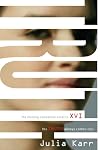
Truth is the companion novel to one of my favorite dystopians this year, XVI. The Governing Council has everyone convinced that teenage girls are sex-crazed, and they are the mastermind behind a sex-slavery ring. A world like this, where women have no rights, is truly terrifying. Rape goes unpunished, and women are pushed back to medievil stereotypes.
Karr did an excellent job of capturing the atmosphere. Even after I put the book down to take a break, there was a lingering paranoia left show more over. Not many authors can do that.
In Truth we get to see Nina really come into her own. She notices some of the same beliefs being held in her niche of the Resistance: the men don't think the girls and women are capable to taking care of themselves, or in making progress for their cause. Tired of constantly being told what to do, Nina joins a subgroup of girls determined to be heard and make a difference. This really kicks off the story for me, and it's very enjoyable seeing a female protagonist taking action of her own accord.
Dee really grew on me in this second installment. You could tell that her surroundings were really making her grow up. Instead of retreating further into herself, Dee was starting to shine. I wish that Nina and the other NonCons would have told her the truth. That's what the book was about, after all.
The ending of Truth left me crying. I won't say what happened, but, having a little sister myself, I just don't think I could be as strong as Nina. There were a few loose ends, so I'm hoping for a sequel. All the same, though, Truth was wrapped up well, and left a little to the readers' imagination. I just don't want Nina's journey to end here, though!
XVI was one of my favorite dystopian stories of the year. It was totally different from the others, and the main character, Nina, was a treat to read about. I definitely recommend picking this series up if you enjoy dystopia. Especially lovers of Delirium. show less
Karr did an excellent job of capturing the atmosphere. Even after I put the book down to take a break, there was a lingering paranoia left show more over. Not many authors can do that.
In Truth we get to see Nina really come into her own. She notices some of the same beliefs being held in her niche of the Resistance: the men don't think the girls and women are capable to taking care of themselves, or in making progress for their cause. Tired of constantly being told what to do, Nina joins a subgroup of girls determined to be heard and make a difference. This really kicks off the story for me, and it's very enjoyable seeing a female protagonist taking action of her own accord.
Dee really grew on me in this second installment. You could tell that her surroundings were really making her grow up. Instead of retreating further into herself, Dee was starting to shine. I wish that Nina and the other NonCons would have told her the truth. That's what the book was about, after all.
The ending of Truth left me crying. I won't say what happened, but, having a little sister myself, I just don't think I could be as strong as Nina. There were a few loose ends, so I'm hoping for a sequel. All the same, though, Truth was wrapped up well, and left a little to the readers' imagination. I just don't want Nina's journey to end here, though!
XVI was one of my favorite dystopian stories of the year. It was totally different from the others, and the main character, Nina, was a treat to read about. I definitely recommend picking this series up if you enjoy dystopia. Especially lovers of Delirium. show less
XVI by Julia Karr
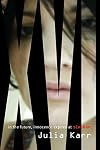
I love a good dystopian book that brings ugly socio-political issues to light. XVI does just that, as the premise of this book is horrifying. On their 16th birthday, teen girls are branded with a tattoo on their wrist: XVI. This announces to the world that they are now sexteens and ready and willing to pleasure you. Predatory men await the day that tattoos appear on the wrists of teenage girls so that they can have their way with them, regardless of the girl’s consent. Big Brother was in show more full effect in this novel. The Media has constant verts talking in your ear, which doesn’t give you a moment to think for yourself. You can’t talk freely lest the big ears in the sky pick up your Non-Con speak. Society is also now a caste system. The lower the tier, the lower the class, and thus, the lower opportunities you have and the bigger chance you have of being royally screwed.
All of the above creates a terrifying world that really makes your skin crawl, and we are presented with this ugly, disgusting society…with no explanation. We get no history on how the world came to be as such, and while that isn’t a required component for dystopian novels, it sure as hell helps. I think that history assists the reader in absorbing why society has become Hell on Earth, and not just accepting it as is. I need cause and effect!
Nina was forgettable to me and was not the standout in this book. While her character seemed to have the right combination of substance and mindlessness only a teenager can possess, I did not find myself connecting with her. I loved her relationship with Sal, but it was mainly because of Sal. He was an enjoyable character, providing me with my much needed witty sarcasm and vulnerability. Nina’s grandparents were amazing too, as was Wei, Nina’s upper tier friend. Nina’s grandparents were so realistic and endearing. I felt so much love between those pages. Wei was a very interesting character. She has already turned 16 and thus, has the tattoo. However, she is strong-minded and confident in herself and does not worry about what the tattoo means for her. She shows much concern for her friends and sticks her neck out to keep them safe.
Slang can be hit or miss with me. The slang in this book did not annoy me as it was not overused and it was easy to figure out the meaning. Ultrayums is about the best word ever. And while Nina’s best friend, Sandy, was as close to getting bitch slapped as a fictional character can get, her use of the world ultra was too fun. Domestic violence was integrated into the story, although it takes a backseat to the main plot. Nina’s mom endured years of abuse to keep Nina safe. You will have to read the book in order to find out the story there. The ending was way too abrupt. It was anticlimactic and a tad disappointing. However, this is a series so it was likely written that way on purpose. I am glad that is continuing. These kids must make it out of the grips of this horrific society! show less
All of the above creates a terrifying world that really makes your skin crawl, and we are presented with this ugly, disgusting society…with no explanation. We get no history on how the world came to be as such, and while that isn’t a required component for dystopian novels, it sure as hell helps. I think that history assists the reader in absorbing why society has become Hell on Earth, and not just accepting it as is. I need cause and effect!
Nina was forgettable to me and was not the standout in this book. While her character seemed to have the right combination of substance and mindlessness only a teenager can possess, I did not find myself connecting with her. I loved her relationship with Sal, but it was mainly because of Sal. He was an enjoyable character, providing me with my much needed witty sarcasm and vulnerability. Nina’s grandparents were amazing too, as was Wei, Nina’s upper tier friend. Nina’s grandparents were so realistic and endearing. I felt so much love between those pages. Wei was a very interesting character. She has already turned 16 and thus, has the tattoo. However, she is strong-minded and confident in herself and does not worry about what the tattoo means for her. She shows much concern for her friends and sticks her neck out to keep them safe.
Slang can be hit or miss with me. The slang in this book did not annoy me as it was not overused and it was easy to figure out the meaning. Ultrayums is about the best word ever. And while Nina’s best friend, Sandy, was as close to getting bitch slapped as a fictional character can get, her use of the world ultra was too fun. Domestic violence was integrated into the story, although it takes a backseat to the main plot. Nina’s mom endured years of abuse to keep Nina safe. You will have to read the book in order to find out the story there. The ending was way too abrupt. It was anticlimactic and a tad disappointing. However, this is a series so it was likely written that way on purpose. I am glad that is continuing. These kids must make it out of the grips of this horrific society! show less
Truth by Julia Karr
Truth is the second book in the XVI series about a dystopia set in 2150. In XVI, we learned that when a girl turns sixteen (or “sex-teen” as it is known), she gets "XVI" tattooed on her wrist. This means she is now legal sex bait for anyone who can get to her. Unfortunately, the result of having the tattoo often translates into a legal license to rape girls, and/or impress them into service as prostitutes.
Nina Oberon has just turned sixteen, and now has her tattoo. She comes from a show more family of “nonconformists” however: those who are opposed to governmental tyranny and especially the abuse of women. As the story begins, Nina and her younger sister Dee have just been evicted after Nina’s grandpa was arrested for subversive activities and her grandmother is hospitalized for a heart attack. The two girls move in with Nina’s good friend Wei, whose family is also part of the underground movement.
While at Wei’s, Nina grows closer to Wei’s older brother Chris, especially because her boyfriend Sal is always off doing “noncon” work. But this is not a book that focuses on the triangle. Rather, it seems to be included more to elucidate different aspects of gender relationships. And indeed, Nina is increasingly conflicted over her growing feminism and her feelings about boys. Is it loving and nurturing if they want to protect her, or is it an insult to the capabilities of females? Can a need for love go with a desire for independence?
Nina manages to get herself and her adoptive family into serious danger when she refuses the advances of an older and very powerful man. None of them are safe anymore, so they are forced to take drastic action that changes the lives of all of them.
Evaluation: Yay, a second book in a trilogy that is actually better than the first book! Love when that happens! For those of you who like something more from your dystopia trilogies than just love and violence, this one definitely fits the bill. It offers plenty to think about in terms of relationships between males and females, bringing up issues that sadly are not just relevant to fictional dystopias. I do think, however, that this is not easily a standalone book; you probably have to start with XVI. I like XVI, but it is not as sophisticated as Truth.
Note: As an extra bonus, the author has a blog for Nina, in which she writes (as Nina) about her life after the end of this book. Fun or what? You can see it here (but only after you have read the book as it is quite spoilery). show less
Nina Oberon has just turned sixteen, and now has her tattoo. She comes from a show more family of “nonconformists” however: those who are opposed to governmental tyranny and especially the abuse of women. As the story begins, Nina and her younger sister Dee have just been evicted after Nina’s grandpa was arrested for subversive activities and her grandmother is hospitalized for a heart attack. The two girls move in with Nina’s good friend Wei, whose family is also part of the underground movement.
While at Wei’s, Nina grows closer to Wei’s older brother Chris, especially because her boyfriend Sal is always off doing “noncon” work. But this is not a book that focuses on the triangle. Rather, it seems to be included more to elucidate different aspects of gender relationships. And indeed, Nina is increasingly conflicted over her growing feminism and her feelings about boys. Is it loving and nurturing if they want to protect her, or is it an insult to the capabilities of females? Can a need for love go with a desire for independence?
Nina manages to get herself and her adoptive family into serious danger when she refuses the advances of an older and very powerful man. None of them are safe anymore, so they are forced to take drastic action that changes the lives of all of them.
Evaluation: Yay, a second book in a trilogy that is actually better than the first book! Love when that happens! For those of you who like something more from your dystopia trilogies than just love and violence, this one definitely fits the bill. It offers plenty to think about in terms of relationships between males and females, bringing up issues that sadly are not just relevant to fictional dystopias. I do think, however, that this is not easily a standalone book; you probably have to start with XVI. I like XVI, but it is not as sophisticated as Truth.
Note: As an extra bonus, the author has a blog for Nina, in which she writes (as Nina) about her life after the end of this book. Fun or what? You can see it here (but only after you have read the book as it is quite spoilery). show less
XVI by Julia Karr
In this Young Adult dystopia, it is the year 2150, and life has gotten much worse for women. When a girl turns sixteen (or “sex-teen” as it is known), she gets an XVI tattooed on her wrist. This means she is now legal sex bait for anyone who can get to her. As the protagonist Nina Oberon explains: "We’re all supposed to be so excited about sex and willing to do whatever with practically any guy who asks.”
But Nina has differing views than most girls about turning sixteen. Her best show more friend Sandy, who pays constant attention to the propaganda, can’t wait: "Sex has got to be the most ultra thing in the galaxy!”
Even Nina’s eleven-year-old sister Dee is excited about it: "All the verts [advertisements] tell you how popular you’ll be if you dress and act so boys want to have sex with you.”
Nina, on the other hand, is not looking forward to having sex. She has seen the state-approved videos, but she has also seen the porn kept by her mother’s abusive boyfriend Ed, and never wants to be treated like that. Plus, she is afraid to lose who she is by falling in love with someone else.
Sandy is especially interested in being selected for training as a Female Liaison Specialist (FeLS). All fifteen year olds are required to fill out the forms for this mysterious position, and then “choosers” select from among them. They are told that FeLS “get to wear ultra clothes and hang out with vid stars and have all kinds of money.” Ed is a Chooser, but Nina’s mother Ginnie is adamant that Nina not get “chosen”; there are rumors it is just a cover for recruiting virgins for sex slavery to service upper-level government officials.
Ginnie is knifed to death one night, and Nina suspects Ed, but can’t prove it. Right before she died, Ginnie passed some shocking news on to Nina along with a cryptic last request, which Nina is determined to fulfill if only she can figure out how. Now orphaned, Nina and her sister Dee are sent to downtown Chicago to live with her grandparents, the parents of her dad who died right after she was born.
One day Nina sees a group of “’letes” (college athletes known for animalistic behavior) [insert sarcastic comment here about some things never changing even in dystopias], pummeling a homeless person. The homeless are considered to be “no better than river rats” and get beaten up and killed regularly. But Nina risks her own life to intervene. When the ‘letes leave, she is shocked to find the homeless person is a boy about her own age, and moreover, under all the scrapes and blood, he is attractive. His name is Sal Davis, and it turns out he goes to her new high school.
By hanging out with Sal and his friend Wei, Nina and her friends learn the dark secrets of the regime. With their help, she also is able to uncover the secrets of her mother’s life, and find the solution to the problem her mother passed on to her.
But Nina’s friend Sandy can never overcome the propaganda she was brought up to believe, and her willingness to buy into the system has tragic consequences.
Evaluation: I thought the darkness of the world created by the author was appropriate; it sounded like a definite possibility to me. It struck me as much more realistic than the similar but "lighter" dystopia portrayed by Lauren Oliver in Delirium. As for the exploitation of women, much of it was implied rather than described. By way of comparison, I tried to read the adult dystopia, The Windup Girl, written by Paolo Bacigalupi and published in September 2009. It won all kinds of awards, but the sexual abuse was so horrific I just could not get very far in my reading. This book includes mistreatment only by way of suggestion.
I also was not bothered, as some readers have been, by the fast chemistry between Sal and Nina; when I was her age, I continually “fell in love” for no reason whatsoever besides the way someone looked or walked or even the color of his hair. And I’ve known plenty of girls like Sandy. I would probably agree, however, with the criticisms I’ve seen that “the kids” are able to overcome obstacles a bit too readily before moving on to their next adventure. It served to elevate the mood, but did not help to impart a true-to-life flavor to the book. show less
But Nina has differing views than most girls about turning sixteen. Her best show more friend Sandy, who pays constant attention to the propaganda, can’t wait: "Sex has got to be the most ultra thing in the galaxy!”
Even Nina’s eleven-year-old sister Dee is excited about it: "All the verts [advertisements] tell you how popular you’ll be if you dress and act so boys want to have sex with you.”
Nina, on the other hand, is not looking forward to having sex. She has seen the state-approved videos, but she has also seen the porn kept by her mother’s abusive boyfriend Ed, and never wants to be treated like that. Plus, she is afraid to lose who she is by falling in love with someone else.
Sandy is especially interested in being selected for training as a Female Liaison Specialist (FeLS). All fifteen year olds are required to fill out the forms for this mysterious position, and then “choosers” select from among them. They are told that FeLS “get to wear ultra clothes and hang out with vid stars and have all kinds of money.” Ed is a Chooser, but Nina’s mother Ginnie is adamant that Nina not get “chosen”; there are rumors it is just a cover for recruiting virgins for sex slavery to service upper-level government officials.
Ginnie is knifed to death one night, and Nina suspects Ed, but can’t prove it. Right before she died, Ginnie passed some shocking news on to Nina along with a cryptic last request, which Nina is determined to fulfill if only she can figure out how. Now orphaned, Nina and her sister Dee are sent to downtown Chicago to live with her grandparents, the parents of her dad who died right after she was born.
One day Nina sees a group of “’letes” (college athletes known for animalistic behavior) [insert sarcastic comment here about some things never changing even in dystopias], pummeling a homeless person. The homeless are considered to be “no better than river rats” and get beaten up and killed regularly. But Nina risks her own life to intervene. When the ‘letes leave, she is shocked to find the homeless person is a boy about her own age, and moreover, under all the scrapes and blood, he is attractive. His name is Sal Davis, and it turns out he goes to her new high school.
By hanging out with Sal and his friend Wei, Nina and her friends learn the dark secrets of the regime. With their help, she also is able to uncover the secrets of her mother’s life, and find the solution to the problem her mother passed on to her.
But Nina’s friend Sandy can never overcome the propaganda she was brought up to believe, and her willingness to buy into the system has tragic consequences.
Evaluation: I thought the darkness of the world created by the author was appropriate; it sounded like a definite possibility to me. It struck me as much more realistic than the similar but "lighter" dystopia portrayed by Lauren Oliver in Delirium. As for the exploitation of women, much of it was implied rather than described. By way of comparison, I tried to read the adult dystopia, The Windup Girl, written by Paolo Bacigalupi and published in September 2009. It won all kinds of awards, but the sexual abuse was so horrific I just could not get very far in my reading. This book includes mistreatment only by way of suggestion.
I also was not bothered, as some readers have been, by the fast chemistry between Sal and Nina; when I was her age, I continually “fell in love” for no reason whatsoever besides the way someone looked or walked or even the color of his hair. And I’ve known plenty of girls like Sandy. I would probably agree, however, with the criticisms I’ve seen that “the kids” are able to overcome obstacles a bit too readily before moving on to their next adventure. It served to elevate the mood, but did not help to impart a true-to-life flavor to the book. show less
You May Also Like


Associated Authors
Statistics
- Works
- 5
- Also by
- 1
- Members
- 640
- Popularity
- #39,394
- Rating
- 3.4
- Reviews
- 74
- ISBNs
- 13
- Languages
- 2