
A. D. Scott
Author of A Small Death in the Great Glen
Series
Works by A. D. Scott
Associated Works
Tagged
Common Knowledge
- Legal name
- Nolan, Ann Deborah
- Gender
- female
- Short biography
- A. D. Scott was born in the Highlands of Scotland and educated at Inverness Royal Academy and the Royal Scottish Academy of Music and Drama. She has worked in theatre, in magazines, and as a knitwear designer and currently lives in Vietnam and north of Sydney, Australia.
- Nationality
- Scotland
- Birthplace
- Scotland, UK
- Places of residence
- Scotland, UK
Vietnam
Australia
Members
Reviews
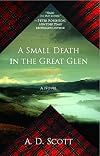
It's 1950 in the western Highlands of Scotland. Little Jamie Fraser has gone missing on his way home from school and Joanne Ross's daughters, Annie and Wee Jean, were the last ones to see him alive: "We saw him," she [Wee Jean] explained, "me and Annie, we saw this great big black hoodie crow. He opens the door, all of a sudden like, an' he spreads out his wings . . . and he picks up Jamie in his wings and takes him . . . ." When Jamie is later found dead in the canal and the coroner show more determines the boy was "interfered with" and murdered, Joanne and her coworkers at the local newspaper wonder--Do the girls actaully know something, or is it just their imaginations trying to make sense out of the death of a friend?
"A Small Death in the Great Glen" is Scottish writer A. D. Scott's debut novel in what looks to be a very promising new series centered around a local newspaper in Inverness, Scotland during the 1950's when the scars of World War II were still red and raw. While the plot of the story turns on the murder of the young boy Jamie, the theme revolves around abuse--child abuse; spousal abuse; alcohol abuse; the abuse of power and position, both civic and religious--and the community's silent acceptance that enables such abuse to continue.
While there are some abrupt shifts between story lines that can be somewhat jarring, A Small Death in the Great Glen is packed with plots, personalities and all the drama of a close-knit community struggling to adjust to a post-war world. Yet the story never loses sight of the central plot and ties off all the seemingly loose threads neatly in the end. show less
"A Small Death in the Great Glen" is Scottish writer A. D. Scott's debut novel in what looks to be a very promising new series centered around a local newspaper in Inverness, Scotland during the 1950's when the scars of World War II were still red and raw. While the plot of the story turns on the murder of the young boy Jamie, the theme revolves around abuse--child abuse; spousal abuse; alcohol abuse; the abuse of power and position, both civic and religious--and the community's silent acceptance that enables such abuse to continue.
While there are some abrupt shifts between story lines that can be somewhat jarring, A Small Death in the Great Glen is packed with plots, personalities and all the drama of a close-knit community struggling to adjust to a post-war world. Yet the story never loses sight of the central plot and ties off all the seemingly loose threads neatly in the end. show less
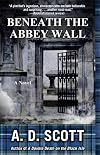
This is the third book in a somewhat cozy murder mystery series set in the 1950’s in the Scottish Highlands. The recurring characters operate a small newspaper, the Highland Gazette. Sometimes, in order to get the bottom of a story, they end up investigating and solving a crime as well.
In this book, one of their own, the the Gazette’s office manager, Joyce Smart, is found murdered. The paper’s deputy editor, Don McLeod, is the chief suspect. The other members of the staff can’t show more believe Don is guilty, but Joyce’s husband is an influential member of their small community, and he insists that McLeod is culpable, particularly since McLeod is named in Joyce’s will.
The Gazette’s editor, John McAllister, joins forces with charming Rob McLean, a young reporter and the son of the local solicitor who will be representing McLeod, to get to the bottom of what happened. They are assisted further by locals (also from earlier books), Jimmy McPhee and his formidable mother Jenny. Jenny, to the shock of most, was also named in the will. Jenny and Jimmy are Travelers, or Tinkers, as they are sometimes called, a group of itinerant people mostly living in the Northwest Highlands who are looked upon as Gypsies and despised for it. In this book, as in her previous ones, the author takes care to try to expose historic prejudice against this group and to redress it.
Joyce Smart, the murder victim, had tried to help the Tinkers by providing them with permanent addresses, in order to prevent the state from taking away their children.
Meanwhile, the paper is floundering with two of its already small staff gone, and McAllister agrees to take on Neil Stewart, a handsome but mysterious newcomer from Canada who has come to town to do research on his ancestors. Unfortunately for McAllister, who has an eye for his reporter Joanne Ross, Neil sweeps Joanne off her feet. And if that isn’t enough to depress him, his friend Don McLeod is in danger of killing himself if he goes to prison, which he will most certainly do if his friends can’t find a way to exonerate him.
Evaluation: This book dragged a bit more than its predecessors for me, but it has a bang-up twist at the end, and the author’s ability to invoke the Scottish countryside is excellent. show less
In this book, one of their own, the the Gazette’s office manager, Joyce Smart, is found murdered. The paper’s deputy editor, Don McLeod, is the chief suspect. The other members of the staff can’t show more believe Don is guilty, but Joyce’s husband is an influential member of their small community, and he insists that McLeod is culpable, particularly since McLeod is named in Joyce’s will.
The Gazette’s editor, John McAllister, joins forces with charming Rob McLean, a young reporter and the son of the local solicitor who will be representing McLeod, to get to the bottom of what happened. They are assisted further by locals (also from earlier books), Jimmy McPhee and his formidable mother Jenny. Jenny, to the shock of most, was also named in the will. Jenny and Jimmy are Travelers, or Tinkers, as they are sometimes called, a group of itinerant people mostly living in the Northwest Highlands who are looked upon as Gypsies and despised for it. In this book, as in her previous ones, the author takes care to try to expose historic prejudice against this group and to redress it.
Joyce Smart, the murder victim, had tried to help the Tinkers by providing them with permanent addresses, in order to prevent the state from taking away their children.
Meanwhile, the paper is floundering with two of its already small staff gone, and McAllister agrees to take on Neil Stewart, a handsome but mysterious newcomer from Canada who has come to town to do research on his ancestors. Unfortunately for McAllister, who has an eye for his reporter Joanne Ross, Neil sweeps Joanne off her feet. And if that isn’t enough to depress him, his friend Don McLeod is in danger of killing himself if he goes to prison, which he will most certainly do if his friends can’t find a way to exonerate him.
Evaluation: This book dragged a bit more than its predecessors for me, but it has a bang-up twist at the end, and the author’s ability to invoke the Scottish countryside is excellent. show less
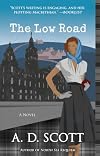
This is the fifth book in a somewhat cozy murder mystery series set in the late 1950’s in the Scottish Highlands. The recurring characters operate a small newspaper, the Highland Gazette. Sometimes, in order to get the bottom of a story, they end up investigating and solving a crime as well.
In this book, Highland Gazette editor John McAllister is taking care of his fiancée, Joanne Ross - one of the reporters on the Gazette. In the previous book, Joanne received a brain injury at the hands show more of a psychopath, and she has not yet recovered. McAllister has taken her into his house to recuperate, along with her two girls, Annie, 11 1/2, and “wee Jean,” 9, as well as Joanne’s former mother-in-law, Granny Ross, who is helping with the girls.
The wedding they had scheduled is just six weeks away, but McAllister is full of misgivings:
"What if she’s never herself again? What if Joanne is never again the woman I love, the woman I wanted to spend the rest of my life with?”
McAllister is ashamed of having these thoughts, and yet he can’t deny them. But in spite of his shame, he craves normality. He longs “to escape the troupe of doctors and nurses and police and friends and parents-in-law ….”
And there is more that is bothering McAllister. Although he transformed the Highland Gazette, elevating it from a boring local broadsheet, it will never be the kind of exciting career he had when he was working for Glasgow’s Herald as a renowned war correspondent in Europe. And Glasgow itself - so much more exciting than the sleepy, though beautiful, Highlands. The technicolor of his youth, he is thinking, has dimmed to sepia. McAllister is starting to feel very trapped, and spends much too much time drinking whiskey.
Just at his most vulnerable, McAllister is asked by an old friend, Jenny McPhee, to help find her grown son Jimmy, gone missing in Glasgow. McAllister’s mother, still in Glasgow, has also contacted McAllister about Jimmy. McAllister goes to his old workplace at The Glasgow Herald for help, and there meets Mary Ballantyne, a young (28), pretty, ambitious reporter who senses a good story and decides to help McAllister. McAllister not only has to navigate the dangerous waters of gang feuds in Glasgow, but deal with his own desires to escape his quiet life; damaged fiancée; inherited family obligations back in the Highlands; and his growing attraction to Mary and to the youth she represents. And while Joanne may not be herself, she understands enough to be terrified that McAllister may not return.
Discussion: Scott has taken us through the emotional ups and downs of these characters in previous books, and the realistic way they are drawn is very impressive. In addition, the author has a knack for making the settings come to life as well, whether the atmospheric beauty of the Highlands or desolation of the post-war landscape of Glasgow:
"…it was a tall, soot-blackened tenement block, one that had survived the carpet bombing of Clydeside. They parked in front of an empty block, bright with fireweed and broken glass, which had not been so lucky. Shipyard cranes filled the skyline to the right. And litter and dust and empty dreams tumbled in a wind coming off the river.”
Scott also beautifully captures the guilt so many caretakers feel, with the feelings of being ready to scream from frustration and even resentment, while also hating themselves for wanting to escape.
Evaluation: I value this series more for the portrayal of life in the 1950’s Scottish Highlands than for the crime story per se. In addition, I have come to care about the characters, and look forward to seeing what befalls them. In spite of often having quite a convoluted mystery as the plot, these books stand out more to me as well-made portraits of a fascinating time and place, in which an endearing and very human group of people struggle to achieve self-fulfillment and happiness. show less
In this book, Highland Gazette editor John McAllister is taking care of his fiancée, Joanne Ross - one of the reporters on the Gazette. In the previous book, Joanne received a brain injury at the hands show more of a psychopath, and she has not yet recovered. McAllister has taken her into his house to recuperate, along with her two girls, Annie, 11 1/2, and “wee Jean,” 9, as well as Joanne’s former mother-in-law, Granny Ross, who is helping with the girls.
The wedding they had scheduled is just six weeks away, but McAllister is full of misgivings:
"What if she’s never herself again? What if Joanne is never again the woman I love, the woman I wanted to spend the rest of my life with?”
McAllister is ashamed of having these thoughts, and yet he can’t deny them. But in spite of his shame, he craves normality. He longs “to escape the troupe of doctors and nurses and police and friends and parents-in-law ….”
And there is more that is bothering McAllister. Although he transformed the Highland Gazette, elevating it from a boring local broadsheet, it will never be the kind of exciting career he had when he was working for Glasgow’s Herald as a renowned war correspondent in Europe. And Glasgow itself - so much more exciting than the sleepy, though beautiful, Highlands. The technicolor of his youth, he is thinking, has dimmed to sepia. McAllister is starting to feel very trapped, and spends much too much time drinking whiskey.
Just at his most vulnerable, McAllister is asked by an old friend, Jenny McPhee, to help find her grown son Jimmy, gone missing in Glasgow. McAllister’s mother, still in Glasgow, has also contacted McAllister about Jimmy. McAllister goes to his old workplace at The Glasgow Herald for help, and there meets Mary Ballantyne, a young (28), pretty, ambitious reporter who senses a good story and decides to help McAllister. McAllister not only has to navigate the dangerous waters of gang feuds in Glasgow, but deal with his own desires to escape his quiet life; damaged fiancée; inherited family obligations back in the Highlands; and his growing attraction to Mary and to the youth she represents. And while Joanne may not be herself, she understands enough to be terrified that McAllister may not return.
Discussion: Scott has taken us through the emotional ups and downs of these characters in previous books, and the realistic way they are drawn is very impressive. In addition, the author has a knack for making the settings come to life as well, whether the atmospheric beauty of the Highlands or desolation of the post-war landscape of Glasgow:
"…it was a tall, soot-blackened tenement block, one that had survived the carpet bombing of Clydeside. They parked in front of an empty block, bright with fireweed and broken glass, which had not been so lucky. Shipyard cranes filled the skyline to the right. And litter and dust and empty dreams tumbled in a wind coming off the river.”
Scott also beautifully captures the guilt so many caretakers feel, with the feelings of being ready to scream from frustration and even resentment, while also hating themselves for wanting to escape.
Evaluation: I value this series more for the portrayal of life in the 1950’s Scottish Highlands than for the crime story per se. In addition, I have come to care about the characters, and look forward to seeing what befalls them. In spite of often having quite a convoluted mystery as the plot, these books stand out more to me as well-made portraits of a fascinating time and place, in which an endearing and very human group of people struggle to achieve self-fulfillment and happiness. show less

I adored this mystery. It’s about a double murder that takes place in 1957 in the Scottish Highlands, and the people trying to get to the bottom of what happened are reporters on the small staff of the Highland Gazette. Joanne Ross, 31, is a former typist for the paper and is now a journalist along with Rob McLean, a good friend although he is ten years younger.
Joanne is a single mother of two girls, Annie and “Wee Jean”; she is also a battered wife who finally walked out on her show more husband three months earlier. She is attracted to the newspaper’s editor, John McAllister, and only Joanne is not aware that McAllister is also attracted to her. Don McLeod, the charming and gruff deputy editor, tries to play matchmaker between them, but this is 1957 in “a paternalistic Presbyterian rigid class-structured society” and still-married women couldn’t just be taking up with other men. Moreover, Joanne suffers a bit from "battered women's syndrome" - full of fear, blaming herself, and lacking self-confidence.
There are some other characters we get to know on the newspaper staff, but among the chief protagonists I would be remiss not to mention the Highlands themselves. As McAllister observes, the lochs, the glens, the firths and the coast made the town what it is and the people who they are. The descriptions of the countryside, with the mountain Ben Wyvis looming over the Black Isle, help us understand the connection to the land felt by the region’s inhabitants, who, as the author explains, tilled the fields, cleared the ditches, and named every nook and cranny, every woodland, and every burn:
"The Black Isle, a peninsula surrounded on three sides by the Cromarty, the Moray,and the Beauly firths, was an island of the mind rather than geography. Picturesque in parts, forbidding in places, it was quite unlike the surrounding glens of heather and lochs. … There were sacred wells, prehistoric standing stones, a castle or two, the remains of Iron Age settlements, and a history teeming with stories and characters.”
You get such a wonderful sense of place from descriptions like those, and from the colorful patois spoken by the characters – I love this exchange, for example, when Rob goes to interview one of the local “Travelers,” itinerant workers who help with the harvest:
"’Wise move, staying for a whiley more.’
‘You think so?’ He was pleased to have Jimmy’s opinion. He was also one of the few who understood that beneath the rough, menacing exterior there lay a very rough, menacing interior, but intelligence with it.
‘Aye. You know what they say about big fishes and small lochs. I suppose you’re wanting information?’”
In the story, a couple of the Travelers, or Tinkers, as they are known, are accused of one of the murders. (The Travelers, it should be understood, are not the same as gypsys; they are Scottish, with ancient names, as the author notes: Stuart, McPhee, Macdonald, and so on:
"Their ancient culture of stories and singing and piping, their nomadic way of life, marked them as different, yet they were as much a part of Scotland as the glens and lochs and mountains.”
But there was much prejudice against the Travelers, and just being accused was often enough to assure a conviction. At the other end of the social spectrum, the richest and most powerful family in the area has also come under suspicion. Muddying up the waters, the daughter in this family, Patricia Ord MacKenzie, is one of Joanne's oldest friends.
So many questions remained unanswered though, that it's hard to sort out what really happened. It takes a lot of intrepid footwork by Joanne, Rob, Hec the photographer, and the others, to try to get to the bottom of of the murders. And while the pace is slow and steady, the author is not above tossing in red herrings and twists.
Evaluation: I thoroughly enjoyed this opportunity to learn more about the history and culture of the Scottish Highlands while getting to know the delightful characters of the Highland Gazette. This is book two in the series, but it is my first. Apparently there are more books to come, and I can’t wait! show less
Joanne is a single mother of two girls, Annie and “Wee Jean”; she is also a battered wife who finally walked out on her show more husband three months earlier. She is attracted to the newspaper’s editor, John McAllister, and only Joanne is not aware that McAllister is also attracted to her. Don McLeod, the charming and gruff deputy editor, tries to play matchmaker between them, but this is 1957 in “a paternalistic Presbyterian rigid class-structured society” and still-married women couldn’t just be taking up with other men. Moreover, Joanne suffers a bit from "battered women's syndrome" - full of fear, blaming herself, and lacking self-confidence.
There are some other characters we get to know on the newspaper staff, but among the chief protagonists I would be remiss not to mention the Highlands themselves. As McAllister observes, the lochs, the glens, the firths and the coast made the town what it is and the people who they are. The descriptions of the countryside, with the mountain Ben Wyvis looming over the Black Isle, help us understand the connection to the land felt by the region’s inhabitants, who, as the author explains, tilled the fields, cleared the ditches, and named every nook and cranny, every woodland, and every burn:
"The Black Isle, a peninsula surrounded on three sides by the Cromarty, the Moray,and the Beauly firths, was an island of the mind rather than geography. Picturesque in parts, forbidding in places, it was quite unlike the surrounding glens of heather and lochs. … There were sacred wells, prehistoric standing stones, a castle or two, the remains of Iron Age settlements, and a history teeming with stories and characters.”
You get such a wonderful sense of place from descriptions like those, and from the colorful patois spoken by the characters – I love this exchange, for example, when Rob goes to interview one of the local “Travelers,” itinerant workers who help with the harvest:
"’Wise move, staying for a whiley more.’
‘You think so?’ He was pleased to have Jimmy’s opinion. He was also one of the few who understood that beneath the rough, menacing exterior there lay a very rough, menacing interior, but intelligence with it.
‘Aye. You know what they say about big fishes and small lochs. I suppose you’re wanting information?’”
In the story, a couple of the Travelers, or Tinkers, as they are known, are accused of one of the murders. (The Travelers, it should be understood, are not the same as gypsys; they are Scottish, with ancient names, as the author notes: Stuart, McPhee, Macdonald, and so on:
"Their ancient culture of stories and singing and piping, their nomadic way of life, marked them as different, yet they were as much a part of Scotland as the glens and lochs and mountains.”
But there was much prejudice against the Travelers, and just being accused was often enough to assure a conviction. At the other end of the social spectrum, the richest and most powerful family in the area has also come under suspicion. Muddying up the waters, the daughter in this family, Patricia Ord MacKenzie, is one of Joanne's oldest friends.
So many questions remained unanswered though, that it's hard to sort out what really happened. It takes a lot of intrepid footwork by Joanne, Rob, Hec the photographer, and the others, to try to get to the bottom of of the murders. And while the pace is slow and steady, the author is not above tossing in red herrings and twists.
Evaluation: I thoroughly enjoyed this opportunity to learn more about the history and culture of the Scottish Highlands while getting to know the delightful characters of the Highland Gazette. This is book two in the series, but it is my first. Apparently there are more books to come, and I can’t wait! show less
Lists
Awards


You May Also Like


Associated Authors
Statistics
- Works
- 6
- Also by
- 1
- Members
- 728
- Popularity
- #34,884
- Rating
- 3.6
- Reviews
- 48
- ISBNs
- 24
- Languages
- 2