
John Heilemann
Author of Game Change: Obama and the Clintons, McCain and Palin, and the Race of a Lifetime
About the Author
John Heilemann is the national political correspondent and columnist for New York magazine. He is a former staff writer for the New Yorker, the Economist, and Wired. He is the author of Pride Before the Fall: The Trials of Bill Gates and the End of the Microsoft Era, Game Change: Obama and the show more Clintons, McCain and Palin, and the Race of a Lifetime and Double Down: Game Change 2012. (Bowker Author Biography) show less
Works by John Heilemann
Game Change: Obama and the Clintons, McCain and Palin, and the Race of a Lifetime (2010) 2,150 copies, 82 reviews
Associated Works
Tagged
Common Knowledge
- Canonical name
- Heilemann, John
- Birthdate
- 1966-01-23
- Gender
- male
- Occupations
- journalist
- Organizations
- The New Yorker
Wired
The Economist
New York - Nationality
- USA
- Places of residence
- New York, New York, USA
- Associated Place (for map)
- New York, USA
Members
Reviews
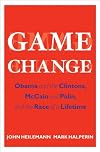
Anyone who loved The West Wing will want to read Game Change- Obama and the Clintons, McCain and Palin and the Race of a Lifetime by political reporters John Heilemann and Mark Halperin.
Now that some time has passed and election fatigue is over, (and with all of the stunning events that have plagued this country in the past year, it seems like the election was years ago) it is time for an analysis of that historic election.
The authors spoke to many people on the inside of the presidential show more campaigns, and their insights are fascinating. This book is written in such a compelling manner, it reads more like a page-turning fiction book. And honestly, how many people just ten years ago could have predicted an African-American candidate would come out of nowhere to defeat a controversial former First Lady for the Democratic nomination and then win the Presidency?
One of the main themes of the book is that people who run for president have big egos. Obviously, you would have to have a big ego to believe that you should be the leader of the free world. Barack Obama's ego is on display when he whines that John Grisham's non-fiction book, An Innocent Man publishes on the same days as his, thus bumping him to second on the best seller list. "But I want to be number one" he whines.
When Hillary Clinton is deciding whether she should run for president, it is her husband Bill who clarifies for her, asking her a question that, reading this book, I had to wonder whether the other candidates asked themselves"You have to ask yourself one question, he replied. Of all the people running, would I be the best president? If you can answer yes, then you need to run. If you're not sure, then you need to think more about it, and if the answer is no, then don't do it."
Reading this book, I got the impression that some of the people working on these campaigns asked a different question: Can I get this person elected? Not whether this person is the most qualified, but the most electable; an important distinction in my mind.
John Edwards and his wife Elizabeth fare poorly in this book. Edwards' behavior is most appalling. When Edwards' affair with Rielle Hunter begins to become common knowledge in his inner circle, he rips into a young, idealistic staffer, blaming the 27-year-old man for leaking the information. Edwards has the utter gall to scream at the young man "Why didn't you come to me like a (expletive deleted) man and tell me to stop (expletive deleted) her?" He actually blames this aide for not stopping him from committing adultery! That one incident alone tells more about Edwards lack of character than any other.
This book's account of Sarah Palin's rise to national prominence differs greatly from her Going Rogue. She is depicted as being in way over her head as a Vice-Presidential candidate. The campaign's attempts to bring her up to speed on subjects she needed to know for interviews and her debate with Joe Biden are disturbing. She wrote out flash cards to help her learn, and the stack was so big, it was overwhelming her. It reminds me of a college student cramming for a final when she never attended the class during the year.
There is so much crammed into this book, political junkies will be in heaven. It is also must-reading for anyone who is engaged in current events, and it puts into question whether the complicated primary process in its current form is the best way to elect the most important office in the land. show less
Now that some time has passed and election fatigue is over, (and with all of the stunning events that have plagued this country in the past year, it seems like the election was years ago) it is time for an analysis of that historic election.
The authors spoke to many people on the inside of the presidential show more campaigns, and their insights are fascinating. This book is written in such a compelling manner, it reads more like a page-turning fiction book. And honestly, how many people just ten years ago could have predicted an African-American candidate would come out of nowhere to defeat a controversial former First Lady for the Democratic nomination and then win the Presidency?
One of the main themes of the book is that people who run for president have big egos. Obviously, you would have to have a big ego to believe that you should be the leader of the free world. Barack Obama's ego is on display when he whines that John Grisham's non-fiction book, An Innocent Man publishes on the same days as his, thus bumping him to second on the best seller list. "But I want to be number one" he whines.
When Hillary Clinton is deciding whether she should run for president, it is her husband Bill who clarifies for her, asking her a question that, reading this book, I had to wonder whether the other candidates asked themselves"You have to ask yourself one question, he replied. Of all the people running, would I be the best president? If you can answer yes, then you need to run. If you're not sure, then you need to think more about it, and if the answer is no, then don't do it."
Reading this book, I got the impression that some of the people working on these campaigns asked a different question: Can I get this person elected? Not whether this person is the most qualified, but the most electable; an important distinction in my mind.
John Edwards and his wife Elizabeth fare poorly in this book. Edwards' behavior is most appalling. When Edwards' affair with Rielle Hunter begins to become common knowledge in his inner circle, he rips into a young, idealistic staffer, blaming the 27-year-old man for leaking the information. Edwards has the utter gall to scream at the young man "Why didn't you come to me like a (expletive deleted) man and tell me to stop (expletive deleted) her?" He actually blames this aide for not stopping him from committing adultery! That one incident alone tells more about Edwards lack of character than any other.
This book's account of Sarah Palin's rise to national prominence differs greatly from her Going Rogue. She is depicted as being in way over her head as a Vice-Presidential candidate. The campaign's attempts to bring her up to speed on subjects she needed to know for interviews and her debate with Joe Biden are disturbing. She wrote out flash cards to help her learn, and the stack was so big, it was overwhelming her. It reminds me of a college student cramming for a final when she never attended the class during the year.
There is so much crammed into this book, political junkies will be in heaven. It is also must-reading for anyone who is engaged in current events, and it puts into question whether the complicated primary process in its current form is the best way to elect the most important office in the land. show less
http://nwhyte.livejournal.com/1847222.html
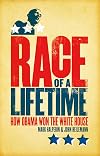
This is a brilliant account of the 2008 US presidential election, concentrating particularly on the Obama/Clinton dynamic (since that turned out to be much more important and durable than the Obama/McCain dynamic). The authors claim to have got detailed accounts from campaign insiders of key conversations and exchanges right up to the level of the candidates, and it rings true without revealing anything about the two key personalities that I had not show more already guessed. (It seems to have been published as Game Change in the USA.)
Three aspects of the narrative really struck me.
First, that the candidates themselves tend to be pretty flawed human beings. Successively the Edwards and McCain campaigns crashed to disaster largely because of the personalities of Edwards and McCain themselves, unwilling to adapt to the discipline necessary to keep their teams motivated and to avoid gaffes to the press. Both Obama and McCain suffered serious wobbles in the last few weeks before the election due to the indiscipline of their running-mates. All of those individuals had previous won elections for public office, so it is surprising that Edwards and McCain were not able to deal with the demands of the presidential campiagn. I can cut Biden and Palin a bit more slack, as the vice-presidential slot is much more peculiar, and perhaps Edwards is explicable because he was in complete denial about the state of his marriage. But McCain's behaviour is just bizarre.
Second, and linked to the first point, the peculiar desire of the media - particular the US media - for spectacle rather than story means that any electoral campaign is vulnerable to a single killer moment. Occasionally - as with Hillary Clinton's tearful interview in New Hampshire, which it is pretty clear won her the primary there - it works to the candidate's advantage. Much more often, of course, it reacts to their disadvantage, as Rick Perry is discovering.
Third, and also linked to the first point, the fact that the US system is so very candidate-based rather than party-based makes the professional campaigner's career much more volatile and much more based on personality. That has consequences for how campaigns work internally. Staffers are jockeying not only to get the credit for getting their candidate elected, but also for positioning in the victorious candidate's administration and/or for a better-paid role in the next campaign. It can also be much more difficult to tell the candidate home truths about their own performance, compared to the situation if both candidate and staffer are beholden to a political party structure rather than staffers being utterly dependent on the candidate's whim. It also feeds into the dependence of the campaigns on continual fund-raising.
In the end, Obama won because his fundamentals were sound; he had a good narrative in the first place, he was disciplined about sticking to it, and he was fortunate in both the character of his opponent in the general election and the economic circumstances which made Republicans unelectable in 2008. Clinton was unlucky in that her narrative was almost as good and her discipline equal to Obama's, but her campaign team was less coherent (for the reasons given above) and she carried unfair negative baggage in the shape of her husband. McCain lost because he deserved to. (The authors are surprisingly sympathetic to Sarah Palin, and blame McCain for choosing her without sufficient forethought and exposing her on the national platform without adequate preparation.) An excellent book from which I learned some interesting things. show less
This is a brilliant account of the 2008 US presidential election, concentrating particularly on the Obama/Clinton dynamic (since that turned out to be much more important and durable than the Obama/McCain dynamic). The authors claim to have got detailed accounts from campaign insiders of key conversations and exchanges right up to the level of the candidates, and it rings true without revealing anything about the two key personalities that I had not show more already guessed. (It seems to have been published as Game Change in the USA.)
Three aspects of the narrative really struck me.
First, that the candidates themselves tend to be pretty flawed human beings. Successively the Edwards and McCain campaigns crashed to disaster largely because of the personalities of Edwards and McCain themselves, unwilling to adapt to the discipline necessary to keep their teams motivated and to avoid gaffes to the press. Both Obama and McCain suffered serious wobbles in the last few weeks before the election due to the indiscipline of their running-mates. All of those individuals had previous won elections for public office, so it is surprising that Edwards and McCain were not able to deal with the demands of the presidential campiagn. I can cut Biden and Palin a bit more slack, as the vice-presidential slot is much more peculiar, and perhaps Edwards is explicable because he was in complete denial about the state of his marriage. But McCain's behaviour is just bizarre.
Second, and linked to the first point, the peculiar desire of the media - particular the US media - for spectacle rather than story means that any electoral campaign is vulnerable to a single killer moment. Occasionally - as with Hillary Clinton's tearful interview in New Hampshire, which it is pretty clear won her the primary there - it works to the candidate's advantage. Much more often, of course, it reacts to their disadvantage, as Rick Perry is discovering.
Third, and also linked to the first point, the fact that the US system is so very candidate-based rather than party-based makes the professional campaigner's career much more volatile and much more based on personality. That has consequences for how campaigns work internally. Staffers are jockeying not only to get the credit for getting their candidate elected, but also for positioning in the victorious candidate's administration and/or for a better-paid role in the next campaign. It can also be much more difficult to tell the candidate home truths about their own performance, compared to the situation if both candidate and staffer are beholden to a political party structure rather than staffers being utterly dependent on the candidate's whim. It also feeds into the dependence of the campaigns on continual fund-raising.
In the end, Obama won because his fundamentals were sound; he had a good narrative in the first place, he was disciplined about sticking to it, and he was fortunate in both the character of his opponent in the general election and the economic circumstances which made Republicans unelectable in 2008. Clinton was unlucky in that her narrative was almost as good and her discipline equal to Obama's, but her campaign team was less coherent (for the reasons given above) and she carried unfair negative baggage in the shape of her husband. McCain lost because he deserved to. (The authors are surprisingly sympathetic to Sarah Palin, and blame McCain for choosing her without sufficient forethought and exposing her on the national platform without adequate preparation.) An excellent book from which I learned some interesting things. show less
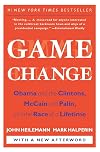
“We are the makers of history, not its victims.”
― John Heilemann, Game Change: Obama and the Clintons, McCain and Palin, and the Race of a Lifetime
Edit of an old review:
It is hard for me to imagine ANY political junkie not loving this one.
It is about exactly what it says its about.
And it is just fantastic . I believe it is one of the best political non fiction books I have ever read. For a political junkie, as am I, you get everything you could possibly want.
Inside campaigns, how they show more come together, how decisions are made, who makes them, bad decisions, good decisions, politics..pure, raw and unfiltered.
Game Change takes you into the inner workings of Political campaigns. Or more specifically, THESE political campaigns...and leaves you there.
And make no mistake, you are there. It doesn't feel like your reading a book. Your in the thick of it, watching the whole race unfold. It's fast paced, electrifying and just pure Political fun.
AND..it isn't dull. Some political books I have read can be written in a way that lacks excitement. There are many books on Politics which maybe about very interesting topics but the writing can be dry or they can be overly long. Or it can feel like your in a class room and who wants to go back to school. LOL.
Not here. I was actually a bit down when the book ended..any political junkie will know that is a sign of a great political book!
It gets into the weeds on everything and is very well researched and is effortlessly interesting.
Game Change is a winner! show less
― John Heilemann, Game Change: Obama and the Clintons, McCain and Palin, and the Race of a Lifetime
Edit of an old review:
It is hard for me to imagine ANY political junkie not loving this one.
It is about exactly what it says its about.
And it is just fantastic . I believe it is one of the best political non fiction books I have ever read. For a political junkie, as am I, you get everything you could possibly want.
Inside campaigns, how they show more come together, how decisions are made, who makes them, bad decisions, good decisions, politics..pure, raw and unfiltered.
Game Change takes you into the inner workings of Political campaigns. Or more specifically, THESE political campaigns...and leaves you there.
And make no mistake, you are there. It doesn't feel like your reading a book. Your in the thick of it, watching the whole race unfold. It's fast paced, electrifying and just pure Political fun.
AND..it isn't dull. Some political books I have read can be written in a way that lacks excitement. There are many books on Politics which maybe about very interesting topics but the writing can be dry or they can be overly long. Or it can feel like your in a class room and who wants to go back to school. LOL.
Not here. I was actually a bit down when the book ended..any political junkie will know that is a sign of a great political book!
It gets into the weeds on everything and is very well researched and is effortlessly interesting.
Game Change is a winner! show less
The political wonk's version of US Weekly. Full of apparentlys, allegedlys and not a source in sight. It's extremely readable (how could multiple train-wrecks not be?) but I still have issues with the way the women are dealt with in the book. When Hillary Clinton talks, she is described as "whining" or "bitching" or "screeching", words never used for Obama or the men. While Obama wipes away a tear, Hillary cries. The message remains clear.
For a chunky book, it's a surprisingly quick read, show more and a good starting point for anyone interested in the 2008 election, a historic one in politics. show less
For a chunky book, it's a surprisingly quick read, show more and a good starting point for anyone interested in the 2008 election, a historic one in politics. show less
Lists
Awards


You May Also Like


Associated Authors
Statistics
- Works
- 4
- Also by
- 3
- Members
- 2,676
- Popularity
- #9,594
- Rating
- 3.9
- Reviews
- 99
- ISBNs
- 32
- Languages
- 2