
Susan Hasler
Author of Intelligence
Works by Susan Hasler
Tagged
Common Knowledge
There is no Common Knowledge data for this author yet. You can help.
Members
Reviews
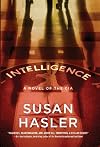
It only just dawned on me why the eagle insignia has rabbit ears on the book jacket. You'll have to read this chilling, funny take on Washington's spy community to find the reason. Ex-CIA speechwriter and analyst Susan Hasler's novel spin on the U.S. reaction to terrorist attacks is a distant cousin of "Catch-22," only -- in a couple of senses of the word -- more spooky. Cringe, and enjoy!
Told from the point of view of several people, Susan Hasler, an ex-CIA employee, tells a story of a terrorist attack and how analysts try to sift through evidence to prevent it. Although this is a novel, the details of the way analysts work seem authentic, and descriptions of how politics interfere with the work the analysts do would explain a lot. Acronyms and code words make the text hard to get through at points, but overall this is an enjoyable read.
I heard about this book on NPR, and it sounded interesting. Susan Hasler worked as a counter-terrorism analyst at the CIA for over two decades, and the NPR interview discussed some interesting topics like intelligence failures. So I requested the book from my local library and started it with some modestly high expectations. And while certain aspects of the book were illuminating and occasionally entertaining, Intelligence was a disappointment for me.
The basic story of Intelligence follows show more an analyst named Maddie James who suspects there is an impending terrorist attack on U.S. soil. She and her small team race against the clock and fight against incompetent superiors as they try to identify and prevent the attack. Intelligence is most successful at conveying the sheer volume of data and the near impossibility of accurately identifying threats to national security or American interests abroad. The frustration of the characters as they sift through endless intelligence reports and intercepts clearly comes from Hasler's own personal experience.
But the rest of novel is fairly sub-par. The writing is sophomoric, but at least it isn't too distracting. Hasler develops her own intra-organizational series of terms and metaphors, with analysts referring to the organization as the "mines." Everything has a mining or metallurgic slang term, like alchemists, mine shafts, veins, canaries, drilling down, etc. Regardless of whether this jargon is genuine (I suspect is not), it was used inconsistently and got on my nerves. Also annoying were the various sexual encounters of the characters during the crisis. Do intelligence analysts really jump into each other's beds in the midst of terrorist threats? For our country's sake, I hope not.
Unfortunately, the major flaws of Intelligence weren't limited to the common foibles of a writer's freshman offering of fiction. The terrorist attack involves model airplanes at a major league baseball park, and the plan is so elaborate that it strained even my willing suspension of disbelief. But this isn't a book about analysts versus terrorists. The terrorists are basically gone halfway through the book. The real bad guys are the incompetent and one-dimensional administrators in the intelligence community and the corrupt and deceitful presidential administration that tries to parlay the threat into an excuse to invade Iran. Perhaps in the hands of a more skillful author these themes wouldn't be as forced and clumsy, but in Intelligence they come across as heavy-handed echoes of Bush-hatred that was so common during the time Hasler was writing the novel. By the end of the book, the character of Maddie James is so embittered and cynical that she almost loses her credibility to explain to the public what actually happened. In my estimation, the novel as a whole essentially shares that same fate. show less
The basic story of Intelligence follows show more an analyst named Maddie James who suspects there is an impending terrorist attack on U.S. soil. She and her small team race against the clock and fight against incompetent superiors as they try to identify and prevent the attack. Intelligence is most successful at conveying the sheer volume of data and the near impossibility of accurately identifying threats to national security or American interests abroad. The frustration of the characters as they sift through endless intelligence reports and intercepts clearly comes from Hasler's own personal experience.
But the rest of novel is fairly sub-par. The writing is sophomoric, but at least it isn't too distracting. Hasler develops her own intra-organizational series of terms and metaphors, with analysts referring to the organization as the "mines." Everything has a mining or metallurgic slang term, like alchemists, mine shafts, veins, canaries, drilling down, etc. Regardless of whether this jargon is genuine (I suspect is not), it was used inconsistently and got on my nerves. Also annoying were the various sexual encounters of the characters during the crisis. Do intelligence analysts really jump into each other's beds in the midst of terrorist threats? For our country's sake, I hope not.
Unfortunately, the major flaws of Intelligence weren't limited to the common foibles of a writer's freshman offering of fiction. The terrorist attack involves model airplanes at a major league baseball park, and the plan is so elaborate that it strained even my willing suspension of disbelief. But this isn't a book about analysts versus terrorists. The terrorists are basically gone halfway through the book. The real bad guys are the incompetent and one-dimensional administrators in the intelligence community and the corrupt and deceitful presidential administration that tries to parlay the threat into an excuse to invade Iran. Perhaps in the hands of a more skillful author these themes wouldn't be as forced and clumsy, but in Intelligence they come across as heavy-handed echoes of Bush-hatred that was so common during the time Hasler was writing the novel. By the end of the book, the character of Maddie James is so embittered and cynical that she almost loses her credibility to explain to the public what actually happened. In my estimation, the novel as a whole essentially shares that same fate. show less
At first, this story wasn't grabbing me, but as it progressed, I became more ad more hooked into what was going on.
I hadn't realized that the book was supposed to be a satire, but I could see the dark comedy that was in it, along the lines of Catch 22 and M*A*S*H. But then I could see the not-so-humorous side of it, and the near-confession of, "Yes, there was a cover-up at the highest levels, but there was nothing we in the lower levels could do about it."
The only thing that the audiobook show more lacks (but it's in the ebook and printed books) is a glossary of terms. I had thought that the "Mines" and "Organ" were actual terms used in the CIA (and they probably are), but it would have been nice to know right off the bat what the terms meant. I'll have to research the glossary at some point.
All in all, it was a good audiobook, and I'd be keen on listening to her second book at some point in the near future. show less
I hadn't realized that the book was supposed to be a satire, but I could see the dark comedy that was in it, along the lines of Catch 22 and M*A*S*H. But then I could see the not-so-humorous side of it, and the near-confession of, "Yes, there was a cover-up at the highest levels, but there was nothing we in the lower levels could do about it."
The only thing that the audiobook show more lacks (but it's in the ebook and printed books) is a glossary of terms. I had thought that the "Mines" and "Organ" were actual terms used in the CIA (and they probably are), but it would have been nice to know right off the bat what the terms meant. I'll have to research the glossary at some point.
All in all, it was a good audiobook, and I'd be keen on listening to her second book at some point in the near future. show less
Statistics
- Works
- 2
- Members
- 83
- Popularity
- #218,810
- Rating
- 3.7
- Reviews
- 6
- ISBNs
- 5
- Languages
- 1
