
Ted Allbeury (1917–2005)
Author of The Twentieth Day of January
About the Author
Disambiguation Notice:
Theodore (Ted) Edward le Bouthillier Allbeury. (Also writes as Richard Butler and Patrick Kelly.)
Series
Works by Ted Allbeury
Der Omega- Minus- Prozeß / Vergangenheit ist nie zu Ende / Die Saat der Angst. Dreimal Geheimdienst intern. (1997) 5 copies
The Rocking-horse Spy 2 copies
Spine nel cervello 1 copy
Tot elke prijs 1 copy
De keerzijde van het verraad 1 copy
Geheimcode Deep Purple 1 copy
Associated Works
Tagged
Common Knowledge
- Legal name
- Allbeury, Theodore Edward le Bouthillier
- Other names
- Butler, Richard
Kelly, Patrick - Birthdate
- 1917-10-24
- Date of death
- 2005-12-04
- Gender
- male
- Occupations
- advertising executive
spy
disc jockey
novelist - Nationality
- UK
- Birthplace
- Stockport, Cheshire, England, UK
- Place of death
- Tunbridge Wells, Kent, England, UK
- Disambiguation notice
- Theodore (Ted) Edward le Bouthillier Allbeury. (Also writes as Richard Butler and Patrick Kelly.)
- Associated Place (for map)
- England, UK
Members
Discussions
Ted Allbeury in Spies & Spy Fiction (January 2017)
Reviews

This book, published in 1984, is an Old School Cold Warrior Tale. The West kicks ass on the East, and the British James Bondian character can take on all-comers with one arm tied behind his back.
It was okay, and I found it sort of interesting due to the setting. It reminded me a bit of the Bartle Bull Anton Rider books as it mostly takes place in that corner of Africa, among similarly exotic NE African cultures, and the parade of colonial powers that have touched them.
The writing itself is show more dated; super undercover expat / (ex-) British secret agent can get away with anything because he is, of course, super undercover expat / (ex-) British secret agent. For instance, he is able to sneak around a super secret arms dump in the middle of the desert that no one knows about, killing people at said super secret arms dump on two separate occasions, and then being able to sneak around super secret arms dump in the middle of nowhere a third time and none of the hundreds of people guarding the super secret arms dump in the middle of nowhere can manage to stop him. Sure, that sounds right, not a problem.
So there's that. To continue on with that theme, the ex-secret agent of an ex-super power was full-on neocolonialist with his I can do whatever I want whenever I want because everyone is a lesser mortal attitude; I operate at will, and I will get the girl and / or save the prostitute – who is half my age – and we will get along famously.
That was pretty much the book, but then at the very end – literally the last few pages - there was a surprising twist where the ex-secret agent has the full realization that everything he was doing, and had done sucked. He had a complete change of heart and a complete change of outlook; basically he opened his eyes for the first time in his entire life. Almost made for an upgraded rating, almost.... show less
It was okay, and I found it sort of interesting due to the setting. It reminded me a bit of the Bartle Bull Anton Rider books as it mostly takes place in that corner of Africa, among similarly exotic NE African cultures, and the parade of colonial powers that have touched them.
The writing itself is show more dated; super undercover expat / (ex-) British secret agent can get away with anything because he is, of course, super undercover expat / (ex-) British secret agent. For instance, he is able to sneak around a super secret arms dump in the middle of the desert that no one knows about, killing people at said super secret arms dump on two separate occasions, and then being able to sneak around super secret arms dump in the middle of nowhere a third time and none of the hundreds of people guarding the super secret arms dump in the middle of nowhere can manage to stop him. Sure, that sounds right, not a problem.
So there's that. To continue on with that theme, the ex-secret agent of an ex-super power was full-on neocolonialist with his I can do whatever I want whenever I want because everyone is a lesser mortal attitude; I operate at will, and I will get the girl and / or save the prostitute – who is half my age – and we will get along famously.
That was pretty much the book, but then at the very end – literally the last few pages - there was a surprising twist where the ex-secret agent has the full realization that everything he was doing, and had done sucked. He had a complete change of heart and a complete change of outlook; basically he opened his eyes for the first time in his entire life. Almost made for an upgraded rating, almost.... show less

This is a chilling book. In the prologue an English MP is asking a question in the House of Commons concerning the official betrayal of a SOE network in occupied France thirty years before, during World War 2. The first part of the book describes the setting up, operations and eventual demise of the network. The second part follows the investigation set in motion after the MP's question by a SIS agent not, it becomes plain, to shed light on the matter but rather to ensure that the true facts show more are buried as securely as the official records which, we are told are walled up deep in a disused Welsh coal mine.
I was drawn to Allbeury's work after reading a review of The Twentieth Day of January, a 'what-if' story of a US President-Elect who has won power with the covert support of Soviet Russia. This has to be a work of imagination even if the events surrounding the election of the 45th President make one wonder if it is entirely far-fetched. I heard an interview with the author, who had been a serving Intelligence officer, in which he was asked if his former masters objected to his writing. His response was that he was told he could write what he liked as long as it was described as fiction. I think most of Allbeury's stories were about the Cold War making this one unusual. To me, it rings horribly true. Military commanders always know that any operations will result in casualties - there is a quote from Field Marshal Montgomery to the effect that he expected 30,000 fatalities on the first day of the battle of El Alamein - but somehow the cold-blooded betrayal of a group of men for some perceived greater good is harder to swallow.
This book is well worth reading by anyone with an interest in the period. show less
I was drawn to Allbeury's work after reading a review of The Twentieth Day of January, a 'what-if' story of a US President-Elect who has won power with the covert support of Soviet Russia. This has to be a work of imagination even if the events surrounding the election of the 45th President make one wonder if it is entirely far-fetched. I heard an interview with the author, who had been a serving Intelligence officer, in which he was asked if his former masters objected to his writing. His response was that he was told he could write what he liked as long as it was described as fiction. I think most of Allbeury's stories were about the Cold War making this one unusual. To me, it rings horribly true. Military commanders always know that any operations will result in casualties - there is a quote from Field Marshal Montgomery to the effect that he expected 30,000 fatalities on the first day of the battle of El Alamein - but somehow the cold-blooded betrayal of a group of men for some perceived greater good is harder to swallow.
This book is well worth reading by anyone with an interest in the period. show less

This book is overshadowed by the Kennedy assassinations. I always feel that Allbeury is mixing a lot of fact with his fiction and Pay Any Price certainly has that feel. Hypnosis plays a big part in the plot and, knowing a little about it, I found that a bit hard to swallow but the conspiracy theory is fine. Betrayal of agents by their controllers is a frequent trope: I am sure Allbeury had personal experience but whether as betrayer or betrayed I am not quite sure. The difficulty agents have show more with close personal relationships is another preoccupation and we get this here. All in all an exciting and competent novel as we have come to expect. show less
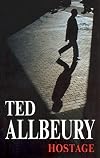
Excellent thriller. Story of a man who took service to his country as seriously as possible but the moment he starts questioning his superiors in regard to orders and actions required he is not just to be disposed of but disposed of in cruelest manner of all.
Story that shows that although loyalty in people is very rare what is rarer is respect that is due to these people - more often than not they are just simply regarded as fools and their reputation is smeared the moment they are declared show more as no-value assets.
Highly recommended. show less
Story that shows that although loyalty in people is very rare what is rarer is respect that is due to these people - more often than not they are just simply regarded as fools and their reputation is smeared the moment they are declared show more as no-value assets.
Highly recommended. show less
Lists
Awards


You May Also Like


Associated Authors
Statistics
- Works
- 59
- Also by
- 6
- Members
- 1,776
- Popularity
- #14,496
- Rating
- 3.2
- Reviews
- 17
- ISBNs
- 440
- Languages
- 10
- Favorited
- 3