
Kelefa Sanneh
Author of Major Labels: A History of Popular Music in Seven Genres
Works by Kelefa Sanneh
Associated Works
Tagged
Common Knowledge
- Birthdate
- 1976
- Gender
- male
- Education
- Harvard University
- Occupations
- journalist
music critic - Organizations
- The New Yorker
The New York Times - Relationships
- Sanneh, Lamin (father)
- Nationality
- USA
- Birthplace
- Birmingham, West Midlands, England, UK
Members
Reviews

It’s not often I give up on a book, but Major Labels has defeated me.
The subtitle “A history of popular music in seven genres – Rock R&B Country Punk Hip-Hop Dance Pop” should give you a clear idea of what the book is about.
The author covered rock and roll, hip-hop, and pop music for The New York Times from 2000-2008 and now writes for The New Yorker.
The first sections on Rock and R&B were engaging and, mostly, convincing. It’s territory that’s largely already well documented, show more although Sanneh does pluck out some lesser know facts and from them draws some interesting conclusions. Yes, there were notable omissions but you have to expect that in a single book covering so much. The main content runs to 550 pages with an index of 66 pages. So he can’t cover everything. I suppose that’s why the book doesn’t delve deeply into jazz, folk or other musical genres.
It was in the Country section that the anomalies and omissions started bothering me. How could Loretta Lynn be reduced to two short references and Tammy Wynette just one? When Sanneh talks about racism in country music, how is it that chart-topping Charley Pride is reduced to a single sentence, and a not very insightful one, at that. Surely, his story should be pivotal in understanding racism in country music.
There were, however, enough insights and background information to keep me interested. When Billboard invented the term Country & Western to hive off some of its listings into a specialty chart, the Country part referred to hillbilly music from the Appalachian mountains in the east, while the Western part referred to cowboy music from Texas and the southwest. Not identical types of music, but with enough in common to put them together. It wasn’t long before Billboard abbreviated this to just Country, as the form’s musical heart became fixed in Nashville. Which resulted in the oddity that a city in the heart of the south became identified with cowboy hats and boots, in an area where there’s no cattle ranching and, by definition, no cowboys. I’d never thought of it like that, and it’s an interesting point.
But it was in the Punk section he lost me, and I think I know why. In the earlier parts, Sanneh was dealing with history (including recent history) at a decent arm’s length. When writing about punk, however, things become very personal, dominated by the author’s own experiences as a punter, a player, a DJ and then a journalist and reviewer. This affects his coverage a great deal. It goes from being “a history” to being “a personal history”. Some might find this more engaging – I didn’t.
Punk is tricky to understand and analyse, let alone write about – which was part of the point of its emergence. It was (and is) anti-establishment music, especially the music establishment. It’s based on the belief that anyone can make music, it doesn’t have to be part of the big business that rock and roll, rock and pop had become. Sanneh correctly identifies that punk’s driving forces were a little more focused than that, driven by people like Malcolm MacLaren, who knew what he was doing in a quite deliberate, calculated way. The Sex Pistols did, after all, take their name from MacLaren’s SEX shop, which was also about selling the late Vivienne Westwood’s iconoclastic clothing designs. The Pistols were always a commercial enterprise, whether they liked it (or knew it) or not.
As to when and where punk emerged, and what is and isn’t punk, that’s not easy to pin down. Sanneh puts his personal spin on it, based mostly on concerts he attended and music he listened to. That’s neither comprehensive nor objective. Arbitrarily labelling bands proto-punk, pop-punk, punk-pop, post-punk, art-punk and punk-ish is unhelpful and becomes increasingly annoying. Focusing on extended personal reactions to Green Day while excluding any analysis of how punk broke Elvis Costello and Joe Jackson in the UK before everyone realised they were master musicians and singer-songwriters mystifies me (those two get no mention at all in the book, The Police get a tiny reference).
The trouble is that Sanneh uses his reflections to make a case for why musical genres themselves are no bad thing and how genre-hopping has produced some masterpieces. I don’t disagree with that, but when the “history” is so selective, how can we give any credence to his conclusions?
I said at the start that this book defeated me but, in truth, I think it defeated Sanneh.
Disappointing. show less
The subtitle “A history of popular music in seven genres – Rock R&B Country Punk Hip-Hop Dance Pop” should give you a clear idea of what the book is about.
The author covered rock and roll, hip-hop, and pop music for The New York Times from 2000-2008 and now writes for The New Yorker.
The first sections on Rock and R&B were engaging and, mostly, convincing. It’s territory that’s largely already well documented, show more although Sanneh does pluck out some lesser know facts and from them draws some interesting conclusions. Yes, there were notable omissions but you have to expect that in a single book covering so much. The main content runs to 550 pages with an index of 66 pages. So he can’t cover everything. I suppose that’s why the book doesn’t delve deeply into jazz, folk or other musical genres.
It was in the Country section that the anomalies and omissions started bothering me. How could Loretta Lynn be reduced to two short references and Tammy Wynette just one? When Sanneh talks about racism in country music, how is it that chart-topping Charley Pride is reduced to a single sentence, and a not very insightful one, at that. Surely, his story should be pivotal in understanding racism in country music.
There were, however, enough insights and background information to keep me interested. When Billboard invented the term Country & Western to hive off some of its listings into a specialty chart, the Country part referred to hillbilly music from the Appalachian mountains in the east, while the Western part referred to cowboy music from Texas and the southwest. Not identical types of music, but with enough in common to put them together. It wasn’t long before Billboard abbreviated this to just Country, as the form’s musical heart became fixed in Nashville. Which resulted in the oddity that a city in the heart of the south became identified with cowboy hats and boots, in an area where there’s no cattle ranching and, by definition, no cowboys. I’d never thought of it like that, and it’s an interesting point.
But it was in the Punk section he lost me, and I think I know why. In the earlier parts, Sanneh was dealing with history (including recent history) at a decent arm’s length. When writing about punk, however, things become very personal, dominated by the author’s own experiences as a punter, a player, a DJ and then a journalist and reviewer. This affects his coverage a great deal. It goes from being “a history” to being “a personal history”. Some might find this more engaging – I didn’t.
Punk is tricky to understand and analyse, let alone write about – which was part of the point of its emergence. It was (and is) anti-establishment music, especially the music establishment. It’s based on the belief that anyone can make music, it doesn’t have to be part of the big business that rock and roll, rock and pop had become. Sanneh correctly identifies that punk’s driving forces were a little more focused than that, driven by people like Malcolm MacLaren, who knew what he was doing in a quite deliberate, calculated way. The Sex Pistols did, after all, take their name from MacLaren’s SEX shop, which was also about selling the late Vivienne Westwood’s iconoclastic clothing designs. The Pistols were always a commercial enterprise, whether they liked it (or knew it) or not.
As to when and where punk emerged, and what is and isn’t punk, that’s not easy to pin down. Sanneh puts his personal spin on it, based mostly on concerts he attended and music he listened to. That’s neither comprehensive nor objective. Arbitrarily labelling bands proto-punk, pop-punk, punk-pop, post-punk, art-punk and punk-ish is unhelpful and becomes increasingly annoying. Focusing on extended personal reactions to Green Day while excluding any analysis of how punk broke Elvis Costello and Joe Jackson in the UK before everyone realised they were master musicians and singer-songwriters mystifies me (those two get no mention at all in the book, The Police get a tiny reference).
The trouble is that Sanneh uses his reflections to make a case for why musical genres themselves are no bad thing and how genre-hopping has produced some masterpieces. I don’t disagree with that, but when the “history” is so selective, how can we give any credence to his conclusions?
I said at the start that this book defeated me but, in truth, I think it defeated Sanneh.
Disappointing. show less
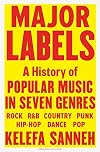
Kelefa Sanneh, a former music critic for the New York Times, and writer for the New Yorker, revisists the history of popular music from the 1970s to today in a series of essays focusing on genres. These genres include the venerable traditions of Rock, R&B, and Country as well as the upstarts Punk, Hip-Hop, and Dance. The final essay focuses on the amorphous genre of Pop.
Sanneh is a fan of all these types of music so he brings in his personal experience when discussing them. I find that show more appropriate since music is such a personal thing. Sanneh does a great job at summarizing the history and the struggles of artists within these genres to remain true to their style. He also notes that over the past 50 years that each of these genres is converging to create a new "pop" music even at a time when streaming music platforms should allow greater splits.
This was a fun an informative book for a music fan. show less
Sanneh is a fan of all these types of music so he brings in his personal experience when discussing them. I find that show more appropriate since music is such a personal thing. Sanneh does a great job at summarizing the history and the struggles of artists within these genres to remain true to their style. He also notes that over the past 50 years that each of these genres is converging to create a new "pop" music even at a time when streaming music platforms should allow greater splits.
This was a fun an informative book for a music fan. show less

Don’t let the title Major Labels keep you from reading this. It isn’t about the major record labels behind the most popular music of the past fifty years; it’s about the music itself. There’s a lot here about the history of how today's music genres evolved and it includes enough examples of specific songs that it was easy to cue them up and listen along. I ended up hearing a lot of familiar tunes with completely new ears this way.
A few short passages from Major Labels:
*
Many contemporary listeners want to be reassured that the performers they love are also people they would like – a common enough desire, although probably a more radical one than some listeners realize. (A playlist of unimpeachably good-hearted, well-behaved musicians would probably not resemble anyone’s idea of a greatest-hits collection.)
*
A song about anguish is not necessarily any more meaningful than a song about partying, let alone show more better.
*
There are limits to this sort of analysis, of course, because it may measure what listeners are willing to settle for, as opposed to what they actually want. But that is true for all genres and all audiences. And there is no reason to think that the fans who packed arenas for hair metal were especially ambivalent or unusually unsatisfied.
*
Out of the mainstream, countless singer-songwriters built their own idiosyncratic bodies of work; for decades I have nursed an obsession with Daniel Bejar, the Canadian singer-songwriter who records as Destroyer, and whose lyrics are packed with cryptic in-jokes that no one fully understands, including him.
*
There is nothing wrong with supporting unpopular causes, of course: sometimes those causes spread and triumph, and sometimes causes that never catch on are nevertheless righteous. But there is something especially perverse about adopting unpopular causes in part because they are unpopular, and then pretending to be outraged by that unpopularity.
*
But traditionally, small labels were just as hungry for sales and hits as big ones, and often hungrier. By contrast, the punk-inspired indie labels […] had a paradoxical mission. They aimed to engage in commerce without going commercial.
* show less
*
Many contemporary listeners want to be reassured that the performers they love are also people they would like – a common enough desire, although probably a more radical one than some listeners realize. (A playlist of unimpeachably good-hearted, well-behaved musicians would probably not resemble anyone’s idea of a greatest-hits collection.)
*
A song about anguish is not necessarily any more meaningful than a song about partying, let alone show more better.
*
There are limits to this sort of analysis, of course, because it may measure what listeners are willing to settle for, as opposed to what they actually want. But that is true for all genres and all audiences. And there is no reason to think that the fans who packed arenas for hair metal were especially ambivalent or unusually unsatisfied.
*
Out of the mainstream, countless singer-songwriters built their own idiosyncratic bodies of work; for decades I have nursed an obsession with Daniel Bejar, the Canadian singer-songwriter who records as Destroyer, and whose lyrics are packed with cryptic in-jokes that no one fully understands, including him.
*
There is nothing wrong with supporting unpopular causes, of course: sometimes those causes spread and triumph, and sometimes causes that never catch on are nevertheless righteous. But there is something especially perverse about adopting unpopular causes in part because they are unpopular, and then pretending to be outraged by that unpopularity.
*
But traditionally, small labels were just as hungry for sales and hits as big ones, and often hungrier. By contrast, the punk-inspired indie labels […] had a paradoxical mission. They aimed to engage in commerce without going commercial.
* show less
Lists
Awards


You May Also Like
Associated Authors
Statistics
- Works
- 5
- Also by
- 3
- Members
- 228
- Popularity
- #98,696
- Rating
- 3.9
- Reviews
- 5
- ISBNs
- 12
- Languages
- 1