
William H. Propp
Author of Exodus 1-18: A New Translation with Notes and Comments
About the Author
William H. C. Propp is currently Professor of History and Judaic Studies at the University of California, San Diego. He has written widely on the Hebrew Bible in respected scholarly journals such as Catholic Biblical Quarterly, Journal of Biblical Literature, and Vetus Testamentum. He lives in La show more Jolla, California. show less
Works by William H. Propp
Associated Works
Tagged
Common Knowledge
- Legal name
- Propp, William Henry
- Gender
- male
Members
Reviews
Exodus 19-40: A New Translation with Introduction and Commentary by William H.C. Propp (Anchor Bible) by William H. Propp
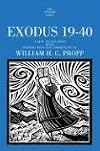
I've found this commentary to be particularly useful. Propp provides for each pericope textual analysis comparing the Masoretic Text with other early version (the Samaritan Pentateuch, the Septuagint, the various targumim, etc.), an analysis of source criticism (because some people are just kinky that way), redaction analysis, general notes, and commentary on certain topics within the pericope. The most rewarding part of this, for me, are the general notes where analyses everything he show more believes to be of note. Often times, this meanings digging into the precise meaning of words, and his Hebrew is good enough for him to competently hold forth on the classic medieval Jewish commentators in addition to modern scholarship. In volume two, he also provides hand-drawn images of certain elements of the Tabernacle, which I found very helpful.
On the down side:
1) His pericope divisions aren't helpful if you're reading the weekly portion: He groups his sections topically, which makes sense, but he's aside from casual mention here and there he's completely ignored the traditional parashah layout, and that annoys me.
2) His translation is almost English: The goal of the translation is to adhere to the MT as closely as possible to include word order and using transliterations in instances of question. This is good enough, but sometimes I just wish I didn't have to turn to the notes to figure out what an alleged English sentence meant.
3) No footnotes: In an ideal world, the Notes section would have been presented as footnotes instead of as a separate section 30-40 pages after the translation.
4) The citation style blows: Propp uses APA, and it's crap. Yes, I know, it's easy and it's familiar, but it forces the reader to check the bibliography if one wants to know more than the author's last name and the year of publication. Gershayim sez: a full name and a title plus year of publication in a footnote is the way to go.
5) The moshing priest on page 434 in volume 2: You might think this cool, but you might also be high.
Despite the negatives and the moshing priest drawing, serious readers and those wanting quality spot checks on the text and/or language would do well to include Propp in their arsenal.
For the record: I've given the two volumes different star ratings. The exodus story is fine and all, but at heart the twisted grammar, nit-picky details, and philological lacunae provided in the legal portions of the second volume do it for me. show less
On the down side:
1) His pericope divisions aren't helpful if you're reading the weekly portion: He groups his sections topically, which makes sense, but he's aside from casual mention here and there he's completely ignored the traditional parashah layout, and that annoys me.
2) His translation is almost English: The goal of the translation is to adhere to the MT as closely as possible to include word order and using transliterations in instances of question. This is good enough, but sometimes I just wish I didn't have to turn to the notes to figure out what an alleged English sentence meant.
3) No footnotes: In an ideal world, the Notes section would have been presented as footnotes instead of as a separate section 30-40 pages after the translation.
4) The citation style blows: Propp uses APA, and it's crap. Yes, I know, it's easy and it's familiar, but it forces the reader to check the bibliography if one wants to know more than the author's last name and the year of publication. Gershayim sez: a full name and a title plus year of publication in a footnote is the way to go.
5) The moshing priest on page 434 in volume 2: You might think this cool, but you might also be high.
Despite the negatives and the moshing priest drawing, serious readers and those wanting quality spot checks on the text and/or language would do well to include Propp in their arsenal.
For the record: I've given the two volumes different star ratings. The exodus story is fine and all, but at heart the twisted grammar, nit-picky details, and philological lacunae provided in the legal portions of the second volume do it for me. show less
See review on other volume
You May Also Like


Associated Authors
Statistics
- Works
- 5
- Also by
- 1
- Members
- 296
- Popularity
- #79,167
- Rating
- 4.5
- Reviews
- 2
- ISBNs
- 8