
Karen Heuler
Author of The Splendid City
Works by Karen Heuler
Associated Works
When Things Get Dark: Stories Inspired by Shirley Jackson (2021) — Contributor — 255 copies, 12 reviews
Dreams from the Witch House: Female Voices of Lovecraftian Horror (2015) — Contributor — 102 copies, 2 reviews
ParaSpheres: Extending Beyond the Spheres of Literary and Genre Fiction: Fabulist and New Wave Fabulist Stories (2006) — Contributor — 65 copies
Asimov's Science Fiction: Vol. 47, No. 1 & 2 [January/February 2023] — Contributor — 5 copies, 2 reviews
Tagged
Common Knowledge
- Birthdate
- 1949-06-13
- Gender
- female
- Education
- Long Island University, 1976 (MA|English)
- Nationality
- USA
- Birthplace
- Brooklyn, New York, USA
- Associated Place (for map)
- New York, USA
Members
Reviews
Rating: 3.75* of five
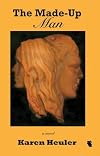
The Book Report: Alyson Salky lives in 1980s New York with her beloved, Peter, their dog Dingo, and a few friends that Alyson can't really account for liking. One of those friends, Maggie, snatches Peter out from under Alyson, which is as we all know a painful experience. So what does Alyson do? She sells her soul to the devil, here called Madame Hope the fortuneteller. Several stinging ironies in that, eh what?
So now we get to the title: Alyson chooses, as her first show more step in this revenge of hers, to become a man. Yes, actually become a man, as in physically transforming herself into the enemy. Madame Hope, an evil glint in her eye (I confess, it's a horrible pun, but it had to be said), agrees with relish to the proposal and *poof* Alyson becomes Bob. Everyone still remembers Alyson, but Bob is part of each memory now, too. Bob is friends, through Alyson, with Maggie and Peter; Bob is now part of the magazine staff where Alyson once worked; and it's these things that allow Bob to wreak his devilish (!) havoc on the lives of Maggie and Peter.
He does a damn fine job of his revenge! Oh my my, does he do a good job! I was quite awed by Heuler's vicious imagination, and I'd hate to be a character at *this* author's mercy. In the end, though, Alyson passes through her revenge fantasy, and her dark night of the soul, and emerges as a fascinating, multi-dimensional character one would like to have on the next barstool. That would be one interesting conversation.
My Review: Heuler, a well-published short-story writer and novelist, has a deft hand with prose. There's a nice economy to her storytelling, as she brings this sardonic take on the Don Giovanni story home in under 230pp. It's very easy to see how the characters, all of them, fall into the pits and traps and snares that await all humanity. It's a lot harder to judge them for it than it is other writers' characters precisely because Heuler has such a keen sense of what to say and what to leave out.
There are two problems I have with the book: First, as Bob, the author has some characters think he's gay and in love with Peter, while others don't think so at all, including Peter; second, the last paragraphs of the ending seem to me a cheat, an added-on afterthought that adds nothing to the character or the story.
My first issue is a serious one. Structurally, this mooshy-splooshy confusion isn't dealt with in any kind of story-advancing constructive way. Emotionally, it makes little difference, really, simply keeping two characters from getting inconveniently involved at a certain point; and it gives little depth to any of the interactions Bob has. I took a whole star off because of the unnecessary complication and confusion it caused me in reading the book.
The ending, well, it's not in me to spoiler it, but I can say it bothered me a lot less than the botched gay subplot because it was so short-lived, only a few sentences at the very end of this wicked little book.
A nicely made how-the-other-half-lives cautionary tale, a sharp and sarcastic "Mephistopheles in Manhattan," and a darn good candidate for the title "Love's Labours Won and Lost and Won and Lost and...." Read it soon. show less
The Book Report: Alyson Salky lives in 1980s New York with her beloved, Peter, their dog Dingo, and a few friends that Alyson can't really account for liking. One of those friends, Maggie, snatches Peter out from under Alyson, which is as we all know a painful experience. So what does Alyson do? She sells her soul to the devil, here called Madame Hope the fortuneteller. Several stinging ironies in that, eh what?
So now we get to the title: Alyson chooses, as her first show more step in this revenge of hers, to become a man. Yes, actually become a man, as in physically transforming herself into the enemy. Madame Hope, an evil glint in her eye (I confess, it's a horrible pun, but it had to be said), agrees with relish to the proposal and *poof* Alyson becomes Bob. Everyone still remembers Alyson, but Bob is part of each memory now, too. Bob is friends, through Alyson, with Maggie and Peter; Bob is now part of the magazine staff where Alyson once worked; and it's these things that allow Bob to wreak his devilish (!) havoc on the lives of Maggie and Peter.
He does a damn fine job of his revenge! Oh my my, does he do a good job! I was quite awed by Heuler's vicious imagination, and I'd hate to be a character at *this* author's mercy. In the end, though, Alyson passes through her revenge fantasy, and her dark night of the soul, and emerges as a fascinating, multi-dimensional character one would like to have on the next barstool. That would be one interesting conversation.
My Review: Heuler, a well-published short-story writer and novelist, has a deft hand with prose. There's a nice economy to her storytelling, as she brings this sardonic take on the Don Giovanni story home in under 230pp. It's very easy to see how the characters, all of them, fall into the pits and traps and snares that await all humanity. It's a lot harder to judge them for it than it is other writers' characters precisely because Heuler has such a keen sense of what to say and what to leave out.
There are two problems I have with the book: First, as Bob, the author has some characters think he's gay and in love with Peter, while others don't think so at all, including Peter; second, the last paragraphs of the ending seem to me a cheat, an added-on afterthought that adds nothing to the character or the story.
My first issue is a serious one. Structurally, this mooshy-splooshy confusion isn't dealt with in any kind of story-advancing constructive way. Emotionally, it makes little difference, really, simply keeping two characters from getting inconveniently involved at a certain point; and it gives little depth to any of the interactions Bob has. I took a whole star off because of the unnecessary complication and confusion it caused me in reading the book.
The ending, well, it's not in me to spoiler it, but I can say it bothered me a lot less than the botched gay subplot because it was so short-lived, only a few sentences at the very end of this wicked little book.
A nicely made how-the-other-half-lives cautionary tale, a sharp and sarcastic "Mephistopheles in Manhattan," and a darn good candidate for the title "Love's Labours Won and Lost and Won and Lost and...." Read it soon. show less

This is the story of twins, one of whom is born with a rare neurological disorder that makes her unable to feel pain. The pain-free twin grows up with a sense of invulnerability and superiority over mere fearful mortals, while the "normal" twin, who is forced to monitor her sister's well-being since she could be seriously injured without being aware of it, has an overdeveloped sense of responsibility. It was a little disappointing in that the ethical and psychological ramifications were not show more explored as deeply as they could have been. But it was quite a page-turner, and having myself a slightly older sister with an overdeveloped sense of responsibility, I found enough food for thought to make it worthwhile reading. show less
I received a copy of The Inner City from the author in exchange for an honest review.
I really truly enjoyed the series of short stories in The Inner City. I enjoyed the strange and rather creepy elements that were incorporated into each of the stories, even some of the more docile ones like "Fish Wish" that weren't as scary as some of the others left a lasting impression on me. My favorites among the stories were probably as follows, "Down On the Farm", "The Escape Artist", "Creating Cow", show more "How Lightly He Stepped in the Air", and "Thick Water". The sense of wonder I was left with is something I sometimes have trouble finding when reading although its a part of it that I really enjoy. Being left with questions after you read is something that helps it seem like the characters are real and breathing out there somewhere instead of taking up space on paper. Karen Heuler has made her characters come to life and I highly recommend The Inner City to those who don't cringe at strange and peculiar happenings. show less
I really truly enjoyed the series of short stories in The Inner City. I enjoyed the strange and rather creepy elements that were incorporated into each of the stories, even some of the more docile ones like "Fish Wish" that weren't as scary as some of the others left a lasting impression on me. My favorites among the stories were probably as follows, "Down On the Farm", "The Escape Artist", "Creating Cow", show more "How Lightly He Stepped in the Air", and "Thick Water". The sense of wonder I was left with is something I sometimes have trouble finding when reading although its a part of it that I really enjoy. Being left with questions after you read is something that helps it seem like the characters are real and breathing out there somewhere instead of taking up space on paper. Karen Heuler has made her characters come to life and I highly recommend The Inner City to those who don't cringe at strange and peculiar happenings. show less
https://fromtheheartofeurope.eu/the-splendid-city-by-karen-heuler-brief-note/
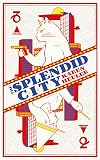
I really enjoyed The Splendid City and read it to the end, a charming and slightly subversive suburban fantasy, but I don’t think there’s any way it could reasonably be classified as science fiction. All the technology is contemporary, and there is lots of magic.
I really enjoyed The Splendid City and read it to the end, a charming and slightly subversive suburban fantasy, but I don’t think there’s any way it could reasonably be classified as science fiction. All the technology is contemporary, and there is lots of magic.
Lists
Awards

You May Also Like
Associated Authors
Statistics
- Works
- 22
- Also by
- 22
- Members
- 247
- Popularity
- #92,309
- Rating
- 3.7
- Reviews
- 5
- ISBNs
- 28
