
Joy Evans
Author of How to Teach Art to Children, Grades 1-6
Works by Joy Evans
Literature & Writing Connections : How to Make Books with Children - Grade Level 1 through 6 (1997) 15 copies
Holidays & Celebrations: How to Make Books W/Children (How to Make Books with Children Series) (1997) 6 copies
Winter art ideas: Teacher resource book, level K-5 (Evan-Moor Arts and Crafts Series) (1986) 3 copies
Masks of imaginary creatures for oral language activities (Masks for oral language activities) (1987) 1 copy
Sequencing: Reproducible 1 copy
Cross-legged Critters: 13 Critters from One Basic Design (Art Plans and Reproductibles) (1980) 1 copy
How is it Made? 1 copy
Tagged
Common Knowledge
- Birthdate
- 1946
- Gender
- female
- Occupations
- teacher
educational publisher - Organizations
- Evans-Moor (co-founder)
- Places of residence
- Monterey, California, USA
- Associated Place (for map)
- California, USA
Members
Reviews
Originally published in a homeschool support group newsletter in the summer of 2008.
===
I loved craft projects as a child and still do. As a mom and a homeschooler, I believe my child should have a basic knowledge of various art media and elements. For kindergarten and first grade, I used Five in a Row's art appreciation lessons to develop some familiarity with art. Yet, I thought my son needed some hands-on experience.
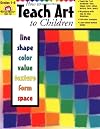
Then, I discovered "How to Teach Art to Children." This book contains show more simple, not-too-messy projects that don't deter my little perfectionist, complete with a materials list, step-by-step instructions, and color photo illustrations.
The book contains two parts: Learning About the Elements of Art and Using the Elements of Art. Vocabulary words are listed in the introduction. The bulk of the text covers the seven elements of art: line, shape, color, value, texture, form, and space. Each element section begins with a definition and provides several projects to demonstrate the element.
For instance, the color section starts with the primary colors and then moves on to the secondary colors, contrasting colors, warm and cool colors, and a study of the color wheel. Some projects take a more scientific bent, such as mixing paints. This appealed to my scientist son.
Part Two, Using the Elements of Art, offers 24 projects based on the work of famous artists, presented in order of difficulty. Each project gives a short description of an artist with literature references, lists of materials and art elements used, what to talk about, and step-by-step instructions.
Most of the artists listed worked in the 19th and 20th centuries. Some projects come from different time periods and cultures, such as ancient Egypt or the Ashanti Peoples of Ghana, Africa. The media used include items such as paper, paint, clay, fabric, stamps, and papier-mache. All projects are kid-friendly, and no offensive pictures appear in this text. You may need to screen some of the suggested books, however, since art books sometimes contain nudity. show less
===
I loved craft projects as a child and still do. As a mom and a homeschooler, I believe my child should have a basic knowledge of various art media and elements. For kindergarten and first grade, I used Five in a Row's art appreciation lessons to develop some familiarity with art. Yet, I thought my son needed some hands-on experience.
Then, I discovered "How to Teach Art to Children." This book contains show more simple, not-too-messy projects that don't deter my little perfectionist, complete with a materials list, step-by-step instructions, and color photo illustrations.
The book contains two parts: Learning About the Elements of Art and Using the Elements of Art. Vocabulary words are listed in the introduction. The bulk of the text covers the seven elements of art: line, shape, color, value, texture, form, and space. Each element section begins with a definition and provides several projects to demonstrate the element.
For instance, the color section starts with the primary colors and then moves on to the secondary colors, contrasting colors, warm and cool colors, and a study of the color wheel. Some projects take a more scientific bent, such as mixing paints. This appealed to my scientist son.
Part Two, Using the Elements of Art, offers 24 projects based on the work of famous artists, presented in order of difficulty. Each project gives a short description of an artist with literature references, lists of materials and art elements used, what to talk about, and step-by-step instructions.
Most of the artists listed worked in the 19th and 20th centuries. Some projects come from different time periods and cultures, such as ancient Egypt or the Ashanti Peoples of Ghana, Africa. The media used include items such as paper, paint, clay, fabric, stamps, and papier-mache. All projects are kid-friendly, and no offensive pictures appear in this text. You may need to screen some of the suggested books, however, since art books sometimes contain nudity. show less
Easy to use, whether in a classroom or home school situation. Uses easy to find materials, & allows the child to discover art for himself.
You May Also Like


Associated Authors
Statistics
- Works
- 84
- Members
- 671
- Popularity
- #37,613
- Rating
- 4.5
- Reviews
- 3
- ISBNs
- 88
- Languages
- 1