
Steven High
Author of Industrial Sunset: The Making of North America's Rust Belt, 1969-1984
About the Author
Steven High is Professor and Canada Research Chair in Oral History at Concordia University.
Works by Steven High
Associated Works
Tagged
Common Knowledge
- Gender
- male
Members
Reviews
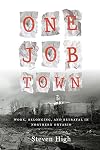
Northern Ontario is dotted with one job towns dependent for decades on mine, mill, or factory. And just like similar towns throughout the rest of Canada, the United States, and Europe, deindustrialization has had a devastating impact not only on the towns as a whole but on the mental and physical well-being of the workers who have been left without work and in too many cases without prospects or hope. As the publishers blurb points out, ‘[t]here’s a pervasive sense of betrayal in areas show more scarred by mine, mill and factory closures’.
Steven High examines one such town in northern Ontario, Sturgeon Falls, It had been dependent on its lumber mill for over a century, through successive booms, busts, and changing management until its final closure in 2002. In most ways, Sturgeon Falls is no different than other one job towns. What does make it unique is the fact that during the ‘90s, the mill was switched over to produce corrugated cardboard to keep it open. The town and government had provided a loan to Weyerhaeuser, the latest owners, to do so and, in return, retained a financial stake in it. As a result the books were open to the public and they showed that this final closure was not due to falling revenues – in fact, they had an ongoing contract in effect for the next nine months for all the cardboard they could produce. There was an attempt to purchase the factory locally to keep it running but Weyerhaeuser, an American-owned company, refused and had the factory torn down.
High uses both secondary and primary sources including interviews with many of the workers and black and white photographs to tell the tale. It is unfortunately a story that has been neglected by the mainstream media and too many politicians. We are given unemployment statistics that show that things are going well but they don’t tell the whole story. They don’t show how many of the new jobs that are replacing good-paying union jobs in these mines, mills and factories, are part-time, casual, and minimum wage, how much is due to the aging out of Boomers from the workforce, or how many people have just given up looking. It also doesn’t tell how many of the young people in these towns have been forced to leave to find work elsewhere.
I won’t say One Job Town is an easy read – despite the interviews with the workers, it does often feel like a university textbook which some may find off-putting. But for anyone who wants to understand what the effects of deindustrialization looks like in real human terms or wonders what is driving the political shifts both left and right in working class areas including the American rust belt, High provides both facts and insights as well as an empathetic portrait of the working class, something that is missing from most sources purporting to explain it usually only as scapegoat for the rise of right-wing ‘populists’ like trump.
Thanks to Netgalley and University of Toronto Press for the opportunity to read this book in exchange for an honest review show less
Steven High examines one such town in northern Ontario, Sturgeon Falls, It had been dependent on its lumber mill for over a century, through successive booms, busts, and changing management until its final closure in 2002. In most ways, Sturgeon Falls is no different than other one job towns. What does make it unique is the fact that during the ‘90s, the mill was switched over to produce corrugated cardboard to keep it open. The town and government had provided a loan to Weyerhaeuser, the latest owners, to do so and, in return, retained a financial stake in it. As a result the books were open to the public and they showed that this final closure was not due to falling revenues – in fact, they had an ongoing contract in effect for the next nine months for all the cardboard they could produce. There was an attempt to purchase the factory locally to keep it running but Weyerhaeuser, an American-owned company, refused and had the factory torn down.
High uses both secondary and primary sources including interviews with many of the workers and black and white photographs to tell the tale. It is unfortunately a story that has been neglected by the mainstream media and too many politicians. We are given unemployment statistics that show that things are going well but they don’t tell the whole story. They don’t show how many of the new jobs that are replacing good-paying union jobs in these mines, mills and factories, are part-time, casual, and minimum wage, how much is due to the aging out of Boomers from the workforce, or how many people have just given up looking. It also doesn’t tell how many of the young people in these towns have been forced to leave to find work elsewhere.
I won’t say One Job Town is an easy read – despite the interviews with the workers, it does often feel like a university textbook which some may find off-putting. But for anyone who wants to understand what the effects of deindustrialization looks like in real human terms or wonders what is driving the political shifts both left and right in working class areas including the American rust belt, High provides both facts and insights as well as an empathetic portrait of the working class, something that is missing from most sources purporting to explain it usually only as scapegoat for the rise of right-wing ‘populists’ like trump.
Thanks to Netgalley and University of Toronto Press for the opportunity to read this book in exchange for an honest review show less
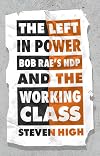
In The Left in Power, Steven High gives a well-researched and objective account of the New Democratic Party’s 1990-95 government in Ontario, Canada, under Bob Rae. The victory of the Social Democratic NDP was a surprise to everyone and no more so than to the party itself and, as High makes clear, it showed. These were tumultuous years as the west was shifting to globalization and neoliberalism and, in an effort to cope, the NDP government abandoned many of their progressive ideas much to show more the dismay of their membership and allies in the labour movement. This is not to say they didn’t do some good especially in northern Ontario but their embrace of many neoliberal policies including austerity resulting in the abandonment of the party by many of its members and staunchest allies and, eventually, loss at the next election. In clear and concise language, High gives an in depth look at what the NDP accomplished and how and why it failed.
Thanks to Netgalley and Literary Press Group of Canada for the opportunity to read this book in exchange for an honest review show less
Thanks to Netgalley and Literary Press Group of Canada for the opportunity to read this book in exchange for an honest review show less
Awards


You May Also Like
Associated Authors
Statistics
- Works
- 13
- Also by
- 1
- Members
- 84
- Popularity
- #216,910
- Rating
- 3.8
- Reviews
- 2
- ISBNs
- 30