
Sassafras Patterdale
Author of Lost Boi
About the Author
Image credit: Sassafras Patterdale
Works by Sassafras Patterdale
Associated Works
Trans/Love: Radical Sex, Love & Relationships Beyond the Gender Binary (2011) — Contributor — 116 copies, 2 reviews
Tagged
Common Knowledge
- Canonical name
- Patterdale, Sassafras
- Legal name
- Patterdale, Sassafras
- Other names
- Lowrey, Sassafras
- Birthdate
- 1984-05-16
- Gender
- genderqueer
- Occupations
- writer
dog trainer - Awards and honors
- Lambda Literary Award (Dr. Betty Berzon Emerging Writer Awards, 2013)
- Short biography
- Sassafras Patterdale (formerly Sassafras Lowrey) is an American author and dog trainer. Ze is non-binary and uses they/them and ze/hir pronouns.
- Nationality
- USA
- Places of residence
- Portland, Oregon, USA
- Associated Place (for map)
- Oregon, USA
Members
Reviews
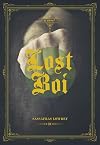
The blurbs on the back of Lost Boi seem to mostly focus on the anthem-like qualities of the novel. And the novel -is- an anthem in that it depicts a world where everyone is queer and everyone celebrates their queerness, or even takes it for granted as the way things are in Neverland.
But celebration of identity was only part of the "Neverland" metaphor for me. There was also a dark and unsafe quality to the Neverland metaphor when it's transplanted to a queer context. The "lost bois" in this show more novel are runaways, just as they are in Barrie's original Peter Pan story. But in a queer context, a novel about runaways also feels like an unflinching nod to the truth, that queer/trans teens make up a disproportionately large percentage of runaways and homeless youth. Wendi and John Michael are in high school at the beginning of the novel when they run away with Pan. They are still in the foster care system--so, under 18. And while the character of Pan (never "Peter Pan") is depicted as ageless, as in the original material, he feels older to me. He feels predatory. He's the only character who is called by the pronoun "he." I kept imagining the hairy half-goat god Pan, not the little boy in green from the Disney version, and not a "boi" either. While on one level Pan acts as a guide to a world where queerness is fully celebrated, on another level he, and Neverland, felt to me like metaphors for a real-world reality where young queer runaways are in constant danger of being sexually exploited.
I have to say this was obviously my very individual read of the text. It felt gritty and disturbing and threatening to me, as well as celebratory. For me, the entire read vibrated between these two interpretations--both a celebration of identity, and an acknowledgment of how unsafe it is to be queer. The submission/dominance themes that occur throughout the novel felt like another reflection of this dichotomy, and they increased my sense of vulnerability as a reader. This novel is an exploration of how, in the act of accepting your identity, you're also accepting that you're living in a hostile world. The characters in Lost Boi love their life, and they love one another. But even in Neverland it's dangerous to be queer. show less
But celebration of identity was only part of the "Neverland" metaphor for me. There was also a dark and unsafe quality to the Neverland metaphor when it's transplanted to a queer context. The "lost bois" in this show more novel are runaways, just as they are in Barrie's original Peter Pan story. But in a queer context, a novel about runaways also feels like an unflinching nod to the truth, that queer/trans teens make up a disproportionately large percentage of runaways and homeless youth. Wendi and John Michael are in high school at the beginning of the novel when they run away with Pan. They are still in the foster care system--so, under 18. And while the character of Pan (never "Peter Pan") is depicted as ageless, as in the original material, he feels older to me. He feels predatory. He's the only character who is called by the pronoun "he." I kept imagining the hairy half-goat god Pan, not the little boy in green from the Disney version, and not a "boi" either. While on one level Pan acts as a guide to a world where queerness is fully celebrated, on another level he, and Neverland, felt to me like metaphors for a real-world reality where young queer runaways are in constant danger of being sexually exploited.
I have to say this was obviously my very individual read of the text. It felt gritty and disturbing and threatening to me, as well as celebratory. For me, the entire read vibrated between these two interpretations--both a celebration of identity, and an acknowledgment of how unsafe it is to be queer. The submission/dominance themes that occur throughout the novel felt like another reflection of this dichotomy, and they increased my sense of vulnerability as a reader. This novel is an exploration of how, in the act of accepting your identity, you're also accepting that you're living in a hostile world. The characters in Lost Boi love their life, and they love one another. But even in Neverland it's dangerous to be queer. show less
Genderqueer element aside, I didn't expect to enjoy this. Fairy tale retellings often fall flat for me; I wasn't sure I could get invested in the plight of homeless bois; and I didn't see how the d/s element could fit in without being exploitative. Much to my delight, it all works, and does so both smartly and erotically. Thhere are a lot of characters introduced at once, but I fell in love with all of them (including the mermaids), and I loved the tension between Hook and Wendi. This is how show more you remain true to the idea of a classic, but completely reinvent it and make it relevant for not just a new age, but a new community. show less
I picked this up while attempting to find a book with BDSM and queer elements. It was pretty decent and I'd recommend it, particularly if you have a high tolerance for nonmagical queer fairytale retellings.
In this book, the narrator is Tootles, part of the accretion of queer bois and homeless young trans men taken into the Leather family of Pan, who calls them his Lost Bois and requires their chaotic service and submission to live in the abandoned warehouse they call Neverland. Pan's show more greatest nemesis/violent love is Hook, who captains a high protocol House of Leathermen and who is both drawn to and disgusted by Pan's chaotic lifestyle and disregard for Hook's Leather standards and who hates Hook's addiction to Crocodile (heroin). Across the way live a group of prostitutes, Mermaids living at the Cove, and the Lost Bois join these women frequently for playing and fucking.Into this world Pan falls in love with Wendi, a foster teen reading slam poetry at the local lesbian bookstore. Pan convinces Wendi and her foster sib, a genderqueer John Michael, to leave their foster family and join Neverland, with Pan setting Wendi up as Mommy to the Lost Bois. Predictably, this destabilizes the Lost Bois and Things Happen.
What I like about this book is that the sex and the kink are embedded in the fabric of the characters' lives, and their participation in their shared fantasy is key to their survival and self-identity. Change happens--the fantasy they share is powerful but not resilient enough to encompass that change, and some of the characters must move forward into a different understanding of reality. I really enjoyed this book, I felt like it took the characters, their alternative sexualities, and their chosen families very seriously while drawing in many threads from the source material. I would recommend this book! show less
In this book, the narrator is Tootles, part of the accretion of queer bois and homeless young trans men taken into the Leather family of Pan, who calls them his Lost Bois and requires their chaotic service and submission to live in the abandoned warehouse they call Neverland. Pan's show more greatest nemesis/violent love is Hook, who captains a high protocol House of Leathermen and who is both drawn to and disgusted by Pan's chaotic lifestyle and disregard for Hook's Leather standards and who hates Hook's addiction to Crocodile (heroin). Across the way live a group of prostitutes, Mermaids living at the Cove, and the Lost Bois join these women frequently for playing and fucking.Into this world Pan falls in love with Wendi, a foster teen reading slam poetry at the local lesbian bookstore. Pan convinces Wendi and her foster sib, a genderqueer John Michael, to leave their foster family and join Neverland, with Pan setting Wendi up as Mommy to the Lost Bois. Predictably, this destabilizes the Lost Bois and Things Happen.
What I like about this book is that the sex and the kink are embedded in the fabric of the characters' lives, and their participation in their shared fantasy is key to their survival and self-identity. Change happens--the fantasy they share is powerful but not resilient enough to encompass that change, and some of the characters must move forward into a different understanding of reality. I really enjoyed this book, I felt like it took the characters, their alternative sexualities, and their chosen families very seriously while drawing in many threads from the source material. I would recommend this book! show less
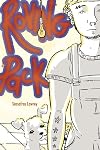
I can think of no higher praise for this book than this: when it was done, I didn't want it to be. Click is going to stay with me for a while. Powerful novel about what gender fluidity looks and feels like, something that is sorely lacking in most of the other work about trans and genderqueer youth. Get this book immediately. HIGHLY recommended.
Awards


You May Also Like


Associated Authors
Statistics
- Works
- 9
- Also by
- 6
- Members
- 284
- Popularity
- #82,066
- Rating
- 4.0
- Reviews
- 6
- ISBNs
- 16
