
Ghita Schwarz
Author of Displaced Persons: A Novel
Works by Ghita Schwarz
Tagged
Common Knowledge
- Gender
- female
Members
Reviews
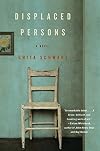
'Displaced Persons' follows four liberated Jews from the concentration camps as they regain their freedom, marry, move to the US and (to put it simply) survive. This is not a happy book or a heartwarming story. Neither is it one of the WWII tales that makes your stomach ache. 'Displaced Persons' isn't so much about the wartime experiences as the lives lived after. Even though Pavel and his friends try to put the devastating experiences behind them, it inevitably affects the rest of their show more lives. The overwhelming theme was survival. Not just what it took for a Jew to survive the war (though that's a part of it), but also what it takes to live day to day life: raising children, moving out of your native country, repairing a marriage after an affair... You ache for the characters, but also learn from them- family is important, but sometimes you have to make your own. show less
 This review was written for LibraryThing Early Reviewers.
For many schoolchildren, Holocaust survivors were rescued by the Allies, and they lived happily ever after. This is the extent to which history books discuss the plight of the Jews and other political prisoners deemed unworthy to survive by the Nazi regime. Ghita Schwartz’ Displaced Persons disabuses this notion and showcases just what did happen to the hundreds of thousands of people from whom everything had been taken. It is by turns thrilling, thought-provoking, and always informative, show more as it shows a people continuing to struggle to survive.
The end of the war was not just devastating to the people of Germany. For those who survived the concentration camps, the end of the war still meant being detained in camps for those without family or home. In other words, nothing really changed. They continued to be at the mercy of soldiers, albeit British or American ones and without the fear of death. There was little money and little food. More importantly, they remained unwanted, not only by Germans and Polish, but also by Americans and the British, both of whom limited the number of refugees they would allow into their borders. Yet, in spite of this ongoing miserable treatment, people like Pavel and Chaim, Fela and Hinda begin to rise and to recover.
Displaced Persons begins to falter once all of the characters make their way to New York. It is at this point in time where their stories become less dramatic and enthralling. What was a fascinating study in sociology and human nature becomes something more mundane as they each struggle to find happiness and overcome the sense of not belonging anywhere. Their stories are told in little vignettes with jumps through time, sometimes spacing several years. There seems to be no continuity to these jumps other than to show how long-lasting the pain of the past really is and how it influences future generations. The details remain murky, as each advance in time comes with the sense of visiting someone you haven’t seen in years but have no time to spend catching up before diving into everyday life. There is an impression of unfamiliarity with each jump that is disconcerting to the reader and interrupting the flow of the narrative.
When you have seen and experienced the worst that one human can do towards another, how do you recover from that? The short answer, based on Pavel’s, Chaim’s, Fela’s, and the others’ experiences, is that you don’t. The long answer, as discovered in Displaced Persons, is that recovery means different things for different people. Some became criminals, some ignored the past, others harbored fear or anger or both, and yet others developed a profound need for family and security. While their stories are interesting, Displaced Persons shines brightest when it tells the stories in the displaced persons camps. These are the stories that show how fragile and yet how very strong these survivors truly were. The rest of the novel tends to drag, ruining the impact of what could have been an amazing novel.
Acknowledgements: Thank you to HarperCollins and the LibraryThing Early Reader program for my review copy! show less
The end of the war was not just devastating to the people of Germany. For those who survived the concentration camps, the end of the war still meant being detained in camps for those without family or home. In other words, nothing really changed. They continued to be at the mercy of soldiers, albeit British or American ones and without the fear of death. There was little money and little food. More importantly, they remained unwanted, not only by Germans and Polish, but also by Americans and the British, both of whom limited the number of refugees they would allow into their borders. Yet, in spite of this ongoing miserable treatment, people like Pavel and Chaim, Fela and Hinda begin to rise and to recover.
Displaced Persons begins to falter once all of the characters make their way to New York. It is at this point in time where their stories become less dramatic and enthralling. What was a fascinating study in sociology and human nature becomes something more mundane as they each struggle to find happiness and overcome the sense of not belonging anywhere. Their stories are told in little vignettes with jumps through time, sometimes spacing several years. There seems to be no continuity to these jumps other than to show how long-lasting the pain of the past really is and how it influences future generations. The details remain murky, as each advance in time comes with the sense of visiting someone you haven’t seen in years but have no time to spend catching up before diving into everyday life. There is an impression of unfamiliarity with each jump that is disconcerting to the reader and interrupting the flow of the narrative.
When you have seen and experienced the worst that one human can do towards another, how do you recover from that? The short answer, based on Pavel’s, Chaim’s, Fela’s, and the others’ experiences, is that you don’t. The long answer, as discovered in Displaced Persons, is that recovery means different things for different people. Some became criminals, some ignored the past, others harbored fear or anger or both, and yet others developed a profound need for family and security. While their stories are interesting, Displaced Persons shines brightest when it tells the stories in the displaced persons camps. These are the stories that show how fragile and yet how very strong these survivors truly were. The rest of the novel tends to drag, ruining the impact of what could have been an amazing novel.
Acknowledgements: Thank you to HarperCollins and the LibraryThing Early Reader program for my review copy! show less
This review was written for LibraryThing Early Reviewers.This debut novel is a grim, uncompromising work of literary fiction that shows how for those Jews who lived to see the end of World War II, liberation did not bring an end to suffering but, rather, a new set of challenges. The first half of the novel is set in refugee camp run by British military, where “displaced persons” can find food and shelter. Many of the displaced persons are concentration camp survivors – like Pavel, the protagonist – but others, like Chaim, spent the war on show more the run, moving from place to place under various false identities.
Some of the “displaced persons” at the camp aren’t ready to face the future yet – but others see that the charity of the British is a temporary solution. Without their homes, their families, or their worldly possessions, they face the job of building a new life from scratch. That’s where things get difficult – desperate times call for desperate measures, and many of the inhabitants of the camp are willing to lie, cheat, steal, and even commit murder in order to obtain identity papers, emigration permits, or money.
The characters, and in particular Pavel, are real, fully-realized and not always easy to like. Pavel was probably a macho, stubborn, non-communicative man before the war. After, he is macho, stubborn, non-communicative and deeply traumatized – his emotions are stunted, hard to access, and his instinct for self-preservation makes him severe and occasionally cruel. He is a natural caretaker, and after emancipation he is driven to provide for his new wife, Fela, and his sister, his only family member to survive the war. Pavel wants Fela to have a comfortable house, so he uses forged documents to convince British officers to kick an old widow out of her home so that he can inhabit it himself.
Such acts do not sit easily on Pavel’s conscience, but he can justify them to himself. It is, nonetheless, deeply painful when the tables are turned – a business partner tries to kill Pavel, so that he can steal a few small diamonds that Pavel keeps in a secret pouch sewn into his clothes. Pavel had hoped to use them to emigrate to America; Pavel’s business partner takes the stones, and he arrives in America first.
Things get a little better for Pavel and Fela after they arrive in the United States – while they continue to struggle, they are able to provide for their children. Their son, Larry, grows up to become a doctor. But Pavel is again betrayed by the people he thought he could trust the most – he goes into business with his brother-in-law, who seizes an opportunity to drive Pavel out of his own company in a hostile takeover.
The point, ultimately, is that all the horrors of World War II didn’t grant the survivors any kind of exemptions – no free pass to a few easy years, or a peaceful time to recuperate. Life, with all its ups and downs, goes on. The writing is gritty and atmospheric, perfectly capturing the mood of the book, which traces its path through murky moral grey areas and painful truths. It is a hard and bleak book, but well-executed and beautiful. While painful to read, I enjoyed it a great deal. show less
Some of the “displaced persons” at the camp aren’t ready to face the future yet – but others see that the charity of the British is a temporary solution. Without their homes, their families, or their worldly possessions, they face the job of building a new life from scratch. That’s where things get difficult – desperate times call for desperate measures, and many of the inhabitants of the camp are willing to lie, cheat, steal, and even commit murder in order to obtain identity papers, emigration permits, or money.
The characters, and in particular Pavel, are real, fully-realized and not always easy to like. Pavel was probably a macho, stubborn, non-communicative man before the war. After, he is macho, stubborn, non-communicative and deeply traumatized – his emotions are stunted, hard to access, and his instinct for self-preservation makes him severe and occasionally cruel. He is a natural caretaker, and after emancipation he is driven to provide for his new wife, Fela, and his sister, his only family member to survive the war. Pavel wants Fela to have a comfortable house, so he uses forged documents to convince British officers to kick an old widow out of her home so that he can inhabit it himself.
Such acts do not sit easily on Pavel’s conscience, but he can justify them to himself. It is, nonetheless, deeply painful when the tables are turned – a business partner tries to kill Pavel, so that he can steal a few small diamonds that Pavel keeps in a secret pouch sewn into his clothes. Pavel had hoped to use them to emigrate to America; Pavel’s business partner takes the stones, and he arrives in America first.
Things get a little better for Pavel and Fela after they arrive in the United States – while they continue to struggle, they are able to provide for their children. Their son, Larry, grows up to become a doctor. But Pavel is again betrayed by the people he thought he could trust the most – he goes into business with his brother-in-law, who seizes an opportunity to drive Pavel out of his own company in a hostile takeover.
The point, ultimately, is that all the horrors of World War II didn’t grant the survivors any kind of exemptions – no free pass to a few easy years, or a peaceful time to recuperate. Life, with all its ups and downs, goes on. The writing is gritty and atmospheric, perfectly capturing the mood of the book, which traces its path through murky moral grey areas and painful truths. It is a hard and bleak book, but well-executed and beautiful. While painful to read, I enjoyed it a great deal. show less
In May 1945, Pavel and his friend Fishl are newly liberated from the German concentration camps. They steal to get money and rent rooms from a widow woman. Eventually they are joined by Fela and Pavel, two other refugees and begin to build their lives back together.
This is one of the most depressing books I've read in a long time. While I felt sorry for the characters for their war experiences, I did not like a lot of the choices they made, such as Pavel's plan to kick a widow out of her show more house to have for himself, Fela, and Chaim. I thought a story about characters in the aftermath of their war experiences might give some interesting insight into their psychology. Well, it did, but what I found was an awfully bleak world view in which your friends and family can betray or hurt you, and broken lives can never fully be put back together. Aside from the tone, I had trouble with the lack of quotation marks around speech, unless it was a character speaking in English. It was very hard for me to follow in the beginning, especially, trying to remember who was speaking, and knowing when speech stopped and a character's thoughts began. Because the book covers the years 1945 through 2000, there are often gaps of several years between chapters, which gave the story a very disjointed feeling that I also had a hard time with. I'm not sorry I read it, as it thoughtfully addresses the way in which tragedies like World War 2 can become commodities, but it's not the type of book I enjoy reading. show less
This is one of the most depressing books I've read in a long time. While I felt sorry for the characters for their war experiences, I did not like a lot of the choices they made, such as Pavel's plan to kick a widow out of her show more house to have for himself, Fela, and Chaim. I thought a story about characters in the aftermath of their war experiences might give some interesting insight into their psychology. Well, it did, but what I found was an awfully bleak world view in which your friends and family can betray or hurt you, and broken lives can never fully be put back together. Aside from the tone, I had trouble with the lack of quotation marks around speech, unless it was a character speaking in English. It was very hard for me to follow in the beginning, especially, trying to remember who was speaking, and knowing when speech stopped and a character's thoughts began. Because the book covers the years 1945 through 2000, there are often gaps of several years between chapters, which gave the story a very disjointed feeling that I also had a hard time with. I'm not sorry I read it, as it thoughtfully addresses the way in which tragedies like World War 2 can become commodities, but it's not the type of book I enjoy reading. show less
This review was written for LibraryThing Early Reviewers.Awards

Statistics
- Works
- 1
- Members
- 141
- Popularity
- #145,670
- Rating
- 3.6
- Reviews
- 18
- ISBNs
- 4
- Languages
- 1
- Favorited
- 1
