
Richard Wurmbrand (1909–2001)
Author of Tortured for Christ
About the Author
Works by Richard Wurmbrand
The Triumphant Church: A three-part study from the writings of Richard Wurmbrand, John Piper, & Milton Martin (2008) 19 copies, 1 review
The Sweetest Song: The Song of Solomon Expressed Through the Lives of Saints and Martyrs (1993) 16 copies
Dovezi ale existenței lui Dumnezeu 5 copies
Cele șapte cuvinte de pe cruce 4 copies
Ondergronds vir God 2 copies
Cu Dumnezeu in Subterana 2 copies
El Marx desconocido 2 copies
Îmbătat de dragoste 2 copies
Umple?i vidul 2 copies
Why Am I a Revolutionist? 2 copies
Perle Duhovnicesti 1 copy
Tortured for Christ #3 1 copy
Saatana ja Marx 1 copy
Kirkkautta kidutuskammiossa 1 copy
Umpleti Vidul? 1 copy
Adu-ți aminte de frații tăi 1 copy
Oglinda sufletului omenesc 1 copy
Cele 7 cuvinte de pe Cruce 1 copy
Marx um satanista? 1 copy
SECT 01 - Marx y Satanás 1 copy
Vem var Karl Marx? 1 copy
Mihin me kristityt uskomme? 1 copy
Hoe zou ik zwijgen? 1 copy
BERKORBAN DEMI KRISTUS 1 copy
Tanrı'nın Yeraltı Dünyası 1 copy
Mučeni za Krista 1 copy
Gemarteld om Christus' wil 1 copy
Megkínozva Krisztusért egy híradás a Földalatti Egyház szenvedéseiről és hitvallásáról (1992) 1 copy
Wurmbrand Sermon Series' The Faces of God, Preserve the Word, No Other God, In Prison with Psalm 107 (2003) 1 copy
Our Powerful Witness 1 copy
Wurmbrand Sermon 1 copy
Mensajes de un incomunicado 1 copy
Tagged
Common Knowledge
- Legal name
- Wurmbrand, Richard Heinrich
- Other names
- Valentin, Radu
Ionescu, Nicolai - Birthdate
- 1909-03
- Date of death
- 2001-02-17
- Gender
- male
- Occupations
- cleric
evangelist - Organizations
- Voice of the Martyrs
Lutheran Church
Church' Ministry Among Jewish People (CMJ UK)
Anglican Church
Comintern - Relationships
- Wurmbrand, Sabina (spouse)
Wurmbrand, Mihai (son) - Nationality
- Romania
- Birthplace
- Bucharest, Romania
- Places of residence
- Istanbul, Turkey
Moscow, Russia, USSR
Doftana prison, Prahova, Romania
Craiova, Romania
Gherla, Romania
Danube-Black Sea Canal labour camps, Romania (show all 11)
Văcărești prison, Bucharest, Romania
Malmaison, Bucharest, Romania
Cluj, Romania
Fortress 13, Jilava, Romania
Palos Verdes, California, USA - Place of death
- Torrance, California, USA
- Associated Place (for map)
- Romania
Members
Reviews
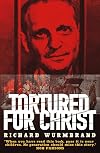
Reading this book, how did I react? Honestly, with envy. The Underground Church members' persecution forces them to stay in their Lord's protecting arms all the time with all possible distractions, worldly interests, taken away. Their devotion to Him is enormous.
The copyright says this book was published in 1967 or 1969. I wonder what the state of Christianity in Russia and former Soviet states is now, since it probably doesn't have to stay show more underground.
______________________________________
10/12/2019
I recently read Tortured for Christ again, and seem to have paid more attention to Richard Wurmbrand's attitude toward other churches and the remarks it led him to make about them. I have seen some readers here in the West react indignantly to such remarks, for not bothering to absorb Wurmbrand's point of view.
Other churches? Well, the official denomination Wurmbrand pastored--before his imprisonment--was Lutheran, but that's actually completely irrelevant. From the point of his imprisonment on, Wurmbrand's church wasn't the Lutheran church, it was the Underground Church. All other church groups were at least potentially the Underground Church's enemy, because various congregations in Russia and other Communist countries had corrupt leaders who betrayed Jesus by preaching what Communist governments told them to preach, and/or sold out Christians by informing on believers to get them sent to prison. That is, into the Underground Church.
These denominations with churches led by government-sanctioned pastors included Lutheran; Baptist (my denomination); Orthodox; and Roman Catholic. Wurmbrand uses the term "papists," but I can figure out that he's not throwing a slur at Catholic laypersons or clerics. He's using the term broadly to describe hypocritical church leadership in all churches behind the Iron Curtain. There may not be another word to describe this type, because congregational church polities (e.g., Protestant churches) have nothing like a pope and, although I don't know very much about the Orthodox Church, I understand it has no pope either. If there's a synonym with less provocative connotations and Wurmbrand didn't know it--Wurmbrand was a prisoner, not a language teacher. And if the use of "papist" offends, then it does; but are the offended bothering to consider that Wurmbrand and the saints in the Underground Church were put there by the betrayal led by the leaders of the "above-ground church"? If he felt distrust toward them, why not? They (not believers in any church) are what George Orwell symbolized in Animal Farm's character Moses the raven--look him up.
It dovetails well enough with an idea I thought of within the last few years: "the church within the church." A church of believers among a larger church of hypocrites--it's always there. show less
The copyright says this book was published in 1967 or 1969. I wonder what the state of Christianity in Russia and former Soviet states is now, since it probably doesn't have to stay show more underground.
______________________________________
10/12/2019
I recently read Tortured for Christ again, and seem to have paid more attention to Richard Wurmbrand's attitude toward other churches and the remarks it led him to make about them. I have seen some readers here in the West react indignantly to such remarks, for not bothering to absorb Wurmbrand's point of view.
Other churches? Well, the official denomination Wurmbrand pastored--before his imprisonment--was Lutheran, but that's actually completely irrelevant. From the point of his imprisonment on, Wurmbrand's church wasn't the Lutheran church, it was the Underground Church. All other church groups were at least potentially the Underground Church's enemy, because various congregations in Russia and other Communist countries had corrupt leaders who betrayed Jesus by preaching what Communist governments told them to preach, and/or sold out Christians by informing on believers to get them sent to prison. That is, into the Underground Church.
These denominations with churches led by government-sanctioned pastors included Lutheran; Baptist (my denomination); Orthodox; and Roman Catholic. Wurmbrand uses the term "papists," but I can figure out that he's not throwing a slur at Catholic laypersons or clerics. He's using the term broadly to describe hypocritical church leadership in all churches behind the Iron Curtain. There may not be another word to describe this type, because congregational church polities (e.g., Protestant churches) have nothing like a pope and, although I don't know very much about the Orthodox Church, I understand it has no pope either. If there's a synonym with less provocative connotations and Wurmbrand didn't know it--Wurmbrand was a prisoner, not a language teacher. And if the use of "papist" offends, then it does; but are the offended bothering to consider that Wurmbrand and the saints in the Underground Church were put there by the betrayal led by the leaders of the "above-ground church"? If he felt distrust toward them, why not? They (not believers in any church) are what George Orwell symbolized in Animal Farm's character Moses the raven--look him up.
It dovetails well enough with an idea I thought of within the last few years: "the church within the church." A church of believers among a larger church of hypocrites--it's always there. show less

This was probably the most interesting book I've read this year.
It should actually be titled Marxism and Satan, not Marx and Satan, because it is more a book about the mostly hidden Satanic origins of Marxism than a spiritual biography of Karl Marx, and as such, it's broad enough to include information on the religious viewpoints of Marx's contemporaries who influenced him or were influenced by him. These include Moses Hess (described as Marx's philosophical mentor, the man who inspired him show more to embrace communism); Marx's partner Friedrich Engels; and Mikhail Bakhunin, Marx's colleague and former friend and (per one of my professors) the philosophical father of anarchistic terrorism.
Things I didn't know before reading this book:
However, Marx did not embrace communism out of any love for mankind and desire to improve working-class conditions; that widely-held belief is a Communist-promulgated myth. Marx explained in his writings, in the clearest possible terms, that he would help establish communism, socialist ideas, for the express purpose of spreading misery in the world. He wrote an explicit statement about wanting to "drag mankind into hell"; I can't find it in the book at the moment, but you will if you read it.
Note the similarity to Mein Kampf and its effect: that Hitler announced his plans years beforehand in Mein Kampf, but nobody paid enough attention; and the same has been true with Marx's early writings. The truth is there for examination, but most don't bother to look.
The Satanist influence explains so much. I already knew the hatred for Christianity; but finally I know the origin of the Gothic (and goth) tendencies I have seen and been fascinated by for years when I see or read about Marxists past and present.
These are some writings of Marx, quoted by Wurmbrand, that are particularly illustrative of his true thinking.
These and other quotations, most with footnotes, reveal Marx's hatred toward individuals, nations and classes of people. His colleagues and mentors, such as Hess and Friedrich Engels, make many similar statements in their writings.
Marx and the others sometimes absolutely sound as though they were being used as a conduit, as though Satan spoke through them.
Later thinkers and political leaders who put Communism into action, especially Lenin, seemed to recognize the darkness with incredible and terrifying self-awareness. From Lenin:
It should actually be titled Marxism and Satan, not Marx and Satan, because it is more a book about the mostly hidden Satanic origins of Marxism than a spiritual biography of Karl Marx, and as such, it's broad enough to include information on the religious viewpoints of Marx's contemporaries who influenced him or were influenced by him. These include Moses Hess (described as Marx's philosophical mentor, the man who inspired him show more to embrace communism); Marx's partner Friedrich Engels; and Mikhail Bakhunin, Marx's colleague and former friend and (per one of my professors) the philosophical father of anarchistic terrorism.
Things I didn't know before reading this book:
Marx's (not Marxism's) Christian background. Everyone who knows anything about Marx knows he was ethnically Jewish, so I didn't guess he would have been raised Christian; but yes, his family was Christian and he grew up one, as shown in his youthful writing. But around age eighteen or so, he flipped from praising God to explicitly hating Him. His writings (quoted extensively in the book) completely avoid explaining what happened to change him, but make it clear that he had not become an "atheist" per se--he knew perfectly well that God existed, but simply hated Him.
Marx's colleague Friedrich Engels had also rebelled against God in his youth, but retained some grudging sympathy or fondness toward Christianity that Marx did not share; and author Wurmbrand claims Engels may have repented at the end of his life.
Marx actually strongly opposed communism in his youth at the time he began hating God. He even explicitly wrote that anyone expressing communist views should be executed.
Marx's primary mentor, the man who convinced him to embrace communism, was German philosopher and poet Moses Hess. Like Marx, Hess hated God and explicitly embraced Satan.
I already knew a little about Marx's racism, but I did not know he explicitly supported slavery in America. The reason is somewhat complicated--I don't fully understand it--but has to do with his belief that America would have been a "patriarchal" nation without slavery. (I have no idea.)
However, Marx did not embrace communism out of any love for mankind and desire to improve working-class conditions; that widely-held belief is a Communist-promulgated myth. Marx explained in his writings, in the clearest possible terms, that he would help establish communism, socialist ideas, for the express purpose of spreading misery in the world. He wrote an explicit statement about wanting to "drag mankind into hell"; I can't find it in the book at the moment, but you will if you read it.
Note the similarity to Mein Kampf and its effect: that Hitler announced his plans years beforehand in Mein Kampf, but nobody paid enough attention; and the same has been true with Marx's early writings. The truth is there for examination, but most don't bother to look.
The Satanist influence explains so much. I already knew the hatred for Christianity; but finally I know the origin of the Gothic (and goth) tendencies I have seen and been fascinated by for years when I see or read about Marxists past and present.
These are some writings of Marx, quoted by Wurmbrand, that are particularly illustrative of his true thinking.
[from Marx's poem "Ode to Despair"]
So a god has snatched me from my all,
In the curse and rack of destiny.
All his worlds are gone beyond recall.
Nothing but revenge is left to me.
I shall build my summit high overhead,
Cold, tremendous shall its summit be.
For its bulwark--superstitious dread.
For its marshal--blackest agony.
Who looks on it with a healthy eye,
Shall turn back, deathly pale and dumb,
Clutched by blind and chill mortality,
May his happiness prepare its tomb.
"Then I will be able to walk triumphantly,
Like a god, through the ruins of their kingdom.
Every word of mine is fire and action.
My breast is equal to that of the Creator."
[Marx in a letter to his father]
"A curtain had fallen. My holy of holies was rent asunder and new gods had to be installed.
[from his poem "On Hegel"]
"Words I teach all mixed up into a devilish muddle.
Thus, anyone may think just what he chooses to think."
"Thus heaven I've forfeited,
I know it full well.
My soul, once true for God,
Is chosen for hell."
[from his poem "The Pale Maiden"]
"With disdain I will throw my gauntlet
Full in the face of the world,
And see the collapse of this pygmy giant
Whose fall will not stifle my ardour.
Then will I wander godlike and victorious
Through the ruins of the world
And, giving my words an active force,
I will feel equal to the Creator."
[his poem "Human Pride"]
"...stupid boys, rogues, asses." --Marx describing the proletariat
These and other quotations, most with footnotes, reveal Marx's hatred toward individuals, nations and classes of people. His colleagues and mentors, such as Hess and Friedrich Engels, make many similar statements in their writings.
Marx and the others sometimes absolutely sound as though they were being used as a conduit, as though Satan spoke through them.
Later thinkers and political leaders who put Communism into action, especially Lenin, seemed to recognize the darkness with incredible and terrifying self-awareness. From Lenin:
I committed a great error. My nightmare is to have the feeling that I'm lost in an ocean of blood from our innumerable victims. Is it too late to return. To save our country, Russia, we could have needed men like Francis of Assisi. With ten men like him we would have saved Russia.
From the Communist International's secretary-general Bukharin, writing to his wife just before he was arrested and executed by Stalin: "I am leaving life. I am lowering my head. ... I feel my helplessness before a hellish machine..."show less
This is a short biographical account of a Romanian Pastor imprisoned and tortured for his Christian faith by the Communists just after the second world war. He spent a total of 14 years in prison, was eventually ransomed and released and moved to the West to encourage others to support "The Underground (persecuted) Church" in many countries. He founded "Voice of the Martyrs," which continues to work in countries around the world to this day.
Although the author states that he cannot go into show more graphic detail about the torture he endured at the hands of evil men. He proceeds to give seriously disturbing detail which some readers may not appreciate. He was placed in solitary confinement for 3 years!
"In solitary confinement, we could not pray as before. We were unimaginably hungry; we had been drugged until we acted like idiots. We were as weak as skeletons. The Lord's prayer was much too long for us- we could not concentrate enough to say it. My only prayer repeated again and again was, "Jesus, I love You."
Personally I felt challenged when reading this and forced to ask myself questions about how far I would be willing to go for my Christian faith. The detail is not in any way included for entertainment or to assist the author in obtaining spiritual one-up-man-ship. I believe the author's main purpose in writing these things was to try and shock people into doing something to help the persecuted church. His passion, dedication and commitment to the cause resonate throughout the book and are compelling. Many Christian's have been and will continue to be seriously convicted about their own roles in this Gospel and help ministry to those that are suffering for Christ, this can only be a good thing.
I note the complaints in various reviews about the author's negative/judgemental comments about Western Christian's. His attitude is that they are unconcerned, indifferent, apathetic and lacking in prayer for their brethren in crisis in other parts of the world. One reviewer's response which I would echo is that when reading/hearing criticism of ourselves we should examine (through Scripture and prayer) whether the things that are being said are true. If they are we should seek to address them and if they are not we should disregard them. Wurmbrand's opinion about Western Christian's may or may not be accurate, (in my view it is pretty accurate and has become more so in recent decades as this book was written a long time ago.) But, we cannot disregard his experiences and fail to help the persecuted church based on our prejudice towards him as an individual and how he chose to express himself. The things he experienced are happening around the world and the underground church does need help.
To those that don't believe the content of the book (which I also read in some reviews.) I can understand the skepticism due to various Christian Biographical books being removed from sale due to the "made-up" stories. Wurmbrand has on his body the scars from the torture he endured at the hands of his persecutors as he revealed this during a public meeting. Again I believe he did this to capture the attention of people rather than for personal gain.
I tend to believe the content of this book and that the author (who has since died) was a sincere soul seeking to follow Jesus and being willing to give up everything for that call. Ultimately only God knows his heart but we can all be challenged by his story and encouraged to get more involved in helping those suffering persecution in any way that we can.
I would encourage adult Christians to read this book. show less
Although the author states that he cannot go into show more graphic detail about the torture he endured at the hands of evil men. He proceeds to give seriously disturbing detail which some readers may not appreciate. He was placed in solitary confinement for 3 years!
"In solitary confinement, we could not pray as before. We were unimaginably hungry; we had been drugged until we acted like idiots. We were as weak as skeletons. The Lord's prayer was much too long for us- we could not concentrate enough to say it. My only prayer repeated again and again was, "Jesus, I love You."
Personally I felt challenged when reading this and forced to ask myself questions about how far I would be willing to go for my Christian faith. The detail is not in any way included for entertainment or to assist the author in obtaining spiritual one-up-man-ship. I believe the author's main purpose in writing these things was to try and shock people into doing something to help the persecuted church. His passion, dedication and commitment to the cause resonate throughout the book and are compelling. Many Christian's have been and will continue to be seriously convicted about their own roles in this Gospel and help ministry to those that are suffering for Christ, this can only be a good thing.
I note the complaints in various reviews about the author's negative/judgemental comments about Western Christian's. His attitude is that they are unconcerned, indifferent, apathetic and lacking in prayer for their brethren in crisis in other parts of the world. One reviewer's response which I would echo is that when reading/hearing criticism of ourselves we should examine (through Scripture and prayer) whether the things that are being said are true. If they are we should seek to address them and if they are not we should disregard them. Wurmbrand's opinion about Western Christian's may or may not be accurate, (in my view it is pretty accurate and has become more so in recent decades as this book was written a long time ago.) But, we cannot disregard his experiences and fail to help the persecuted church based on our prejudice towards him as an individual and how he chose to express himself. The things he experienced are happening around the world and the underground church does need help.
To those that don't believe the content of the book (which I also read in some reviews.) I can understand the skepticism due to various Christian Biographical books being removed from sale due to the "made-up" stories. Wurmbrand has on his body the scars from the torture he endured at the hands of his persecutors as he revealed this during a public meeting. Again I believe he did this to capture the attention of people rather than for personal gain.
I tend to believe the content of this book and that the author (who has since died) was a sincere soul seeking to follow Jesus and being willing to give up everything for that call. Ultimately only God knows his heart but we can all be challenged by his story and encouraged to get more involved in helping those suffering persecution in any way that we can.
I would encourage adult Christians to read this book. show less

This is a very powerful autobiographical account of the fourteen years which Pastor Richard Wurmbrand spent in prison. He was sent there in 1948 because he was a Christian who refused to renounce his faith and embrace Communism.
The book describes in detail much of his experience, including attempts at brainwashing and some appalling torture. Somehow it manages to be vivid without being graphic. It brought alive the horrors of this kind of imprisonment, yet didn't give me nightmares.
I found show more it gripping reading, despite there being so many people mentioned that I lost track of who was whom at times, and a fair bit of 'preaching'. Recommended to anyone - Christian or otherwise - who would like to know more about what went on during the Communist era in Rumania. show less
The book describes in detail much of his experience, including attempts at brainwashing and some appalling torture. Somehow it manages to be vivid without being graphic. It brought alive the horrors of this kind of imprisonment, yet didn't give me nightmares.
I found show more it gripping reading, despite there being so many people mentioned that I lost track of who was whom at times, and a fair bit of 'preaching'. Recommended to anyone - Christian or otherwise - who would like to know more about what went on during the Communist era in Rumania. show less
You May Also Like


Associated Authors
Statistics
- Works
- 101
- Members
- 6,822
- Popularity
- #3,582
- Rating
- 4.1
- Reviews
- 47
- ISBNs
- 169
- Languages
- 11

