
Don Richardson (1) (1935–2018)
Author of Peace Child
For other authors named Don Richardson, see the disambiguation page.
About the Author
Don Richardson, author of Peace Child, Eternity in Their Hearts and Secrets of the Koran, has been studying tribal cultures and the Muslim world for more than 30 years. He and his late wife, Carol Joy, spent 15 years among the Sawi, a tribe in Papua. Don designed an alphabet suited to the Sawi show more language, authored 19 primers, taught the tribesmen to read in their native tongue, and translated the entire New Testament. Since 1977, Don has served as ambassador-at-large for World Team, a mission organization, Don holds an honorary doctorate of literature from Biola University and is an ordained pastor. He speaks at more than 40 conferences annually. show less
Image credit: Don Richardson (1)
Works by Don Richardson
Do Missionaries Destroy Cultures 2 copies
On the death of Chet Bitterman 2 copies
Tagged
Common Knowledge
- Birthdate
- 1935-06-23
- Date of death
- 2018-12-23
- Gender
- male
- Education
- Prairie Bible Institute
Summer Institute of Linguistics - Occupations
- missionary
- Organizations
- U.S. Center for World Mission in Pasadena
- Nationality
- Canada (birth)
- Birthplace
- Charlottetown, Prince Edward Island, Canada
- Places of residence
- Irian Jaya, Indonesia
Woodland Hills, California, USA - Place of death
- Orlando, Florida, USA
- Burial location
- All Faiths Memorial Park, Casselberry, Seminole County, Florida, USA
Members
Reviews

One of the better written missionary biographies-- It's less about the missionary and more about the people (which might be why it's worthwhile!). It's a good book for conveying the theory that Christianity has meaning for every culture, that it is not merely a "white man's religion" or "western" belief system. The story is both poignant and thought provoking in its implications across cultures. Richardson's ideas are respectful and dignity affirming; each man is made in the image of God, show more and God has made a way for each culture to know Him. show less
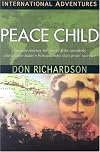
Among the headhunting Sawi of Irian Jaya, treachery was an ideal that generations of their people had perfected. The heroes of Sawi legend weren't those who took the greatest number of heads in battle or ambush, but those who were the most deceitful in befriending their victims before they took their heads.
When missionaries Don and Carol Richardson searched for the key that would open the gospel to the Sawi, God moved in a stunning way. He revealed His true Peace Child--the ideal fulfillment show more of the Sawi's own redemptive analogy. "Peace Child" chronicles the agony--and the triumph--of the Richardsons' unforgettable sojourn among this people loved by God. show less
When missionaries Don and Carol Richardson searched for the key that would open the gospel to the Sawi, God moved in a stunning way. He revealed His true Peace Child--the ideal fulfillment show more of the Sawi's own redemptive analogy. "Peace Child" chronicles the agony--and the triumph--of the Richardsons' unforgettable sojourn among this people loved by God. show less
Peace Child: An Unforgettable Story of Primitive Jungle Treachery in the 20th Century by Don Richardson
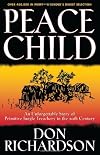
For years, I have been fascinated with the question of how undiscovered, isolated groups of people would held accountable for their decision to accept or reject God. How could uncivilized people understand how God's message related to their lives? After reading this book, I found my answer! I realized that through what Don Richardson calls "redemptive analogies," God makes a way for ALL people to understand his loving message. Just as he ably used analogies that were particularly meaningful show more to the Jews and Greeks in the Bible, God is able to use analogies that are meaningful to cannibals and other isolated groups. Peace Child is Don Richardson's account of how he discovered the analogy that God had specially designed to make a cannibalistic tribe in New Guinea understand his love... and then of how he risked his life trying to share that analogy with those people.
This book chronicles one man's purposeful encounter with a group of people who had never come in contact with Godly principles. Perhaps because I'm a wife and mother of two, Richardson's decision to include his wife and two toddlers in his quest to share righteousness really made me understand his degree of commitment to God.
Richardson's powerful text outlines a sacrifice of earthly comforts for spiritual reasons and shows God's protection of the lives of people who actively seek to serve His purposes. While written by a very educated scholar, the text is very easy to follow. The careful reader will also notice that Richardson used a combination of both white collar and physical talents to convert members of the cannibalistic tribe. (To live and teach the cannibals, he was required to work not only as a carpenter and foreman, but also as a linguist and dictionary author.) That was a real revelation for me.
I want to emphasize, though, that this book is more than the masterpiece story of Don Richardson's experiences as a missionary. It is also a book that really convicts its readers to think about what their own roles should be in influencing the moral compass of people who have no social rules and no agreements about how to live together in groups - people with no Ten Commandments and no Magna Carta. There was a point at which I put this book down for a minute because tears were rolling down my face. I felt such an inward "call" to become more involved in sharing both the message of love and salvation and the principles of organized group behavior with the forgotten people of this earth, even if it meant sacrificing the comforts I am so used to. My brother-in-law read it years ago, and as a result, he started sharing the Christian gospel with prisoners in his hometown every Saturday morning. He still does that today.
Buy it and share it with your friends. It will change you inwardly and motivate you to inspire others. show less
This book chronicles one man's purposeful encounter with a group of people who had never come in contact with Godly principles. Perhaps because I'm a wife and mother of two, Richardson's decision to include his wife and two toddlers in his quest to share righteousness really made me understand his degree of commitment to God.
Richardson's powerful text outlines a sacrifice of earthly comforts for spiritual reasons and shows God's protection of the lives of people who actively seek to serve His purposes. While written by a very educated scholar, the text is very easy to follow. The careful reader will also notice that Richardson used a combination of both white collar and physical talents to convert members of the cannibalistic tribe. (To live and teach the cannibals, he was required to work not only as a carpenter and foreman, but also as a linguist and dictionary author.) That was a real revelation for me.
I want to emphasize, though, that this book is more than the masterpiece story of Don Richardson's experiences as a missionary. It is also a book that really convicts its readers to think about what their own roles should be in influencing the moral compass of people who have no social rules and no agreements about how to live together in groups - people with no Ten Commandments and no Magna Carta. There was a point at which I put this book down for a minute because tears were rolling down my face. I felt such an inward "call" to become more involved in sharing both the message of love and salvation and the principles of organized group behavior with the forgotten people of this earth, even if it meant sacrificing the comforts I am so used to. My brother-in-law read it years ago, and as a result, he started sharing the Christian gospel with prisoners in his hometown every Saturday morning. He still does that today.
Buy it and share it with your friends. It will change you inwardly and motivate you to inspire others. show less
So good.
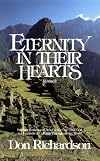
Covering “redemptive analogies” in ancient tradition worldwide, to how the Abrahamic covenant and then Jesus taught about reaching not just Jews, but the rest of the world as well — I see how this became the missions classic that it is.
I appreciated his thorough research on different peoples with redemptive analogies. He differentiates between “redemptive analogies” and “redeeming analogies”: ‘“Redeeming” would mean that Mbaka people could find relationship with show more God through their own lore, apart from the gospel. “Redemptive” in this context means “contributing to the redemption of a people, but not culminating it.”’ show less
Covering “redemptive analogies” in ancient tradition worldwide, to how the Abrahamic covenant and then Jesus taught about reaching not just Jews, but the rest of the world as well — I see how this became the missions classic that it is.
I appreciated his thorough research on different peoples with redemptive analogies. He differentiates between “redemptive analogies” and “redeeming analogies”: ‘“Redeeming” would mean that Mbaka people could find relationship with show more God through their own lore, apart from the gospel. “Redemptive” in this context means “contributing to the redemption of a people, but not culminating it.”’ show less
Lists
You May Also Like


Associated Authors
Statistics
- Works
- 22
- Members
- 4,623
- Popularity
- #5,449
- Rating
- 4.2
- Reviews
- 46
- ISBNs
- 94
- Languages
- 11
- Favorited
- 1